
Yes, your furnace can still expose you to carbon monoxide when turned off due to residual gas trapped in ducts or vents from prior operation.
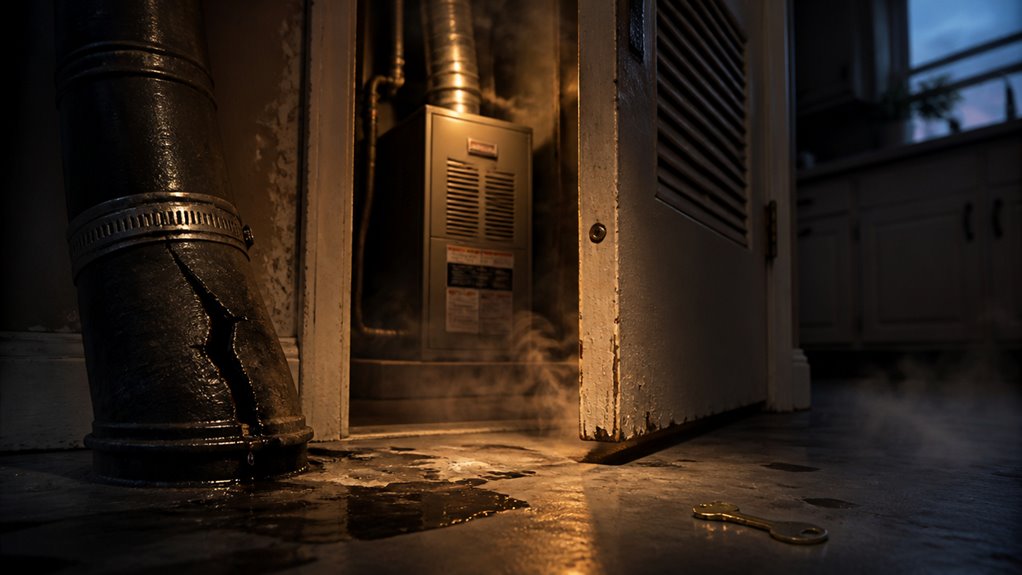
Defects like cracked heat exchangers or damaged venting may have allowed exhaust leaks before shutdown, causing lingering CO indoors.
Other fuel-burning appliances and venting problems can also contribute.
CO detectors are essential for continuous monitoring and safety. Understanding these risks and how to identify them can help you protect your home effectively.
Key Takeaways
- A furnace turned off does not generate new CO but residual CO may remain trapped in ducts or indoor air.
- Cracked heat exchangers or venting defects can cause CO leakage that lingers even after the furnace stops running.
- Blocked or damaged vent pipes can allow CO from previous operation or other sources to enter the home.
- CO can circulate through duct leaks, posing risks even when the furnace is off.
- Continuous CO detectors provide crucial monitoring and should be trusted regardless of furnace operation status.
Carbon Monoxide Risks From Furnaces When Turned Off
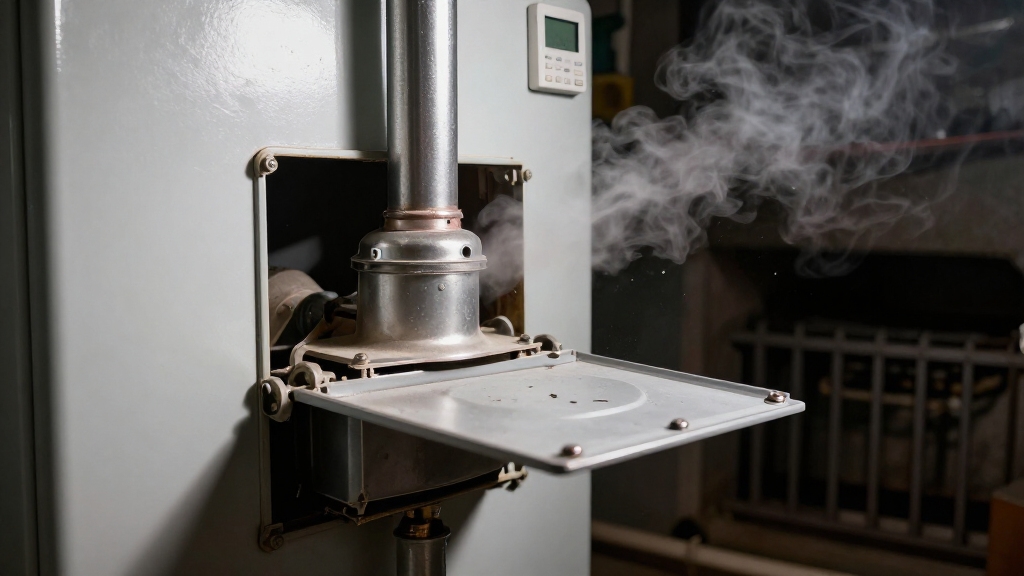
Although a furnace that’s completely turned off doesn’t produce new carbon monoxide (CO), you still face risks from residual CO left over from previous operation cycles or venting issues.
Even when off, a furnace can harbor lingering carbon monoxide hazards from past use or vent problems.
CO generated during prior furnace operation can remain trapped in ducts, vents, or indoor air, posing a hidden danger. If your furnace has a cracked heat exchanger or defective venting, exhaust gases may have leaked before shutdown, leaving unsafe CO concentrations behind.
Additionally, venting defects can cause exhaust to backdraft or linger, allowing CO to accumulate even when the furnace isn’t running. You should always treat CO alarms seriously, regardless of furnace status.
Understanding these risks helps you maintain a safer environment and highlights the importance of regular furnace inspections and proper vent maintenance. Regular inspection, balanced mechanical ventilation, and clearing chimney blockages are crucial to mitigate CO retention and alarm activations.
Sources of Carbon Monoxide in Your Home When the Furnace Is Off
When your furnace is off, carbon monoxide can still sneak into your home from several sources. Residual CO might linger in the ducts or indoor air from earlier furnace operation. Other fuel-burning appliances, like water heaters or stoves, can emit CO independently. Venting issues or duct leaks may also allow CO to enter or circulate inside your home.
| Source | Description |
|---|---|
| Residual CO | Trapped from prior furnace cycles |
| Other Appliances | Gas stoves, water heaters emitting CO |
| Venting Defects | Blocked or damaged exhaust vents |
| Duct Leaks | CO circulating through leaks or holes |
| Cracked Heat Exchanger | CO escaping during previous operation |
It is important to note that electric furnaces themselves do not produce carbon monoxide because they operate without combustion, making electric heating a safer option in terms of CO risks.
Furnace Problems That Can Cause Carbon Monoxide Leaks
Understanding the sources of carbon monoxide in your home sets the stage for recognizing how specific furnace problems can directly cause CO leaks. A cracked heat exchanger is the primary culprit; it allows combustion gases, including CO, to escape into your home’s air circulation.
Improper furnace installation or poor maintenance can also increase CO risks by impairing combustion efficiency. Older furnaces lacking safety switches may continue operating despite dangerous conditions, raising leak likelihood.
Additionally, malfunctioning combustion components or blocked burners can create incomplete fuel burning, generating excess CO. While venting issues also contribute, they’re discussed separately.
To minimize risks, make certain your furnace undergoes annual professional inspection focusing on heat exchanger integrity, burner condition, and system safety features. Promptly addressing these problems can prevent CO infiltration and protect your household.
Poor venting and maintenance, such as clogged chimneys or blocked flues, allow incomplete combustion and prevent proper exhaust, leading to dangerous CO buildup indoors.
How Venting Issues Lead to Carbon Monoxide Indoors?
If your furnace’s venting system is blocked, damaged, or improperly installed, exhaust gases containing carbon monoxide can be forced back into your home instead of being safely expelled outdoors.
This backdrafting occurs when negative pressure or obstructions prevent proper airflow, allowing CO to accumulate indoors. You need to make certain vents and flues remain clear and intact to maintain safe exhaust paths.
Common venting issues causing indoor CO include:
- Blocked vent pipes due to debris or nests
- Cracked or corroded vent sections
- Improper vent slope or direction
- Loose or disconnected vent joints
- Insufficient combustion air supply
Addressing these defects promptly prevents dangerous CO buildup, protecting your indoor air quality and health. Installing certified CO detectors near sleeping areas and key locations is essential for early warning and safety.
Signs You Might Have a Carbon Monoxide Problem
You should always be alert to the subtle warning signs that indicate a possible carbon monoxide (CO) leak in your home. Since CO is colorless and odorless, you won’t detect it without a CO alarm, but physical symptoms can provide clues.
If you or household members experience unexplained headaches, dizziness, nausea, or fatigue, especially when indoors and relieved by fresh air, these may signal CO exposure. Additionally, pets showing unusual lethargy or distress can be an indicator.
Mechanical signs include soot buildup around the furnace, yellow instead of blue burner flames, or excessive rust on the appliance. Frequent pilot light outages or visible damage like cracked heat exchangers also warrant concern.
Recognizing these signs early helps prevent prolonged exposure and guarantees timely professional inspection. Installing carbon monoxide detectors provides continuous monitoring and early alerts to ensure safety even when symptoms are not yet apparent.
What to Do When Your Carbon Monoxide Alarm Sounds?
When your carbon monoxide alarm goes off, take immediate action to protect yourself and others.
Carbon monoxide is colorless and odorless, so the alarm is your only warning. Don’t ignore it or assume it’s a false alarm.
Evacuate everyone from the building immediately, including pets.
Call emergency services from a safe location outside the home.
Do not reenter until professionals confirm it’s safe.
Avoid operating any fuel-burning appliances or the furnace until inspected.
Ventilate the home by opening doors and windows only if it’s safe to do so outside.
Prompt response limits exposure to this toxic gas and prevents potential poisoning.
Always treat CO alarms as emergencies regardless of whether your furnace is running.
Preventing Carbon Monoxide Risks With Proper Furnace Maintenance
Maintaining your furnace regularly plays a critical role in preventing carbon monoxide (CO) risks. You should schedule annual professional inspections to detect cracked heat exchangers, vent blockages, or combustion inefficiencies that could cause CO leaks.
Pay particular attention to venting systems, ensuring chimneys and flues are clear of debris to prevent exhaust backdraft. Replace or repair any damaged components immediately.
Regular maintenance also includes verifying safety switches and proper installation standards to minimize leaks. Additionally, keep CO alarms operational near the furnace and throughout your home.
Ensuring proper sealing of ductwork helps prevent CO infiltration into the HVAC airflow, enhancing your home’s safety.
Keeping Your Home Safe From Carbon Monoxide Year-Round
To keep your home safe from carbon monoxide year-round, it’s a good idea to install carbon monoxide detectors on every floor and close to any fuel-burning appliances. This way, you’ll have continuous monitoring in place.
Don’t forget to check those vents regularly, too! Clear any debris you find to ensure proper exhaust flow throughout the year. Following some seasonal safety tips can really help prevent CO buildup, no matter if your furnace is running or not. It’s all about staying proactive!
Regular maintenance and inspections of your furnace and vents by a certified professional are essential to reduce the risk of carbon monoxide leaks.
Continuous CO Monitoring
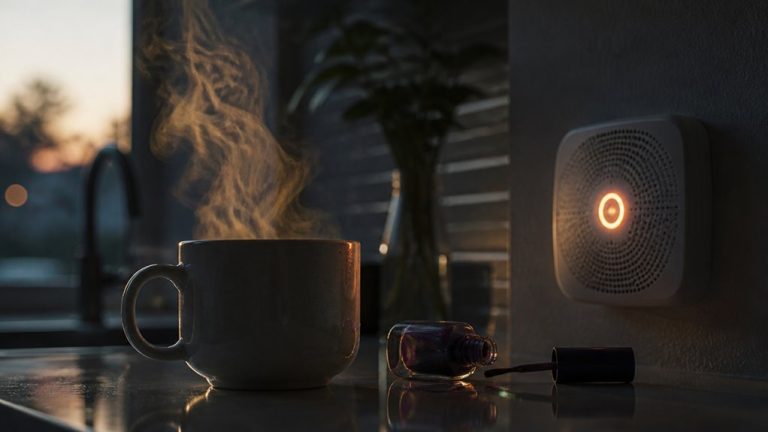
Regularly monitoring carbon monoxide levels in your home provides essential, real-time protection against this invisible threat. Continuous CO monitoring devices detect even low-level carbon monoxide concentrations, alerting you immediately if dangerous levels arise.
By installing detectors near fuel-burning appliances and sleeping areas, you gain early warnings of potential leaks, even when your furnace is off. Advanced monitors can log data and connect to smart home systems, increasing response efficiency.
Key points to contemplate:
- Place CO detectors on every floor and near major combustion sources.
- Use devices with digital displays for precise CO level readings.
- Make certain alarms meet UL 2034 safety standards.
- Regularly test and replace batteries or units as recommended.
- Integrate monitors with home automation for remote alerts.
Note that carbon monoxide detectors are specifically calibrated for CO and will not detect natural gas leaks, so separate detectors are necessary for comprehensive safety involving multiple gases, such as natural gas detection.
This proactive strategy markedly reduces carbon monoxide poisoning risks year-round.
Seasonal Safety Tips
Seasonally adjusting your home’s carbon monoxide safety measures guarantees continuous protection against this silent hazard.
As temperatures fluctuate, inspect fuel-burning appliances, vents, and chimneys for blockages or damage.
Test CO alarms monthly and replace batteries biannually. Keep vents clear of snow and debris during winter.
Consider scheduling annual furnace inspections before heating season.
Regular maintenance also helps prevent device tampering that could compromise appliance safety.
| Season | Key Action | Safety Focus |
|---|---|---|
| Fall | Professional furnace inspection | Heat exchanger & vent integrity |
| Winter | Clear vents & test alarms | Prevent exhaust backdraft |
| Spring/Summer | Maintain appliances & alarms | Assure no residual CO buildup |
Consistently applying these measures reduces risks from venting defects, cracked heat exchangers, and residual CO.
This keeps your home safe year-round.
Frequently Asked Questions
How Long Can Carbon Monoxide Linger in a Home After Furnace Shutdown?
Carbon monoxide can linger in your home for several hours after your furnace shuts down, depending on ventilation and air circulation.
Without fresh air exchange, CO may remain trapped in ducts, vents, or indoor spaces. You shouldn’t assume the danger ends immediately after shutdown.
To guarantee safety, ventilate your home thoroughly and evacuate if a CO alarm sounds. Always have professionals inspect your system before use again.
Can Carbon Monoxide Enter My Home From Neighbors’ Furnaces?
Yes, carbon monoxide can enter your home from neighbors’ furnaces, especially if your building shares ventilation systems, walls, or has open windows near their exhaust vents.
CO is odorless and can infiltrate through cracks, gaps, or shared ducts.
To protect yourself, make certain your home has properly installed CO detectors.
Maintain good ventilation and report any suspicious odors or symptoms to professionals immediately to prevent dangerous exposure.
Are Portable Heaters a Significant Carbon Monoxide Risk?
Yes, portable heaters can pose a significant carbon monoxide risk if they burn fuel like propane, kerosene, or natural gas.
You must ensure proper ventilation and never use them in enclosed spaces.
Electric portable heaters don’t produce CO, so they’re safer in that regard.
Always follow manufacturer guidelines, keep CO alarms nearby, and never leave fuel-burning heaters unattended to minimize the risk of CO poisoning in your home.
How Often Should Carbon Monoxide Detectors Be Replaced?
You should replace carbon monoxide detectors every 5 to 7 years, depending on the manufacturer’s recommendations. Over time, their sensors degrade and become less reliable.
Regularly test your alarms monthly and replace batteries at least once a year. If your detector sounds false alarms or fails tests, replace it immediately.
Keeping your CO detectors up-to-date guarantees accurate detection, protecting you from invisible, odorless carbon monoxide hazards.
Can Opening Windows Reduce Carbon Monoxide Levels Effectively?
Yes, opening windows can reduce carbon monoxide levels by increasing ventilation and allowing fresh air to dilute indoor CO concentrations.
However, it’s only a temporary measure and mightn’t completely eliminate the danger, especially if there’s a continuous CO source.
You should still evacuate immediately if your CO alarm sounds and call emergency services.
Relying solely on open windows isn’t safe; professional inspection and proper ventilation fixes are essential for long-term safety.
Protect Your Home From Hidden Carbon Monoxide Risks
Even when your furnace is off, the silent threat of carbon monoxide can linger like an unseen shadow.
Don’t let complacency cloud your judgment. Faulty vents or hidden leaks can still spill this invisible danger into your home.
Stay vigilant by maintaining your system and trusting your alarms; they’re your first line of defense against this stealthy hazard.
Protect your home with precision and care, ensuring safety is never left in the cold.