
You can get carbon monoxide poisoning from a wood-burning stove due to incomplete combustion producing this odorless, colorless gas.
When your stove burns wood inefficiently, such as with damp wood, poor ventilation, or creosote buildup, CO levels rise. This reduces oxygen delivery to your body.
Early symptoms include headache and dizziness, but severe exposure can be fatal.
Proper stove maintenance and CO detectors are essential for safety. Understanding causes and prevention can help protect you and your household.
Key Takeaways
- Yes, incomplete combustion in wood-burning stoves produces carbon monoxide, a colorless, odorless, and toxic gas.
- Poor ventilation, blocked chimneys, or creosote buildup increase CO accumulation and poisoning risk.
- Using damp or unseasoned wood causes smoldering, raising CO levels significantly.
- Cracked stove components or improperly adjusted dampers reduce combustion efficiency and increase CO exposure.
- CO poisoning symptoms include headache, dizziness, nausea, confusion, and require immediate evacuation and medical attention.
What Is Carbon Monoxide and Why Is It Dangerous?
Understanding the nature of carbon monoxide is essential for anyone using a wood stove.
Carbon monoxide (CO) is a colorless, odorless gas resulting from incomplete combustion of carbon-containing materials.
When inhaled, CO binds with hemoglobin in your blood more effectively than oxygen, reducing oxygen delivery to crucial organs.
This mechanism makes CO exposure particularly dangerous, as you may not recognize symptoms until significant harm occurs.
Prolonged or high-level exposure can impair cognitive function, cause unconsciousness, or even be fatal.
Because you can’t detect CO through smell or sight, relying on detectors and proper stove operation is critical for safety.
Recognizing CO’s insidious nature helps you understand why strict precautions around wood stove use are necessary to protect your health.
For effective home safety, it is important to install a CO detector near bedroom doors to ensure early detection and timely warnings.
How Carbon Monoxide Is Produced in Wood-Burning Stoves?
When you burn wood in a stove, carbon monoxide forms as a byproduct of incomplete combustion. It’s pretty interesting how that works, right? Basically, when the wood doesn’t burn completely, you end up with this hazardous gas.
A few factors can really ramp up CO emissions, like smoldering coals and poor airflow. When the fire isn’t getting enough oxygen, it leads to increased CO production. Plus, this can cause the flue to get coated with soot and creosote, which is definitely not something you want.
Regular maintenance, such as cleaning soot and creosote buildup, is essential to prevent carbon monoxide hazards and ensure safe stove operation.
Carbon Monoxide Formation
Although wood stoves provide effective heating, they produce carbon monoxide (CO) as a byproduct of combustion, especially when burning is incomplete. CO forms when the carbon in wood doesn’t fully oxidize due to insufficient oxygen supply or low combustion temperatures.
You should understand these key factors in CO formation:
- Smoldering coals after the flames die down continue to emit significant CO because they burn without enough oxygen.
- Incomplete combustion occurs when the wood is damp or poorly ventilated, increasing CO concentration inside the stove.
- Creosote buildup on flue surfaces accelerates CO production by altering combustion efficiency and trapping gases.
Recognizing these mechanisms helps you maintain your stove properly and reduce dangerous CO exposure risks. Unlike fuel-burning appliances, electric furnaces produce no carbon monoxide because they generate heat without combustion.
Combustion and Emission Factors
The formation of carbon monoxide in wood stoves depends heavily on specific combustion and emission factors that influence how completely the wood burns. When combustion is incomplete due to low oxygen supply, smoldering coals, or restricted airflow, carbon monoxide levels rise sharply.
As wood burns, soot and gases, including CO, accumulate inside the flue, especially if creosote buildup occurs from improper burning. This buildup further impedes ventilation and accelerates CO production. You must maintain proper draft settings and guarantee adequate oxygen flow to promote complete combustion.
Incomplete burning not only increases CO emission but also coats interior surfaces, impairing the stove’s efficiency. Understanding these factors helps you minimize CO risks by controlling airflow, fuel quality, and stove maintenance for safer operation. Neglecting maintenance on wood-burning stoves or fireplaces causes blocked chimneys or poor drafting and CO leakage that can trigger alarms and health hazards.
Warning Signs of Carbon Monoxide Poisoning From Stoves
You should definitely keep an eye out for early symptoms, like headaches, which can be one of the first signs of carbon monoxide exposure from your wood stove.
If things escalate, you might start feeling nauseous or dizzy. That’s a sign that the levels of gas in your system are getting higher and affecting your body more seriously.
In really severe cases, confusion or even loss of consciousness can happen.
That’s when you need to act fast to prevent any fatal outcomes. Don’t take these symptoms lightly!
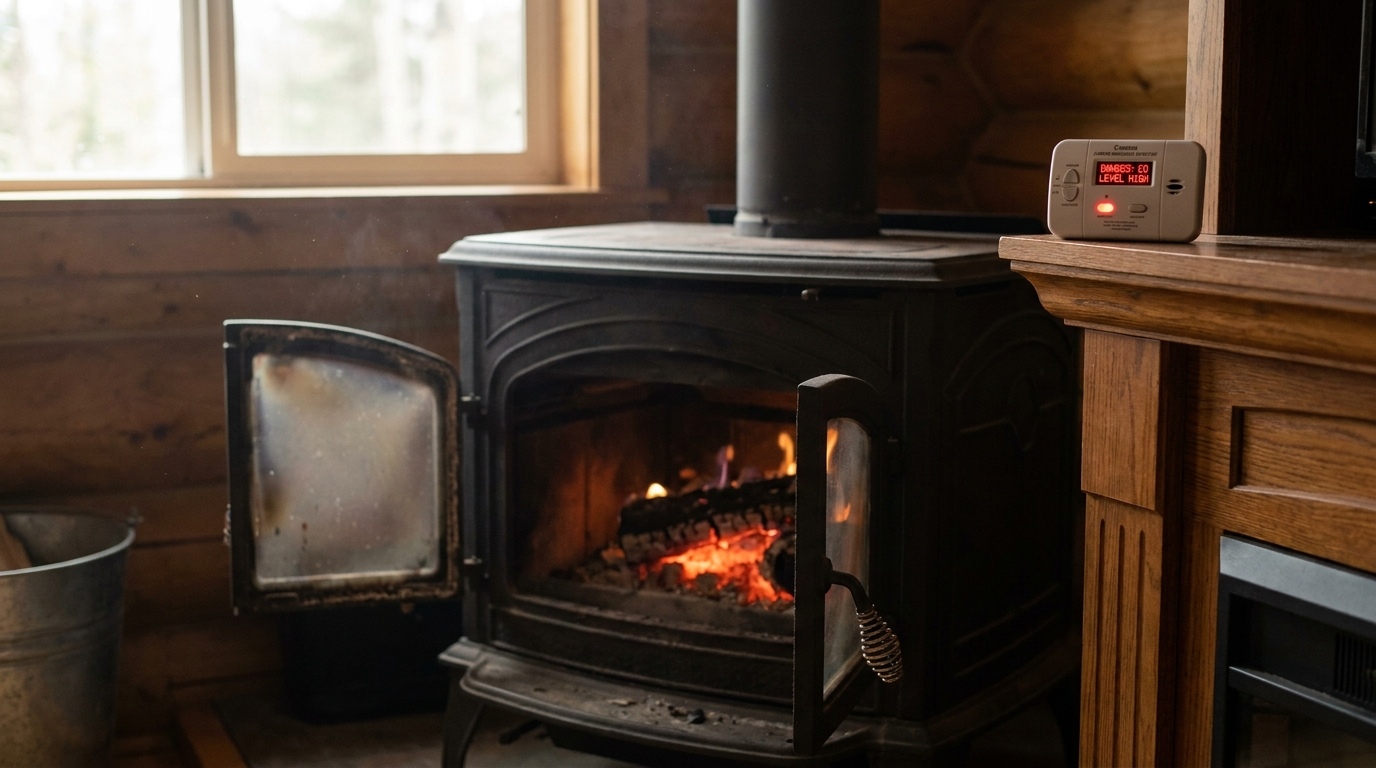
If your carbon monoxide alarm goes off or you notice these symptoms, evacuate immediately to fresh air and call 9-1-1 from a safe location.
Early Symptoms Overview
When carbon monoxide starts accumulating from a wood stove, you might first notice subtle symptoms like headaches that signal early exposure.
These initial signs warn you that dangerous gas levels are rising and immediate action is necessary.
Pay close attention to your body, as early detection can prevent more severe poisoning.
Common early symptoms include:
- Headaches – Result from reduced oxygen delivery to the brain caused by CO binding to hemoglobin.
- Mild dizziness – Indicates impaired oxygen transport and slight neurological effects.
- Fatigue or weakness – Reflects decreased cellular oxygen availability affecting muscle function.
Recognizing these signs quickly helps you respond to carbon monoxide buildup.
Ideally, ventilate the area and check your stove and flue for malfunctions.
Because carbon monoxide detectors are specifically designed for CO, it is important to have separate natural gas detectors to monitor for other potential hazards.
Moderate Poisoning Indicators
As carbon monoxide exposure increases beyond initial symptoms, moderate poisoning indicators emerge and demand immediate attention.
You may experience nausea and dizziness, signaling that CO levels in your environment are rising to harmful thresholds.
These symptoms result from the gas’s interference with oxygen transport in your bloodstream, reducing cellular oxygenation.
Additionally, confusion and difficulty concentrating arise as the brain becomes deprived of adequate oxygen, impairing cognitive functions.
If you notice these signs while using a wood-burning stove, promptly ventilate the area and seek fresh air.
Continuing exposure at this stage can worsen your condition rapidly.
Recognizing these moderate indicators early is critical to prevent progression to severe poisoning and to guarantee timely medical intervention.
Installing carbon monoxide detectors near combustion appliances can provide early warning and improve safety.
Severe Exposure Effects
Although moderate symptoms signal rising carbon monoxide levels, severe exposure effects pose immediate life-threatening risks requiring urgent response. If you experience severe poisoning, your body is under critical distress from oxygen deprivation caused by high CO concentrations. Recognize these urgent signs:
- Loss of consciousness indicates critical brain hypoxia and requires immediate medical attention.
- Severe confusion and disorientation reflect significant neurological impairment needing emergency intervention.
- Respiratory failure, difficulty breathing or cessation of breath signals imminent danger and demands prompt action.
If you notice any of these, evacuate the area immediately, call emergency services, and seek medical care. Carbon monoxide disrupts oxygen transport at the cellular level.
Early recognition of severe symptoms is essential to preventing fatal outcomes. Never ignore worsening symptoms when using wood-burning stoves. For enhanced safety, consider installing carbon monoxide detectors to provide early warnings of dangerous gas levels.
Risk Factors That Increase Carbon Monoxide Leaks
Because carbon monoxide (CO) is a colorless, odorless gas, you must be aware of specific risk factors that increase its escape from wood stoves into living spaces.
Carbon monoxide is colorless and odorless, so understanding risk factors is crucial for safe wood stove use.
Restricted draft settings can trap CO inside the stove instead of venting it outdoors.
Damaged or cracked flue systems allow harmful gases to leak indoors.
Chimney blockages caused by debris or animal nests impede proper ventilation, increasing CO buildup.
Negative air pressure from appliances like clothes dryers and exhaust fans can pull CO back into your home.
Additionally, using a flue that’s inadequately sized for your heating system prevents efficient gas extraction, raising the risk of CO leakage.
Monitoring these factors helps you maintain safe indoor air quality when operating a wood-burning stove.
Proper ventilation and regular maintenance are essential to prevent blocked vents that can worsen CO buildup and related hazards.
How Incomplete Combustion Raises Carbon Monoxide Levels?
When wood burns without enough oxygen, it leads to incomplete combustion. This process produces higher levels of carbon monoxide, which can be pretty concerning.
You know how smoldering coals and creosote buildup inside the stove can worsen this situation? They actually increase CO emissions even more. Understanding what causes this can really help you reduce the risk of dangerous gas buildup in your home.
To monitor safety effectively, devices like security cameras use a unique identifier called UID for secure remote access and management.
Causes Of Incomplete Combustion
Incomplete combustion occurs whenever the wood stove fails to burn fuel efficiently, resulting in insufficient oxygen supply or improper burning conditions. This inefficiency causes carbon monoxide levels to rise because the carbon in wood doesn’t fully oxidize into carbon dioxide.
You should be aware of common causes:
- Restricted airflow: Blocked vents or dampers limit oxygen, forcing smoldering rather than clean burning.
- Wet or unseasoned wood: High moisture content reduces combustion temperature, preventing complete oxidation.
- Poor stove maintenance: Creosote buildup and soot restrict airflow and insulate heat, lowering combustion efficiency.
Effects On Carbon Monoxide
The inefficiencies in combustion directly increase carbon monoxide levels by preventing the carbon in wood from fully oxidizing into carbon dioxide.
When combustion is incomplete, unburned carbon combines with oxygen insufficiently, producing CO instead of CO2.
Factors like smoldering coals, restricted airflow, or damp wood exacerbate this process, raising toxic gas concentrations.
You’ll notice that creosote buildup inside the flue also impairs airflow, further promoting incomplete combustion and CO formation.
This gas coats the interior surfaces, reducing stove efficiency and increasing health risks.
Since CO is odorless and colorless, you won’t detect it without a monitor.
Understanding how incomplete combustion elevates CO levels emphasizes the need for proper fuel, airflow, and maintenance to guarantee safe wood stove operation and minimize dangerous carbon monoxide exposure.
Why Creosote and Soot Make Carbon Monoxide Worse?
Creosote and soot build up inside your wood stove’s flue as byproducts of combustion. This markedly worsens carbon monoxide production. These substances interfere with the stove’s ability to vent gases effectively, causing incomplete combustion that elevates CO levels. Understanding their impact helps you maintain safer stove operation.
- Restriction of airflow: Creosote and soot narrow the flue passage. This reduces oxygen flow necessary for complete combustion, thereby increasing CO generation.
- Acceleration of chemical reactions: Creosote contains volatile compounds that, when heated, promote further CO formation through incomplete oxidation.
- Insulation effect: The buildup acts as an insulating layer. This causes heat retention that disrupts normal combustion temperatures, leading to inefficient burning and higher CO emissions.
Regular cleaning minimizes these hazards and ensures safer air quality in your home.
Fuels to Avoid for Safer Wood Stove Operation
Maintaining clean flues is only part of ensuring safe wood stove use. The types of fuels you burn also play a significant role in carbon monoxide production and overall safety.
Clean flues are essential, but choosing the right fuel is crucial for safe and efficient wood stove use.
You should avoid treated or painted wood, as burning these releases toxic chemicals and increases CO emissions. Wet wood is another fuel to avoid because it promotes creosote buildup, which impedes ventilation and raises carbon monoxide risks.
Never burn plastic materials or household trash, as they emit hazardous fumes and can damage your stove’s components.
Steer clear of cardboard and wrapping paper, which generate excessive smoke and dangerous gas buildup. This undermines efficient combustion and safe operation.
How to Prevent Carbon Monoxide Poisoning With Your Stove?
Regularly inspecting and adjusting your wood stove’s draft settings can materially reduce carbon monoxide buildup. This ensures proper venting of harmful gases outdoors.
Proper draft adjustment optimizes combustion, minimizing incomplete burning that produces CO. To prevent carbon monoxide poisoning with your stove:
- Maintain Clear Ventilation: Check for chimney blockages. Remove debris or creosote that restrict airflow, ensuring efficient gas extraction.
- Use Seasoned Hardwood: Burn only properly dried hardwood. This reduces creosote and CO emissions compared to wet or treated wood.
- Install Carbon Monoxide Detectors: Place certified CO detectors near your stove and living areas. This ensures immediate detection of dangerous gas levels.
Why Regular Maintenance Is Key to Stove Safety?
Keeping your wood stove in peak condition goes beyond adjusting draft settings and choosing the right fuel. You must perform regular maintenance to guarantee safe operation and minimize carbon monoxide risks.
Routine cleaning removes ash and creosote buildup that restricts airflow and promotes incomplete combustion, a primary source of CO. Annual professional inspections detect flue cracks, leaks, or blockages that can allow dangerous gases to escape into your living space.
Maintaining proper stove placement and clearing ventilation pathways prevents negative air pressure that pulls CO indoors. Additionally, removing ashes while leaving a proper base layer guarantees efficient burning.
Neglecting these tasks increases the likelihood of carbon monoxide accumulation, posing serious health hazards. Regular maintenance is your most effective strategy to sustain safe, efficient stove performance and protect your home from toxic gas exposure.
How Carbon Monoxide Detectors Protect Your Home?
A carbon monoxide detector serves as a critical safeguard by constantly monitoring the air quality in your home and alerting you to dangerous CO levels before symptoms develop.
A carbon monoxide detector continuously monitors your home’s air, warning you of dangerous CO levels early.
It detects invisible, odorless CO gas produced during incomplete combustion in wood stoves, providing early warnings that prevent poisoning. You should install detectors near sleeping areas and the stove itself.
Here’s how these devices protect you:
- Continuous Monitoring: They measure CO concentration in real time, triggering alarms when thresholds are exceeded.
- Early Detection: They alert you before CO reaches harmful levels, allowing prompt evacuation or ventilation.
- Maintenance Alerts: Some models indicate low batteries or sensor malfunctions, ensuring reliable operation.
Using carbon monoxide detectors is essential for preventing poisoning and safeguarding your home’s air quality.
Frequently Asked Questions
Can Pets Be Affected by Carbon Monoxide From Wood Stoves?
Yes, your pets can be affected by carbon monoxide from wood stoves.
Like humans, they inhale the gas, which interferes with oxygen delivery in their bodies.
Symptoms in pets include lethargy, vomiting, disorientation, and collapse.
Because pets often can’t communicate discomfort, you need to ensure proper ventilation, maintain your stove and chimney, and install carbon monoxide detectors to protect all household members, including your animals.
How Does Altitude Affect Carbon Monoxide Production in Wood Stoves?
At higher altitudes, reduced oxygen levels contrast sharply with your stove’s need for complete combustion.
This oxygen scarcity causes incomplete burning, increasing carbon monoxide production despite wood’s normal behavior at sea level.
You’ll notice your stove struggles more, producing more CO due to less efficient oxidation.
To counteract this, you must adjust draft settings or increase ventilation to guarantee enough oxygen reaches the fire.
This minimizes dangerous CO buildup and maintains safe stove operation.
Are Pellet Stoves Safer Than Traditional Wood-Burning Stoves?
Yes, pellet stoves are generally safer than traditional wood-burning stoves. They burn manufactured pellets with controlled combustion, producing fewer emissions including carbon monoxide.
You’ll benefit from a more consistent draft and less creosote buildup, reducing CO risks. However, you still must maintain proper ventilation, clean regularly, and use certified carbon monoxide detectors to guarantee safety.
Neglecting these precautions can still lead to hazardous CO exposure.
Can Using a Wood Stove Impact Indoor Air Quality Beyond CO?
When you cozy up to a wood stove, invisible guests like fine particulate matter and volatile organic compounds quietly enter your indoor air.
These byproducts of combustion can reduce air quality, potentially causing respiratory irritation or exacerbating allergies.
You should make certain proper ventilation and regular maintenance to keep these emissions minimal.
What Should I Do if My Carbon Monoxide Detector Sounds While Using the Stove?
If your carbon monoxide detector sounds while using the stove, immediately stop using it and ventilate your home by opening windows and doors.
Leave the premises to get fresh air and call emergency services or a qualified technician to inspect your stove and flue system.
Do not re-enter until professionals confirm it’s safe.
Regular maintenance and proper stove operation reduce risks, but any alarm should always be treated as a serious warning.
Prevent Carbon Monoxide Risks Before They Start
You rely on your wood-burning stove for warmth. Yet it can silently produce deadly carbon monoxide if not properly maintained.
While the cozy glow promises comfort, incomplete combustion risks invisible, odorless gas buildup that threatens your health.
By understanding how CO forms and recognizing warning signs, you can ensure regular maintenance alongside detectors to actively protect your home.
Don’t let warmth become a hazard. Stay informed and vigilant to keep your environment safe and breathable.