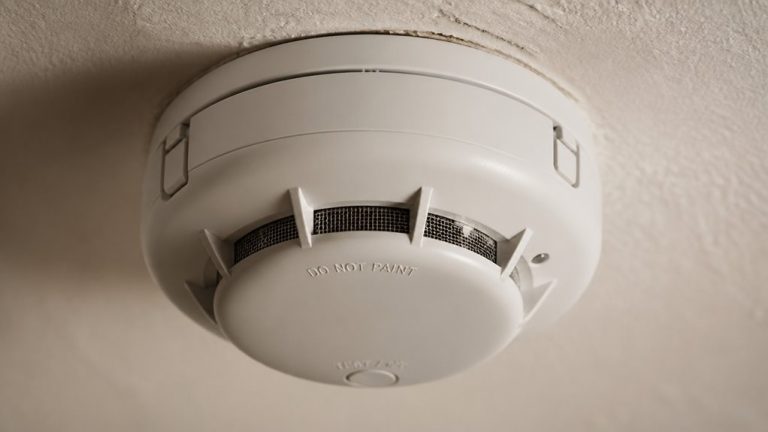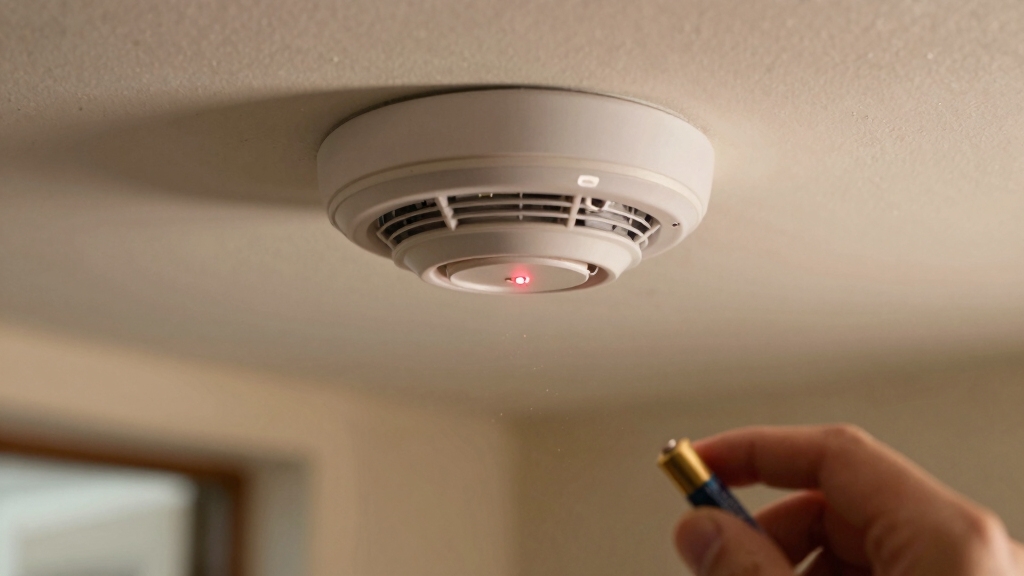

Yes, your smoke detector emits a distinct, regular chirp when its battery is low to signal insufficient power.
This happens because reduced voltage lowers the electrical current in the sensing chamber, triggering a warning that mimics detecting smoke.
Hard-wired units’ backup batteries chirp similarly, often activating all interconnected alarms. Ignoring these chirps risks detector failure during fire events.
You can learn how to stop persistent chirps and maintain reliable operation with proper battery care.
Key Takeaways
- Smoke detectors emit audible chirps, typically every 30 seconds, to signal low battery voltage.
- Low battery voltage reduces electrical current, causing false hazard detection and triggering chirps.
- Hard-wired detectors chirp from backup battery issues and can cause all interconnected alarms to sound.
- Ignoring low-battery chirps risks detector failure and leaves occupants vulnerable during fires.
- Replacing batteries promptly and using recommended types stops chirps and ensures reliable alarm function.
Why Do Smoke Detectors Chirp When Batteries Are Low?
When your smoke detector’s battery voltage drops, it chirps to alert you that the power source is insufficient for reliable operation.
A low battery voltage causes your smoke detector to chirp, signaling the need for replacement.
This low voltage causes a reduction in electrical current within the detector’s sensing chamber.
This mimics the effect of smoke particles blocking ion flow. The detector interprets this current drop as a potential hazard, triggering the chirp.
Battery-operated units typically chirp every 30 seconds to prompt timely replacement.
In hard-wired detectors, a low backup battery during power outages also triggers chirping despite main power presence. This design guarantees continuous monitoring and early warning.
You should replace batteries every six months to one year to maintain proper function and prevent these alerts.
Understanding this mechanism helps you respond promptly, ensuring your detector operates reliably when needed.
Replacing batteries promptly prevents the detector from losing power and ensures the voltage remains above approximately 8.7 volts for proper operation.
How Do Hard-Wired and Battery Smoke Detectors Chirp?
Hard-wired and battery smoke detectors chirp by detecting drops in electrical current caused by low battery voltage.
In battery-powered units, the voltage decline reduces ionization current, which the detector interprets as a fault. This prompts a chirp every 30 seconds.
For hard-wired detectors, the main power source is your home’s electrical system, but they rely on a backup battery during outages.
When this backup battery weakens, it similarly causes current drops, triggering the chirp despite active primary power.
The interconnected design means one unit’s low battery chirp activates all linked alarms.
To stop persistent chirps, you may need to turn off the circuit breaker.
Always use manufacturer-recommended batteries to maintain proper current flow and reliable detection.
Regularly replacing batteries every six months helps prevent these low-battery alerts and ensures consistent detector performance with alkaline batteries.
What Happens If You Ignore Low Battery Alerts?
Although low battery alerts might seem like minor annoyances, ignoring them markedly increases the risk of your smoke detector failing during an actual fire.
The reduced voltage compromises the ionization current or photoelectric sensor response, resulting in unreliable alarm activation.
Eventually, the residual power fully drains, causing the detector to cease functioning altogether.
This failure leaves you without critical early warning in emergencies.
Ignoring low battery alerts leads to:
- Complete alarm shutdown after residual power depletion, eliminating fire detection capability.
- Persistent false alarms triggered by fluctuating low voltage, desensitizing occupants.
- Increased vulnerability to unnoticed fires due to non-functional or unreliable detectors.
Prompt battery replacement is essential to maintain detector reliability and guarantee occupant safety at all times. Additionally, most smoke alarms emit single beeps every 60 seconds to signal low battery status, helping you identify when replacement is needed.
How to Stop Persistent Smoke Detector Chirps?
To stop persistent smoke detector chirps, you need to systematically eliminate common causes such as low or improperly installed batteries, residual power, and compartment issues.
First, replace the battery with a fresh, manufacturer-specified type, ensuring correct polarity and secure placement.
Next, remove the battery and hold the test button for 15 seconds to discharge residual charge from capacitors, which can sustain chirping after battery removal.
Verify the battery compartment closes firmly and contacts are clean to avoid intermittent power loss.
For hard-wired detectors, reset the unit by switching off the circuit breaker for 30 seconds, then restore power.
If chirping persists beyond these steps, the detector may require replacement due to internal faults or complete battery drain.
Always address chirps promptly to maintain reliable smoke detection.
Regular battery maintenance and timely replacement can prevent false alarms and ensure optimal performance.
Best Practices for Maintaining Smoke Detector Batteries
Addressing persistent smoke detector chirps starts with proper battery care. You should replace batteries annually to guarantee consistent voltage and prevent low current that mimics smoke detection.
Persistent smoke detector chirps often signal the need for annual battery replacement to ensure reliable performance.
Test batteries monthly by pressing the test button, verifying the alarm responds correctly. Use manufacturer-specified batteries to maintain device integrity and avoid malfunctions.
Additionally, clean detectors every 1–2 months with compressed air to prevent dust interference.
Replace batteries at least once a year, regardless of chirp status. Conduct monthly functionality tests to confirm battery performance. Use only recommended battery types to guarantee compatibility and safety.
Following these best practices maintains peak sensor operation, prevents false alarms, and safeguards your home against undetected fires caused by battery failures. Consider using sealed 10-year lithium batteries for maintenance-free operation and extended reliability.
Frequently Asked Questions
Can a Dying Battery Cause False Smoke Alarms Besides Chirping?
Yes, a dying battery can cause false smoke alarms beyond just chirping.
As the battery voltage drops, it reduces the electrical current flowing through the detector’s ionization chamber. This mimics the presence of smoke, triggering the alarm falsely.
To avoid these random false alarms, you should replace batteries regularly and test your detector monthly.
Ignoring low battery signals risks both nuisance alarms and compromised fire detection.
How Long Do Smoke Detector Batteries Typically Last Under Normal Conditions?
You’ll find smoke detector batteries typically last between six months and one year under normal conditions.
You’ll need to test them monthly, replace them annually, and clean the units regularly to guarantee reliability.
You’ll avoid false alarms and missed alerts by sticking to this schedule.
You’ll also want to use manufacturer-recommended batteries to maintain peak performance and prevent premature battery failure or chirping caused by low voltage.
What Type of Battery Is Best for Replacing Smoke Detector Batteries?
You should use manufacturer-specified batteries for smoke detectors to guarantee peak performance.
Typically, 9-volt alkaline batteries are recommended for most units due to their stable voltage and long life.
Lithium batteries offer a longer lifespan but at a higher cost, suitable for hard-to-reach detectors.
Avoid rechargeable or carbon-zinc batteries, as they provide inconsistent voltage.
Always check your detector’s manual and replace batteries every 6 to 12 months to maintain reliable operation.
Does Temperature Affect Smoke Detector Battery Life or Performance?
While you might expect stable temperatures to extend battery life, extreme heat or cold actually shortens it, degrading performance.
High temperatures accelerate chemical reactions inside batteries, causing faster depletion.
Cold reduces voltage output, impairing detection sensitivity.
You should store and operate smoke detectors within manufacturer-recommended temperature ranges to guarantee reliable function.
Ignoring this can cause premature battery failure or false alarms, risking your safety by compromising early smoke detection.
Can Cleaning a Smoke Detector Prevent Low Battery Alerts?
Cleaning a smoke detector won’t prevent low battery alerts because these alerts signal voltage drops, not dirt accumulation.
However, regular cleaning with compressed air every 1-2 months removes dust that can interfere with sensor function and cause false alarms.
To avoid low battery chirps, you must replace batteries every 6 to 12 months and test them monthly.
Clean detectors complement proper battery maintenance but don’t replace it.
Stay Ahead of Danger with Timely Battery Replacement
When your smoke detector chirps due to a low battery, don’t hit snooze on the alert. It’s your device’s way of waving a red flag. Ignoring it can leave you vulnerable to unseen dangers.
Whether hard-wired or battery-operated, timely battery replacement keeps your safety net intact. Stay proactive, replace batteries regularly, and make certain your detector is always battle-ready.
After all, a silent alarm is a useless alarm.