
You’ll find security cameras in some classrooms, but their use is limited and strictly regulated to balance safety with privacy.
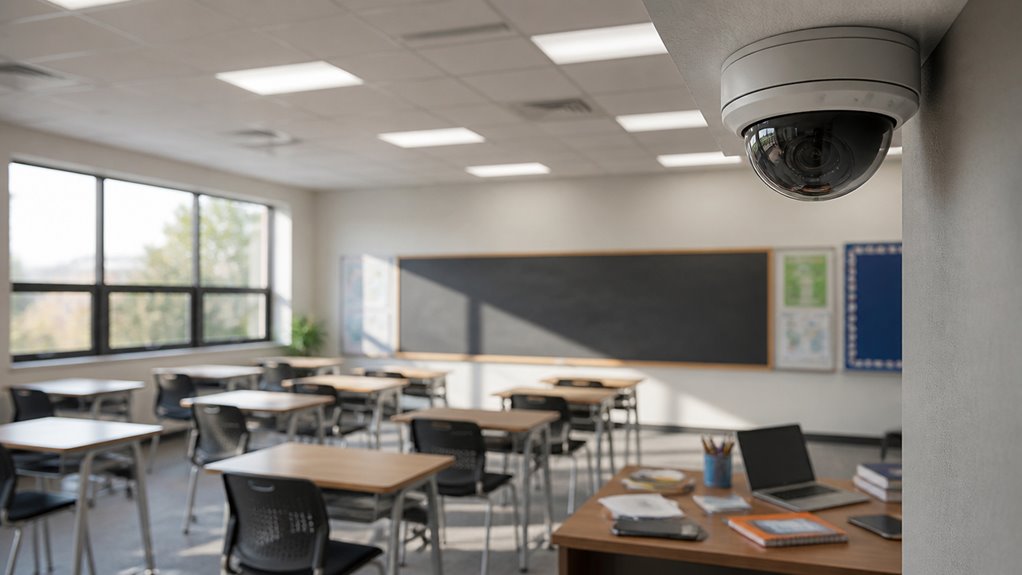
They’re typically placed in upper corners, focusing on entry points while avoiding sensitive areas.
Laws often restrict audio recording, and schools must secure footage with encryption and limit access.
Cameras help deter misconduct and theft but require clear policies, consent, and approvals.
Exploring these considerations further reveals how schools manage this delicate balance.
Key Takeaways
- Security cameras are commonly installed in hallways and entrances but less frequently inside classrooms due to stricter privacy rules.
- Classroom cameras focus on entry points and high-value areas while avoiding sensitive locations like restrooms and locker rooms.
- Cameras enhance student safety, prevent theft, and document incidents, but installation depends on state and local regulations.
- Notification, consent, and visible placement are often required to respect privacy and maintain transparency in classroom surveillance.
- Audio recording in classrooms is generally excluded due to wiretapping laws, and footage must be securely stored with restricted access.
Are Security Cameras Commonly Installed in Classrooms?
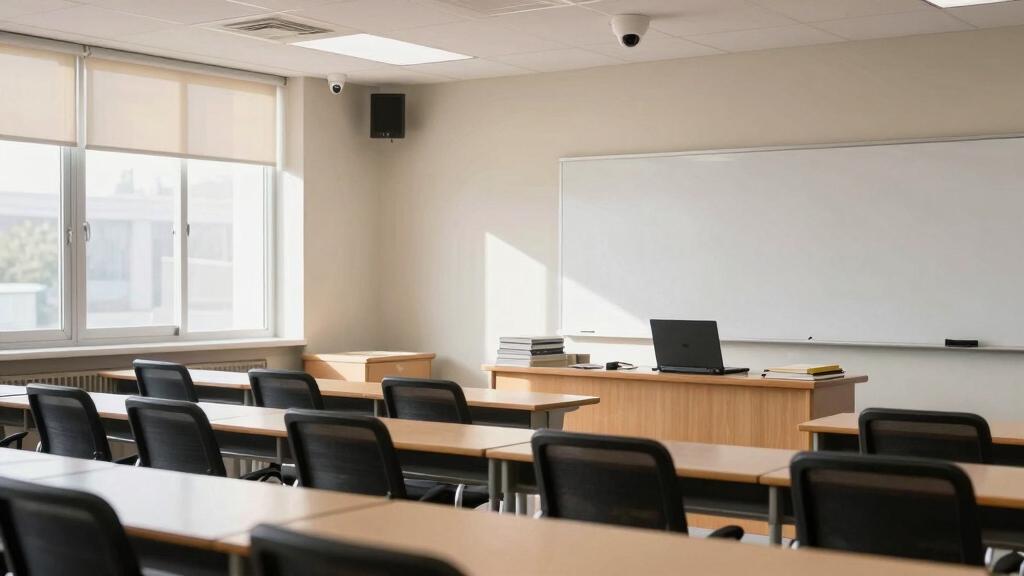
How common is the installation of security cameras inside classrooms? You’ll find that while cameras are widely used in hallways, entrances, and exterior areas, their presence inside classrooms is less frequent.
Security cameras are common in hallways and entrances but less frequently installed inside classrooms.
This limited use reflects legal complexities and privacy concerns. Some schools install cameras to enhance student safety, monitor incidents, or prevent theft, but this depends heavily on state and local regulations.
You should note that classrooms are often subject to stricter rules than common areas, with many districts requiring formal approval before installation. Audio recording is usually excluded due to wiretapping laws.
If cameras are installed, they must be visibly placed and disclosed to comply with transparency standards. Overall, classroom camera use is cautious and varies markedly across jurisdictions.
It is important to respect privacy boundaries by avoiding surveillance that captures sensitive areas or violates legal and ethical standards.
What Laws Affect Classroom Camera Use in Schools?
It’s important to know that there are federal and state laws governing the use of cameras in classrooms. The rules can really vary depending on where you are, so it’s good to keep that in mind.
Privacy protections and consent requirements often play a big role in determining where and how surveillance can happen. So, before you think about installing or operating classroom cameras, make sure to take a close look at the relevant laws. This way, you can ensure that you’re following the right guidelines! Additionally, understanding the difference between offline recording and internet-connected cameras can help balance privacy with monitoring needs.
Federal And State Laws
Although security cameras in classrooms can enhance safety and accountability, their use is tightly regulated by a combination of federal, state, and local laws.
You must understand that federal laws like FERPA restrict how student information, including video footage, is handled.
State laws vary widely; some require explicit approval from school boards or superintendents before installation.
Audio recording often faces stricter limitations due to wiretapping statutes.
You need to make certain cameras are placed only where legally permissible, typically excluding restrooms or locker rooms.
Disclosure of surveillance to relevant parties is commonly mandated, though consent requirements differ by jurisdiction.
Schools should also consider the impact of bypassing security zones when cameras or sensors are temporarily disabled to accommodate certain activities, ensuring that security vulnerabilities are minimized.
Privacy And Consent Rules
Understanding the legal framework surrounding classroom surveillance requires careful attention to privacy and consent rules. These rules directly influence where and how cameras can be used.
You must recognize that federal laws like FERPA and various state statutes govern student privacy. They outline specific conditions for video use.
Consent and notification are often mandatory. Additionally, audio recording usually faces stricter restrictions due to wiretapping laws.
To comply, consider these key points:
- Notify parents, teachers, and staff before installation.
- Obtain written consent where required by jurisdiction.
- Avoid placing cameras in areas with a reasonable expectation of privacy.
- Restrict access to footage to authorized personnel only.
- Securely store recordings with encryption and limit retention periods.
Following these rules helps guarantee lawful and ethical use of classroom cameras. Proper placement and clear signage, similar to safety practices with fire extinguisher visibility, also contribute to maintaining transparency and awareness in monitored environments.
How Do Schools Handle Camera Privacy, Consent, and Audio Recording?
When it comes to installing cameras in classrooms, you really have to tread carefully around privacy laws. It’s important to provide clear disclosures and, in many cases, you’ll need to get written consent from parents or staff. This kind of transparency helps everyone feel more comfortable about the situation.
Now, when it comes to audio recording, the rules get even stricter. You typically need explicit permission because of wiretapping regulations. It’s a pretty big deal. So, ensuring compliance isn’t just a suggestion; it’s a must.
And don’t forget about data security! You’ll want to restrict access to those recordings and make sure that any stored data is secured according to state and federal guidelines. Keeping everything above board protects everyone involved.
Additionally, understanding motion detection mechanisms can help schools better manage camera use and privacy settings to avoid unnecessary surveillance.
Privacy Laws and Consent
When schools install security cameras, they must carefully navigate privacy laws and consent requirements to stay compliant. Federal and state regulations heavily influence where and how cameras can operate, especially in classrooms.
Transparency is key: notifying parents, staff, and sometimes obtaining written consent is often mandatory. Areas with a reasonable expectation of privacy are typically off-limits for surveillance. Cameras should be placed visibly to avoid legal challenges.
Key considerations include:
- Compliance with FERPA and relevant state laws
- Prior notification to all stakeholders
- Written consent when required by jurisdiction
- Avoiding surveillance in private spaces like restrooms
- Securing footage access to authorized personnel only
Regular maintenance and clear operational protocols help ensure ongoing compliance and functionality, similar to how routine cleaning and inspection maintain reliable safety devices.
Audio Recording Restrictions
Although video surveillance is common in schools, audio recording faces tighter restrictions due to wiretapping laws and privacy concerns.
You should know that many jurisdictions prohibit audio capture without explicit consent from all parties involved.
Schools often avoid audio to comply with federal and state statutes, minimizing legal risk.
If audio recording is permitted, you’ll typically see strict protocols: clear disclosure, documented consent, secure encrypted storage, and limited access to authorized personnel only.
Additionally, retention periods are strictly enforced, commonly ranging from 30 to 90 days.
You must understand that improper audio recording can lead to serious legal consequences, so schools handle it cautiously, prioritizing privacy while balancing safety and accountability.
Always check local laws before assuming audio surveillance is allowed in classrooms.
Visible cameras create a psychological barrier signaling high risk and low reward for offenders, making criminals think twice about surveillance presence.
Why Do Schools Choose to Install Classroom Cameras?
Schools install classroom cameras primarily to enhance student safety and maintain a secure learning environment.
These cameras serve as a deterrent against bullying, violence, and misconduct. They also help document incidents objectively, supporting fair investigations and accountability for both students and staff.
Additionally, cameras protect valuable equipment from theft and vandalism. When considering their implementation, you must also factor in legal compliance, privacy concerns, and proper disclosure.
Key reasons include:
- Deterring bullying and violence
- Documenting incidents for investigations
- Enhancing accountability of staff and students
- Preventing theft of classroom equipment
- Supporting rapid response to emergencies
Many indoor cameras like dome or turret types are chosen for classrooms due to their vandal-resistant design and adaptability to indoor lighting conditions.
Where Are Classroom Cameras Usually Placed?
Understanding where classroom cameras are typically installed helps clarify how they contribute to safety and oversight.
You’ll often find cameras mounted in unobtrusive locations like upper corners of classrooms, positioned to capture wide-angle views without invading privacy.
Schools avoid placing cameras in sensitive areas such as restrooms, locker rooms, or changing spaces to comply with privacy laws and ethical standards.
Entry points, such as doors and windows, are common focus areas, allowing monitoring of access and egress.
Cameras may also be installed near equipment storage or high-value items to deter theft.
Placement decisions must balance effective surveillance with minimizing disruption and respecting reasonable privacy expectations.
Following legal guidelines and district policies ensures cameras serve their intended protective functions without overreach.
Additionally, cameras are typically mounted at heights that maximize coverage while reducing the risk of tampering, adhering to mounting height recommendations to optimize their effectiveness.
How Do Schools Store and Secure Classroom Camera Footage?
When handling classroom camera footage, districts must implement strict protocols to guarantee data security and compliance with legal requirements.
Districts must enforce strict protocols to ensure classroom camera footage remains secure and legally compliant.
You should make sure footage is encrypted during storage and transmission to prevent unauthorized access. Access controls must restrict viewing to authorized personnel only, typically through password protection and multi-factor authentication.
Retention policies commonly mandate deleting footage after a set period, often 30 to 90 days, to comply with privacy laws. Regular audits and monitoring help detect potential breaches or misuse.
Key practices include:
- Encrypting stored and transmitted video data
- Restricting access to authorized users only
- Implementing strict retention and deletion schedules
- Maintaining audit trails for access and usage
- Using secure, centralized storage systems with backups
Additionally, districts should ensure cameras and storage systems receive firmware updates regularly to maintain security and performance.
These measures protect privacy and uphold regulatory compliance.
What Benefits Do Classroom Cameras Provide for Safety and Discipline?
Securing and managing classroom camera footage lays the foundation for leveraging surveillance systems effectively.
When you use cameras, you enhance safety by deterring bullying, violence, and theft. You also gain objective records for incident review, which supports fair discipline and accountability among students and staff.
Real-time monitoring can speed emergency response, reducing risks.
| Benefit | Description | Impact |
|---|---|---|
| Deterrence | Cameras increase perceived oversight | Reduced misconduct |
| Incident Documentation | Recorded footage supports investigations | Clearer disciplinary outcomes |
| Emergency Response | Allows rapid intervention during emergencies | Enhanced student safety |
What Rules Govern Audio Recording in Classroom Cameras?
Although video recording in classrooms is commonly permitted under certain legal frameworks, capturing audio introduces additional complexities due to stricter wiretapping laws and privacy concerns.
While video recording is often allowed, audio capture entails stricter legal and privacy challenges.
You must understand that audio recording often requires explicit consent from all parties involved, which can include students, teachers, and staff. Many jurisdictions prohibit audio capture without such consent, making compliance essential.
Before installing audio-enabled cameras, verify applicable federal, state, and local laws. Obtain necessary approvals from school boards or superintendents. Additionally, secure storage and restricted access to recordings are critical to protect privacy.
Key points to contemplate include:
- Audio recording usually demands explicit consent under wiretapping statutes.
- FERPA and other privacy laws may restrict audio capture in classrooms.
- Written permissions might be mandatory in some states or districts.
- Secure encryption and controlled access safeguard recorded audio.
- Unauthorized audio surveillance can lead to legal consequences.
Frequently Asked Questions
How Do Students and Parents Typically Feel About Classroom Camera Use?
You’ll find that students and parents often feel cautious or uneasy about classroom cameras. They worry about privacy, fearing constant monitoring might affect trust and comfort in learning.
Some accept cameras for safety and accountability, but many want clear policies, transparency, and consent before installation. Concerns increase if audio recording is involved or if footage access isn’t strictly controlled.
This emphasizes the need for balanced security and privacy safeguards.
Are Teachers Trained to Use and Manage Classroom Surveillance Systems?
Yes, you typically receive specific training to use and manage classroom surveillance systems.
This training covers proper camera operation, privacy compliance, and secure handling of footage. You’ll learn legal restrictions, such as avoiding audio recording where prohibited, and protocols for accessing and storing recordings safely.
Training guarantees you understand consent requirements and limits on footage use. This helps you maintain transparency and protect all parties’ rights responsibly.
What Technology Features Enhance Classroom Camera Effectiveness?
Think of advanced classroom cameras as watchful sentinels equipped with night vision, wide-angle lenses, and motion detection.
Each feature sharpens your oversight.
You’ll benefit from encrypted cloud storage to safeguard footage and AI-driven analytics that flag unusual behavior or unauthorized access.
Real-time alerts guarantee swift response, while remote access lets you monitor from anywhere.
Can Classroom Cameras Be Integrated With Other School Security Systems?
Yes, you can integrate classroom cameras with other school security systems like access control, intrusion alarms, and emergency notification platforms. This integration allows centralized monitoring and quicker incident response.
However, you’ll need to ensure compatibility between devices and comply with privacy laws restricting audio capture and footage access.
Always configure secure data storage and restrict access to authorized personnel to maintain legal and ethical standards while enhancing overall security effectiveness.
How Do Schools Address Potential Technical Malfunctions of Cameras?
You address potential technical malfunctions by implementing routine maintenance schedules and real-time system monitoring.
You assure firmware and software updates are applied promptly to prevent vulnerabilities.
Backup power supplies and redundant recording systems help avoid data loss during outages.
Regular testing verifies camera functionality, and you train designated staff to identify and report issues quickly.
Establishing clear protocols for troubleshooting and vendor support minimizes downtime and maintains surveillance reliability.
Keep School Surveillance Safe and Transparent
So, you want cameras watching every moment you spend in class? Don’t worry, schools follow strict laws and privacy rules because who wouldn’t want Big Brother as a hall monitor?
With careful placement, secure storage, and clear audio recording guidelines, they’re less about spying and more about safety and discipline. Just remember, your classroom performance might be streamed to the future’s security archive all in the name of education and order.