
A pool alarm works by sensing changes in water movement, pressure, or entry points around your pool.
Surface wave alarms float and detect ripples or splashes, while subsurface alarms monitor underwater pressure changes.
Perimeter alarms track door or gate openings, and personal immersion alarms activate upon water contact on the body.
These systems trigger audible alerts to help you respond quickly to potential dangers.
Keep exploring to understand each alarm type’s functions and installation specifics.
Key Takeaways
- Pool alarms use specialized sensors to detect unexpected motion, entry, or disturbances in or around the pool environment.
- Surface wave alarms float on the pool and trigger alerts when ripples or waves exceed preset sensitivity thresholds.
- Subsurface alarms monitor underwater pressure changes caused by motion, activating alarms when someone or something enters the pool.
- Perimeter alarms detect openings of doors, gates, or windows leading to the pool using magnetic or proximity sensors.
- Personal immersion alarms worn by swimmers activate upon water contact, alerting caregivers immediately to potential accidental pool entry.
How Pool Alarms Detect Intrusions and Movement?
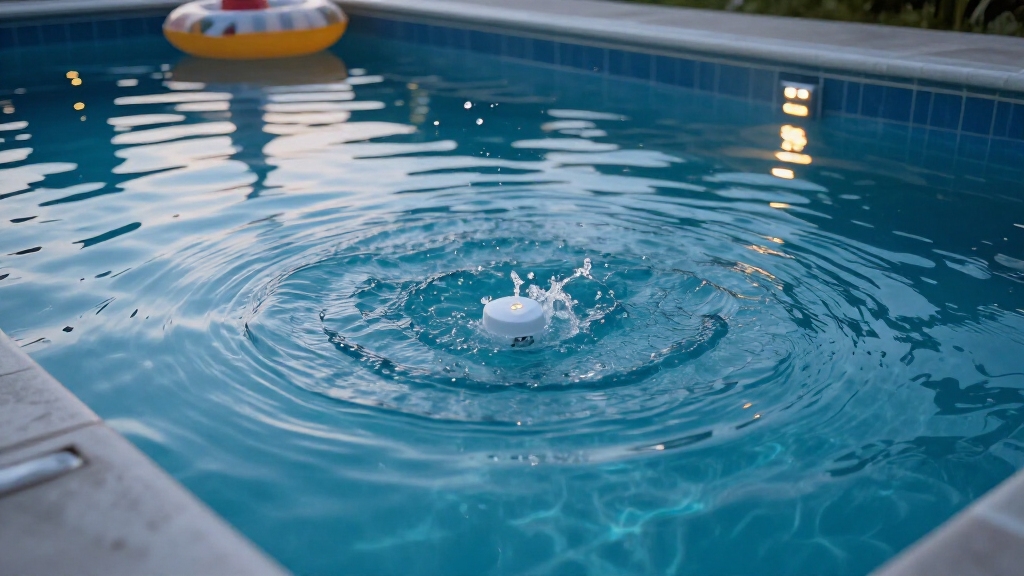
Pool alarms detect intrusions and movement by using specialized sensors that monitor changes in or around the pool environment.
Pool alarms use advanced sensors to detect any movement or intrusion near the pool area.
You rely on these sensors to identify unexpected motion, entry, or disturbances. When crossing a predefined threshold, they trigger an audible alarm.
This immediate alert allows you or other caregivers to respond quickly to potential hazards. Some alarms focus on detecting entry directly into the pool water.
Others monitor access points such as doors, gates, or pool perimeters. The alarm output is designed for rapid activation, ensuring minimal delay between intrusion detection and warning.
Advanced systems may integrate with on-device AI to reduce false alarms and improve detection accuracy.
Surface Wave Pool Alarms: How They Detect Water Disturbances
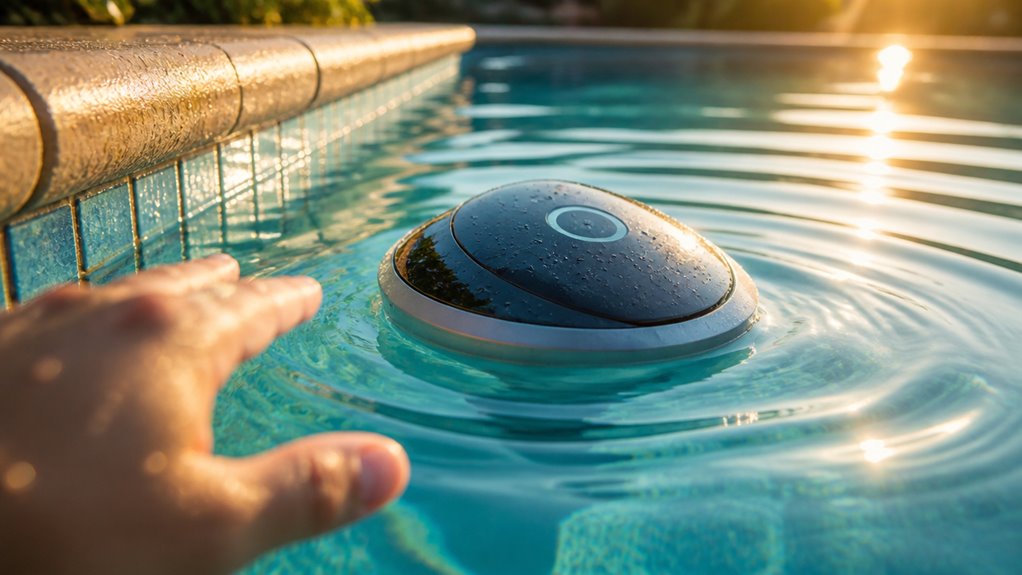
When placed on the water’s surface, surface wave alarms detect disturbances by monitoring ripples, waves, and splashes that interrupt or complete an internal sensor circuit.
You’ll find these alarms float directly on the pool, using sensitive sensor arrays that trigger an audible alert once the surface motion exceeds a preset threshold.
This detection method focuses on surface-level disruptions caused by unexpected entry or objects hitting the water.
While effective for quick warning, you should know surface wave alarms can generate false alarms from wind, pool equipment, or normal activity creating waves.
Proper placement and calibration are essential to minimize false triggers.
These alarms conform to ASTM residential alarm standards and serve as a critical safety layer by rapidly identifying surface disturbances indicating potential intrusions.
For enhanced safety, it is important to follow local codes and standards when installing pool alarms to ensure proper coverage and reliability.
Subsurface Pool Alarms: Detecting Underwater Movement
Detecting underwater movement relies on sensors placed below the pool’s surface to monitor pressure changes or disturbances caused by entry.
Subsurface pool alarms typically use pressure-sensitive switches or magnetic floats paired with sensors to identify shifts in water pressure or movement beneath the surface.
When you install these sensors correctly, they detect underwater motion resulting from a person or object entering the pool, triggering an immediate audible alarm.
These alarms often outperform surface models in pools with irregular water movement since they focus on subsurface pressure changes rather than surface ripples.
However, you should consider that water circulation or strong agitation may cause false alarms.
Proper placement and calibration are essential to guarantee reliable detection and minimize nuisance alerts in your subsurface pool alarm system.
Regular maintenance and testing are crucial to prevent false alarms and ensure the system functions properly over time.
Perimeter, Gate, and Door Alarms for Pool Safety
While subsurface alarms focus on disturbances below the water, perimeter, gate, and door alarms monitor access points around the pool area to prevent unauthorized or accidental entry.
You’ll find these alarms use magnetic or proximity sensors to detect the opening of doors, gates, or windows leading to the pool. Once triggered, they emit a loud audible signal, typically at least 85 decibels at 10 feet, to alert caregivers immediately.
Many jurisdictions require these alarms to activate within 7 seconds of access point opening and to sound continuously for at least 30 seconds.
Proper installation guarantees the sensors detect separation between gate and frame or door and jamb, maintaining pool safety by preventing unsupervised access before a potential pool immersion event occurs.
For optimal performance, it is crucial to test sensors regularly and ensure batteries are replaced promptly to maintain reliable pool safety monitoring.
Personal Immersion Alarms: What They Do and When to Use
Although pool alarms generally focus on monitoring pool access points or water surface disturbances, personal immersion alarms provide a unique layer of protection by being worn on the body.
These devices activate upon detecting water contact, usually through moisture-triggered sensors, alerting caregivers immediately if the wearer enters water unexpectedly.
You’ll find them especially useful for supervising young children or individuals who may accidentally fall into the pool.
However, keep in mind that these alarms can produce false alerts from ordinary water exposure like rain or handwashing.
Personal immersion alarms are recognized under ASTM F2208 standards, emphasizing their role as supplemental safety tools rather than replacements for barriers or active supervision.
Use them in conjunction with other safety measures to enhance overall pool protection effectively.
For maximum effectiveness, it is important to regularly test and maintain personal immersion alarms, similar to how smoke alarm maintenance is performed to ensure reliable operation.
Frequently Asked Questions
Are Pool Alarms Waterproof and Weather-Resistant for Outdoor Use?
Yes, most pool alarms designed for outdoor use are both waterproof and weather-resistant to withstand poolside conditions.
Surface and subsurface alarms are built to function submerged or floating on water.
Perimeter and gate alarms endure rain and humidity.
However, you should always check the manufacturer’s specifications to make certain the alarm meets ASTM F2208 standards and is suitable for your climate.
Proper installation helps maintain durability and reliable performance.
How Often Should Pool Alarm Batteries Be Replaced or Maintained?
You might worry about frequent battery changes, but to keep your pool alarm reliable, replace batteries every 6 to 12 months.
Regularly check battery status according to the manufacturer’s guidelines, since weak batteries can cause false alarms or failure.
Some alarms have low-battery indicators; don’t ignore them.
For peak performance, test the system monthly and maintain batteries proactively. This ensures your alarm stays fully operational and ready to alert you instantly.
Can Pool Alarms Be Integrated With Home Security Systems?
Yes, you can integrate pool alarms with home security systems, especially models with smart capabilities or outputs compatible with security panels. This allows you to monitor pool safety alongside other home sensors from a single interface.
Integration often involves connecting alarms via wired inputs, wireless signals, or smart home hubs. However, make certain the pool alarm supports such connectivity and follow manufacturer guidelines for proper installation and system compatibility.
Do Pool Alarms Comply With Local Safety Regulations and Building Codes?
Yes, pool alarms often comply with local safety regulations and building codes, especially when they meet ASTM F2208 standards.
You’ll find that states like Florida require certified alarms for residential pools.
However, compliance varies by jurisdiction, so you should verify local codes.
Remember, pool alarms act as warning devices and don’t replace barriers or supervision.
Proper installation and certification guarantee your system meets safety mandates and functions effectively.
What Is the Typical Lifespan of a Residential Pool Alarm System?
Think of your pool alarm as a vigilant sentinel, typically lasting around 5 to 7 years with proper maintenance.
You’ll want to regularly check sensors, batteries, and wiring to guarantee peak function.
Environmental factors like humidity or pool chemicals can shorten its lifespan, so keep it clean and protected.
Replacing components as recommended by the manufacturer helps maintain reliability, ensuring your alarm stays a dependable guardian for your pool safety over time.
How Does a Pool Alarm Work? Final Safety Tips
Now that you understand how pool alarms sense movement, whether through surface ripples, underwater shifts, or entry points, you can appreciate the subtle guardians they are.
These devices don’t just alert you; they quietly enhance safety by detecting unexpected activity before it becomes a concern.
By choosing the right alarm for your pool environment, you’re investing in a discreet layer of protection that keeps every splash under watchful eyes.
This gives you peace of mind with every dip.