
Your heater’s beeping usually signals faults like overheating, safety sensor triggers, or power interruptions. It may indicate blocked vents, wiring issues, low batteries, or maintenance alerts such as filter replacement.
Gas heaters beep for ignition failures or combustion problems, while water heaters alert you to leaks or pressure issues. Check vents, power connections, and sensor status first.
Persistent alarms often mean you need a technician. There’s more to know about identifying codes, troubleshooting, and preventive care.
Key Takeaways
- Heater beeping often signals faults like overheating, safety switch activation, or maintenance alerts such as filter replacement.
- Power interruptions, wiring faults, or low control batteries commonly cause intermittent or repeated beeping noises.
- Combustion heaters beep due to ignition failures, blocked vents, or defective flame sensors indicating safety shutdowns.
- Moisture near leak detectors or overheating in water heaters triggers persistent beeps warning of potential damage.
- Inspect vents, wiring, and sensors; call a technician if beeping persists after basic troubleshooting or error code resets.
Common Causes of Heater Beeping
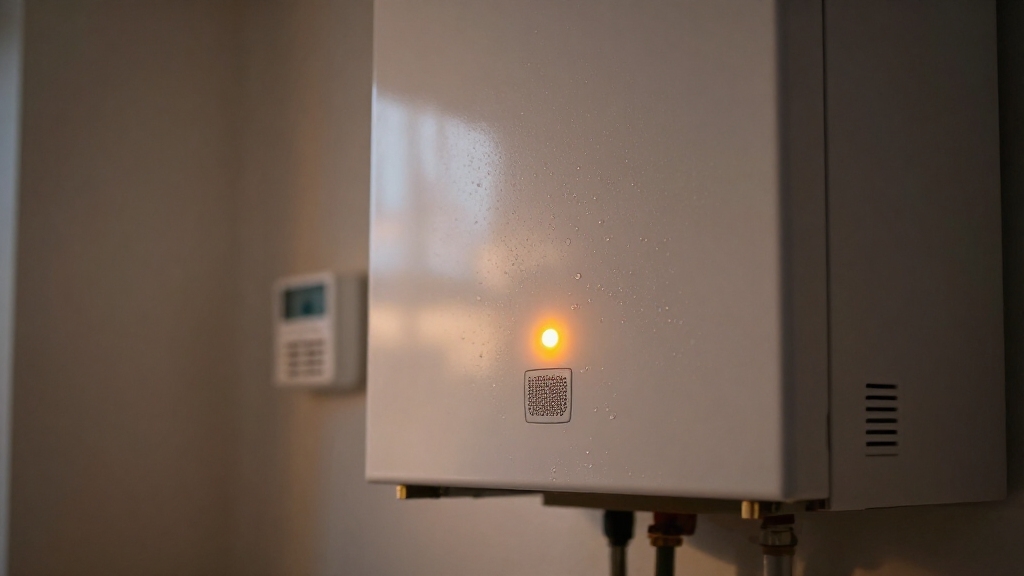
When your heater starts beeping, it usually signals a fault or safety issue detected by the electronic control board. Common causes include maintenance alerts, such as filter replacements or routine service reminders.
Heater beeping often indicates a fault or maintenance alert detected by the electronic control board.
Overheating protection often triggers beeps to warn you of dangerous temperature levels. Safety switches like tip-over sensors, child locks, or blocked airflow detectors can activate alarms to prevent hazards.
Additionally, wiring faults or power interruptions may cause intermittent beeping. To diagnose, check for error codes displayed on the unit and inspect for airflow obstructions, proper unit positioning, and visible damage.
Addressing these factors early helps avoid shutdowns or lockouts. If beeping persists after basic checks, it likely indicates a deeper control or sensor malfunction requiring professional evaluation. High or low ambient temperatures can also affect sensor accuracy and cause false beeping due to temperature-induced sensor anomalies.
How Power Problems Cause Heater Beeping?
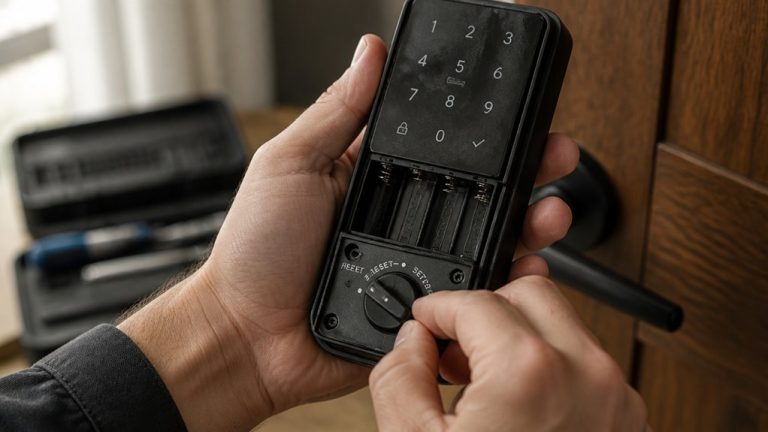
You might hear your heater beeping if there are any power interruptions that disrupt its normal operation. It can be pretty annoying, right? Sometimes, wiring issues can send erratic signals, which trigger those pesky fault alarms.
Then there are those voltage dips, which can also cause your system to reset or even shut down, and guess what? That usually comes with some warning beeps. So, if you’re dealing with beeping, it’s a good idea to check your power supply and connections. It’s crucial for figuring out what’s going on with those electrical triggers!
Additionally, low thermostat batteries can cause erratic signals and intermittent operation, leading to beeping noises and heating disruptions.
Power Interruptions Impact
Although power interruptions may seem minor, they can cause your heater’s electronic control board to emit beeping alerts. When power fluctuates or briefly cuts out, the control board may interpret this as a fault condition, triggering an alarm to notify you of potential issues.
These interruptions can cause the system to reset unexpectedly or lose stored diagnostic codes. This may lead to repeated beeping during startup or operation. Additionally, voltage dips may disrupt sensor signals or communication between components, prompting the control board to signal an error.
To diagnose, verify your power supply stability and inspect for recent outages. If beeping persists after power is stable, consider other faults before resetting the heater. Repeated interruptions can mask underlying control or sensor malfunctions requiring professional attention. It is also important to enter the security code on your alarm keypad to silence tamper alerts that may coincide with power issues.
Wiring Issues Effects
Since wiring issues disrupt the stable flow of electricity, they often cause your heater to emit intermittent or continuous beeping alerts.
Faulty connections, damaged wires, or loose terminals can create electrical noise or intermittent power loss, triggering the control board’s fault detection.
This instability may cause your heater’s safety circuits to activate, producing beeps to warn of potential hazards.
Additionally, wiring faults can interfere with sensor signals, leading to false error codes and repeated alarms.
When diagnosing, inspect wiring for visible damage, corrosion, or poor connections at terminals and junctions.
Use a multimeter to verify continuity and voltage stability.
Addressing wiring problems promptly prevents erratic heater behavior and reduces the risk of control board damage or unexpected shutdowns caused by power irregularities.
Loose or corroded connections increase resistance and can cause localized heating, which further contributes to wiring instability and beeping alerts related to poor electrical connections.
Voltage Dips Consequences
When voltage dips occur, your heater’s control board can misinterpret the reduced power as a fault, triggering beeping alerts.
These brief drops in voltage disrupt normal operation and can cause the system to shut down or enter a lockout mode.
Frequent dips may degrade electronic components, leading to persistent alarms or failure.
| Voltage Dip Effect | Heater Response |
|---|---|
| Temporary power drop | Beeping, shutdown |
| Prolonged low voltage | Lockout, error codes |
| Fluctuating voltage | Intermittent beeps |
| Component stress | Permanent faults |
Monitoring your power supply stability and ensuring proper wiring can prevent these issues and reduce false alarms caused by voltage dips. Checking for power supply troubles using the alarm panel’s trouble menu can help diagnose if voltage dips are triggering the beeping.
Combustion Issues That Make Gas Heaters Beep
If your gas heater starts beeping, it often signals combustion-related problems that require immediate attention.
Gas heater beeping usually indicates combustion issues needing prompt attention to ensure safety.
These beeps typically indicate safety mechanisms activating due to abnormal combustion conditions. You should diagnose the issue promptly to prevent hazardous situations.
Common combustion triggers for beeping include:
- Ignition failure or repeated unsuccessful start attempts
- Blocked or disconnected venting causing improper exhaust flow
- Defective flame sensor, pressure switch, or combustion fan malfunction
- Exhaust or combustion-air faults leading to unit shutdown
- Ice, debris, or back-drafting obstructing airflow
You should inspect vents, sensors, and ignition components carefully. If beeping persists after clearing blockages, seek professional service for thorough combustion system diagnostics and repair.
Additionally, yellow or flickering flames on your gas heater can indicate incomplete combustion, which is a common cause for beeping alarms and increased carbon monoxide risk.
Water Heater Beeping: Leaks and Pressure Alerts
Gas heater beeping often relates to combustion issues, but water heaters have their own distinct alarms, primarily linked to leaks and pressure anomalies.
When your water heater beeps, first check for water around the base or near sensors. Leak detection systems trigger alarms upon moisture contact.
Persistent beeping may indicate a shutdown caused by flood prevention logic. Additionally, monitor water pressure; high pressure can prompt alerts on certain models to prevent tank damage.
A low battery in the control circuit or warning module also causes beeping, so verify power sources. Overheating triggers alarms on electronically controlled units, signaling potential thermostat or heating element faults.
Address these conditions promptly to prevent further damage or safety risks. If beeping continues after inspection, consult a professional technician for diagnostic and repair.
For water heaters stored outdoors or in vehicles, following temperature guidelines is essential to avoid performance degradation or damage to control components.
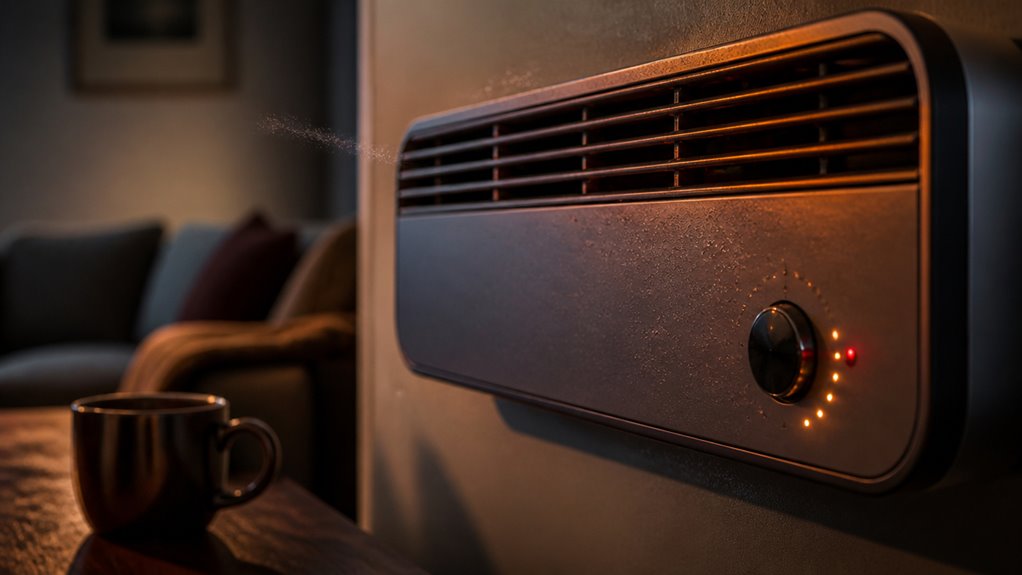
Why Space Heaters Keep Beeping: Safety and Sensors?
Although space heaters provide convenient warmth, they often beep as a response to safety and sensor triggers designed to prevent hazards.
These beeps alert you to conditions requiring immediate attention to avoid damage or injury. Common sensor-activated causes include:
Tip-over sensors activating if the heater isn’t upright or stable.
Overheat warnings triggered by excessive internal temperatures.
Blocked airflow detection due to obstructed vents or filters.
Temperature sensor failures causing error codes and continuous beeping.
Child lock activation emitting repeated alerts when buttons are pressed.
Understanding these triggers helps you recognize when the beep signals a genuine safety concern versus a minor sensor fault.
This ensures you respond appropriately to maintain safe operation, as combining multiple safety layers is essential for effective hazard prevention, similar to how layered security measures enhance alarm system effectiveness.
Basic Troubleshooting: Checking Vents, Power, and Position
Before diving into complex repairs, you should start by inspecting the heater’s vents, power supply, and physical position.
Begin troubleshooting by checking the heater’s vents, power source, and placement for basic issues.
Check all vents and air outlets for blockages like dust, debris, or ice. Restricted airflow often triggers beeping alarms.
Make sure the unit is upright, level, and placed on a firm, stable surface to avoid activating tip-over sensors.
Next, verify the power source: confirm the heater is plugged in securely, circuit breakers are on, and batteries in any remote or control panel are fresh.
Inspect wiring for visible damage or loose connections that might cause intermittent power interruptions.
Performing these checks can often resolve common causes of beeping related to safety switches, airflow sensors, and power faults before escalating to advanced diagnostics or professional service calls.
Also, consider the impact of humidity levels around the heater, as high moisture can cause sensor malfunctions that trigger false alarms.
What to Do If Your Heater Shows an Error Code?
When your heater shows an error code, the first thing you should do is take note of the exact code on the control panel. Trust me, that little number or letter can tell you a lot about what’s going on!
After you’ve got that code down, it’s time for some basic safety checks. Start by checking the vents to make sure they’re not blocked, and take a look at the power supply. Also, double-check the positioning of your unit. Sometimes, common issues can be easy fixes!
Now, if you’re still hearing that beeping or the error codes point to combustion or sensor faults, don’t hesitate to reach out to a qualified technician. It’s better to be safe than sorry! Regular maintenance helps prevent issues like faulty limit switches or flame sensor problems that can trigger error codes and beeping.
Identify Displayed Error Codes
Many heaters display error codes to help you quickly diagnose issues when beeping occurs. These codes pinpoint specific faults, enabling faster troubleshooting.
When your heater beeps and shows an error code, start by noting the exact alphanumeric sequence or symbol displayed. Then, consult the user manual or manufacturer’s online resources to interpret the code.
Common error codes often indicate:
- Ignition failure or repeated start attempts
- Sensor malfunctions such as temperature or flame sensors
- Safety switch activations like tip-over or airflow blockage
- Overheating warnings or thermal shutdowns
- Power supply irregularities or control board faults
Accurately identifying these codes guides your next steps, whether that’s resetting the unit or calling a technician. Avoid guessing to prevent further damage or safety risks.
Perform Basic Safety Checks
In response to an error code and accompanying beeping, start by performing basic safety checks to pinpoint potential issues.
First, read the display carefully to note any error codes or alarm patterns.
Check for blocked vents, filters, or air outlets and clear obstructions that may restrict airflow.
Make sure the unit is upright, level, and on a stable surface to avoid tip-over sensor activation.
Inspect the heater’s base for any visible water leaks if a leak alarm sounds.
Verify power supply, battery levels, and that isolation valves are fully open.
Avoid resetting the unit before completing these checks, as unresolved faults can cause repeated beeping.
These steps help isolate common safety triggers before considering further diagnostics or repairs.
When To Call Technician?
If your heater continues to beep after completing all basic safety checks, it’s a clear indication that the issue goes beyond simple troubleshooting. You should call a technician to diagnose and repair the problem safely and effectively.
Persistent beeping often signals faults in the control board, sensors, or safety mechanisms that require professional tools and expertise.
Contact a technician if you notice:
- Repeated ignition failures or combustion-related error codes
- Continuous leak alarms despite drying the area
- Persistent beeping linked to power or control board faults
- Carbon monoxide detector alarms near your heater
- Beeping after clearing airflow blockages and restoring power
Addressing these issues promptly guarantees safety and prevents further damage to your heating system.
When to Call a Professional for Heater Beeping Issues?
When basic troubleshooting steps don’t stop your heater’s beeping, it signals a deeper issue that requires professional attention.
Persistent alarms often indicate control board faults, sensor failures, or safety switch activations beyond simple fixes.
If your gas heater repeatedly fails ignition or exhibits combustion-air faults, call a licensed technician immediately to inspect venting and burner components.
Continuing leak detection beeps after drying suggest active leaks needing expert plumbing or appliance evaluation.
Also, sustained beeping linked to power issues or error codes demands professional diagnostics to prevent damage or hazards.
Never ignore carbon monoxide detector alarms near your furnace; evacuate and contact emergency services.
Timely professional intervention guarantees reliable heater operation and safety, preventing costly repairs or dangerous conditions.
Prevent Heater Beeping With Regular Maintenance
Regularly maintaining your heater reduces the chances of beeping caused by faults or safety triggers. By performing routine checks and upkeep, you can prevent common issues that activate alarms or shutdowns. Focus on these essential maintenance tasks:
Routine heater maintenance helps prevent beeping alerts by addressing faults and safety triggers early.
Inspect and clean air filters to avoid airflow blockages and overheating warnings.
Check vents and exhaust paths for obstructions like debris, ice, or disconnections.
Test safety switches, including tip-over sensors and child locks, for proper function.
Verify electronic control boards for error codes and reset alerts as needed.
Replace batteries in controllers or leak detectors to prevent low-power alarms.
Consistent maintenance addresses potential faults early, minimizing beeping incidents and extending your heater’s reliability.
Frequently Asked Questions
Can Heater Beeping Affect My Home’s Wi-Fi or Electronics?
Heater beeping itself won’t directly affect your home’s Wi-Fi or electronics since it’s an audio alert, not an electromagnetic interference source.
However, if the beeping stems from electrical faults like wiring issues or voltage dips, those problems could cause power fluctuations.
This may potentially disrupt sensitive devices or Wi-Fi routers.
You should inspect your heater’s electrical connections and ensure a stable power supply to avoid any indirect interference with your home electronics or network.
Do Heater Beeping Noises Vary by Brand or Model?
Yes, heater beeping noises vary by brand and model. While all aim to alert you, some use distinct tones, patterns, or error codes specific to their control boards and safety features.
For example, one brand might signal overheating with a continuous beep, while another uses intermittent pulses. Knowing your heater’s unique beep sequences helps you diagnose issues accurately and respond effectively.
This reduces guesswork and prevents misinterpretation of critical alerts.
Is It Safe to Temporarily Disable the Heater’s Beeping Alarm?
You shouldn’t temporarily disable your heater’s beeping alarm, as it signals critical faults or safety issues. Silencing it without resolving the cause risks undetected malfunctions, overheating, or dangerous gas leaks.
Instead, perform basic diagnostics: check vents, power, and error codes. Address the root problem. If the alarm persists, contact a qualified technician.
Prioritize safety over convenience. Alarms are designed to protect you and your property.
Can Pets or Children Accidentally Trigger Heater Beeping?
Yes, pets or children can accidentally trigger heater beeping, especially if they press buttons or tip over the unit.
For example, a child locking the controls or a pet knocking the heater off balance activates safety sensors, causing alarms.
To diagnose, check for tip-over switches or child lock alerts.
Make certain the heater is on a firm, stable surface, and consider placing it out of reach to prevent accidental triggers.
How Long Does a Typical Heater Beep Alarm Last Before Auto-Reset?
A typical heater beep alarm lasts between 30 seconds to several minutes before auto-resetting, depending on the model and fault type.
Some units require manual reset if the issue persists. You should check the display for error codes during the beep to diagnose the problem accurately.
If the alarm continues beyond this timeframe or repeats frequently, it usually indicates a persistent fault needing professional inspection or maintenance.
Identify Heater Warning Sounds and Take Action
If your heater starts beeping, don’t ignore it. It’s trying to tell you something important.
Power glitches, combustion faults, or sensor alerts could signal serious issues waiting to escalate. You might fix minor problems yourself.
However, persistent beeps often mean it’s time to call a professional. Neglecting these warnings could lead to costly damage or safety hazards.
Act quickly, diagnose precisely, and maintain regularly to keep your heater running safely and silently.