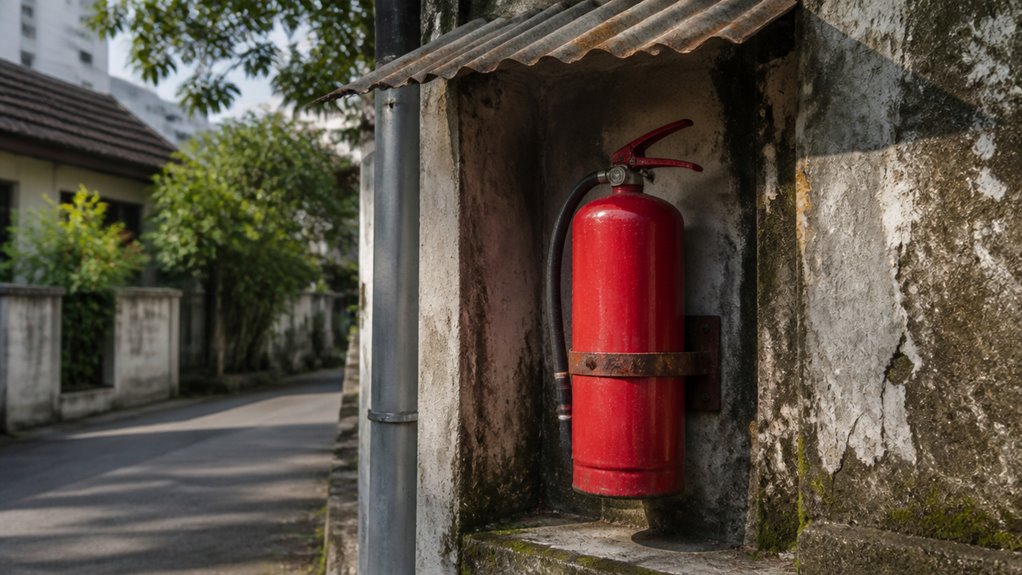

Yes, you can store fire extinguishers outside, but you must select corrosion-resistant models with wide operating temperature ranges (e.g., -40°F to 120°F) to guarantee reliability.
Use sealed or service-free designs to minimize maintenance and environmental damage. Protect them with weatherproof, lockable enclosures mounted securely to guard against theft and weather effects.
Regular inspection is vital to maintain performance. Understanding proper storage, protection, and care will help you make certain these extinguishers function effectively when needed.
Key Takeaways
- Fire extinguishers can be stored outside if they are designed to resist corrosion and withstand temperature ranges from -40°F to 120°F.
- Use weatherproof, lockable cabinets or enclosures to protect extinguishers from rain, UV exposure, moisture, and theft.
- Sealed or service-free extinguisher models reduce maintenance needs and improve durability in outdoor environments.
- Regular inspections are essential to check for corrosion, pressure integrity, and enclosure security when stored outdoors.
- Position extinguishers in accessible, visible locations along evacuation routes, ensuring clear signage and secure mounting.
Is It Safe to Store Fire Extinguishers Outside?
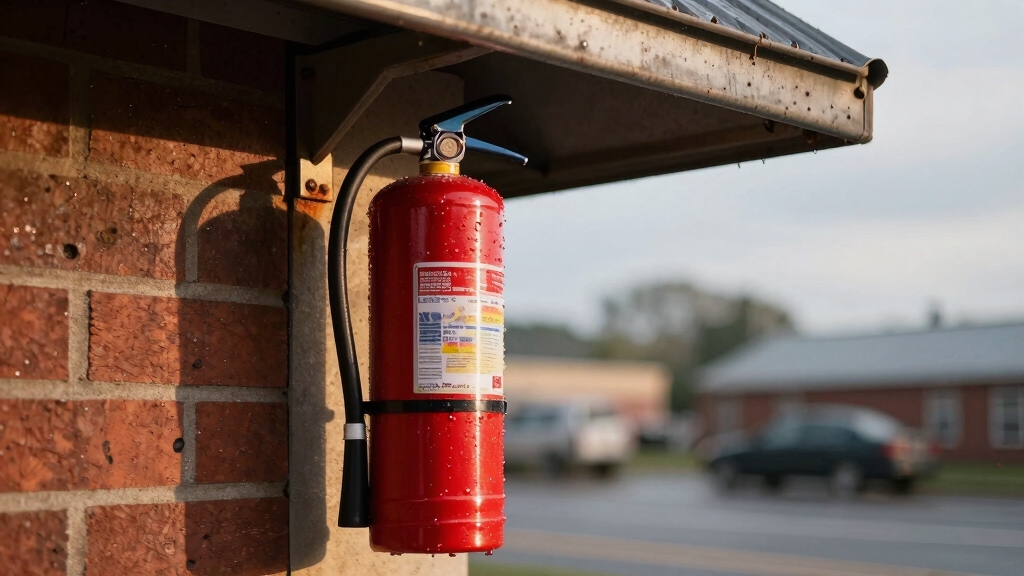
Although you can store fire extinguishers outside, doing so requires specific precautions to guarantee their reliability and safety. Outdoor storage subjects extinguishers to temperature fluctuations, moisture, and UV exposure, all of which can degrade performance.
You must use weatherproof cabinets or enclosures designed to shield against rain and direct sunlight when storing standard steel models outdoors. Some service-free extinguishers, like P50 types, tolerate outdoor conditions without additional protection.
Regardless, maintaining clear visibility, easy accessibility, and quick emergency readiness is essential. You should avoid direct exposure to environmental stressors and secure extinguishers against theft and damage.
Proper mounting on solid structures prevents movement during harsh weather. Always adhere to manufacturer guidelines and regulatory standards to guarantee outdoor storage doesn’t compromise extinguisher integrity or emergency effectiveness. Professional inspection and maintenance by licensed fire protection services ensure extinguishers remain operational despite outdoor conditions.
How Weather Affects Outdoor Fire Extinguisher Performance?
When you store fire extinguishers outdoors, weather conditions directly impact their reliability and functionality. Exposure to rain, frost, heat, and UV rays can degrade components, causing corrosion, valve damage, or reduced discharge efficiency. You must understand these effects to maintain extinguisher readiness.
Outdoor storage exposes fire extinguishers to weather damage, affecting reliability and discharge efficiency.
Consider these critical weather impacts:
Temperature extremes: Cold can crack hoses and valves. Heat may shorten discharge time.
Moisture exposure: Prolonged wetness accelerates rust and corrosion on metal cylinders.
UV radiation: Direct sunlight degrades labels and weakens materials, risking malfunction.
Regular inspections and adherence to manufacturer temperature ratings are essential to prevent pressure-related failures caused by environmental stress.
You need to monitor environmental conditions closely and conduct regular inspections to ensure extinguishers remain operational despite outdoor exposure. Failure to do so compromises performance and safety during emergencies.
Best Protective Storage Options for Outdoor Fire Extinguishers
Providing effective protection for outdoor fire extinguishers means selecting storage solutions that shield them from weather and physical damage while maintaining accessibility.
You should use weatherproof cabinets or enclosed boxes specifically designed for exterior use, guaranteeing they block rain, UV rays, and moisture.
These enclosures must be securely mounted to prevent displacement by wind or tampering.
Opt for lockable models to deter theft and vandalism without compromising emergency access.
Heavy bases or wall mounts add stability and protect against accidental impact.
Avoid exposure to extreme temperatures by situating storage in shaded or covered areas when possible.
Regularly inspect cabinets for corrosion, water ingress, and structural integrity.
Ensure that fire extinguishers stored outside undergo regular inspections to confirm their integrity and proper functionality.
How to Keep Outdoor Fire Extinguishers Accessible and Secure?
To keep outdoor fire extinguishers accessible and secure, you must balance visibility, ease of reach, and protection against theft or vandalism.
Place extinguishers along natural evacuation routes, ensuring they’re unobstructed and mounted at a height suitable for quick access while deterring unauthorized use.
Use lockable, weatherproof cabinets bolted firmly to solid structures to prevent theft and damage.
Maintain clear signage to enhance visibility in emergencies.
Mount extinguishers to avoid trip hazards and accidental knocks.
Employ tamper-resistant enclosures with lock-and-key or alarm features.
Regularly inspect mounting integrity and accessibility to comply with NFPA 10.
Outdoor extinguishers must be housed in weatherproof cabinets and positioned near entry points or outdoor hazards within 75 feet travel distance.
Outdoor Fire Extinguisher Temperature Guidelines
Since outdoor fire extinguishers face variable environmental conditions, you must carefully monitor temperature exposure to maintain their functionality. Extremes outside the recommended range (-40°F to 120°F) can cause cracking, valve damage, or shortened discharge time. Protecting extinguishers from direct sun and frost is critical to preserve operational readiness. Many safety devices, including fire extinguishers, benefit from continuous monitoring to ensure they function properly under all conditions.
| Temperature Range (°F) | Risk to Extinguisher | Recommended Action |
|---|---|---|
| Below -40 | Valve/hose cracking, reduced pressure | Use insulated enclosures |
| -40 to 120 | Peak operational range | Regular inspection |
| Above 120 | Heat damage, shortened discharge | Provide shade or cooling |
| Fluctuating extremes | Material fatigue, corrosion risk | Weatherproof cabinets |
Adhering to these guidelines guarantees your outdoor extinguisher remains reliable in emergencies.
How to Maintain and Inspect Outdoor Fire Extinguishers?
Regularly inspecting and maintaining outdoor fire extinguishers is essential to guarantee they function properly during emergencies.
You must check for physical damage, corrosion, and make certain the pressure gauge remains within the operable range.
Verify that the weatherproof cabinet or enclosure is intact, free from rust, and securely mounted.
Pay special attention to the hose and nozzle for cracks or blockages caused by environmental exposure.
To maintain your outdoor extinguishers effectively:
- Conduct monthly visual inspections for damage or corrosion.
- Confirm pressure gauge readings comply with manufacturer specifications.
- Clean and lubricate moving parts if applicable, following NFPA 10 standards.
Consistent, detailed inspections ensure readiness despite outdoor environmental challenges and comply with safety regulations. Additionally, be aware that pressure loss can prevent proper discharge, so expired or damaged extinguishers should be replaced promptly.
Preventing Theft and Vandalism of Outdoor Fire Extinguishers
Maintaining outdoor fire extinguishers in prime condition also means protecting them from theft and vandalism, which can render them unusable when needed most.
You should install lockable, weatherproof cabinets that restrict unauthorized access while allowing quick emergency use.
Secure mounting to walls or heavy bases prevents removal or displacement.
Consider alarmed enclosures in high-risk public areas to deter tampering.
Position extinguishers in visible, well-lit locations to discourage vandalism and facilitate monitoring.
Avoid unsupervised or isolated spots where malicious damage or accidental discharge is more likely.
Regularly inspect enclosure integrity and locks during maintenance checks to guarantee security measures remain effective.
Additionally, mounting signs with high contrast lettering above outdoor extinguishers ensures clear visibility and compliance with safety regulations.
Best Fire Extinguishers for Outdoor Use
Choose fire extinguishers designed to withstand environmental challenges when selecting units for outdoor use. You need models that resist corrosion, temperature extremes, and moisture infiltration to guarantee reliability in emergencies.
Service-free extinguishers, such as Kidde’s P50 series, offer enhanced durability without requiring additional weatherproof enclosures. Standard steel extinguishers demand protective housing to prevent rust and mechanical damage.
Key considerations include:
Corrosion-resistant materials: Stainless steel or aluminum cylinders minimize rust risk.
Wide operating temperature range: Units rated for -40°F to 120°F maintain functionality despite weather fluctuations.
Sealed or service-free designs: Reduce maintenance needs and vulnerability to environmental degradation.
Selecting extinguishers with these features guarantees consistent performance and safety when stored outdoors. Regular inspection and maintenance remain essential to ensure extinguishers function properly despite outdoor conditions.
Frequently Asked Questions
Can Fire Extinguishers Be Stored in Vehicles or Trailers Outdoors?
Yes, you can store fire extinguishers in vehicles or trailers outdoors, but you must protect them from extreme temperatures, moisture, and physical damage.
Use weatherproof, secure mounts or enclosures to prevent movement and vandalism.
Regularly inspect them to make certain they remain fully charged and functional despite exposure.
Keep them accessible and visible for emergencies, and follow manufacturer temperature guidelines to avoid performance degradation or valve damage in harsh outdoor environments.
Are There Specific Fire Extinguisher Types Better Suited for Coastal Environments?
If salty sea air gnaws at your safety gear, you need extinguishers built for coastal battles.
Stainless steel or corrosion-resistant models, like those with P50 technology, stand firm against rust and moisture.
Choose units sealed against salt spray and humidity, ensuring lasting reliability.
Regular maintenance is essential since the coastal environment accelerates wear.
How Often Should Outdoor Extinguisher Cabinets Be Cleaned or Repainted?
You should clean and inspect outdoor extinguisher cabinets at least quarterly to remove dirt, debris, and corrosion.
Repainting or touch-ups are recommended whenever you notice paint chipping, rust, or fading to maintain weather resistance and visibility.
Prompt maintenance prevents corrosion and prolongs cabinet life. Always use weather-resistant paint suitable for metal surfaces.
Make certain cabinets remain fully functional and secure after any cleaning or repainting.
Can Solar-Powered Alarms Be Integrated With Outdoor Extinguisher Storage?
Yes, you can integrate solar-powered alarms with outdoor extinguisher storage to enhance security and emergency response.
These alarms provide continuous, reliable power without wiring, ideal for remote or exposed locations.
Make certain the alarm housing is weatherproof and positioned for peak sunlight exposure.
Connect the alarm system to tamper switches or cabinet doors to alert you immediately if the extinguisher is accessed or the enclosure is compromised.
This setup helps maintain readiness and prevent theft.
Are Plastic or Composite Extinguishers More Durable Outdoors Than Steel Ones?
While steel extinguishers offer strength, they’re prone to rust and corrosion outdoors.
Plastic or composite extinguishers, by contrast, resist moisture and UV damage better, making them more durable in harsh weather.
You’ll find composites endure temperature swings and resist cracking more effectively than steel.
Protect Your Outdoor Fire Extinguishers the Right Way
You might think storing fire extinguishers outside invites damage and theft, but with proper protective enclosures and regular inspections, outdoor placement can be both safe and effective.
Exposure to extreme weather can compromise performance, yet strategic temperature control and secure mounting preserve functionality.
Balancing accessibility with security guarantees readiness when you need it most.
Ultimately, thoughtful storage transforms outdoor fire extinguishers from vulnerable liabilities into reliable safeguards.