
You should choose a construction security camera that supports stable PoE connections for reliable power and data, especially in harsh environments.
Prioritize high-resolution, infrared night vision with built-in heaters to guarantee clear images in low light and cold weather.
Opt for durable, IP65+ weatherproof housings with rugged materials to withstand site conditions.
Consider PTZ models for flexible coverage and integrate smart motion alerts with customizable zones for real-time notifications.
Keep exploring to optimize coverage, storage, and security features for your project.
Key Takeaways
- Prioritize PoE cameras with NVR compatibility for stable, reliable wired connections and simplified installation on construction sites.
- Choose high-resolution cameras (3K or 4K) with night vision and built-in heaters for clear images in all lighting and weather conditions.
- Select PTZ or panoramic cameras for flexible, wide-area coverage, optimizing camera count and reducing blind spots.
- Ensure cameras have rugged, weatherproof housings (IP65+) and corrosion-resistant materials to withstand harsh outdoor environments.
- Implement smart motion detection with customizable zones and real-time alerts to enhance security and reduce false alarms.
Choosing Power and Connectivity for Construction Cameras
When selecting power and connectivity options for construction security cameras, you’ll need to take into account the site’s infrastructure and operational demands.
If Ethernet cables can be installed, PoE cameras provide the most reliable connection by delivering power and data over a single cable.
When AC power is accessible but Ethernet isn’t, plug-in cameras serve as a practical alternative.
For remote or temporary sites without Wi-Fi, 4G LTE cellular cameras offer flexibility but require SIM cards and data plans.
To reduce maintenance, especially for long-term setups, consider solar panels paired with rechargeable batteries.
Evaluating these factors guarantees uninterrupted camera operation, aligning with your site’s power availability and connectivity constraints for peak security coverage.
Additionally, choosing cameras compatible with Power over Ethernet (PoE) technology simplifies installation and enhances network efficiency.
Why Image Quality Matters for Construction Cameras?
Power and connectivity lay the foundation for reliable surveillance, but image quality determines how effectively you can identify key details on a construction site.
Reliable surveillance starts with power and connectivity, but image quality reveals crucial construction site details.
When selecting a construction camera, prioritize high-resolution models, 3K or 4K, to capture sharp images of faces, license plates, and clothing. This is essential for security and incident investigation.
Night vision capability is equally indispensable. Infrared sensors guarantee visibility in low-light conditions, while color night vision can enhance detail recognition, aiding quicker assessments after hours.
Crisp image quality minimizes false alarms by distinguishing actual events from shadows or debris. Investing in cameras with superior optics and sensors ensures you won’t miss critical evidence and supports accurate monitoring.
Opt for cameras with higher bitrates and advanced processing algorithms to reduce motion blur and improve clarity, especially during fast action on site, enhancing overall image clarity.
Ultimately, this strengthens your site’s security infrastructure. Don’t compromise on resolution or night vision when safeguarding valuable assets and personnel.
Best Field of View and Coverage for Construction Cameras
When choosing cameras for construction sites, it’s really important to think about those with pan-tilt-zoom (PTZ) capabilities. These cameras can cover large areas efficiently since you can adjust angles and zoom in remotely**ly*. It makes a huge difference when you want to keep an eye on everything without having to move the camera physically.
Also, don’t overlook panoramic cameras! They provide broad, continuous coverage using multiple sensors, which helps reduce blind spots, especially on complex sites. Plus, being able to adjust the coverage remotely means you can adapt as the project evolves. It’s all about making sure you have the best visibility without any hassle!
Many PTZ cameras feature smart platform integration that enables remote control and coordinated responses for enhanced site security.
Pan-Tilt-Zoom Advantages
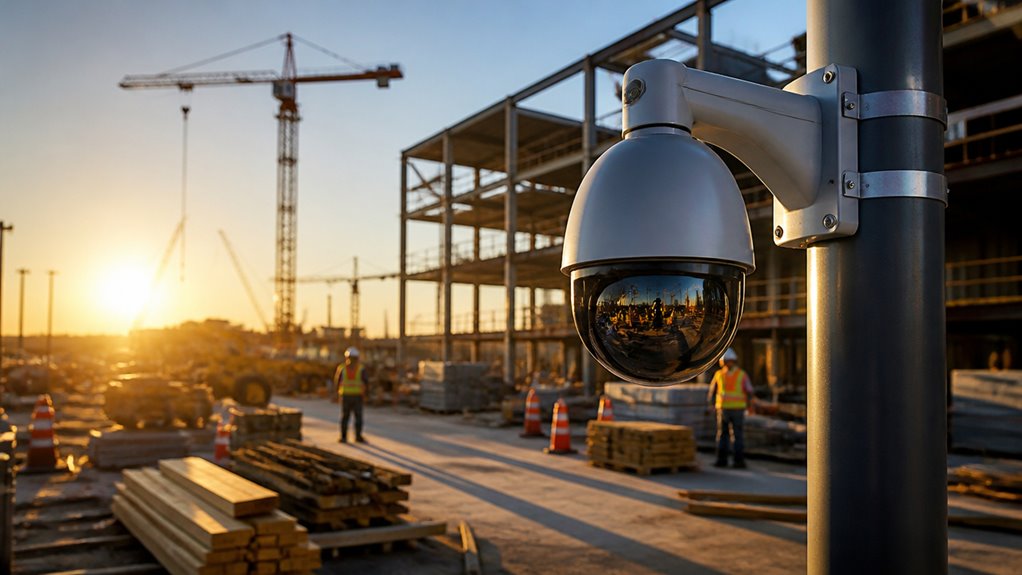
Although fixed cameras provide steady coverage, Pan-Tilt-Zoom (PTZ) cameras offer superior flexibility by allowing you to remotely adjust the view angle and zoom level to monitor different site areas as needed.
This capability maximizes your site’s security with fewer cameras, saving costs while enhancing coverage.
Here’s why PTZ cameras excel for construction monitoring:
- Wide Area Surveillance: Pan and tilt functions let you scan expansive zones without blind spots.
- Detail Focus: Optical zoom captures fine details like faces or license plates at a distance.
- Dynamic Coverage: You can change viewpoints on-demand as project phases evolve.
- Reduced Hardware: One PTZ camera often replaces multiple fixed cameras, streamlining installation.
Additionally, mounting PTZ cameras at optimal heights between 8 to 10 feet with a slight downward angle enhances field of view and reduces the risk of tampering.
Panoramic Coverage Benefits
Panoramic cameras combine multiple sensors to deliver seamless, wide-angle coverage that captures entire jobsite zones without gaps. This multi-sensor design enables you to monitor expansive areas continuously, reducing blind spots and minimizing the number of cameras needed.
You’ll benefit from all-encompassing situational awareness, which is critical for detecting unauthorized access or safety hazards across large, open environments. These cameras stitch images in real time, maintaining consistent resolution throughout the field of view.
With fixed, broad coverage, they’re ideal for static monitoring where you want to avoid complex mechanical parts. However, they require precise installation to cover target zones effectively and avoid overlap or dead zones.
When selecting panoramic models, focus on sensor quality, image stitching accuracy, and robust housing to withstand harsh construction conditions. Additionally, considering the IP rating ensures reliable operation under the varying weather conditions commonly found on construction sites.
Remote Angle Adjustment
Adjusting camera angles remotely lets you optimize coverage dynamically as your construction site evolves. With remote angle adjustment, you can pan, tilt, and zoom cameras to cover new areas without physically relocating equipment. This flexibility is essential in large, changing jobsite environments.
Consider these key points when choosing remote angle adjustment features:
- PTZ Capability: Opt for cameras with pan-tilt-zoom functions to cover wide areas and zoom in on details.
- Control Interface: Make certain the system offers intuitive remote controls via mobile apps or desktop platforms.
- Response Speed: Look for cameras with fast and smooth angle adjustments to track activity effectively.
- Integration: Verify compatibility with your existing security system for seamless monitoring and recording.
Remote adjustment reduces blind spots and lowers camera quantity requirements, enhancing site security efficiently. Additionally, ensuring a stable wired connection can improve the reliability and responsiveness of remote angle adjustments, minimizing latency and signal interference.
Durability and Weather Resistance for Jobsite Cameras
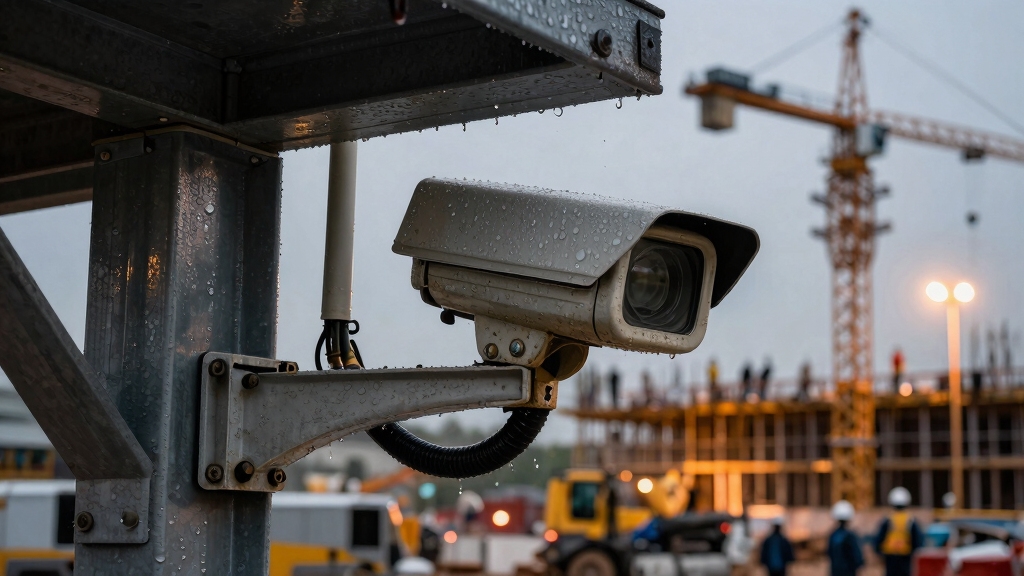
When selecting cameras for construction sites, you need equipment that withstands harsh environmental conditions without compromising performance. Focus on cameras with weatherproof housings rated at IP65 or higher, ensuring protection against dust, rain, and snow.
Look for industrial-grade materials designed to resist vibration and temperature extremes common in active jobsites. Rugged construction minimizes failure risks caused by wind, debris, or accidental impacts.
Verify the camera’s operating temperature range matches your location’s climate to prevent downtime. Additionally, sealed connectors and corrosion-resistant components enhance longevity and reliability.
Prioritize models tested for outdoor durability to avoid frequent replacements or maintenance. By selecting cameras with these robust features, you maintain continuous surveillance and safeguard your investment against the demanding conditions of construction environments. Installing cameras with built-in heaters can prevent fogging and ice buildup, ensuring clear imagery in cold weather.
Motion Alerts for Real-Time Security
You definitely want motion detection to keep an eye on any unauthorized activity happening on your site. It’s super important!
By integrating smart alerts, you can get real-time notifications straight to your phone or monitoring platform.
This means you won’t miss a beat. Those instant alerts ensure that you can jump into action right away, helping to minimize risks and potential losses. It’s all about staying one step ahead!
Using custom detection zones can help focus alerts on critical areas, improving accuracy and reducing unnecessary notifications.
Motion Detection Benefits
Frequently, motion detection serves as a critical feature in construction security cameras by instantly alerting you to any unauthorized activity on the jobsite. This capability enhances real-time security and minimizes response times.
When selecting a camera, consider these motion detection benefits:
1. Immediate Notifications
Receive alerts via phone or monitoring systems the moment motion is detected.
2. Reduced False Alarms
Advanced sensors differentiate between human movement and environmental factors like wind or animals.
3. Targeted Surveillance
Trigger recording only when relevant motion occurs, optimizing storage and review efficiency.
4. After-Hours Protection
Maintain vigilant oversight during off-hours when unauthorized access risks increase.
These precise advantages guarantee you can act quickly to protect valuable equipment and materials.
This improves overall site security without overwhelming your monitoring resources. Additionally, customizing Motion Zones and Sensitivity allows you to focus detection on critical areas while minimizing irrelevant alerts.
Smart Alert Integration
Smart alert integration consistently enhances construction site security by delivering real-time motion notifications directly to your devices. When motion triggers an alert, the system analyzes activity using advanced algorithms to reduce false alarms caused by environmental factors like wind or wildlife.
You can customize sensitivity levels and designate specific zones for monitoring high-risk areas, ensuring alerts are relevant and actionable. Integration with cloud platforms allows immediate access to footage, enabling swift incident verification.
Additionally, smart alerts support tiered notification protocols, so you can route alerts to different team members based on urgency or role. This streamlined communication accelerates response times and minimizes potential losses.
To maintain optimal performance and security, it is essential to regularly update camera firmware and configure strong encryption settings on both devices and networks to protect your data privacy.
Real-Time Notification Methods
Effective real-time notification methods play a critical role in leveraging motion alerts to enhance construction site security. When your camera detects motion, you want immediate, reliable alerts to respond swiftly.
Choose systems that offer customizable notification channels and minimal delay. Consider these key options:
- Push Notifications: Instantly alert you on smartphones or tablets through dedicated apps for on-the-go monitoring.
- Email Alerts: Provide detailed event summaries with timestamps and snapshot attachments for documentation.
- SMS/Text Messages: Deliver concise alerts when internet connectivity is limited, guaranteeing you never miss an incident.
- Integrated Monitoring Platforms: Allow centralized control and alert management across multiple cameras and sites.
Selecting notification methods that fit your connectivity and operational needs guarantees timely awareness. This enables proactive security management and effectively reduces response times.
Storage Options for Reliable Video Backups
Selecting the right storage option guarantees you have reliable video backups that safeguard your construction site’s recorded data.
You can choose between cloud-based and local storage, or a hybrid approach for redundancy.
Cloud storage offers remote access and automatic backups but needs consistent internet connectivity and may involve monthly fees.
Local storage, like SD cards or Network Video Recorders (NVRs), assures immediate data access and protects against connectivity issues but requires regular maintenance and physical security.
For peak reliability, consider PoE cameras paired with NVRs for stable wired connections and local storage.
4G LTE systems often rely on cloud solutions due to mobility.
Always verify storage capacity aligns with your camera resolution and retention needs to avoid data loss during critical events.
Security Features to Prevent Theft and Liability Risks
Reliable storage solutions keep your video evidence secure, but preventing theft and liability requires specific security features integrated into your camera system.
You need a system that actively deters unauthorized access and supports quick incident response.
Focus on these key features:
- Motion-Activated Alerts: Receive instant notifications when unusual activity occurs, enabling prompt action.
- Tamper Detection: Cameras should alert you if they’re moved, covered, or disabled, preventing blind spots.
- Secure Cloud and Local Storage: Combine encrypted cloud storage with local backups to guarantee video integrity if connectivity fails.
- Integration with Perimeter Controls: Sync cameras with fences, locked gates, and warning signs to reinforce site security and reduce liability exposure.
Incorporating these features guarantees your construction site remains protected against theft while minimizing legal risks from accidents or unauthorized access.
When to Use PTZ, Panoramic, or Fixed Cameras?
Optimize your construction site surveillance by understanding the distinct advantages of PTZ, panoramic, and fixed cameras.
Use PTZ cameras when you need flexible coverage over large or dynamic areas. They pan, tilt, and zoom, reducing the number of cameras required.
Panoramic cameras excel at capturing wide-angle views with multiple sensors. They are ideal for monitoring broad, static zones.
Fixed cameras offer high-resolution, focused monitoring for critical entry points or equipment.
| Camera Type | Coverage Area | Best Use Case |
|---|---|---|
| PTZ | Large, variable | Dynamic site zones |
| Panoramic | Wide, static | Broad perimeter monitoring |
| Fixed | Narrow, precise | Entry points, asset focus |
Selecting based on site layout and surveillance goals guarantees efficient, reliable security.
Frequently Asked Questions
How Do Construction Cameras Integrate With Existing Site Management Software?
You can integrate construction cameras with existing site management software through APIs or compatible platforms, enabling real-time video feeds and alerts directly within your dashboard.
This lets you monitor security alongside project progress, ensuring seamless workflow. Many systems support cloud storage and remote access, so you’ll receive smart notifications and review footage without switching apps.
Confirm your camera’s software supports integration standards to maintain efficient, centralized site management.
What Are the Best Practices for Camera Placement to Avoid Blind Spots?
Think of your site like a watchtower guarding a fortress. Every angle counts. To avoid blind spots, place cameras at elevated corners covering overlapping fields of view.
Use PTZ cameras to adjust angles remotely as the site evolves. Secure coverage of high-value assets and entry points. Regularly test for shadows or obstructions.
Combining fixed and panoramic cameras helps fill gaps. Motion detection alerts catch unseen movements, guaranteeing all-inclusive surveillance.
Can Construction Cameras Operate Efficiently in Extreme Cold or Heat?
Yes, construction cameras can operate efficiently in extreme cold or heat if you choose models with rugged, industrial-grade materials and weatherproof housing rated IP65 or higher.
These cameras resist dust, wind, rain, snow, and temperature extremes, maintaining reliable performance.
Make sure the camera’s specifications explicitly state temperature operating ranges suitable for your site conditions.
This ensures durability and consistent monitoring regardless of harsh weather challenges.
How Do Privacy Regulations Affect Construction Camera Usage?
You must comply with privacy regulations by positioning cameras to avoid capturing non-consenting individuals or neighboring properties.
Use signage to inform workers and visitors about surveillance. Limit access to recorded footage and implement data retention policies consistent with legal requirements.
Make sure cameras focus on jobsite areas only and avoid audio recording unless explicitly permitted.
Staying informed about local laws helps you avoid legal risks while maintaining effective security monitoring.
What Maintenance Is Required to Keep Cameras Functioning Optimally?
You should clean lenses regularly to prevent dirt and dust from reducing image clarity. About 40% of camera failures stem from environmental factors.
Check weatherproof seals and housings for damage to maintain IP65+ protection. Inspect power sources and replace rechargeable batteries or solar panels as needed.
Test connectivity and firmware updates monthly to guarantee smooth operation. Don’t forget to verify local storage and cloud backups.
Keep motion detection sensors calibrated for accurate alerts.
Make a Smarter Investment in Construction Site Security
When choosing the best construction security camera, you need to balance power, connectivity, and image quality while ensuring durability against harsh weather.
Don’t forget to take into account your field of view, motion alerts, and secure storage to protect your site efficiently.
Think of it like selecting a knight’s armor; each feature must work in harmony to defend your investment.
By focusing on these practical details, you’ll safeguard your jobsite with precision and reliability.