
You’ll find store camera checks vary based on size, risk, and resources. Smaller shops often review footage only after incidents like theft or complaints.
Larger stores may audit daily or monitor key feeds regularly. Most don’t use continuous live monitoring except in high-risk areas.
Routine system maintenance and verifying recording integrity are key. Budgets and staffing limitations also influence how often footage gets reviewed.
Explore how store type and best practices shape these monitoring routines.
Key Takeaways
- Many stores review camera footage within 24 to 48 hours, focusing on key areas and incidents.
- Smaller retailers often check footage only when triggered by theft, complaints, or specific events.
- Larger stores may perform daily or near-daily audits and assign security teams for routine monitoring.
- Continuous live monitoring is rare, mainly reserved for high-risk or luxury retail environments.
- Regular system maintenance and firmware updates support consistent camera functionality during checks.
How Often Do Stores Check Their Security Cameras?
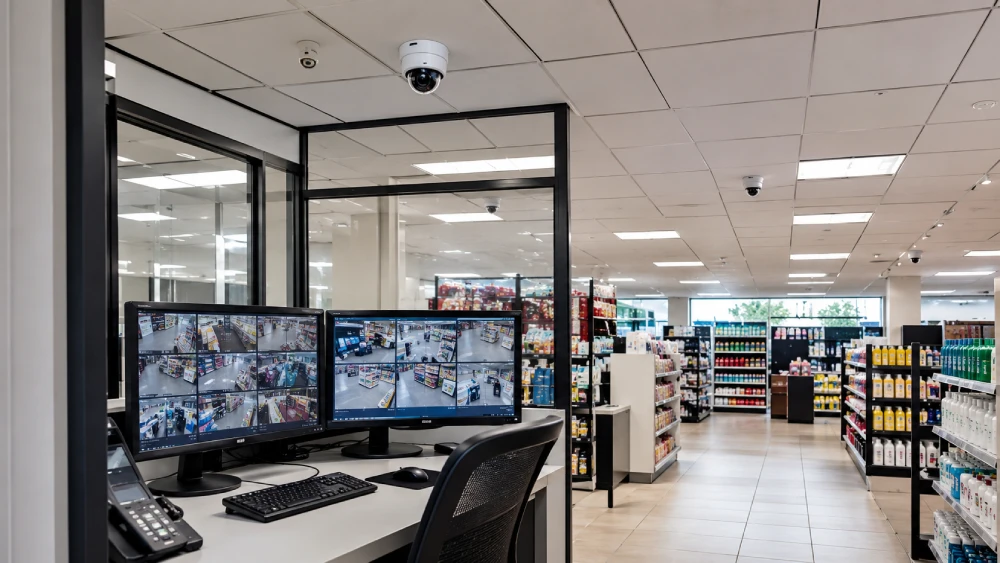
Typically, stores check their security cameras either after specific incidents or on a routine schedule that varies widely depending on factors like store size, risk level, and security objectives.
Stores review security footage after incidents or on schedules tailored to size, risk, and security goals.
You’ll notice no universal timetable exists; smaller retailers often review footage only when incidents occur, such as theft or complaints.
Larger stores or those with higher risk profiles may monitor selected feeds in real time or conduct near-daily audits.
Additionally, some retailers perform operational checks to confirm camera functionality, recording integrity, and storage capacity.
The frequency and method of review closely align with documented security goals and risk management strategies.
Understanding these nuances can help you gauge why your store’s camera review practices differ from others and highlight the importance of tailored security protocols.
Real-time monitoring and alerts enable faster responses, further discouraging criminal activity through motion detection technology.
Common Timeframes for Reviewing Camera Footage
You’ll notice that the review intervals for camera footage can really differ, often falling somewhere between every 24 to 48 hours in many retail settings.
It’s interesting to see how factors like the size of the store, its risk level, and specific security goals play a big role in determining how often the footage is looked at.
Understanding these common timeframes can really shed light on how stores manage to balance operational efficiency with loss prevention.
It’s all about finding that sweet spot, right?
Regularly reviewing footage and backing it up every 7 to 14 days helps maintain device management and ensures important evidence is preserved.
Typical Review Intervals
Frequently, stores review camera footage within a 24 to 48-hour window, especially for key areas and events.
You’ll find larger retailers often audit footage daily or near-daily to quickly identify issues or suspicious activity.
In contrast, smaller shops tend to check footage more sporadically or only when prompted by incidents like theft or complaints.
High-risk zones such as entrances and cash registers usually receive more frequent attention.
Some stores supplement incident-driven reviews with routine operational checks, confirming recordings and storage integrity on a daily or weekly basis.
However, continuous live monitoring remains uncommon except in high-value or high-risk environments.
By understanding these typical intervals, you can better anticipate how stores balance security needs with resource constraints.
This ensures footage is reviewed promptly without excessive monitoring.
For enhanced security, many sites are increasingly relying on solar-powered wireless cameras to maintain continuous surveillance without dependence on power outlets.
Factors Influencing Frequency
Several key factors influence how often stores review their camera footage, shaping the common timeframes you observe across different retail environments.
Retailer size plays a pivotal role; larger chains tend to conduct daily or near-daily audits, while smaller shops review footage sporadically, often only after incidents.
Risk level and security goals also matter. High-risk areas like entrances or cash registers receive more frequent checks. Luxury stores often use continuous live monitoring.
Additionally, operational priorities, such as ensuring recording integrity, verifying timestamps, and managing storage capacity, can prompt routine reviews.
Incident triggers like theft, customer complaints, or inventory discrepancies frequently lead to targeted playback.
Ultimately, review frequency depends on a store’s specific needs, balancing resource availability, loss prevention strategies, and the documented purpose of their CCTV system.
Regularly reviewing access logs and alert notifications also helps detect unauthorized activity or anomalies that might otherwise go unnoticed.
What Usually Triggers Retailers to Review Cameras?
Retailers typically review camera footage when specific events raise concerns about security or operations.
You’ll find that suspected theft is the most frequent trigger, prompting targeted playback to identify perpetrators.
Customer complaints also lead to focused reviews, helping verify incidents or resolve disputes.
Additionally, slip-and-fall claims cause retailers to examine footage from surrounding angles to assess liability.
When cash register shortages or inventory shrink spikes occur, retailers audit footage to detect any suspicious activity.
Law enforcement requests further compel stores to retrieve and review relevant recordings.
These triggers reflect how retailers use their CCTV systems reactively, addressing incidents rather than conducting routine surveillance.
Regular inspections and clear signage, such as Do Not Block Fire Extinguisher signs, ensure safety compliance during emergency situations.
How Store Size and Risk Levels Impact Camera Checks?
Because store size and risk levels directly influence security priorities, camera check practices vary considerably across retail environments.
If you manage a large store or one in a high-risk area, you’ll likely implement more frequent and systematic camera reviews, sometimes even live monitoring.
Conversely, smaller or lower-risk stores often rely on incident-driven checks.
Here’s how you can expect those factors to shape your camera review routine:
- Store Size: Larger retailers tend to audit footage daily or near-daily. Smaller shops review sporadically or only post-incident.
- Risk Levels: High-value or vulnerable areas prompt continuous or frequent monitoring to preempt losses.
- Resource Allocation: Staffing and budget constraints in smaller stores limit routine checks, focusing efforts on critical events.
Additionally, implementing smart motion detection with customizable zones can help prioritize alerts and reduce unnecessary footage reviews.
Camera Review Differences by Store Type and Area
Although store size and risk levels influence how often cameras are checked, the type of store and specific areas within it also shape review practices substantially.
Store size, risk, and specific areas significantly impact how frequently security cameras are reviewed.
For instance, luxury retailers typically implement active remote monitoring, reviewing footage more frequently to protect high-value inventory.
Apparel stores, by contrast, often conduct audits only after incidents like theft.
When it comes to areas, entrances, self-checkout zones, and cash registers receive more scrutiny due to heightened risk.
Smaller shops usually review footage only when necessary, influenced by budget and staffing constraints.
Understanding these differences helps you recognize that camera review frequency isn’t uniform; it adjusts based on store type, security priorities, and the vulnerability of specific zones within each retail environment.
Regular maintenance and firmware updates are crucial to ensure consistent camera functionality and reliable footage for effective security monitoring.
How Stores Conduct Routine Camera System Checks?
Regularly conducting routine camera system checks is essential to maintain effective surveillance and guarantee recorded footage is reliable when needed.
When you perform these checks, you verify that cameras are recording, footage is retrievable, and system components function correctly.
Many stores adopt a structured approach to avoid gaps in security coverage. Here’s how you typically conduct routine checks:
- Recording Verification: You confirm all cameras capture video properly, without blind spots or outages.
- Playback Testing: You review sample footage to ensure recordings play back smoothly and timestamps align accurately.
- Storage and Timestamp Audits: You inspect storage capacity and timestamp integrity to prevent data loss or misalignment.
Additionally, it is important to test motion detection sensitivity regularly to ensure cameras respond accurately to movement and reduce false alerts.
How Budget and Staffing Affect Camera Review Frequency?
When you consider how budget and staffing influence camera review frequency, it becomes clear that limited resources often restrict the ability to conduct frequent or continuous monitoring.
If a store has a tight budget, it may lack dedicated personnel to review footage regularly, leading to sporadic or incident-driven checks.
Conversely, stores with ample staffing can assign security teams to perform daily or near-real-time monitoring, especially in high-risk areas.
Budget constraints also affect technology investment; lower funds may limit access to advanced systems that support automated alerts, reducing review efficiency.
Ultimately, the frequency hinges on balancing costs with security needs.
You’ll find smaller retailers often review footage only when necessary, while larger stores with better resources maintain more consistent surveillance practices.
Implementing motion detection zones can help optimize monitoring efficiency by reducing false alerts and focusing attention on critical events.
Best Practices for Retail Camera Monitoring
Consistently applying best practices in retail camera monitoring can markedly enhance loss prevention and operational efficiency.
Consistent application of retail camera best practices significantly boosts loss prevention and operational effectiveness.
You should establish a clear review schedule tailored to your store’s risk level and staffing capabilities, ensuring key footage is examined every 24 to 48 hours.
Beyond post-incident checks, incorporate routine operational audits to verify recording integrity, timestamps, and storage health.
Additionally, prioritize monitoring high-risk areas like entrances and cash registers to deter theft and detect suspicious activity promptly.
- Implement a documented review cadence balancing incident-driven and routine audits.
- Conduct regular system maintenance checks to confirm camera functionality and data accessibility.
- Use targeted surveillance on sensitive zones to optimize resource allocation and risk management.
Adopting these practices helps you maintain a proactive security posture, reducing losses and improving accountability. Consider switching from continuous to motion-triggered recording to conserve storage space and extend footage retention for more effective monitoring.
Frequently Asked Questions
What Technology Do Stores Use to Store Recorded Camera Footage?
Stores use Network Video Recorders (NVRs) and Digital Video Recorders (DVRs) to store recorded footage. Many opt for cloud storage, which offers remote access and scalability.
Hybrid systems combining local storage with cloud backup are common, too. These technologies guarantee footage integrity, timestamp accuracy, and secure storage.
You’ll also encounter storage solutions tailored to a store’s size, risk level, and data retention policies, balancing cost and reliability effectively.
How Long Do Stores Typically Retain Security Camera Recordings?
Imagine your security footage as a library book. You get to keep it only for a set loan period.
Stores typically retain recordings anywhere from 7 to 90 days, depending on policy, storage capacity, and legal requirements.
Some high-risk retailers hold footage longer, especially if incidents arise.
You’ll find retention balances operational needs with privacy laws. This ensures you have enough history to investigate issues without overwhelming storage or violating regulations.
Are Employees Trained to Review Camera Footage Effectively?
Yes, you’ll find that many stores provide employees with specific training to review camera footage effectively.
This training focuses on identifying suspicious behavior, understanding camera angles, and using playback tools efficiently.
You’ll also learn how to document incidents accurately and comply with privacy policies.
However, the depth of training varies depending on store size and security needs.
Larger retailers offer more thorough instruction compared to smaller shops.
Do Stores Notify Customers About Video Surveillance Policies?
Imagine walking into a store knowing your every move could be watched. Yes, stores do notify customers about video surveillance policies, often through visible signs near entrances or at checkout.
These notices explain surveillance presence to comply with legal requirements and promote transparency. You’ll find wording about recording for safety and loss prevention.
While specifics vary, most retailers aim to inform you upfront, balancing privacy concerns with security needs.
How Do Privacy Laws Affect Retail Camera Monitoring Practices?
Privacy laws require you to balance security with respecting individuals’ rights when monitoring retail cameras.
You must inform customers about surveillance through clear signage and limit camera placement to public areas, avoiding private spaces like fitting rooms.
You’re also bound to handle footage securely, restricting access and retaining recordings only as long as necessary.
Compliance with local regulations guarantees your monitoring practices protect privacy while supporting loss prevention effectively.
How Often Do Stores Check Their Cameras? Final Answer
You’ll find that stores check their cameras at varying intervals, much like a heartbeat adjusting to different rhythms.
Some review footage daily, while others wait for specific triggers like suspicious activity.
Factors such as store size, risk level, and budget heavily influence this frequency.
By understanding these variables and adopting best practices, you can see how retailers balance security needs with practical constraints.
They maintain effective surveillance without overextending resources.