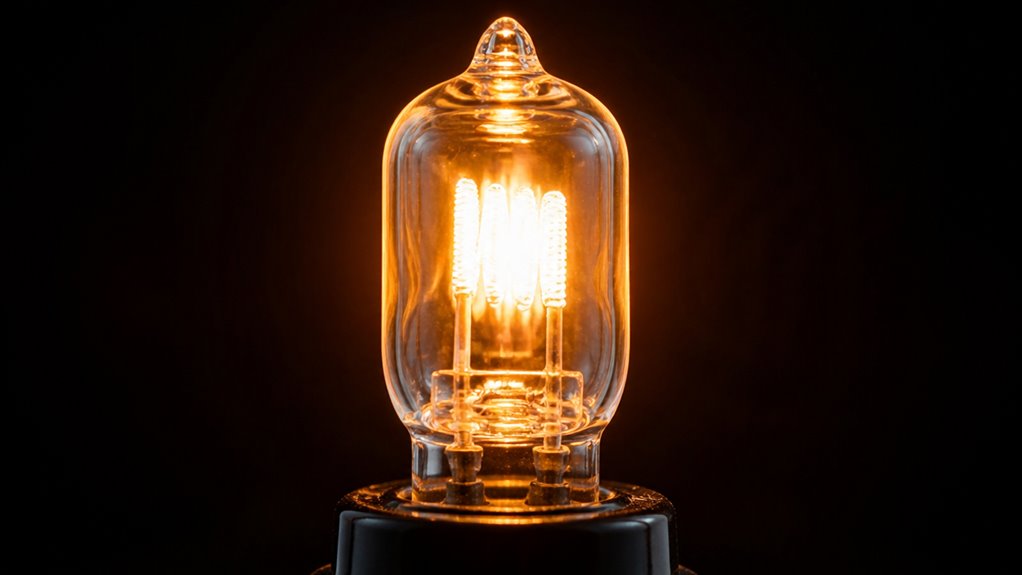

A halogen bulb’s glass envelope routinely reaches surface temperatures above 250 °C, often climbing past 500 °C in higher-wattage models.
This intense heat results from the bulb’s elevated filament temperatures around 3,000 K, which boost brightness and efficiency but generate significant thermal radiation.
Because the halogen cycle depends on high temperatures to redeposit tungsten vapor, these bulbs inherently run hotter than standard incandescents.
Understanding these factors is key to managing their heat and associated safety concerns.
Key Takeaways
- Halogen bulb filaments operate at approximately 2,900–3,200 K (2,627–2,927 °C), producing intense heat.
- The glass or quartz envelope surface temperature typically ranges between 250 °C and 550 °C (482 °F to 1,022 °F).
- High-wattage or tubular halogen bulbs can exceed envelope temperatures of about 540 °C (1,004 °F).
- Elevated envelope temperatures are essential to sustain the halogen cycle and prevent tungsten evaporation.
- Bulb surfaces can cause severe burns and ignite combustibles due to temperatures often surpassing 500 °C.
Just How Hot Does a Halogen Bulb Get?
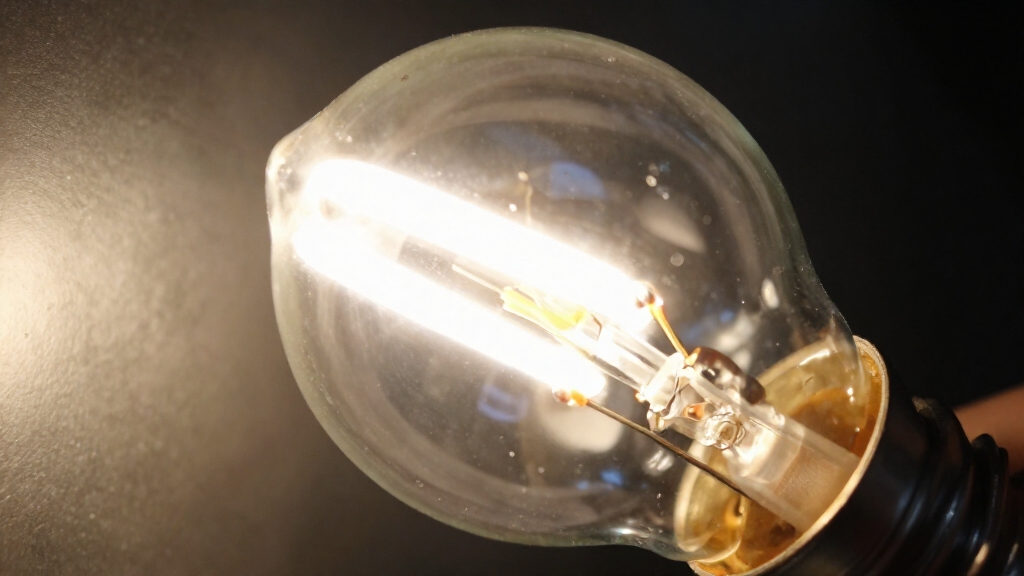
How hot does a halogen bulb actually get during operation? Its tungsten filament runs at approximately 2,900 to 3,200 K (2,627 to 2,927 °C), markedly hotter than standard incandescent filaments.
Halogen filaments operate at an intense 2,900 to 3,200 K, far hotter than standard incandescent bulbs.
This elevated temperature enhances luminous efficacy and light brightness. The halogen cycle allows the filament to sustain these high temperatures by redepositing tungsten vapor, reducing filament degradation.
As a result, the filament temperature directly correlates with improved performance but also increased thermal output. You should recognize that this intense heat elevates the bulb’s surface temperature beyond typical incandescent levels, making handling and placement critical for safety.
Understanding these operating temperatures helps you appreciate the balance between light quality and thermal management inherent in halogen bulb design.
Glass Envelope Temperatures in Halogen Bulbs
Because the halogen cycle depends on maintaining high temperatures, the glass envelope of a halogen bulb routinely reaches and sustains surface temperatures above 250 °C (482 °F).
This temperature threshold is critical to facilitate the chemical reactions that redeposit evaporated tungsten onto the filament, preserving lamp longevity and performance.
Typical operating temperatures range from 250 °C up to approximately 550 °C (1,022 °F), with high-wattage or tubular bulbs sometimes exceeding 540 °C (1,004 °F).
These elevated envelope temperatures are necessary to sustain the halogen cycle but also result in significant thermal radiation and surface heat.
Consequently, you must manage clearance and ventilation carefully, as the glass can cause severe burns or ignite nearby combustible materials.
Understanding these temperature ranges helps you optimize both safety and lamp efficiency.
To protect against fires caused by such high temperatures on combustible materials, using an ABC fire extinguisher is recommended as it effectively coats, smothers, and interrupts combustion.
Reasons Halogen Bulbs Run Hotter Than Other Lamps
Halogen bulbs generate higher temperatures than other lamps primarily due to their unique halogen cycle. This cycle requires maintaining a hot quartz or glass envelope to redeposit evaporated tungsten back onto the filament.
This process allows the filament to operate at approximately 3,000 K, markedly hotter than standard incandescent lamps. The elevated filament temperature enhances luminous efficacy and light quality but demands higher envelope temperatures, typically above 250 °C.
Consequently, halogen bulbs emit more thermal radiation and surface heat.
| Feature | Halogen Bulbs |
|---|---|
| Filament Temperature | ~2,900–3,200 K |
| Envelope Temperature | >250 °C (typically 540–550 °C) |
| Light Quality | Brighter, whiter |
| Tungsten Evaporation | Reduced via halogen cycle |
| Thermal Radiation Output | High |
Fire and Burn Risks From Halogen Bulb Heat
Although the intense heat produced by these bulbs enhances their efficiency and brightness, it also creates significant fire and burn hazards.
Operating temperatures can exceed 500 °C, making the bulb surface capable of igniting combustible materials nearby. You must recognize the risks of both direct contact burns and indirect heat ignition.
Consider these key dangers:
Immediate skin burns from touching the bulb during or shortly after use due to retained heat.
Fire hazards when combustible items like wood, fabric, or paper are placed too close, as halogen lamps can reach temperatures triggering auto-ignition.
Radiant heat that elevates temperatures of adjacent objects increases fire risk even without direct contact.
Understanding these risks highlights why careful placement around flammable materials is critical with halogen lighting. Using water as a fire extinguisher involves cooling and heat absorption to effectively reduce fire hazards.
Safely Using and Handling Halogen Bulbs
Recognizing the intense heat risks from these bulbs, you must adopt specific precautions to handle and use them safely.
Always allow the bulb to cool completely before touching it, as surface temperatures can exceed 500 °C, causing severe burns.
Use gloves or a cloth to avoid direct skin contact with the glass envelope.
Make certain there’s adequate ventilation around the fixture to dissipate heat and prevent ignition of nearby combustible materials.
Follow manufacturer wattage and fixture guidelines precisely.
Overloading or improper enclosures can elevate temperatures dangerously.
Avoid placing halogen bulbs near flammable objects like paper, fabric, or wood.
Never operate halogen lamps unattended for extended periods, particularly in confined spaces.
Ensure proper ventilation and heat management to prevent heat buildup that can accelerate degradation and create safety hazards.
Frequently Asked Questions
How Long Do Halogen Bulbs Typically Last Compared to Incandescent Bulbs?
You’ll find halogen bulbs typically last about 2,000 to 4,000 hours, roughly two to three times longer than standard incandescent bulbs.
Incandescent bulbs usually last around 1,000 to 2,000 hours.
This increased lifespan comes from the halogen cycle that redeposits tungsten onto the filament, reducing degradation.
So, while halogen bulbs run hotter, you get better durability and efficiency.
This makes them a more economical choice despite their higher operating temperatures.
Can Halogen Bulbs Be Used Outdoors or in Damp Environments?
“Better safe than sorry” applies here: you can use halogen bulbs outdoors or in damp environments only if they’re specifically rated for such conditions.
Halogen bulbs themselves aren’t inherently waterproof or moisture-resistant. You must install them in properly sealed, weatherproof fixtures designed to protect against water and humidity.
Otherwise, exposure to moisture risks electrical hazards and bulb damage, compromising safety and performance. Always check manufacturer specifications before outdoor or damp use.
What Are the Energy Consumption Differences Between Halogen and LED Bulbs?
You’ll find that halogen bulbs consume markedly more energy than LED bulbs.
Typically, halogens use about 3 to 4 times the wattage of LEDs to produce the same light output.
For example, a 50-watt halogen can be replaced by a 10 to 15-watt LED.
LEDs convert energy more efficiently into light, reducing electricity use and heat output.
Do Halogen Bulbs Emit UV Radiation That Can Harm Skin or Eyes?
Think of halogen bulbs as a double-edged sword: yes, they do emit some UV radiation, but it’s usually minimal and mostly blocked by the quartz envelope.
However, if the bulb’s outer glass is damaged or missing, UV exposure can increase. This could potentially harm your skin or eyes over extended periods.
To protect yourself, always use halogen bulbs with intact envelopes. Avoid prolonged close-range exposure to prevent any UV-related risks.
Are Halogen Bulbs Recyclable or Environmentally Friendly?
Halogen bulbs aren’t easily recyclable due to their quartz envelope and tungsten filament, which require specialized processing.
You’ll find they contain no hazardous materials like mercury, making them less environmentally harmful than fluorescents.
However, their shorter lifespan and higher energy consumption compared to LEDs reduce their overall eco-friendliness.
To minimize environmental impact, you should dispose of halogen bulbs following local regulations and consider switching to more energy-efficient, recyclable lighting alternatives.
How Hot Does a Halogen Bulb Get? Final Answer
Just like Icarus flew too close to the sun, halogen bulbs reach temperatures that demand your respect. Their glass envelopes often soar beyond 250°C, far hotter than standard bulbs, due to their unique design and tungsten filament.
You must handle them with care to avoid burns or fire hazards. By understanding their heat output and following safety measures, you can harness their brightness without risking damage or injury.