
If you need wired or PoE cameras with superior 4K video and sharp night vision, Reolink fits well. It offers flexible power options and robust motion detection.
For faster, battery-powered setups with strong privacy through offline AI and facial recognition, Eufy excels. Both avoid forced subscriptions and work with Alexa and Google Assistant.
Your choice depends on installation ease, video quality, and data control. Exploring the details will help you pick the best system for your needs.
Key Takeaways
- Reolink excels in wired/PoE setups with superior 4K video quality and advanced night vision, ideal for users comfortable with network wiring.
- Eufy prioritizes easy, battery-powered, plug-and-play installation with local AI facial recognition and strong offline data privacy via HomeBase.
- Reolink supports flexible storage options including microSD, NVR, and optional cloud, while Eufy emphasizes local HomeBase storage to enhance privacy.
- Euflik offers cleaner, less grainy night vision and AI that filters pets and recognizes faces, reducing false alerts effectively.
- Both brands avoid mandatory subscriptions, support Google Assistant and Alexa, and recommend WPA3 encryption for secure smart home camera use.
How to Choose Between Reolink and Eufy Cameras?
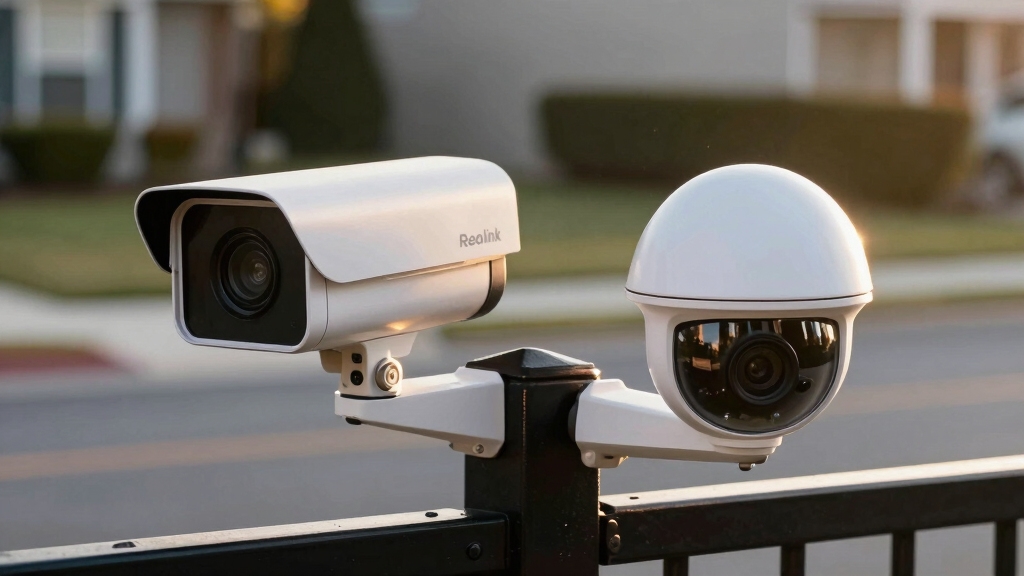
When deciding between Reolink and Eufy cameras, you need to assess your priorities regarding video quality, installation preferences, and data privacy.
If you prefer flexible power options, Reolink offers wired, PoE, battery, and solar models, suitable for users comfortable with network setup.
Eufy favors battery-powered cameras with solar add-ons, focusing on straightforward, plug-and-play installation, ideal if you want minimal technical involvement.
For storage, Reolink supports local microSD, NVR, and optional cloud, providing versatility.
Eufy emphasizes local storage via its HomeBase, handling AI processing offline to enhance data privacy.
Your choice hinges on whether you prioritize installation complexity and power variety (Reolink) or ease of use with strong local security features (Eufy).
This evaluation helps tailor your security system to your technical comfort and privacy needs.
Keep in mind that cameras with local storage options can operate without WiFi, ensuring continuous recording even during internet outages.
Video Quality and Resolution Comparison
Reolink really shines when it comes to resolution options. They offer a wide range, including true 4K on some of their pan-and-tilt models. On the other hand, Eufy typically tops out at 2K, unless you’re looking at the EufyCam S330, which is a bit of an exception.
Now, when we talk about image clarity, Reolink’s wired cameras tend to outperform the competition. They deliver sharper images and higher bitrates, which helps cut down on motion blur, especially in bright conditions.
Eufy’s battery-powered cameras, while still providing decent image quality, might struggle a bit more with motion blur during fast action scenes. So, if you’re into capturing quick movements, that’s definitely something to consider!
For optimal performance, it’s also important to verify power supply continuity to avoid intermittent video loss, especially with battery-powered models.
Resolution Options Overview
Although both Reolink and Eufy offer high-resolution security cameras, their resolution options differ markedly in range and consistency.
Reolink provides a broader spectrum, including 1080p, 2K, and true 4K models, such as the Argus PT Ultra and Atlas PT Ultra, which maintain 4K clarity even with pan-and-tilt functions.
Eufy’s lineup primarily caps at 2K resolution, except for the EufyCam S330, which supports 4K.
Wired Reolink cameras generally deliver sharper images due to higher bitrates, reducing motion blur in bright conditions.
Eufy focuses on battery-powered units that balance resolution with efficient power use, offering clean 2K output and selective 4K.
Your choice depends on whether you prioritize maximum resolution variety and wired options or streamlined battery-powered models with decent resolution.
Additionally, factors such as frame rate impact motion clarity and should be considered alongside resolution when evaluating video quality.
Image Clarity Differences
Beyond resolution specifications, image clarity hinges on factors like bitrate, sensor quality, and processing algorithms.
Reolink generally pushes higher bitrates, which enhances sharpness and reduces artifacting, especially in wired models.
Eufy’s battery-powered cameras deliver clean images but often at lower bitrates, balancing clarity with power efficiency.
Sensor quality in Reolink’s 4K models, such as the Argus PT Ultra, supports finer detail retention compared to many Eufy 2K units.
Processing algorithms vary, with Reolink emphasizing aggressive detail enhancement, while Eufy favors noise reduction for clearer night vision.
| Feature | Reolink | Eufy |
|---|---|---|
| Max Resolution | Up to true 4K | Up to 4K (select models) |
| Bitrate | Higher (especially wired) | Moderate (battery focus) |
| Sensor Quality | High-end sensors on premium models | Balanced for battery efficiency |
| Processing Approach | Detail-focused enhancement | Noise reduction priority |
| Night Image Clarity | Bright, detailed infrared | Clean, less grainy vision |
Motion Blur Performance
Motion blur greatly affects the clarity of moving subjects in security footage, making its reduction critical for accurate identification. Reolink cameras, especially wired models, minimize motion blur effectively by pushing higher bitrates and utilizing resolutions up to 4K.
This technical approach results in sharper images with fewer blur lines during fast motion in bright conditions. In contrast, Eufy’s battery-powered units, while offering clean and clear video, generally cap at 2K resolution, which can lead to slightly more noticeable motion blur in dynamic scenes.
The EufyCam S330 stands out with 4K capability but still doesn’t match Reolink’s bitrate advantage. If you prioritize motion clarity in moving subjects, Reolink’s combination of higher bitrate and resolution offers a technical edge in reducing motion blur artifacts.
Additionally, Reolink’s wired cameras benefit from NVR systems that process video at the camera, enabling higher resolution and clearer images with less processing load on the recorder.
Power Options and Installation Methods Compared
When it comes to power options and installation methods, Reolink really stands out. They offer a wide variety of power sources, including wired, PoE, battery, and solar options. This flexibility is perfect for those complex installations where you need a stable connection.
On the flip side, Eufy keeps things simple. They mainly focus on battery-powered cameras, with the option for solar panels. This makes them super easy to set up and great for portability.
Reolink cameras also benefit from a unique UID system that enhances secure remote access and device management.
Power Source Variety
Typically, selecting the right security camera involves evaluating its power source and installation requirements to fit your environment and technical comfort level.
Reolink offers a broad power source variety, including wired, Power over Ethernet (PoE), battery, and solar-powered options. This range supports flexible placement but often requires network configuration and wired setup skills.
Conversely, Eufy leans heavily on battery-powered models, with solar add-ons for extended autonomy. These designs prioritize plug-and-play simplicity, ideal if you want minimal wiring or are a renter.
Eufy’s batteries tend to last longer and appear less bulky compared to Reolink’s. Choosing between them depends on whether you value installation versatility and wired reliability (Reolink) or prefer wireless convenience and discreet aesthetics (Eufy).
It’s important to consider that wired systems, like many Reolink models, benefit from Power over Ethernet (PoE) technology, which simplifies power and data delivery through a single cable, enhancing installation efficiency.
Installation Ease
While both Reolink and Eufy offer multiple power options, your installation experience will vary markedly depending on your technical skills and preferences.
Reolink provides wired, Power over Ethernet (PoE), battery, and solar-powered cameras, requiring some network setup and wiring knowledge for peak performance. This offers reliable connections but involves a steeper learning curve.
In contrast, Eufy primarily uses battery-powered models designed for quick, plug-and-play installation. This is ideal if you prefer minimal technical hassle or rent your property.
Eufy’s solar add-ons enhance battery life without complicating setup. If you want flexibility and can handle wiring, Reolink suits you.
But if you prioritize ease and speed, Eufy’s user-friendly installation methods will save time and effort.
Many turret cameras support Power over Ethernet (PoE) to simplify power delivery and enhance installation efficiency, a feature that aligns with Reolink’s wired options.
Storage and Data Privacy Comparison
Because data privacy remains a critical concern for security camera users, understanding how Reolink and Eufy manage storage is essential.
Reolink offers versatile options including local microSD cards, NVR compatibility, FTP server support, and optional cloud services. This allows you to tailor storage methods based on your security preferences.
Eufy emphasizes local storage through its HomeBase unit, which can hold up to 16GB internally and supports microSD expansion. This setup processes AI locally, minimizing data transmission and enhancing privacy.
Eufy’s design keeps footage securely inside your home, protecting data even if cameras are stolen. Reolink’s flexibility appeals to users with diverse network configurations, while Eufy prioritizes privacy by limiting cloud reliance.
Both brands avoid mandatory subscriptions, but Eufy’s offline processing offers stronger data control for privacy-conscious users. Additionally, privacy protections such as local edge processing and encrypted cloud validation further safeguard user data in modern security camera systems.
Smart Home Compatibility and Voice Assistant Support
If you want seamless integration with your existing smart home ecosystem, both Reolink and Eufy offer compatibility with popular voice assistants like Google Assistant and Alexa. This enables you to control cameras via voice commands.
Control your cameras effortlessly with voice commands using Google Assistant or Alexa on Reolink and Eufy.
Eufy extends support to Apple HomeKit on select models, allowing tighter integration within Apple-centric setups. You can use voice commands to view live feeds or arm/disarm systems on both platforms.
Reolink additionally supports RTSP streaming, facilitating integration with third-party NVRs and NAS devices for advanced users. Eufy’s app provides more intuitive smart home automation controls, enabling routine triggers based on camera events.
While both brands allow you to embed cameras into broader home automation workflows, Eufy’s ecosystem offers slightly more polished multi-device coordination. Reolink emphasizes flexibility for users with custom or professional setups.
Additionally, ensuring your system uses WPA3 encryption helps protect your smart home cameras from unauthorized access and enhances overall network security.
AI Detection Accuracy and Motion Alert Performance
When evaluating AI detection accuracy and motion alert performance, you’ll find that Reolink and Eufy take distinct approaches tailored to different priorities.
Reolink emphasizes aggressive human detection with strong night vision and infrared detail. Eufy focuses on filtering out pets and offers facial recognition to differentiate visitors.
Your choice depends on whether you prioritize quick, precise person alerts or refined filtering to reduce false notifications.
Consider these key points:
- Reolink delivers faster, more consistent motion detection, especially at night with its bright spotlight and clear color captures.
- Eufy’s AI reduces false alerts by ignoring pets and includes baby monitor-specific detections like crying.
- Eufy’s slower distant motion detection contrasts with Reolink’s broader range and responsiveness.
- Facial recognition on Eufy enhances visitor categorization, improving alert relevance.
Additionally, integration with centralized management platforms can enhance real-time alert synchronization and data analysis for both systems.
Subscription Plans and Cost Differences
Although both Reolink and Eufy provide local storage options that minimize reliance on cloud subscriptions, their approaches to subscription plans and long-term costs differ markedly.
Reolink offers optional cloud plans but doesn’t require subscriptions, allowing you to rely on microSD cards or NVRs to keep costs down. Their flexible power options and third-party compatibility further reduce dependency on proprietary services.
Eufy emphasizes no-fee usage by default, leveraging its HomeBase for offline storage and AI processing. While cloud services exist, Eufy doesn’t heavily promote them, and you can avoid recurring fees altogether.
However, some advanced features on Eufy cameras may occasionally require cloud upgrades. Overall, both brands prioritize local storage to lower ongoing expenses. Reolink provides broader flexibility, while Eufy focuses on simplicity and fee-free operation.
Which Brand Is Right for Your Security Needs?
Determining which brand suits your security needs depends largely on your priorities regarding installation flexibility, video quality, and AI capabilities.
If you want versatile power options and superior night vision, Reolink’s wired and PoE cameras provide high-resolution clarity with advanced human detection. Conversely, Eufy excels in user-friendly, battery-powered setups with reliable facial recognition and offline AI processing.
Consider these factors:
- Installation: Choose Reolink for wired or PoE systems. Eufy fits quick, battery-powered setups.
- Video Quality: Reolink offers higher bitrates and true 4K with pan-tilt. Eufy peaks at 4K on select models.
- AI Features: Reolink prioritizes aggressive human detection. Eufy filters pets and supports facial recognition.
- Storage: Reolink supports flexible local and cloud options. Eufy emphasizes secure, offline HomeBase storage.
Match your technical comfort and security goals to select the ideal brand.
Frequently Asked Questions
Can Reolink and Eufy Cameras Be Used Together in One System?
You can use Reolink and Eufy cameras together physically, but integrating them into a single seamless system is limited.
Each brand relies on its own app and ecosystem, so you’ll need to manage them separately.
However, both support Google Assistant and Alexa, allowing you to control them via voice commands in a unified smart home setup.
For advanced features or unified recording, you’ll likely need separate storage and management platforms.
What Warranty Coverage Do Reolink and Eufy Cameras Offer?
Warranty warranties weigh well: You’ll find Reolink offers a standard one-year limited warranty covering defects in materials and workmanship. Eufy also provides a one-year warranty, sometimes extending to two years on select models or promotions.
Both warranties exclude damage from misuse, accidents, or unauthorized modifications. You should register your product promptly and keep proof of purchase to guarantee smooth service claims. Always check specific terms per model for precise protection details.
Are Reolink and Eufy Cameras Resistant to Extreme Weather Conditions?
Yes, both Reolink and Eufy cameras are designed to resist extreme weather conditions. You’ll find many models from each brand rated IP65 or higher, guaranteeing protection against rain, dust, and snow.
Reolink often offers ruggedized options suitable for harsh environments. Eufy’s battery-powered cameras handle temperature extremes well. Just check the specific IP rating and operating temperature range for your chosen model to guarantee it fits your climate needs.
How Do Reolink and Eufy Handle Firmware Updates and Security Patches?
You’ll find both brands regularly release firmware updates and security patches to enhance performance and close vulnerabilities.
Reolink pushes updates via their app, requiring manual initiation but offering detailed version notes.
Eufy also delivers updates through its app, often automating them to maintain security with minimal user intervention.
Both emphasize encrypted communication during updates, ensuring your cameras stay protected against potential cyber threats.
Do Reolink or Eufy Cameras Support Two-Way Audio Functionality?
Yes, both Reolink and Eufy cameras support two-way audio functionality, allowing you to listen and speak through the camera.
Reolink models like the Argus series and wired cameras typically include built-in microphones and speakers for real-time communication.
Similarly, Eufy’s battery-powered and wired cameras feature integrated two-way audio with noise cancellation, enhancing clarity.
You’ll find this feature useful for interacting with visitors or deterring intruders remotely via their respective apps.
Tailoring Your Protection: Picking the Ideal Camera System
Choosing between Reolink and Eufy cameras is like picking the right tool for a complex job: each excels in distinct areas.
For instance, Reolink’s superior AI detection and versatile power options offer precision, much like a craftsman’s finely tuned instrument.
Meanwhile, Eufy’s strong data privacy and seamless smart home integration resemble a well-oiled machine, prioritizing smooth operation.
Assess your specific needs carefully to select the camera that best fits your security framework.