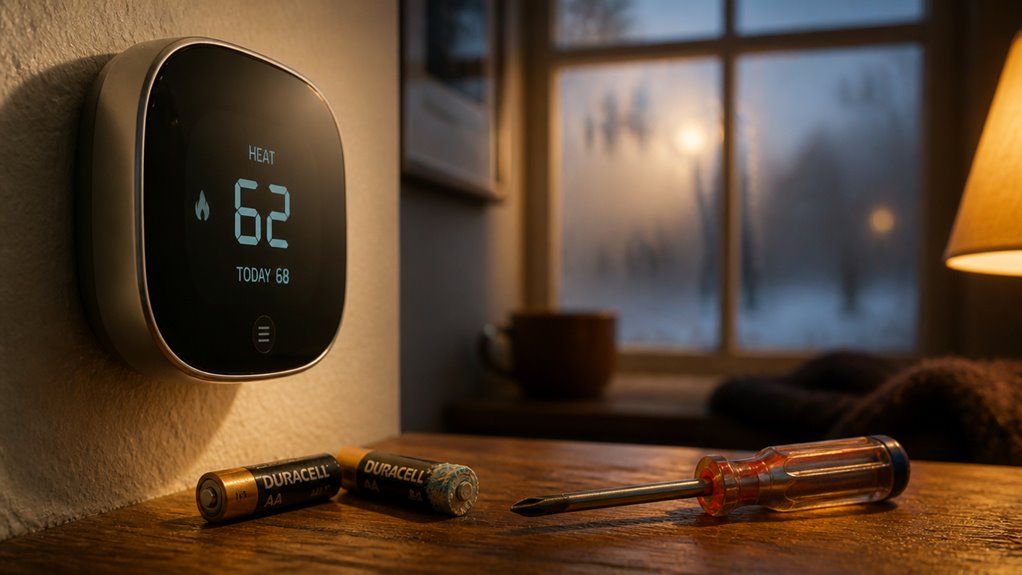

Yes, a low thermostat battery can directly affect your heating system’s performance.
When the battery weakens, your thermostat may show a dim display, delayed responses, or erratic signals that disrupt communication with the furnace.
This can cause intermittent heating, uneven temperatures, or prevent the furnace from starting entirely.
Poor battery connections or corrosion can worsen these issues.
Understanding how to identify and replace weak batteries will guarantee consistent heating and reliable thermostat control.
Key Takeaways
- Low thermostat batteries cause weak signals, leading to delayed or intermittent heating cycles and uneven home temperature control.
- Insufficient power from low batteries may disrupt thermostat-to-furnace communication, preventing the furnace from starting properly.
- Low batteries can cause erratic thermostat behavior, such as heat starting briefly then stopping or loss of programmed schedules.
- Dim or blank thermostat displays often indicate low power, which correlates with unstable heating performance.
- Replacing batteries promptly ensures stable thermostat operation, preventing delayed heat response and maintaining consistent home heating.
Common Signs Your Thermostat Battery Is Low
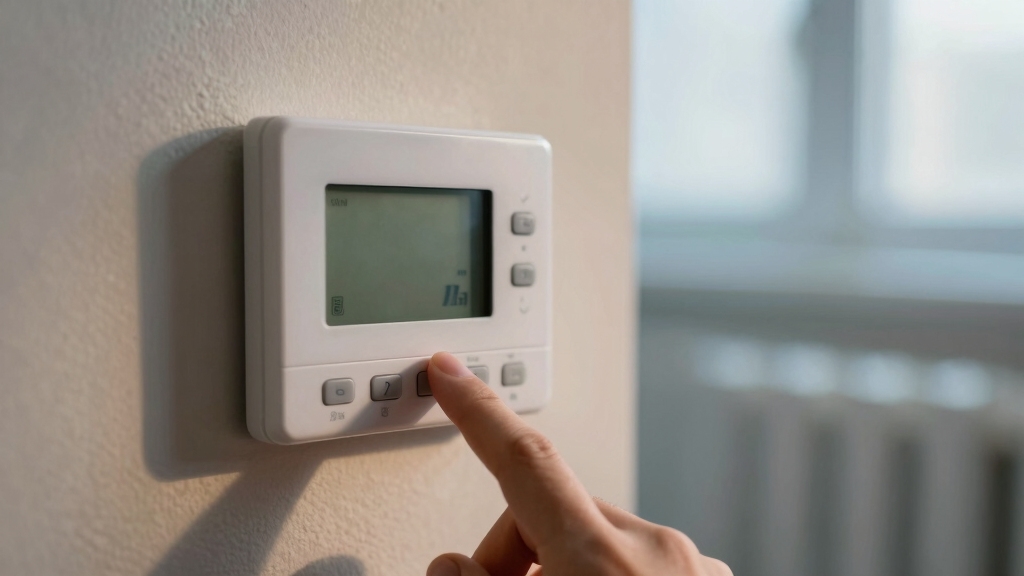
You’ll often notice a dim or blank thermostat screen when the batteries are running low, signaling that the device isn’t receiving enough power to operate properly.
You might see delayed responses after adjusting the temperature, as the thermostat struggles to send commands promptly.
Clicking noises without furnace activation often indicate weak batteries, as the control signals become erratic.
Heat that starts briefly then stops can also signal unstable thermostat operation due to insufficient power.
Additionally, some models display low battery warnings or error messages before failing completely.
Monitoring these signs helps you identify when replacement is necessary, preventing system disruptions and ensuring consistent heating performance.
Addressing battery issues early maintains reliable thermostat communication with your furnace, avoiding unexpected heating interruptions.
Low thermostat batteries can also cause the system to enter a compressor protection delay, temporarily flashing the Cool indicator to prevent damage.
What Happens When Your Thermostat Battery Is Low?
When your thermostat battery is low, it can disrupt the communication between your thermostat and furnace, causing erratic heating behavior or complete system shutdown. You might notice delayed heat response, intermittent heating cycles, or a blank thermostat display.
The thermostat may fail to send correct signals, leading to inconsistent temperature control and system inefficiency.
| Symptom | Cause | Effect |
|---|---|---|
| Dim or blank display | Insufficient power supply | Loss of control interface |
| Delayed heat response | Weak signal transmission | Temperature fluctuations |
| Intermittent heating | Erratic furnace activation | Uneven home heating |
Monitoring these signs helps you address battery issues before heating performance degrades markedly.
Replacing weak or dead batteries promptly ensures consistent power supply and prevents loss of programmed schedules or erratic thermostat behavior.
Why a Low Thermostat Battery Can Stop Your Furnace?
Although a thermostat battery may seem minor, low power can prevent your furnace from receiving the essential signal needed to start heating.
Your thermostat acts as the control hub, sending a “call for heat” to the furnace’s control board. When the battery weakens, this communication can fail or become erratic.
This causes the furnace to remain off or cycle improperly. Low battery voltage can dim or blank the thermostat display, indicating loss of control functionality.
Without adequate power, the thermostat can’t maintain the temperature setpoint or send timely signals. This leads to inconsistent or halted furnace operation.
This means your heating system might appear broken, even if the furnace itself is fully functional. Ensuring the thermostat has sufficient battery power is critical to maintaining reliable furnace startup and operation.
Regular maintenance, including checking battery health and replacing batteries as recommended, is essential to avoid device failure due to low battery.
How to Replace Thermostat Batteries and Keep Heating Working?
Start by locating the battery compartment on your thermostat, typically found behind the faceplate or within a small designated slot.
Carefully remove the faceplate or slide open the compartment cover to access the batteries.
Identify the battery type, usually AA or AAA alkaline cells, and note their orientation.
Remove the old batteries and dispose of them properly.
Insert fresh batteries, ensuring correct polarity alignment with the compartment markings.
After replacement, reattach the faceplate securely.
Power on the thermostat and confirm the display is bright and responsive.
This restores reliable communication with your furnace control board, preventing heating interruptions caused by weak batteries.
For consistent performance, check and replace batteries annually or before the heating season to avoid unexpected system failures during cold weather.
Regular maintenance, including battery replacement, helps ensure the thermostat’s continuous monitoring of ambient temperature for stable heating control.
Troubleshooting Heating Problems After Battery Replacement
If your heating system still isn’t working correctly after swapping out the thermostat batteries, you’ll need to dig deeper to identify the root cause.
First, verify the batteries are installed with correct polarity and that they’re fresh alkaline cells.
Next, check the thermostat display for any error codes or dimness indicating power issues.
Make sure the thermostat is securely seated on its base and that wiring connections, especially the R (power) and W (heat call) terminals, are tight and corrosion-free.
Test the furnace control board by manually initiating a heat call to confirm it responds properly.
If problems persist, inspect furnace components such as the ignition system and limit switches, as the issue may lie beyond the thermostat’s power supply or signaling functions.
Additionally, avoid using rechargeable batteries because their inconsistent voltage can cause premature low battery warnings and operational delays.
Tips to Maintain Your Thermostat Battery and Prevent Heating Issues
You know, it’s a good idea to replace your thermostat batteries regularly—aim for about once a year. This helps keep everything running smoothly and ensures your heating signals stay reliable.
Also, don’t forget to take a peek inside the battery compartment from time to time. Check for any corrosion or loose connections; these little things can really mess with communication between your thermostat and furnace.
If you notice persistent low battery alerts, it’s important to replace the battery with one that matches the original specifications to maintain proper system function.
Regular Battery Replacement
Regularly replacing your thermostat batteries guarantees consistent communication between your thermostat and heating system, preventing unexpected interruptions.
You should use fresh alkaline AA or AAA batteries, matching polarity carefully.
Replace batteries annually or before the heating season begins to assure reliable operation.
After installing new batteries, confirm the thermostat securely seats on its base and that terminals (especially R and W) remain firmly connected.
Neglecting battery replacement risks delayed signals, intermittent heating, or complete system shutdown.
By maintaining fresh batteries, you avoid erratic furnace behavior and forced manual resets caused by power loss.
This simple preventive step reduces the chance of uneven temperatures and energy inefficiencies.
Make battery replacement part of your HVAC maintenance routine to sustain peak heating system performance throughout colder months.
For optimal performance, always choose batteries with the correct voltage and size recommended by the manufacturer to prevent poor contact and signal issues.
Battery Compartment Inspection
Maintaining fresh batteries is only part of making sure reliable thermostat operation. Inspecting the battery compartment itself plays a key role in preventing heating interruptions.
Corrosion, loose contacts, or dirt inside the compartment can hinder power delivery, causing erratic heating behavior. To maintain peak battery function, follow these steps:
- Open the compartment and visually check for corrosion or residue on terminals.
- Clean terminals gently with a cotton swab and isopropyl alcohol if needed.
- Make sure batteries fit snugly without excessive movement to maintain proper contact.
- Confirm correct polarity alignment to prevent electrical issues.
Regularly inspecting and cleaning the battery compartment helps avoid poor connections and unexpected heating failures. This keeps your thermostat and furnace communication stable through the heating season. Using alkaline batteries is generally recommended for their reliability and moderate self-discharge characteristics in such devices.
Frequently Asked Questions
Can a Low Thermostat Battery Affect Cooling Performance?
Yes, a low thermostat battery can affect cooling performance. When the battery weakens, your thermostat might fail to send accurate or timely signals to the air conditioning system.
This can cause intermittent operation, delayed cooling response, or failure to maintain set temperatures. You may notice a dim display, erratic behavior, or the system turning on and off unpredictably.
Replacing batteries regularly guarantees reliable HVAC communication and consistent cooling efficiency.
How Long Do Thermostat Batteries Typically Last in Cold Climates?
Think of thermostat batteries as the heartbeat of your system; in cold climates, they typically last about 6 to 12 months.
The harsher the cold, the faster batteries drain due to increased heating demands.
You should check and replace AA or AAA alkaline batteries annually before winter hits.
Keeping an eye on your thermostat’s display for dimming or blank screens helps you avoid unexpected heating failures during freezing temperatures.
Are Rechargeable Batteries Suitable for Thermostats?
Yes, you can use rechargeable batteries in thermostats, but they’re not always ideal.
Rechargeable NiMH batteries have a lower voltage (1.2V) compared to standard alkaline batteries (1.5V). This might affect thermostat performance or cause inconsistent signals.
If you choose rechargeables, pick high-quality ones and monitor battery life closely. Also, make sure the thermostat supports rechargeable cells.
For reliable operation, standard alkaline batteries remain the recommended choice in most cases.
Can Thermostat Battery Issues Cause Higher Energy Bills?
Imagine driving a car with a faulty gas gauge. It wastes fuel without you realizing it.
Similarly, thermostat battery issues can cause higher energy bills by sending inaccurate or delayed signals to your furnace. Your system may run longer or cycle inefficiently, consuming more power.
Replacing weak batteries guarantees precise temperature control, prevents unnecessary runtime, and keeps your energy costs in check.
Regular battery checks help maintain HVAC efficiency and save money.
Does Wi-Fi Thermostat Connectivity Depend on Battery Power?
Yes, your Wi-Fi thermostat connectivity depends on battery power. If the batteries are low or dead, the thermostat may lose power or reboot, disrupting its wireless connection.
This causes communication failures with your home network and HVAC system. To maintain stable Wi-Fi connectivity, make sure you regularly replace batteries with fresh alkaline ones and check the compartment for secure contacts.
Neglecting this can lead to intermittent control and unresponsive remote access.
Keep Heating Reliable With a Healthy Thermostat Battery
Did you know that nearly 30% of heating system malfunctions are linked to thermostat battery issues?
If your thermostat battery runs low, it can cause your furnace to stop working, leaving you without heat.
By promptly replacing batteries and maintaining your thermostat, you’ll guarantee consistent heating performance and avoid unexpected breakdowns.
Regular checks and timely battery changes are simple steps that keep your system running efficiently all winter long.