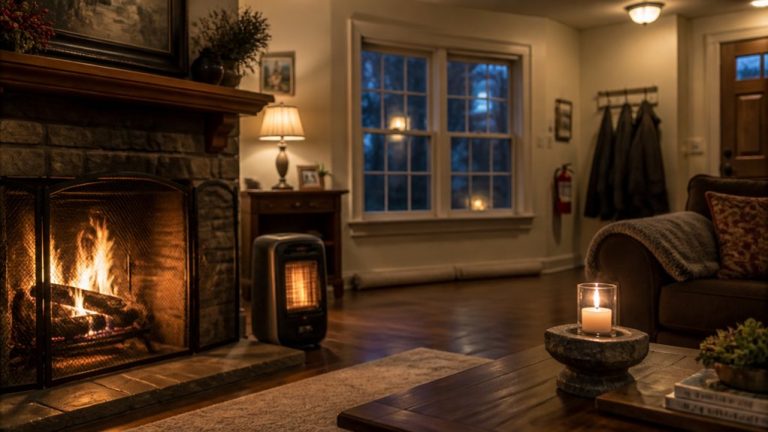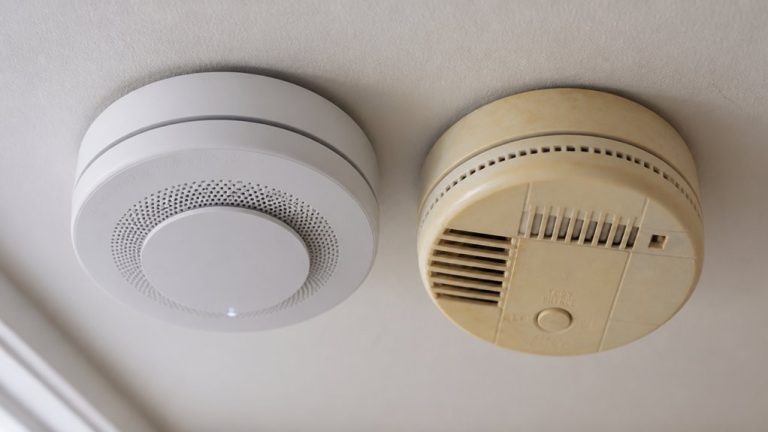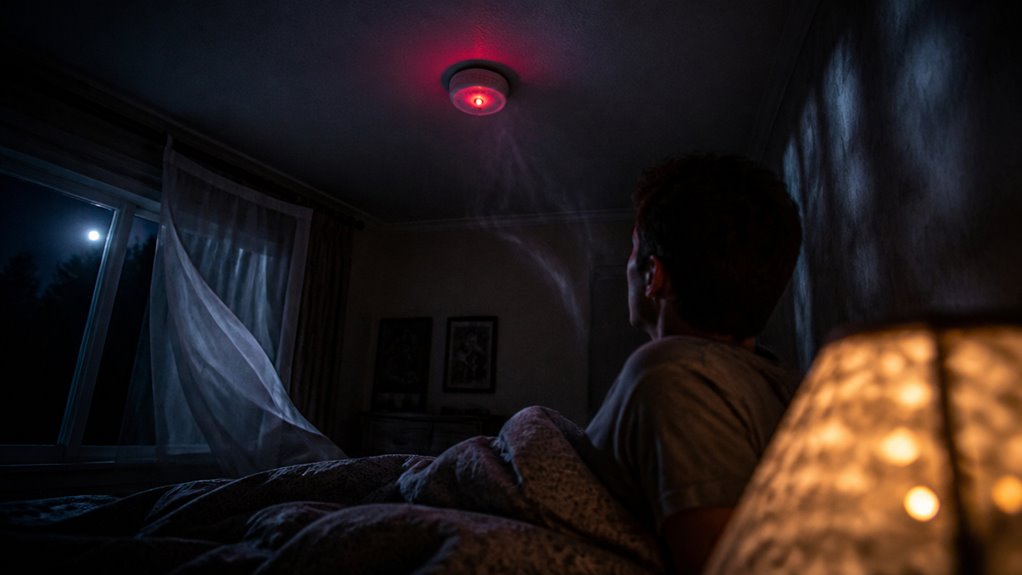

Your smoke alarm chirps at night mainly because cooler temperatures increase battery resistance. This lowers voltage and triggers low-battery warnings even if the battery isn’t fully dead.
This issue often occurs between 2 a.m. and 6 a.m., when temperatures drop and humidity rises. These conditions can sometimes affect sensor accuracy.
Drafts and alarm placement can worsen the issue, especially in older units with degrading sensors. Proper maintenance and timely replacements can help.
Understanding these factors can clarify how to keep your alarms reliable.
Key Takeaways
- Cooler nighttime temperatures increase battery resistance, causing voltage drops that trigger low-battery chirps between 2 a.m. and 6 a.m.
- Humidity and condensation buildup overnight can disrupt smoke sensors, causing false alarms due to moisture interfering with detection.
- Dust, insects, and debris accumulating inside the alarm sensor chamber often cause false activations during the night.
- Alarms placed near vents or drafts experience airflow and temperature changes that can trigger intermittent nighttime chirps.
- Aging batteries and sensors are more prone to nighttime alerts, signaling the need for cleaning or battery replacement.
Why Do Smoke Alarms Chirp Mainly at Night?
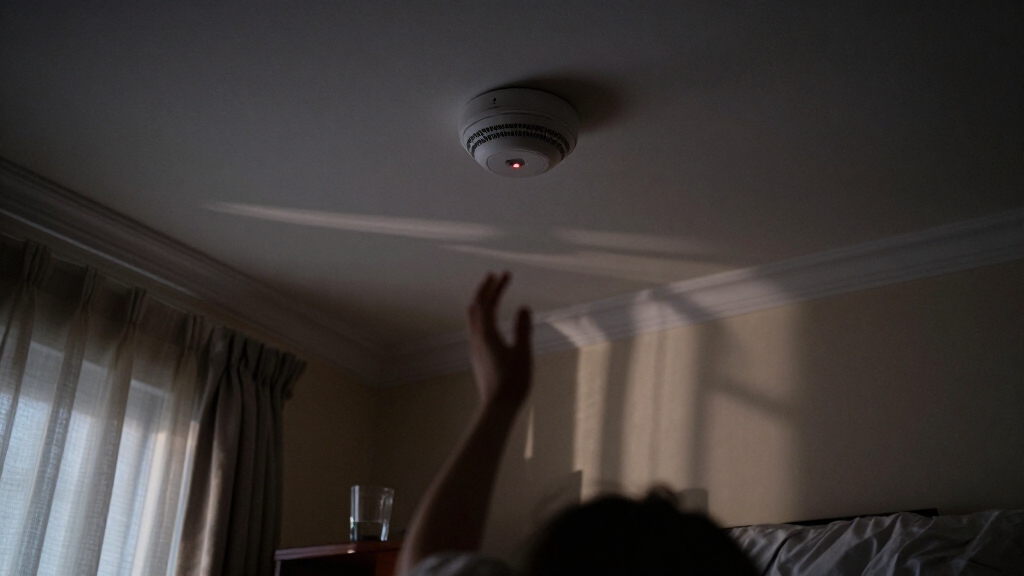
Although smoke alarms can chirp at any time, you’ll often notice the sound mainly at night because cooler temperatures between 2 a.m. and 6 a.m. increase battery internal resistance. This reduces power output and triggers low-battery warnings.
During these hours, your home’s temperature drops, causing aging or weakened batteries to struggle to maintain voltage. While the same battery may function adequately during warmer daytime conditions, the colder environment raises internal resistance.
This causes the alarm’s circuitry to detect insufficient power and initiate chirping. This phenomenon doesn’t indicate a sudden battery failure but rather an interaction between temperature and battery chemistry.
Understanding this helps you anticipate why alarms alert more frequently overnight. It also emphasizes the need for timely battery replacement to avoid intermittent nighttime disturbances.
Regular battery maintenance and replacement can prevent these nighttime chirps and ensure your smoke alarm functions reliably.
How Low Battery Power Causes Nighttime Chirping?
You might’ve noticed that your smoke alarms tend to chirp at night. Ever wonder why? Well, it turns out that low battery power struggles to keep up when the temperatures drop.
As it gets cooler overnight, the internal resistance in older batteries increases, which makes them drain faster. This can cause those annoying warning chirps.
Interestingly, this effect usually happens between 2 a.m. and 6 a.m. That’s when your home is typically at its coldest. So, if you hear that chirping in the middle of the night, it’s likely just your smoke alarm reminding you that it’s time to check the batteries!
Cold temperatures slow battery chemistry, causing intermittent power and delayed alerts due to reduced battery output.
Battery Drain Overnight
Notice how your smoke alarm often chirps between 2 a.m. and 6 a.m.? This is when battery drain overnight becomes most evident.
During these hours, reduced temperatures increase the battery’s internal resistance, lowering its effective voltage output.
Even if the battery functions adequately during warmer daytime periods, cooler nighttime conditions can cause it to fail to supply consistent power.
As a result, your smoke alarm detects this voltage drop and emits periodic chirps to signal low battery status.
This intermittent warning doesn’t mean the battery suddenly died but reflects diminished performance under cooler conditions combined with near-depletion charge.
Understanding this mechanism helps you recognize that overnight chirping is an early indicator to replace or recharge your smoke alarm batteries promptly before complete power loss occurs.
Replacing batteries annually or immediately after low-battery alerts helps maintain voltage above 8.7 volts necessary for proper smoke detector operation.
Temperature Impact on Power
The drop in temperature overnight directly affects your smoke alarm’s battery performance by increasing the internal resistance within the battery cells.
As temperatures fall, especially between 2 a.m. and 6 a.m., the battery’s ability to deliver consistent voltage declines, reducing its effective power output.
This effect is more pronounced in aging or near-depleted batteries, which might function adequately during warmer daytime hours but fail to maintain stable voltage when cold.
The heightened internal resistance causes your smoke alarm to intermittently chirp, signaling low battery power.
This phenomenon occurs because the battery voltage dips below the alarm’s threshold, triggering alerts despite the battery not being fully dead.
Understanding this temperature-dependent behavior helps you identify why nighttime chirping happens and emphasizes the need for timely battery replacement.
To avoid unexpected alerts, it is recommended to replace batteries at least every six months or immediately when chirping indicates low power.
Chirping Timing Explained
Frequently, smoke alarms chirp during the night because their batteries struggle to provide consistent power as temperatures drop. Cooler air increases the battery’s internal resistance, limiting its ability to deliver necessary voltage. This causes the alarm’s low-battery signal to activate between 2 a.m. and 6 a.m., when your home is coldest.
During the day, warmer temperatures temporarily improve battery output, masking the low charge.
Key points to understand chirping timing:
- Batteries near depletion fail to maintain voltage at lower temperatures overnight.
- Internal resistance rises with cooling, reducing effective power supply.
- Daytime warmth can temporarily prevent chirping by restoring battery performance.
Understanding this timing helps you pinpoint when a battery replacement is truly needed. Persistent chirping often signals low battery or other issues that require timely replacement and reset to ensure proper alarm function.
Why Cooler Temperatures Trigger Smoke Alarm Beeps?
When temperatures drop at night, your smoke alarm’s battery faces increased internal resistance, which reduces its effective power output. This means the battery can’t deliver sufficient voltage to keep the alarm fully operational.
You’ll often notice chirping between 2 a.m. and 6 a.m., the coldest hours in most homes. The battery’s declining capacity struggles to maintain consistent power during these times.
Although the battery may seem fine during warmer daytime temperatures, the cooler night air reveals its weakening state. This temperature-dependent performance drop doesn’t indicate sudden battery failure but highlights aging cells’ sensitivity to cold.
Understanding this helps you recognize that nighttime beeps often signal the battery nearing depletion. Lower temperatures impair chemical reactions inside the battery, reducing electrical flow to your smoke alarm.
Regular maintenance and timely battery replacement are essential to ensure reliable smoke alarm operation, especially during temperature fluctuations affecting battery performance.
How Temperature Changes Affect Battery Life Overnight?
Although battery chemistry continuously degrades over time, temperature fluctuations overnight accelerate the drop in available power by increasing internal resistance within the cells.
When temperatures fall, especially between 2 a.m. and 6 a.m., your smoke alarm’s battery output decreases. This causes low battery chirps that mightn’t appear during warmer daytime hours.
This means your battery may still seem fine during the day but struggles to maintain voltage at night.
Consider these points about temperature effects on battery life overnight:
Cooler air increases internal resistance, lowering usable battery power.
Aging batteries exhibit more pronounced voltage drops as temperatures decline.
Nighttime dips in temperature reveal battery weakness not noticeable during the day.
Understanding these factors helps explain why your alarm chirps more frequently at night.
Storing batteries in cool, dry environments can minimize such voltage drops and extend overall battery life, highlighting the importance of storage conditions in battery performance.
How Humidity and Condensation Cause False Alarms at Night?
Since humidity tends to rise overnight, your smoke alarm’s sensors can become disrupted by moisture buildup, leading to false alarms.
Elevated humidity causes condensation to form on sensor components, especially in bathrooms or kitchens where steam is common. This moisture interferes with the photoelectric or ionization processes by scattering light beams or altering ion flow, which the detector misinterprets as smoke particles.
Overnight condensation is particularly problematic because cooler temperatures increase relative humidity, exacerbating moisture accumulation. Additionally, prolonged exposure to high humidity can degrade sensor sensitivity, increasing false alarm frequency during night hours.
To mitigate this, make certain proper ventilation and avoid placing alarms too close to humidity sources. Understanding how moisture impacts sensor operation can help you reduce nuisance alarms and maintain reliable smoke detection throughout the night.
Installing photoelectric or dual-sensor alarms in humid areas can reduce false alarms caused by moisture and steam.
How Dust and Insects Trigger Smoke Alarm Chirps?
Did you know that dust can actually mess with your smoke alarm? It’s true! When dust builds up, it can interfere with the sensors, leading to those annoying chirps you might hear out of nowhere.
And it’s not just dust—tiny insects can sneak into the detector chamber too. They can look a lot like smoke particles to the alarm, which can trigger those false alarms we all dread.
Spider webs and insect debris can physically block sensors, causing optical interference that increases false alarm frequency.
Dust Impact On Sensors
Accumulating dust and insects inside smoke alarms disrupt sensor accuracy and often trigger unexpected chirps. Dust particles and debris can settle on sensor components, causing ionization or photoelectric detectors to misinterpret signals as smoke.
This contamination creates false alarms or intermittent chirping, especially in older or poorly maintained units. You should regularly clean your smoke alarm to maintain sensor integrity.
Consider these factors about dust impact:
Dust accumulation increases sensor resistance, leading to false triggers. Insects and debris inside the sensing chamber interfere with light or ion flow. Both ionization and photoelectric detectors are vulnerable to contamination effects.
Regular inspection and gentle vacuuming help prevent sensor malfunctions. This ensures your smoke alarm operates reliably, especially during nighttime when anomalies often occur. Cleaning every few months with compressed air or a soft brush is recommended to keep sensors clear and functioning properly.
Insects Causing False Alarms
Insects can crawl into the sensing chamber of your smoke alarm and interfere with its detection mechanisms, causing false alarms or intermittent chirping. Small bugs disrupt the photoelectric or ionization sensors by scattering light beams or altering ion flow, mimicking smoke particles.
This interference triggers the alarm even when no smoke is present. Insects often enter through ventilation openings or gaps in older units, where they can become trapped. Along with dust and debris, their presence compromises sensor accuracy.
Regular inspection and cleaning of the alarm’s interior help prevent insect intrusion and maintain reliable operation. Sealing potential entry points and replacing aging alarms reduce false activations caused by insects.
This ensures your smoke detector functions correctly, especially during nighttime when environmental factors make false chirps more noticeable.
How Placement Near Vents and Drafts Causes Night Chirping?
When smoke alarms are installed near vents or drafts, they often react to rapid changes in temperature and airflow, causing nighttime chirping. These fluctuations can disrupt the sensor’s stability, triggering false alerts.
Smoke alarms near vents may chirp at night due to temperature and airflow changes disrupting sensor stability.
You mightn’t realize that cold air blowing directly on the alarm or sudden warm drafts can confuse its internal circuitry.
Consider these factors:
Airflow variations alter the sensor’s environment, causing transient false signals.
Temperature shifts near HVAC vents increase battery internal resistance, reducing power output.
Drafts can carry dust and debris into the detector chamber, further disturbing sensor accuracy.
Why Old Smoke Alarms Chirp More at Night?
You might’ve noticed that old smoke alarms tend to chirp more at night. It’s a bit annoying, right? Well, one reason for this is that as temperatures drop, the batteries in those aging alarms lose efficiency. So, when it’s coldest, their power output decreases.
On top of that, the sensor components in older alarms can become overly sensitive or unstable. This can lead to false alerts, especially during nighttime conditions when everything is quieter.
Battery Performance Decline
Batteries in older smoke alarms tend to lose efficiency, especially during nighttime hours, causing the alarms to chirp more frequently.
As temperatures drop overnight, the internal resistance within aging batteries rises, reducing their ability to deliver consistent power.
You might notice chirping between 2 a.m. and 6 a.m. when your home’s temperature is lowest, even if the battery seemed fine during the day.
This happens because cooler air increases battery internal resistance, limiting power output.
The battery may function normally in warmer conditions but fail overnight.
Low battery warnings become pronounced only after temperature-induced performance drops.
Understanding this decline helps you identify when it’s time to replace batteries or the entire alarm to maintain reliable fire protection.
Sensor Sensitivity Changes
Although aging smoke alarms may have seemingly functional batteries, their sensors often become more sensitive or erratic at night due to environmental changes like temperature drops and increased humidity.
Cooler nighttime temperatures increase sensor responsiveness by affecting internal components. Elevated humidity can cause condensation to settle on sensor surfaces, triggering false alarms.
These environmental shifts alter the sensor’s baseline readings, making it more prone to nuisance chirps. Additionally, accumulated dust and debris inside older detectors exacerbate this sensitivity, as contaminants mimic smoke particles or interfere with sensor function.
Because sensor calibration degrades over time, your alarm’s ability to discriminate actual smoke from environmental noise diminishes, especially overnight. Regular cleaning and timely replacement help maintain sensor accuracy and reduce false alerts during the cooler, damper hours.
Maintenance Tips to Stop Nighttime Smoke Alarm Chirps
Addressing nighttime smoke alarm chirps starts with routine maintenance focused on battery health and sensor cleanliness.
Effective nighttime smoke alarm care hinges on regular battery checks and keeping sensors clean.
You should regularly check and replace batteries before they near depletion. Low power combined with cooler night temperatures often triggers chirps.
Cleaning the sensor chamber prevents dust, debris, and insects from causing false alarms.
Monitor humidity levels nearby, as condensation can interfere with sensor function.
Replace batteries annually or immediately after a chirp warning.
Use a soft brush or compressed air to clear dust and insect debris from sensors.
Avoid placing alarms near bathrooms or kitchens where humidity spikes at night.
When to Replace Your Smoke Alarm to Prevent Night Chirps?
If your smoke alarm frequently chirps at night despite fresh batteries and regular cleaning, it may be time to replace the entire unit. Smoke alarms typically have a lifespan of 8-10 years; beyond this, sensor reliability declines, causing false alarms and erratic chirping.
Aging detectors accumulate dust and suffer sensor degradation, impairing performance. Low battery warnings often signal imminent replacement needs, as batteries may underperform overnight due to cooler temperatures.
You should also replace alarms that randomly activate without cause or fail routine tests. To prevent nuisance alarms at night, note the manufacture date on your unit and adhere to the replacement schedule.
Timely replacement guarantees consistent sensitivity and reduces false alerts caused by sensor wear or environmental factors impacting older devices.
Frequently Asked Questions
Can Pets Cause Smoke Alarms to Go off at Night?
Pets themselves don’t directly cause smoke alarms to go off at night, but their activity can indirectly trigger alarms. For example, if your pet disturbs dust, insects, or debris inside the detector, it might lead to false alarms.
Additionally, pets near smoke alarms might accidentally bump or interfere with the device. To minimize false triggers, keep detectors clean and properly positioned away from areas where pets roam frequently.
Do Cooking Smells Trigger Smoke Alarms During Nighttime?
You might think cooking smells could set off your smoke alarm like a fire alarm concert, but it’s actually the tiny particles and steam from cooking that trigger it, not just the smell.
At night, increased humidity and condensation make sensors hypersensitive, especially near kitchens. So yes, those overnight cooking smells combined with steam can cause false alarms, thanks to moisture disturbing the smoke detector’s optical or ionization sensors.
Can Electrical Issues Cause Smoke Alarms to Beep Randomly?
Yes, electrical issues can cause your smoke alarms to beep randomly. Power fluctuations in hardwired alarms may trigger false alerts or intermittent chirping.
Loose wiring, faulty connections, or circuit problems can disrupt the alarm’s normal operation. If you notice random beeping, inspect the wiring and power supply carefully.
Addressing electrical faults promptly helps maintain reliable alarm function and prevents nuisance alarms that could compromise your safety.
How Does Smoke Alarm Type Affect Nighttime False Alarms?
Imagine you install an ionization smoke alarm in your kitchen.
This type is more sensitive to small particles like cooking smoke, which can cause false alarms at night when humidity rises.
In contrast, photoelectric alarms detect larger smoke particles and are less prone to nuisance triggers from steam or dust.
Are There Smart Smoke Alarms That Reduce False Nighttime Chirps?
Yes, smart smoke alarms exist that reduce false nighttime chirps by using advanced sensors and algorithms to differentiate real threats from nuisances like humidity or dust.
They often feature adaptive sensitivity, self-testing, and mobile alerts, allowing you to monitor and silence false alarms remotely.
Some models integrate with home automation systems, improving accuracy and minimizing disruptions during cooler, quieter hours when false chirps typically occur.
Check Batteries Before Nighttime Chirping Starts
You shouldn’t ignore nighttime smoke alarm chirps. They’re like a telegram from the past urging you to act.
Low battery power, temperature shifts, and humidity often trigger these alerts, especially in older units or poor placements.
Regular maintenance, timely battery changes, and strategic positioning can prevent false alarms.
Remember, replacing outdated smoke alarms not only stops the chirping but guarantees your safety.
Stay proactive to keep your home secure and your nights undisturbed.