
If you suspect a gas leak, leave the area immediately. Move outdoors or upwind without using electrical devices or flames.
Only shut off the gas if you know the exact leak source and can do so safely; otherwise, evacuate promptly.
Open doors and windows carefully for passive ventilation, avoiding fans or switches.
Call 911 from a safe distance, then notify your gas utility.
Regular maintenance and detection devices help prevent leaks. Understanding these steps guarantees your safety and prepares you for what’s essential next.
Key Takeaways
- Detect the leak by smelling sulfur odor and confirm with a soapy water test before attempting shutoff.
- Only close the gas meter valve if the leak location is known and accessible without risk.
- Disconnect LPG cylinder regulators only under trained guidance or emergency instructions.
- Avoid operating electrical switches or devices near the leak to prevent ignition during shutoff.
- Evacuate immediately if the leak is strong or source is unclear, then call emergency responders.
How to Spot and Respond to Gas Leaks?
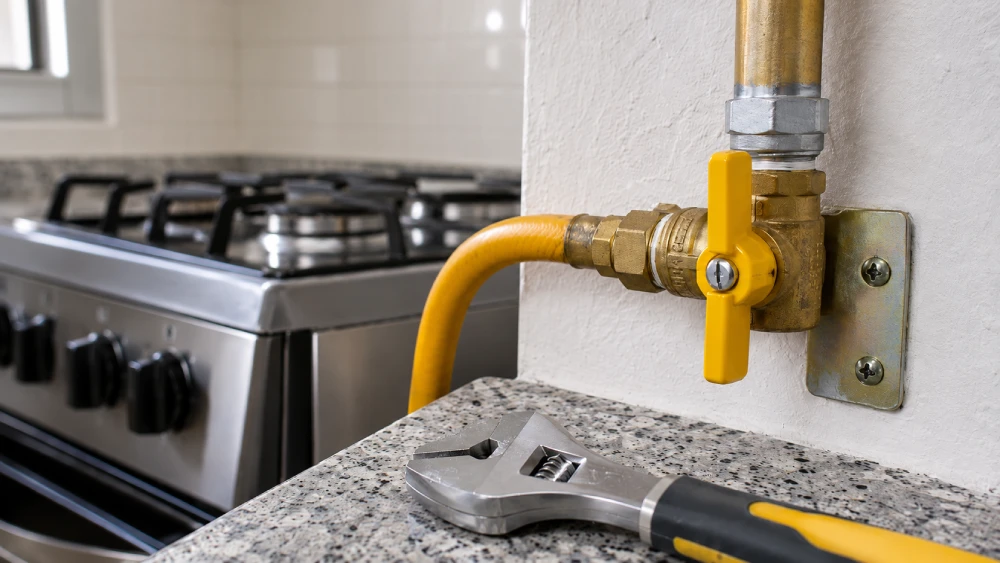
Recognizing gas leaks quickly is crucial for your safety and that of others nearby. If you detect a sulfur-like odor or suspect a leak, leave the area immediately.
Detect gas leaks promptly for your safety—leave immediately if you notice a sulfur-like smell.
Avoid any action that could create a spark or flame. Don’t smoke, light matches, or operate electrical switches. Keep everyone clear of the leak zone to minimize ignition risks and exposure.
Refrain from using phones, elevators, or vehicles until you’re at a safe distance. Never attempt to investigate or fix the leak indoors.
Stay calm and move outdoors or upwind if the leak is outside. Your priority is rapid evacuation and preventing ignition sources, not troubleshooting.
This cautious approach greatly reduces the risk of explosion or poisoning while emergency responders handle the situation. Always shut off the gas supply if it is safe to do so before evacuating.
When and How to Safely Shut Off the Gas Leak Source?
When you suspect a gas leak, shutting off the gas source can prevent further escape only if done safely and correctly.
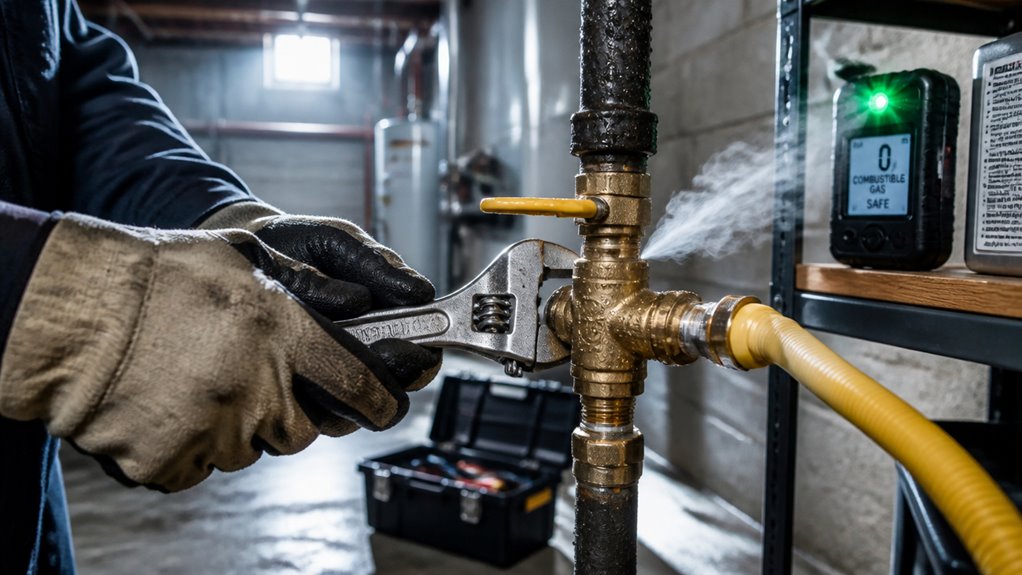
Only attempt to close the gas meter valve if you know the exact leak location and can reach it without exposure risk.
For LPG cylinders, disconnect the regulator only under trained guidance or emergency instruction.
If the leak is strong, source unclear, or evacuation is underway, don’t try to shut off the gas.
Prioritize immediate evacuation over troubleshooting indoors.
Never re-enter the area to locate or adjust equipment until emergency responders or utility personnel declare it safe.
Always act cautiously. Incorrect valve manipulation or lingering near the leak increases ignition and exposure hazards.
Safety must guide your actions above all when handling gas shutoff during a suspected leak.
Using soapy water tests can help preliminarily identify leak points before attempting shutoff, but never rely solely on this method.
How to Ventilate Without Creating Spark Risks?
To clear out gas safely, open doors and windows carefully without flipping any switches or activating electrical devices that could spark ignition.
Open doors and windows cautiously, avoiding any switches or devices that might ignite gas.
Avoid using fans, powered ventilation, or any device that could produce sparks, such as phones, flashlights, or doorbells.
After opening ventilation points, leave the area promptly to minimize exposure and ignition risk.
If the leak is outdoors, move upwind to fresh air.
Do not linger near the leak while ventilating.
Never use electrical controls or appliances until the gas has fully dispersed and emergency responders confirm it’s safe.
Your priority is to reduce gas concentration by passive ventilation only, maintaining strict control over potential ignition sources.
Only trained personnel should operate powered equipment or initiate further ventilation steps.
Proper ventilation is essential to prevent dangerous buildup of gases and maintain indoor air quality.
When and How to Report a Gas Leak Emergency?
If you suspect a gas leak, you must call 911 immediately from a safe location to guarantee prompt emergency response.
Do not use any phone while near the suspected leak; move outdoors or to a safe distance first.
When you call, clearly provide the exact address, describe visible conditions, and confirm if anyone remains inside.
After notifying emergency services, contact your local gas utility’s emergency line to report the incident.
Avoid waiting for symptoms to worsen; report leaks as urgent.
Follow all instructions from dispatchers and utility personnel carefully until crews arrive.
Remember, early reporting and precise communication are vital to mitigate explosion or poisoning risks and ensure responders act swiftly and effectively.
Never re-enter the premises until authorized by professionals.
If a strong hissing sound or significant pressure drop is detected, shut off gas supply immediately and evacuate the area.
Tips for Preventing Gas Leaks With Regular Maintenance
Regularly inspecting and maintaining your gas appliances and connections markedly reduces the risk of leaks and potential hazards.
You should schedule routine checks of all gas pipes, connectors, shutoff valves, and appliances to detect wear, corrosion, or damage early.
Replace any compromised hoses or fittings immediately to prevent gas escape.
Keep the area surrounding gas equipment clear to facilitate visual inspections and odor detection.
Installing and regularly testing carbon monoxide and gas leak detectors enhances safety by providing early warnings.
Additionally, educate everyone in your household on recognizing the distinct smell of gas, how to shut off the supply safely, and evacuation procedures.
These steps guarantee a proactive approach, minimizing the risk of leaks and maintaining a safer environment.
Prompt scheduling of repairs and providing clear access to affected areas can significantly reduce technician scheduling delays.
Frequently Asked Questions
Can I Use Natural Remedies to Mask the Smell of a Gas Leak?
You shouldn’t use natural remedies to mask the smell of a gas leak.
The odorant in natural gas is a critical safety feature designed to alert you to danger.
Masking it with scents or remedies can prevent you and others from detecting a leak, increasing the risk of explosion or poisoning.
Instead, focus on evacuating immediately, avoiding ignition sources, and contacting emergency services to handle the situation safely.
Is It Safe to Use a Gas Leak Detector App on My Phone?
Don’t rely on gas leak detector apps on your phone. They’re like trying to catch a shadow with a net. Your phone’s sensors aren’t designed to detect gas particles, so these apps can give false security or miss leaks entirely.
Instead, trust professionally installed gas detectors. Always respond to the smell of gas with immediate evacuation and emergency calls. Your safety depends on real, certified equipment, not your phone’s screen.
How Long After a Gas Leak Is It Safe to Cook Indoors Again?
You should only cook indoors after a gas leak when emergency responders or the gas company declare it safe.
This clearance usually comes after inspections confirm no lingering gas and proper ventilation.
Never assume it’s safe based on odor alone, as invisible gas or residual fumes can persist.
Follow all official instructions and avoid using appliances until you receive explicit approval to prevent ignition risks and guarantee your safety.
What Are the Health Effects of Minor, Repeated Gas Exposure?
Repeated minor gas exposure can cause headaches, dizziness, nausea, and fatigue.
You might experience respiratory irritation or mild neurological symptoms over time.
Chronic exposure increases risks of more serious conditions like cognitive impairment or respiratory issues.
You shouldn’t ignore persistent low-level leaks, as even small amounts accumulate in your system.
Monitor symptoms closely, maintain good ventilation, and seek medical advice if you notice recurring health problems related to gas exposure.
Can Pets Detect Gas Leaks Before Humans Do?
Yes, pets can detect gas leaks before humans. Studies show dogs’ olfactory receptors are 10,000 to 100,000 times more sensitive than ours.
Your pet may exhibit unusual behavior, such as restlessness, scratching, or barking, indicating early gas presence.
However, you shouldn’t rely solely on pets. Always use proper detectors and respond to any suspected leak immediately by evacuating and contacting emergency services to guarantee safety.
How to Stop Gas Leakage: Final Safety Tips
You might think gas leaks are rare and won’t happen to you, but they’re more common than you realize and dangerous if ignored.
By knowing how to spot leaks, shut them off safely, ventilate properly, and report emergencies promptly, you protect yourself and others.
Regular maintenance is key to prevention. Don’t wait for a leak to become an emergency; stay cautious, act quickly, and keep your environment safe at all times.