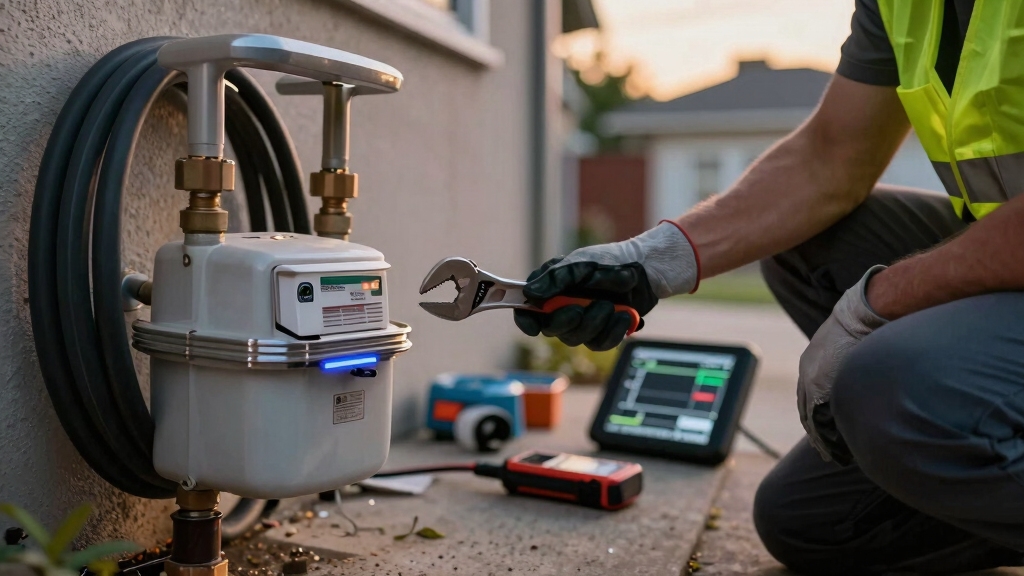

Fixing a gas leak usually takes between 1 and 12 hours, depending on severity, location, and parts availability.
Minor leaks often resolve within 1 to 3 hours, while major leaks may require 6 to 12 hours or more.
Accessibility of pipes and technician scheduling also impact timing.
Post-repair steps like pressure testing and ventilation add extra time.
If you want practical insights on speeding up repairs and understanding key delays, the details ahead will clarify what to expect.
Key Takeaways
- Minor gas leak repairs typically take 1.5 to 3 hours including detection, repair, and post-repair testing.
- Moderate leaks usually require 3 to 6 hours, factoring in longer detection and repair times.
- Major or emergency gas leak repairs can extend from 6 up to 24 hours depending on complexity and material availability.
- Accessibility, technician scheduling, and part availability significantly influence total repair duration.
- Post-repair procedures like pressure testing, ventilation, and system re-establishment add 30 minutes to several hours.
Key Factors Affecting Gas Leak Repair Duration
When you’re dealing with a gas leak repair, several key factors directly influence how long the process will take.
The severity of the leak is primary: minor leaks often resolve within 1 to 3 hours, while moderate leaks can require 3 to 6 hours. Major leaks may extend beyond 12 hours.
Accessibility plays a critical role. Pipe locations behind drywall or underground lines markedly increase repair time due to excavation or demolition needs.
Material availability also affects timelines. Immediate access to parts speeds repairs, but ordering delays can add days.
Technician scheduling impacts when work starts, potentially causing delays.
Finally, post-repair procedures like pressure testing, ventilation, and system re-establishment add 30 minutes to several hours, depending on leak seriousness and system complexity.
Proper detection methods such as soap bubble testing are essential before beginning repairs to accurately identify leak locations and severity.
Detection and Repair of Minor Gas Leaks
Understanding how minor gas leaks are detected and repaired helps you grasp why these issues typically resolve faster than more severe leaks.
Technicians usually spend 30 to 60 minutes locating leaks in connections or flexible appliance connectors. They use specialized detection equipment such as gas sniffers or electronic sensors to pinpoint the exact source quickly.
Once identified, repairs often involve tightening fittings or replacing faulty flexible connectors, which takes an additional 30 to 60 minutes.
After repairs, pressure testing and ventilation typically add 30 to 60 minutes to ensure safety and system integrity.
Using calibrated gauges and following pressure testing protocols helps confirm that the repair is successful and no further leaks remain.
Repair Timelines for Minor, Moderate, and Major Leaks
Because gas leak severity varies widely, repair timelines differ markedly based on the issue’s scale and complexity.
For minor leaks, expect detection and repairs to take 1.5 to 3 hours, typically involving tightening connections or replacing flexible connectors.
Moderate leaks, such as cracked pipes or significant connection failures, require 3 to 6 hours, including 1 to 2 hours for detection and up to 4 hours for repairs.
Major leaks demand extensive work, often spanning 6 to 12 hours or longer, factoring in 2 to 4 hours for detection and 4 to 8+ hours for repairs, especially when pipes are embedded or buried.
Post-repair testing and ventilation add 30 minutes to an hour.
Your repair schedule depends on accessibility, material availability, and technician response.
Using soapy water tests or electronic detectors can help speed up the detection process before repairs begin.
Reasons Major Gas Leak Repairs Take Longer
Although major gas leak repairs demand more time, this extended duration results from several critical factors that guarantee safety and thorough resolution.
You’ll spend additional hours on extensive leak detection, often requiring 2 to 4 hours due to complex pipe damage.
Extensive repair work follows; replacing cracked pipes or significant connection failures can take 4 to 8 hours or longer.
Safety protocols mandate prolonged ventilation periods, especially in severe cases, extending wait times before re-entry.
Post-repair pressure testing and system re-establishment with multiple appliances add further steps, each requiring 30 minutes to over an hour.
Material availability also impacts your timeline; waiting for specialized parts can delay repairs by days.
These combined technical challenges and safety measures make major gas leak fixes inherently more time-consuming.
Proper ventilation during and after repairs is essential to disperse harmful gases and ensure safety.
Location and Accessibility Impact on Repair Time
When gas leaks occur in hard-to-reach places, such as pipes embedded within walls or buried underground, repair times can increase markedly. You’ll face longer excavation or demolition times, which extend the overall duration.
Accessibility directly influences how quickly a technician can detect, isolate, and fix the leak. For example, buried lines require digging, while pipes behind drywall need careful removal and restoration.
| Location Type | Typical Repair Time |
|---|---|
| Wall-embedded pipes | 4 to 8 hours |
| Buried underground lines | 4 hours to 1 day |
| Readily accessible pipes | 1 to 3 hours |
| Complex multi-pipe areas | 6+ hours |
Understanding these factors helps you anticipate realistic repair timelines based on location and accessibility constraints. Additionally, ventilation ducts or other hidden pathways can allow carbon monoxide to infiltrate living spaces, making thorough inspection and sealing essential during repairs.
Material Availability and Scheduling in Gas Leak Repairs
Material availability plays a big role in how fast we can tackle a gas leak repair. If parts need to be ordered, we could face delays of up to two days. That’s a pretty significant wait, right?
On top of that, scheduling can be tricky. If our technicians aren’t available, it can push back repair times even more.
Now, in emergencies, repairs usually take between 4 and 24 hours. But hey, if we’ve everything—materials and personnel—ready to go, we can often provide same-day service. That’s always a great option when time is of the essence!
Prompt repairs are essential to prevent system failures that can escalate costs and hazards.
Impact Of Material Delays
Delays in obtaining necessary materials directly extend the overall timeline for gas leak repairs, sometimes by several days.
When parts like pipes, connectors, or fittings aren’t immediately available, you’ll face waiting periods that postpone the start or completion of repairs.
This issue is especially critical for moderate to major leaks requiring specialized components.
Even if technicians are ready, missing materials halt progress, stretching repair windows beyond the typical 4 to 7 hours.
To minimize downtime, you should verify part availability before scheduling repairs.
Emergency repairs might still proceed with on-hand materials, but custom or bulk items often require ordering, adding 24 to 48 hours to your timeline.
Efficient inventory management and supplier coordination are essential to avoid these setbacks and restore gas service promptly.
Proper scheduling and planning, similar to the recommended maintenance and inspection routines in septic systems, can help reduce unexpected delays in repair projects.
Scheduling Challenges Explained
Although securing the right materials is essential, coordinating technician availability often poses a significant scheduling challenge in gas leak repairs. Even if you have every required part on hand, repair timelines can extend if skilled technicians are booked or unavailable.
This means you might face frustrating delays despite readiness. You can encounter these situations:
Waiting days for a qualified technician to arrive, which increases safety risks. Rescheduling caused by emergency calls diverting available crews. Limited same-day service options for complex repairs due to staffing constraints.
Understanding these scheduling hurdles helps you plan realistically and prioritize safety. Efficient communication with your service provider and flexibility with timing can reduce downtime while ensuring the repair meets safety standards. Additionally, following proper pre-test communication protocols with authorities before repairs can help avoid unnecessary delays and ensure coordinated responses.
Emergency Repair Timelines
Coordinating emergency gas leak repairs demands rapid action, but material availability and technician scheduling often dictate how quickly the job gets done.
If the necessary parts are on hand, you can expect repairs to wrap up within an hour. However, if you need to order materials, delays of one to two days are common.
Technician availability also plays a pivotal role; a backlog may push your repair out several days. For urgent line repairs, completion typically ranges from four to twenty-four hours depending on complexity.
Same-day service is feasible for minor sections or straightforward fixes. Ultimately, your repair timeline hinges on how quickly technicians can access your site and whether all materials are ready.
Proactive communication is essential to minimize downtime and guarantee safety. Properly maintaining and inspecting equipment, similar to following maintenance and inspection standards for fire safety devices, helps prevent emergencies and delays.
Post-Repair Testing and Safety Explained
Once the gas leak repair is complete, you must conduct thorough post-repair testing to guarantee system integrity and safety.
Thorough post-repair testing is essential to ensure gas system safety and integrity.
This involves pressure testing the system for 30 to 60 minutes to assure no residual leaks remain. Proper ventilation follows, lasting from 30 minutes to several hours depending on leak severity, to clear any lingering gas.
Finally, you’ll re-establish the gas supply and test connected appliances, which can take over an hour in complex systems.
Key steps include:
- Conducting pressure tests to confirm airtight seals.
- Ventilating the area to eliminate hazardous gas concentrations.
- Verifying appliance operation and monitoring for irregularities.
Following these procedures precisely protects you and your property from future risks and assures the repair holds under normal use. Installing carbon monoxide detectors during this process enhances safety by providing early warnings of dangerous gas buildup.
Tips to Speed Up Gas Leak Repairs
Streamline your gas leak repair process by preparing key materials and information ahead of time.
Make certain you have replacement parts such as connectors or pipe segments readily available to avoid delays.
Provide clear access to the affected area by removing obstacles and securing permissions if the leak is behind walls or underground.
Schedule repairs during off-peak hours to guarantee technician availability and quicker response times.
Communicate precise leak location details to the repair team to reduce diagnostic time.
After repairs, facilitate proper ventilation and post-repair testing by creating a safe, well-ventilated environment.
Finally, coordinate with your gas provider for expedited system re-establishment.
These steps help minimize downtime and ensure repairs proceed efficiently from detection through final testing.
Frequently Asked Questions
What Are the Health Risks During a Gas Leak Repair?
During a gas leak repair, you face health risks like inhaling toxic gases, which can cause headaches, dizziness, or nausea.
Prolonged exposure might lead to respiratory issues or even unconsciousness.
There’s also a fire or explosion risk, so you need to avoid sparks or flames.
Proper ventilation and protective equipment are essential to minimize these dangers.
Always follow safety protocols and evacuate if you feel unwell or detect strong gas odors.
Can I Stay Home During the Gas Leak Repair?
Sure, you can stay home during the gas leak repair if you enjoy playing hide-and-seek with safety.
Realistically, it’s best to leave while the technician works, especially with major leaks needing ventilation that can last hours or even a day.
For minor leaks, you might stay but keep windows open and avoid ignition sources.
Prioritize your safety; temporary relocation is the smartest, most practical choice during repairs.
How Do I Detect a Gas Leak Myself?
You can detect a gas leak yourself by first smelling for a distinct rotten egg odor, a common additive in natural gas for easy detection.
Listen for hissing sounds near gas lines or appliances.
Use soapy water on suspected connections; bubbles indicate leaks.
Check for dead vegetation or a white cloud near outdoor lines.
If you suspect a leak, avoid sparks, ventilate, and call a professional immediately for accurate detection and repair.
What Safety Precautions Should I Take Before Repair?
Before repair, you should immediately shut off the gas supply to prevent further leaks.
Ventilate the area thoroughly to disperse any lingering gas.
Avoid using open flames, electrical switches, or devices that might spark.
Evacuate everyone from the premises if the leak is significant.
Use proper personal protective equipment, like gloves and safety glasses.
Finally, notify a licensed technician to handle detection, repair, and post-repair testing safely and efficiently.
Will My Gas Service Be Interrupted During Repair?
If you’re fixing a moderate leak like cracked pipe connections, your gas service will be interrupted during repairs to guarantee safety.
For example, a homeowner had to shut off gas for four hours while technicians replaced damaged piping behind drywall.
This interruption is necessary to prevent hazards.
After repairs, the system undergoes pressure testing and ventilation before gas service resumes.
Expect a temporary service shutdown during the repair process.
Don’t Delay a Gas Leak Repair Inspection
When dealing with a gas leak, remember that haste makes waste. While minor leaks can be fixed quickly, moderate to major repairs take longer due to complexity, location, and material availability.
You can’t rush safety checks or post-repair testing. To speed up the process, make certain clear access and prompt scheduling. Staying informed and prepared helps you manage repairs efficiently without compromising safety or quality.