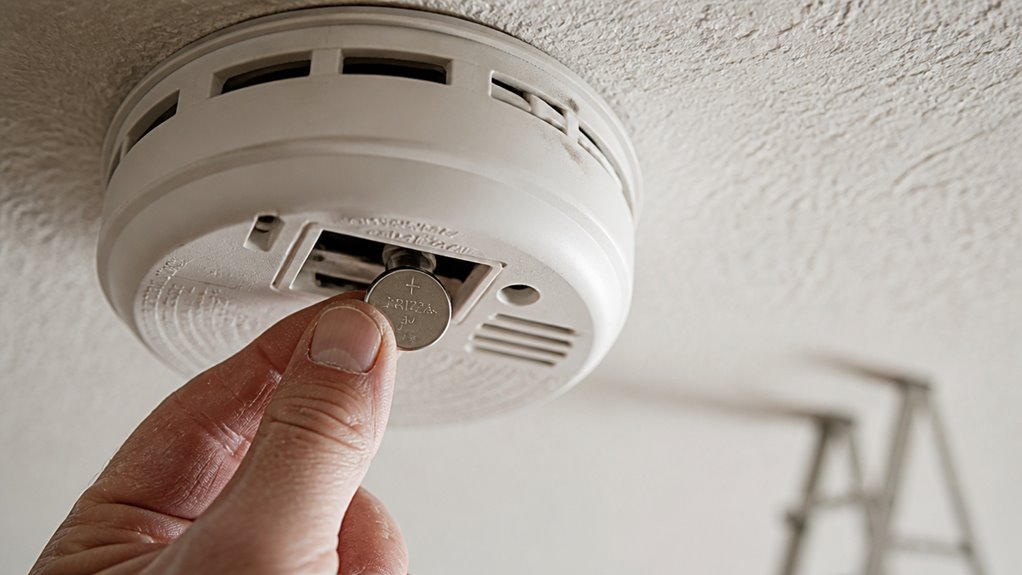

Removing the battery won’t immediately stop your smoke detector from chirping because many models contain internal power reserves that keep powering the alarm for minutes or even hours after battery removal.
Chirping often signals low battery, sensor faults, or end-of-life conditions that battery removal doesn’t fix. In fact, pulling the battery disables protection, creating safety risks.
If chirping persists, it’s important to understand the underlying causes and proper troubleshooting to restore reliable operation.
Key Takeaways
- Removing the battery may not immediately stop chirping due to stored internal power reserves in the detector.
- Chirping can persist for minutes or hours after battery removal as residual charge dissipates.
- Battery removal disables the detector, leaving the home unprotected against fire hazards.
- Persistent chirping often signals low battery, sensor faults, or end-of-life issues not fixed by battery removal.
- Manufacturers recommend replacing the battery and resetting the unit instead of removing the battery to stop chirping.
Why Taking Out Your Smoke Detector Battery Won’t Stop Chirping?
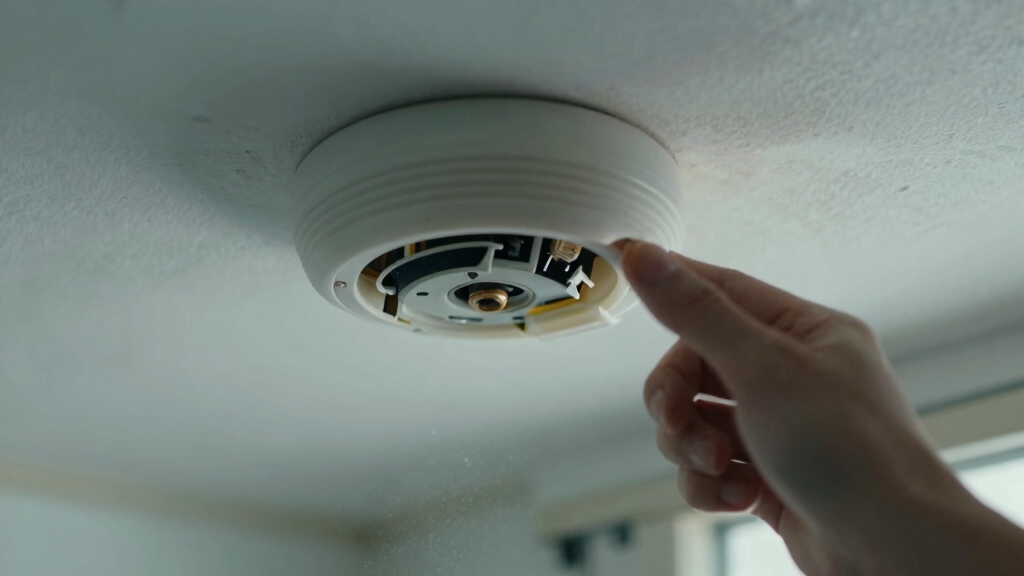
Although it might seem like removing the battery would immediately stop the chirping, this action only provides a temporary silence and doesn’t address the underlying issue.
You should know that many smoke detectors contain an internal power reserve or stored charge, which can cause chirping to continue even after battery removal.
Additionally, pulling the battery disables the detector, leaving your home unprotected against fire hazards. Manufacturers recommend replacing the battery rather than removing it to maintain functionality.
Chirping often signals low battery, end-of-life, or fault conditions, none of which are resolved by simply removing the battery.
Consequently, battery removal isn’t a proper fix and increases risk by making the smoke detector unusable until a proper solution, such as battery replacement or reset, is implemented.
To ensure continuous fire protection, hardwired smoke detectors still require a battery backup as a critical power source during outages.
What Causes Smoke Detectors to Chirp and How to Identify Them?
Smoke detectors frequently chirp to signal specific issues that require your attention, such as low battery power, sensor faults, or the device reaching the end of its service life.
You’ll recognize low battery chirps by periodic, short beeps typically occurring every 30 to 60 seconds.
Sensor faults or contamination often cause irregular or more frequent chirping, sometimes accompanied by error indicators like flashing lights.
When a smoke detector reaches its end-of-life, usually after 8 to 10 years, the chirping becomes persistent and won’t stop with battery replacement.
Identifying these patterns helps you determine the underlying problem quickly.
Environmental factors like humidity or drafts may also cause nuisance chirping, so consider detector placement when diagnosing.
Always consult your model’s manual for specific chirp codes and troubleshooting guidance.
Timely replacement of batteries, typically every 6 to 12 months, is essential to prevent low-battery chirps and maintain reliable smoke detector operation.
How Replacing the Battery Fixes Most Chirping Smoke Detectors?
When your detector starts chirping due to low battery, replacing the battery usually resolves the issue promptly. This is the standard maintenance step recommended by manufacturers to restore full functionality and safety.
To replace the battery effectively:
- Identify the correct battery type specified by the smoke detector model, commonly 9V or AA batteries.
- Remove the old battery and insert a fresh one, ensuring proper polarity alignment.
- Test the detector after replacement to confirm the chirping has stopped and the alarm responds correctly.
Replacing the battery eliminates low power signals that cause intermittent chirping. It also prevents disabling the detector, which removing the battery would cause, leaving your home unprotected.
If chirping persists after replacement, further diagnostics are necessary since the battery is likely not the sole cause. Regular monthly testing is recommended to catch battery issues early and maintain detector reliability.
When and How to Reset Your Smoke Detector to Stop Chirping?
Resetting your smoke detector can often stop nuisance chirping caused by temporary glitches or sensor errors.
After replacing the battery, press and hold the Test/Silence button for 10–30 seconds to initiate a reset.
Some models require removal from the mounting bracket before resetting; consult your alarm’s manual for specifics.
This process clears internal error codes and recalibrates the sensor, potentially silencing false alerts.
If chirping persists after reset, the issue likely extends beyond power glitches, possibly involving sensor contamination or device end-of-life.
Avoid removing the battery as a long-term fix, as it disables protection.
Always test your smoke detector post-reset to confirm normal operation and ensure your home remains safely monitored.
Regular monthly testing is recommended to maintain optimal smoke detector functionality.
How Cleaning Your Smoke Detector Can Prevent False Chirps?
Regularly cleaning your smoke detector prevents dust and debris buildup that can trigger false chirps. Contaminants interfere with sensor accuracy, causing the alarm to misinterpret environmental signals as faults.
To maintain peak function and reduce nuisance chirping, follow these steps:
- Vacuum the detector’s vent openings gently using a soft brush attachment to remove dust without damaging sensitive components.
- Wipe the exterior vents with a slightly damp cloth, ensuring no moisture enters the unit to avoid electrical shorts or sensor damage.
- Perform cleaning routinely, especially in dusty or high-traffic areas, to prevent sensor contamination accumulation that leads to false alarms.
Regularly inspect and clean detectors to remove dust and pollen that worsen moisture-related chirping.
Why Some Smoke Detectors Chirp Even Without a Battery?
Have you ever taken the battery out of your smoke detector, only to hear it chirping away? It’s a bit puzzling, right? Well, some models actually have an internal power reserve or a stored charge.
This means they can still make noise even without a main battery installed.
So, when you remove the battery, you might still get those pesky temporary alerts. It’s just that built-in energy kicking in.
Understanding this feature really clears things up and explains why simply taking out the battery doesn’t instantly silence the chirping. For battery-operated alarms, it’s important to disengage the tamper-resist feature before removal to ensure proper disconnection and silence.
Internal Power Reserve
Some smoke detectors keep chirping even after you remove their batteries due to an internal power reserve. This reserve is designed to maintain minimal operation briefly, preventing immediate shutdown and alerting you to low battery or fault conditions. Here’s why this happens:
- The internal capacitor stores a small charge, providing temporary power after battery removal.
- This stored energy allows the detector’s circuitry to continue monitoring and signaling issues.
- It prevents false silence, ensuring you address the underlying problem rather than ignoring it by simply removing the battery.
Understanding this internal reserve clarifies why removing the battery doesn’t stop chirping immediately. It also highlights the importance of proper battery replacement or maintenance rather than disabling the detector. For a complete resolution, it is recommended to discharge residual power by pressing and holding the test button for 15–30 seconds as part of the reset procedure.
Stored Charge Effects
Stored charge within a smoke detector’s internal components can cause chirping to persist even after you remove its battery. This occurs because capacitors inside the unit store residual electrical energy, allowing the alarm to emit intermittent chirps despite the absence of a battery.
The stored charge typically dissipates over time, but during this period, the detector may continue signaling a low-battery warning. Removing the battery doesn’t immediately eliminate this charge, so chirping can last minutes or even hours.
To properly address this, you should reset the detector by pressing and holding the Test/Silence button for 10 to 30 seconds. This discharges stored energy and stops the chirping. For safety, it is also recommended to perform routine cleaning and inspection to prevent persistent problems and ensure reliable operation.
Signs Your Smoke Detector Has Reached End-of-Life and Needs Replacement
Hey there! To figure out if your smoke detector is due for a replacement, start by checking the manufacture or replacement date printed on it. Ideally, smoke detectors should be replaced every 8 to 10 years.
If you’re hearing that persistent chirping sound even after you’ve popped in fresh batteries and tried resetting it, that’s usually a red flag. It often means that the internal components are starting to fail.
When you notice these signs, it’s time to replace the whole unit. Keeping your smoke detector in good working order is super important for effective fire protection!
Remember, relying on the manufacture or replace-by dates rather than just test results is the best way to know when to replace your smoke alarm.
Expiration Date Indicators
When evaluating the lifespan of your smoke detector, pay close attention to the manufacture or replacement date printed on its housing. This date is critical in determining whether your unit is still reliable or has reached its end-of-life.
Smoke detectors generally have a service life of 8–10 years, after which their sensors degrade and performance diminishes. Ignoring this indicator can lead to persistent chirping that battery replacement won’t fix.
Here are key points to check:
- Confirm the manufacture or replacement date stamped on the detector’s back or side.
- Compare this date against the current year to assess if the unit exceeds its recommended lifespan.
- If expired, replace the entire smoke detector promptly to maintain effective fire protection.
Relying solely on battery changes with an expired alarm compromises safety.
Persistent Chirping Signals
Persistent chirping often indicates that your smoke detector has reached the end of its useful life and requires replacement.
Smoke alarms typically last 8–10 years; beyond this, internal components degrade, causing persistent alerts despite battery changes.
If your detector continues chirping after installing a fresh, manufacturer-specified battery and performing a reset, it’s likely signaling an expired unit.
Some models with sealed 10-year batteries emit chirps when the internal power reserve depletes, which can’t be resolved by battery removal or replacement.
Ignoring these signals compromises your home’s safety as the alarm may fail during an actual fire event.
To maintain reliable protection, check the manufacture or replacement date on the housing and replace the unit promptly if it’s past its service life.
Regular maintenance, including monthly testing and biannual cleaning, can help prevent premature failure and ensure your detector remains effective.
How Environmental Factors Trigger Smoke Detector Chirping?
Although smoke detectors are designed to function reliably under typical indoor conditions, environmental factors like high humidity, temperature fluctuations, and airborne particles can cause them to chirp unexpectedly.
Smoke detectors may chirp unexpectedly due to environmental factors like humidity, temperature changes, and airborne particles.
These factors interfere with the sensor’s normal operation, triggering false low-battery or fault alerts. You should consider these common environmental triggers:
- High Humidity and Steam: Moisture from showers or cooking can condense inside the detector, causing sensor irritation and chirping.
- Temperature Fluctuations: Sudden drops or rises in temperature, especially near HVAC vents or drafty areas, can cause false alarms.
- Airborne Particles: Dust, aerosols, or smoke residue can accumulate on sensor components, disrupting detection sensitivity and prompting intermittent chirps.
Addressing these conditions often reduces nuisance chirping without needing battery removal or replacement.
When to Call a Professional for Persistent Smoke Detector Chirping?
You’ll often find that most smoke detector chirping issues resolve after you replace the battery, reset the unit, or clean the sensor.
However, if chirping persists despite these measures, it’s time to call a professional. Persistent chirping can indicate internal faults, sensor malfunctions, or end-of-life conditions that require expert diagnosis.
A technician can test the alarm’s circuitry, verify power integrity, and determine if replacement is necessary.
Additionally, professionals can assess environmental influences like wiring issues or placement problems contributing to false alarms.
Don’t ignore ongoing chirping, as disabling the detector by removing the battery leaves you vulnerable to fire risks.
Prompt professional intervention guarantees your smoke detector functions reliably and maintains essential home safety.
Frequently Asked Questions
Can a Smoke Detector Cause Electrical Issues in My Home?
A smoke detector itself rarely causes electrical issues in your home if it’s properly installed and maintained.
However, faulty wiring, a damaged detector, or improper connections can create electrical problems like short circuits or nuisance alarms.
If you notice flickering lights or circuit breaker trips near your smoke alarm, you should have a qualified electrician inspect the device and wiring to guarantee safety and proper operation.
How Do Interconnected Smoke Detectors Communicate Chirping Signals?
Interconnected smoke detectors communicate chirping signals via a low-voltage wiring system or wireless radio frequency signals.
When one detector senses smoke or a fault, it sends a signal to others, triggering synchronized alarms or chirps.
This communication guarantees you’re alerted throughout your home.
You’ll want to check wiring integrity or wireless connections if chirping occurs simultaneously, indicating a shared alert or system issue.
Are There Smoke Detectors With Rechargeable Batteries Instead of Replaceable Ones?
Imagine a smoke detector as a tiny guardian with a heart you can recharge.
Yes, some smoke detectors come equipped with rechargeable batteries, often lithium-ion types sealed within the unit.
These models eliminate frequent battery swaps and maintain continuous protection.
However, their lifespan is limited, typically around 10 years.
After that, the entire unit should be replaced to guarantee reliability and safety in your home.
What Safety Precautions Should I Take When Handling Smoke Detectors?
When handling smoke detectors, always turn off power or remove batteries to avoid electric shock.
Use a ladder safely to reach ceiling-mounted units. Avoid touching sensors directly to prevent damage or contamination.
Handle the unit gently and keep it dry. Never expose it to water.
Follow manufacturer instructions when replacing batteries or cleaning.
Dispose of old detectors according to local regulations due to potential radioactive components or batteries.
Can Pets Trigger Smoke Detector Chirping or False Alarms?
Yes, pets can trigger smoke detector chirping or false alarms, primarily through airborne particles like pet dander or fur.
These contaminants can accumulate inside the sensor chamber, causing nuisance chirping or alarms.
Additionally, pet movement near the detector may trigger certain photoelectric alarms sensitive to motion or dust disturbance.
To reduce false alarms, clean the detector regularly and position it away from areas where pets frequently roam or shed heavily.
Keep Your Smoke Detector Working and Quiet
You might not realize that 70% of smoke detector chirps are linked to low batteries, not device failure.
Simply removing the battery won’t stop the warning; it often triggers more issues, including loss of fire protection.
Instead, replace the battery promptly, clean the detector, and reset it as needed.
If chirping persists, consider environmental factors or device age.
Proper maintenance guarantees your smoke detector functions reliably, keeping you and your home safe.