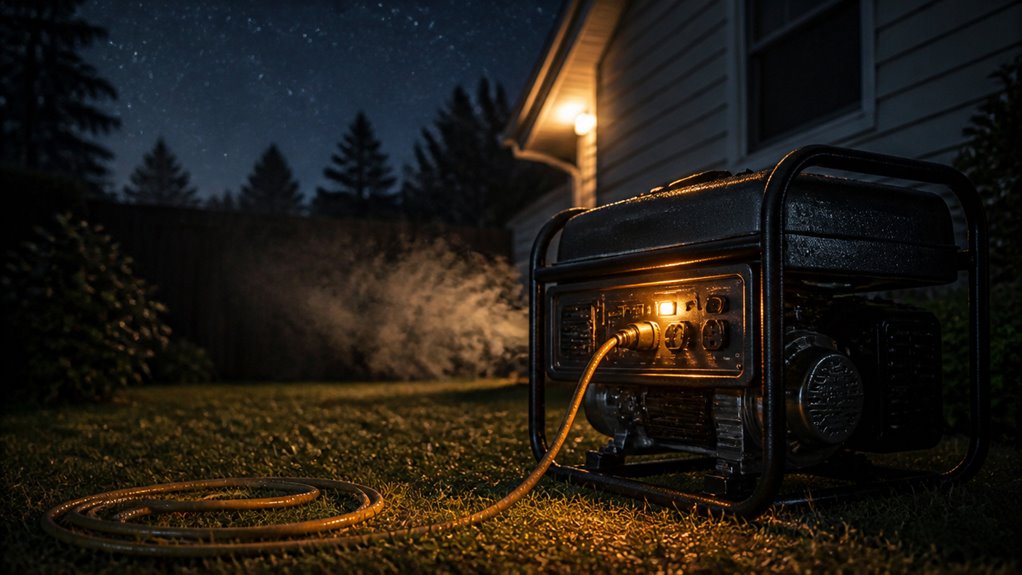

Running a generator overnight poses serious risks, mainly from carbon monoxide, which can accumulate rapidly and silently in nearby living spaces.
You must place the generator outdoors at least 20 feet from doors or windows to guarantee exhaust dispersal and prevent indoor migration.
Fire hazards demand cooling the unit before refueling and stable placement to avoid tipping.
Electrical dangers require proper grounding and use of transfer switches.
Understanding these critical safety measures will help you manage overnight generator use effectively.
Key Takeaways
- Running a generator overnight is safe only if it is outdoors, at least 20 feet from doors, windows, and vents to prevent carbon monoxide buildup.
- Install and regularly test battery-powered CO alarms near sleeping areas to detect dangerous carbon monoxide levels promptly.
- Ensure the generator exhaust directs fumes away from the home and neighboring structures, considering prevailing wind direction.
- Never operate a generator in enclosed or partially enclosed spaces to avoid rapid toxic carbon monoxide accumulation.
- Constantly monitor generator placement and ventilation overnight to minimize fire, fuel, and carbon monoxide hazards.
Dangers of Running a Portable Generator Overnight
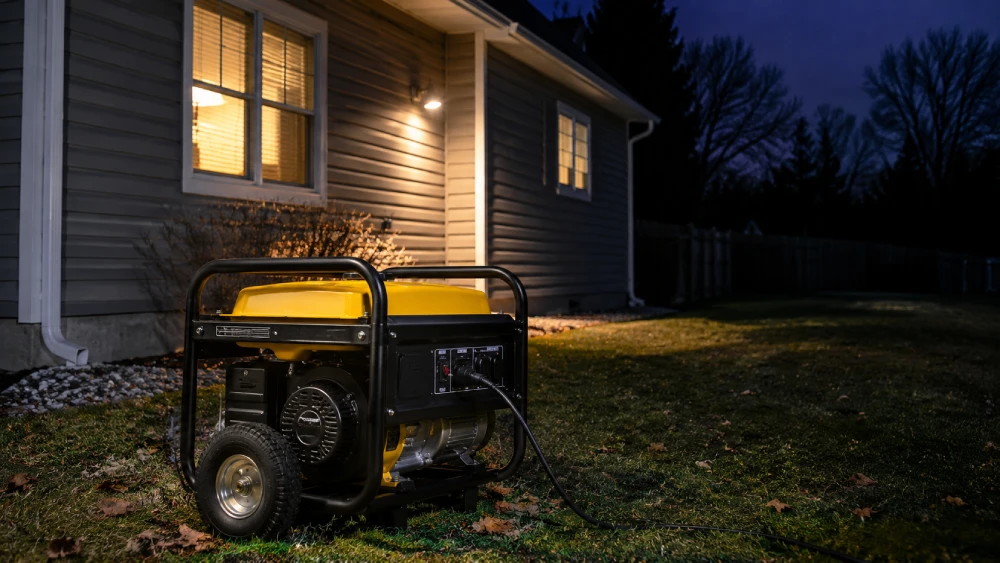
Although portable generators provide convenient power, running one overnight poses significant dangers that you must understand before use.
Portable generators offer convenience but running them overnight carries serious safety risks to be aware of.
You need to recognize that improper placement and operation elevate risks such as fire, electric shock, and fuel-related hazards.
For example, hot engine components can ignite spilled fuel, especially if you refuel while the generator is running, which is highly unsafe.
Electrical hazards arise if you overload the generator or use unapproved extension cords, potentially damaging equipment or causing fire.
Additionally, placing the generator too close to your home increases exposure to exhaust and fire risks.
Since nighttime operation often lacks supervision, unsafe conditions can persist unnoticed.
You must follow strict manufacturer guidelines, maintain adequate ventilation, and ensure proper fuel storage to mitigate these dangers effectively.
Using a gas leak detector near your generator can provide early warnings of hazardous gas accumulations to enhance safety during overnight operation.
Carbon Monoxide Risks When Using a Generator Overnight
Hey there! Just a heads-up: when you’re using a portable generator, it’s really important to remember that it emits carbon monoxide. This gas is colorless and odorless, which means it can build up quickly indoors without you even noticing. That’s pretty scary, right?
Now, if you’re thinking about running the generator overnight, the risk really goes up. You mightn’t realize you’re being exposed to it, and that could lead to symptoms like dizziness, or even worse—unconsciousness or death. Yikes!
To keep yourself safe, it’s a smart idea to install battery-powered carbon monoxide alarms near your sleeping areas. They can help you catch this invisible threat before it becomes a serious problem. Safety first, always!
If your alarm starts continuous beeping, do not ignore it—evacuate immediately and seek fresh air.
Carbon Monoxide Dangers
How quickly can carbon monoxide build up when running a generator overnight?
Carbon monoxide (CO) can accumulate rapidly, especially in enclosed or partially enclosed areas, reaching toxic levels within minutes to hours.
Since CO is colorless and odorless, you won’t detect its presence without a monitor.
Prolonged exposure—even at low concentrations—can impair oxygen delivery in your bloodstream, causing dizziness, confusion, or worse.
Running a generator near your living space increases the risk of CO migrating indoors, particularly if exhaust vents face windows or doors.
Even after shutdown, CO can linger in stagnant air, posing a delayed hazard.
To manage this danger, you must ensure outdoor placement with adequate ventilation and install battery-backed CO alarms near sleeping areas to alert you before symptoms emerge.
This reduces the risk of fatal poisoning.
Additionally, operating generators at optimal loads of 50–75% load can help maintain efficient combustion, potentially reducing harmful emissions like carbon monoxide.
Indoor Exposure Risks
When operating a generator overnight, indoor exposure to carbon monoxide (CO) poses a critical health risk. CO can infiltrate living spaces even if the generator runs outside.
CO is colorless and odorless, making detection difficult without alarms. The gas can seep through windows, doors, and vents, accumulating to lethal levels while occupants sleep.
Understanding the infiltration mechanisms and risk factors can help you mitigate exposure effectively.
| Factor | Impact on Indoor CO Levels |
|---|---|
| Distance from generator | Greater distance reduces CO risk |
| Wind direction | Can carry exhaust indoors |
| Ventilation quality | Poor ventilation increases risk |
| Openings (windows/vents) | Entry points for CO |
| Duration of operation | Longer run times elevate risk |
You must ensure proper outdoor placement and ventilation to minimize indoor CO exposure. Never run generators in enclosed or partially enclosed areas to avoid the buildup of carbon monoxide.
Alarm Recommendations
Reliable carbon monoxide (CO) alarms play a crucial role in mitigating the risks associated with running a generator overnight.
Since CO is colorless, odorless, and can accumulate rapidly, relying solely on human senses is unsafe. You must install battery-powered or hardwired CO alarms inside your home, especially near sleeping areas.
These alarms provide early warnings, giving you time to act before symptoms emerge.
Consider these key points:
- Place alarms on every level of your home, focusing on bedrooms and adjacent hallways.
- Test alarms regularly to verify functionality and replace batteries annually or as needed.
- Use alarms certified to meet UL 2034 standards for accuracy and reliability.
- Avoid disabling or ignoring alarms, even if you suspect false alerts; investigate immediately.
Proper alarm use is critical for safe overnight generator operation.
For optimal protection, install CO detectors within 10 feet of bedroom doors to ensure alarms are loud enough to wake sleeping occupants.
Safe Placement of Portable Generators Outdoors
When using a portable generator, it’s really important to set it up outdoors on a stable and dry surface. This helps prevent any tipping or fire hazards.
You’ll want to keep it at least 20 feet away from all doors, windows, and vents. This distance helps reduce the risk of carbon monoxide exposure inside your home.
Proper positioning is key! It ensures that exhaust gases can dissipate safely without drifting into spaces where people are.
To maintain safety, it is essential to have your generator regularly inspected and maintained by licensed technicians to ensure reliable operation.
Outdoor Placement Guidelines
Where should you place a portable generator to guarantee safe operation?
You must position it outdoors in a well-ventilated, dry area to prevent carbon monoxide buildup and electrical hazards.
Follow these critical guidelines:
- Place the generator on a flat, stable surface to avoid tipping and fuel spills.
- Make sure exhaust vents direct fumes away from your home and neighboring structures.
- Keep the unit at least 20 feet from buildings to minimize carbon monoxide infiltration.
- Avoid placing it under overhangs, porches, or enclosed spaces that trap exhaust gases.
Additionally, understanding the risks of gas leaks and knowing how to recognize leak indicators can help ensure generator safety during operation.
Distance From Openings
Maintaining a safe distance between your portable generator and all building openings markedly reduces the risk of carbon monoxide entering indoor spaces.
Position your generator at least 20 feet away from doors, windows, vents, and other openings to prevent exhaust gases from infiltrating your home.
Make certain the exhaust outlet directs fumes away from the building and nearby structures, accounting for prevailing wind directions.
Even slight proximity increases the potential for carbon monoxide accumulation, which is invisible and deadly.
Avoid partial enclosures or nearby walls that can trap exhaust.
Consistently monitor placement during operation to maintain this buffer, especially overnight when occupants are vulnerable.
Strict adherence to these distance guidelines is critical for safe outdoor generator use, minimizing toxic exposure risks and supporting proper ventilation.
Preventing Fire and Fuel Hazards Overnight
A key factor in preventing fire and fuel hazards overnight involves careful management of gasoline and generator heat. You must control fuel storage, refueling procedures, and generator placement to minimize ignition risks.
Careful handling of gasoline and generator heat is essential to prevent fire hazards overnight.
- Store gasoline only in approved containers, away from living areas and ignition sources.
- Always turn off the generator and allow it to cool before refueling to prevent vapor ignition.
- Position the generator on a dry, stable, non-flammable surface to reduce tipping and spark hazards.
- Avoid refueling while the engine is hot or running, as spilled fuel or vapors can ignite on hot components.
- Ensure the generator is placed in a well-ventilated area with secure mounting to prevent displacement and reduce fire risk.
Electrical Safety for Portable Generators at Night
Because electrical hazards increase in low-light conditions, you must ensure all connections and equipment comply with safety standards when running a portable generator at night.
Use only heavy-duty, outdoor-rated extension cords sized for the load.
Avoid backfeeding by never plugging the generator into household outlets without a transfer switch.
Ground the generator as specified by the manufacturer to prevent shock risk.
Proper identification and handling of load wires in your wiring setup are essential to maintain electrical safety.
| Hazard | Prevention | Equipment Requirement |
|---|---|---|
| Overloading | Calculate load, avoid excess | Rated generator capacity |
| Extension cord misuse | Outdoor-rated, correct gauge | Heavy-duty cords, proper length |
| Improper grounding | Follow instructions | Grounding rod or setup |
Safer Alternatives to Running a Portable Generator Overnight
When considering overnight power needs, you should prioritize solutions that minimize risks associated with portable generators, such as carbon monoxide poisoning and fire hazards.
Portable units pose significant dangers when run unattended, so safer alternatives exist that reduce exposure and improve safety.
Consider these options:
- Install a permanently mounted standby generator with professional ventilation and transfer switch integration to guarantee safe continuous power.
- Use battery-powered or battery-backup carbon monoxide detectors near sleeping areas to monitor air quality reliably.
- Employ a transfer switch to safely power home circuits without backfeeding risks.
- Plan generator placement well in advance, maintaining at least 20 feet from openings and guaranteeing outdoor operation before nightfall.
These measures optimize safety while meeting overnight power demands efficiently. Additionally, strategic wiring can further enhance the reliability and safety of your power setup.
Frequently Asked Questions
Can I Use a Generator Indoors if I Have a Carbon Monoxide Detector?
No, you can’t use a generator indoors even if you have a carbon monoxide detector.
Generators emit deadly carbon monoxide gas, which can accumulate quickly in enclosed spaces. Detectors help alert you but don’t prevent poisoning or remove the gas.
The safest practice is to run generators outdoors, at least 20 feet from your home, with exhaust directed away from openings.
Never rely solely on detectors for indoor use.
How Often Should I Test My Carbon Monoxide Alarms During Generator Use?
You should test your carbon monoxide alarms at least once a month during generator use to make certain they function properly.
Before running the generator, confirm the alarm’s battery and sensor status. If your alarms have a test button, press it regularly to verify the alert sounds.
Additionally, replace batteries annually or as recommended by the manufacturer. Continuous monitoring is crucial since carbon monoxide is odorless and can accumulate rapidly near generator operation.
What Maintenance Is Required for a Portable Generator Before Overnight Use?
Before running your portable generator overnight, you’ve got to dot your i’s and cross your t’s.
Check the oil and fuel levels, ensuring fresh gasoline in approved containers.
Inspect air filters and spark plugs for cleanliness or wear.
Confirm all connections are secure and cords rated for outdoor use.
Test the carbon monoxide alarm nearby.
Always cool the engine before refueling and position the generator outdoors, away from any openings to avoid hazards.
Are Propane or Natural Gas Generators Safer for Overnight Operation?
Yes, propane and natural gas generators are generally safer for overnight use because they produce fewer harmful emissions like carbon monoxide compared to gasoline models.
However, you still need to place them outdoors and maintain proper ventilation. Use carbon monoxide detectors nearby.
Fuel leaks and fire risks remain concerns, so you must follow manufacturer guidelines and ensure secure fuel connections.
Never skip routine inspections and never run them indoors or in enclosed spaces.
Can Weather Conditions Affect Generator Safety Overnight?
Weather acts like an unpredictable conductor, influencing your generator’s safety overnight.
Rain and humidity can cause electrical shorts and corrosion, increasing shock risks. Wind may disperse carbon monoxide unpredictably, potentially directing it toward your home.
Cold temperatures can thicken fuel, impairing engine function, while heat elevates fire hazards.
You must factor in these conditions, ensuring proper placement, weatherproofing, and vigilant monitoring to maintain safe operation throughout the night.
Is It Safe to Run a Generator Overnight? Final Verdict
When running a generator overnight, you can’t afford to overlook safety.
Remember, “an ounce of prevention is worth a pound of cure.”
By placing your generator outdoors, away from living spaces, and monitoring fuel and electrical connections, you minimize carbon monoxide and fire risks.
Always prioritize proper ventilation and follow manufacturer guidelines.
While convenient, running a generator overnight demands strict precautions to protect your health and property effectively.