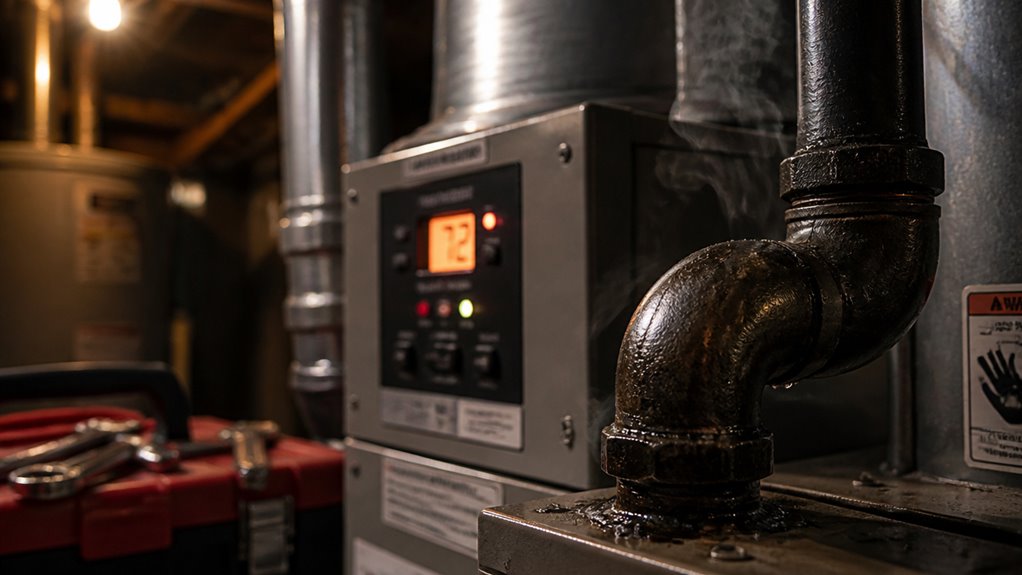

You smell oil when your furnace starts because residual oil or dust burns off during initial ignition, especially after long idle periods.
However, persistent or strong oil odors can indicate leaks, loose fittings, burner malfunctions, or venting issues causing incomplete combustion or indoor fumes.
A cracked heat exchanger or blocked exhaust also leads to oily smells that signal safety risks.
Knowing how to identify these causes helps you address them properly and guarantees safer furnace operation.
Key Takeaways
- A faint oil smell at startup is normal due to residual dust and oil burning off after long idle periods.
- Persistent or strong oil odors indicate potential leaks, dirty flame sensors, or burner malfunctions requiring professional inspection.
- Oil leaks from tanks, lines, or fittings cause continuous odors and pose fire hazards needing immediate repair.
- Burner issues, clogged nozzles, or restricted airflow cause incomplete combustion, producing oily or smoky furnace smells.
- Regular maintenance, filter cleaning, and professional diagnostics prevent and resolve oil odors and ensure safe furnace operation.
Why Your Furnace Might Smell Like Oil at Startup?
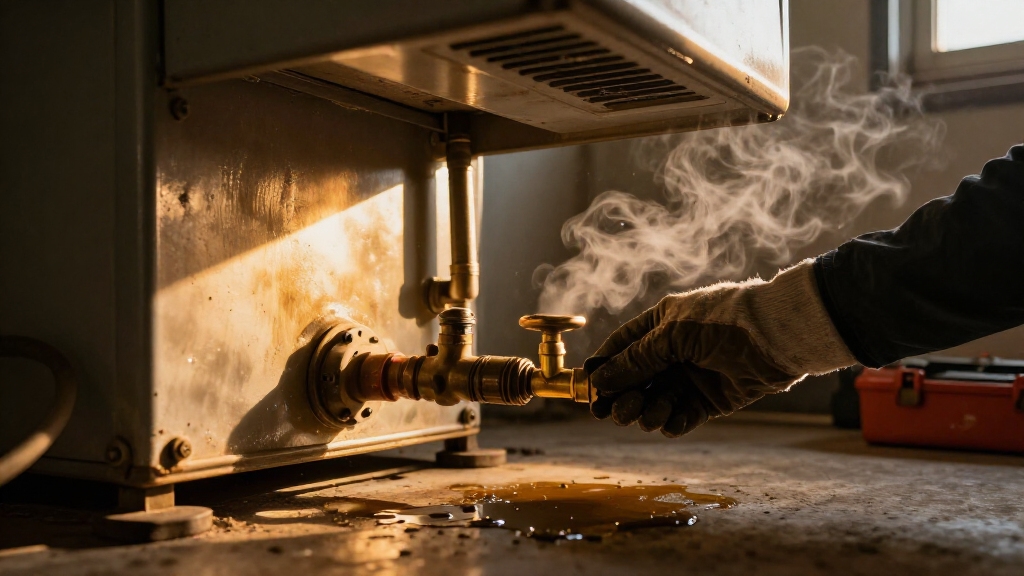
When you start your oil furnace for the first time after a long idle period, you might notice a faint oil smell.
This odor typically results from residual dust and minor oil deposits burning off as the system heats up.
It’s a temporary phenomenon that usually occurs at the beginning of the heating season when the furnace hasn’t been in use for months.
The smell should dissipate quickly once the combustion chamber reaches operating temperature and the residual materials burn away.
If the oil odor persists beyond this initial phase, it could indicate an underlying problem.
Consequently, a short-lived, faint oil smell during startup is generally considered normal.
It signals that your furnace is shifting from idle to active operation without immediate cause for concern.
However, persistent odors may be linked to issues like dirty flame sensors, which can affect furnace operation and safety.
When Is an Oil Smell Normal During Furnace Startup?
Although an oil smell during furnace startup can be concerning, you’ll find it’s normal only under specific conditions.
Typically, a faint oil odor occurs when your oil furnace starts after a long idle period, especially at the beginning of the heating season.
This happens because residual dust and minor oil residues burn off temporarily.
Importantly, this smell should dissipate quickly and not linger.
If you notice the odor is short-lived and mild, it usually indicates normal furnace operation.
However, if the smell persists beyond the initial startup or intensifies, it signals a potential issue requiring professional inspection.
Recognizing this distinction helps you determine when the odor is a routine effect of furnace use and when it demands further attention.
Additionally, just as proper maintenance is crucial for safety in other settings, ensuring your equipment is in good working condition is essential—similar to how Coast Guard regulations emphasize the importance of maintaining fire extinguishers for emergency readiness.
How Oil Leaks Cause Furnace Odors?
If the oil odor from your furnace doesn’t fade quickly after startup, an oil leak might be the cause.
Oil leaks frequently originate from the tank, fuel lines, or filter housing, releasing fumes that produce a persistent smell.
You should inspect for visible oil spots or wet residues near these components, as these signs indicate leaks.
Leaking oil not only causes odors but also poses a fire hazard, requiring immediate attention.
The oil’s vapors can accumulate near the furnace or along the fuel delivery path, intensifying the smell when the system runs.
Because even small leaks can worsen, addressing them promptly prevents damage and safety risks.
Professional maintenance is essential to locate and fix leaks, ensuring your furnace operates safely and odor-free.
Additionally, poor ventilation or blocked exhaust pathways can allow dangerous gases to accumulate indoors, increasing health risks from such leaks and combustion byproducts, so ensuring proper ventilation is critical.
How to Identify Loose Fittings That Cause Oil Smells?
To tackle that pesky oil smell, you’ll want to begin by checking out some common spots where fittings might be loose. Think about places like the oil line connections, filter housing, and tank fittings. As you look around, keep an eye out for any wetness or oil residue.
If you catch a whiff of oil near these joints, it’s usually a sign that something’s not quite right—maybe a loose or compromised seal. Take a moment to carefully tighten those fittings.
And don’t forget, regular inspections are key! They not only help prevent those annoying fumes but also ensure your furnace operates safely. Proper maintenance practices, including inspecting and sealing ducts, play a crucial role in maintaining system safety and efficiency, especially for oil-fueled forced air heating systems with ductwork.
Common Loose Fitting Locations
When inspecting your oil furnace for loose fittings that cause an oil smell, focus on key connection points along the fuel delivery system.
Start with the oil tank’s fill cap and vent, as these fittings can loosen and emit fumes.
Next, check the fuel line connections, especially where the line meets the tank and the furnace’s burner assembly.
The oil filter housing is another critical area; loose fittings here often cause leaks or vapors.
Don’t overlook the pump and nozzle fittings on the burner, as vibration can loosen these over time.
Use a flashlight to spot any gaps or residues and gently tighten fittings with appropriate tools.
Ensuring these common locations are secure helps prevent hazardous oil fumes and maintains furnace efficiency.
For safety, it is important to perform post-repair testing after tightening fittings to confirm there are no leaks.
Signs of Oil Leaks
Securing common loose fitting locations along your furnace’s fuel system reduces the risk of oil leaks.
Awareness of specific signs helps you identify leaks promptly.
You should look for visible oil spots or wet residues near fittings, lines, or the filter housing. These indicate compromised seals or loose connections.
Pay attention to persistent oil odors around the furnace area. Unlike the brief smell at startup, a continuous scent often signals leakage.
Additionally, check for corrosion or staining on metal components, which can suggest slow leaks.
If you notice oil pooling on the floor or dripping from fittings, treat this as a critical issue requiring immediate attention.
Recognizing these signs early helps you prevent fire hazards and maintain furnace efficiency.
Loose or corroded connections can generate localized heat and increase fire hazard risks, making timely detection and repair essential.
Tightening and Inspection Tips
Although oil leaks can stem from various sources, loose fittings remain one of the most common causes of persistent oil odors around your furnace.
To identify them, start by visually inspecting all connections along the fuel line, oil filter housing, and tank fittings. Look for signs like oil residue, wet spots, or corrosion around joints.
Use a wrench to gently tighten fittings, but avoid over-tightening, which can damage threads or seals.
After tightening, run the furnace and monitor for any renewed odors or visible leaks. If you detect persistent smells or spots, recheck fittings or consider replacing worn gaskets or seals.
Regular inspection and maintenance help prevent leaks, ensuring safe furnace operation and minimizing fire hazards related to oil fumes escaping at loose connections.
Additionally, performing routine maintenance practices can extend the life of your furnace and help detect issues like oil leaks early.
What Burner Problems Cause Oil Furnace Odors?
If your oil furnace is giving off an oily or smoky smell, it’s usually due to a burner issue. You know, when the burners get clogged or if there’s a problem with the fuel pump, it can lead to incomplete combustion. That means some oil doesn’t burn off completely, leaving behind that persistent odor.
It’s really important to tackle these problems sooner rather than later. Not only does it help your furnace run more efficiently, but it also keeps you safe from potential hazards. So, if you notice those smells, don’t wait—get it checked out! Yellow or flickering flames are a common warning sign of incomplete combustion and increased carbon monoxide risk.
Burner Malfunction Effects
When your oil furnace burner malfunctions, it can produce distinct oily or smoky odors that signal incomplete combustion.
Clogged burner nozzles or malfunctioning fuel pumps often cause unburned oil to accumulate, releasing noticeable smells.
These odors indicate the burner isn’t atomizing fuel properly, leading to inefficient burning and excess soot.
Additionally, burner flame instability due to faulty electrodes or ignition components can exacerbate odor issues.
Persistent oily smells suggest the burner needs professional inspection and cleaning to restore proper combustion.
Ignoring these signs risks reduced furnace efficiency and potential safety hazards.
Regular burner maintenance guarantees optimal fuel delivery and combustion quality, preventing odor problems and preserving system performance.
If you detect continuous oil smells, schedule a technician visit promptly.
It is also important to recognize leak indicators such as unusual odors or visual signs to prevent potential gas hazards associated with furnace operation.
Incomplete Combustion Causes
Burner malfunctions often stem from incomplete combustion, which directly causes oil furnace odors.
When your burner isn’t burning fuel efficiently, unburned oil residue accumulates, emitting a distinct oily or smoky smell.
Common causes include clogged nozzles or dirty burner components that disrupt the proper air-fuel mixture.
Insufficient oxygen supply also leads to poor combustion, creating odors and reducing heating efficiency.
Additionally, malfunctioning burner parts such as worn electrodes or damaged flame sensors can prevent stable ignition, worsening incomplete combustion.
You should address these issues promptly, as ongoing inefficient burning not only produces unpleasant odors but can also increase fuel consumption and pose safety risks.
Regular professional maintenance guarantees your burner operates cleanly, minimizing odors and optimizing furnace performance.
Blockages like soot and creosote buildup in the chimney and flue can further restrict airflow, exacerbating incomplete combustion and odor problems.
Fuel Pump Issues
Detecting fuel pump issues is essential because a malfunctioning fuel pump disrupts the precise delivery of oil to the burner. This leads to incomplete combustion and the characteristic oily furnace odor. If your furnace emits this smell, consider these fuel pump-related factors:
Erratic oil flow causing inconsistent burner operation.
Reduced oil pressure leading to improper atomization.
Pump wear or mechanical failure reducing fuel delivery efficiency.
Air infiltration in the fuel line causing sputtering and odor.
Electrical faults impairing pump motor performance.
Addressing these issues promptly is critical since a compromised fuel pump triggers odor problems. It also decreases heating efficiency and risks further burner damage.
Regular inspection and maintenance confirm the pump functions correctly, preventing unpleasant smells and maintaining safe furnace operation.
How a Dirty Filter Causes Oil Smells and Performance Issues?
Frequently, a dirty or clogged oil furnace filter restricts airflow, which directly impacts combustion efficiency and leads to oil odors.
When airflow is limited, the burner doesn’t receive enough oxygen for complete combustion, causing unburned oil particles to accumulate and emit an oily smell.
Additionally, restricted airflow forces the furnace to work harder, potentially overheating components and reducing overall performance.
You might notice decreased heating output and increased fuel consumption as a result.
Replacing or cleaning the filter restores proper airflow, improves combustion quality, and often eliminates the oil odor.
However, if the smell persists after addressing the filter, further investigation into other furnace components is necessary to pinpoint the source.
Regular filter maintenance is essential for efficient, safe oil furnace operation.
Why a Cracked Heat Exchanger Causes Oil Furnace Smells?
When a heat exchanger cracks, it can allow oil combustion byproducts to escape into your home’s air supply, causing a distinct oily smell. This damage compromises the furnace’s sealed combustion chamber, mixing harmful gases with your indoor air.
You should recognize these signs:
- Persistent oily odor when the furnace runs
- Uneven heating or hot spots on the furnace surface
- Visible rust or corrosion on the heat exchanger
- Increased condensation or moisture near the furnace
- Frequent furnace cycling or unexplained shutoffs
A cracked heat exchanger not only causes odor issues but also poses serious health risks by leaking carbon monoxide. If you notice these symptoms, avoid running your furnace and schedule an immediate professional inspection to guarantee your home’s safety and prevent further damage.
Why Exhaust Vent Problems Make Your Home Smell Like Oil?
If exhaust vents become blocked or damaged, combustion gases containing oil residues can seep back into your home, producing a noticeable oil smell.
These vents are designed to safely expel harmful combustion byproducts outside. When obstructed by debris, corrosion, or improper installation, the exhaust flow restricts, causing gases to backdraft.
This backdraft releases oil-laden fumes and potentially hazardous pollutants indoors. You might also experience reduced furnace efficiency and increased carbon monoxide risks due to inadequate venting.
Regular inspection and maintenance of exhaust vents are vital to guarantee unobstructed airflow and system integrity. Detecting damage early helps prevent persistent oil odors and safeguards your indoor air quality.
If you notice vent blockages or oil smells, arrange professional vent system evaluation promptly to avoid safety hazards.
When You Should Shut Off Your Furnace Because of Oil Smells?
Although a faint oil smell during startup may be normal, you should shut off your furnace immediately if the odor becomes strong, persistent, or accompanied by visible leaks or unusual furnace behavior.
A faint oil smell at startup is normal, but strong or persistent odors require immediate furnace shutdown.
Ignoring these signs may risk fire hazards or carbon monoxide exposure.
Take action if you notice:
- Strong, lingering oil odor beyond initial startup
- Visible oil leaks or wet spots near the furnace or fuel lines
- Irregular furnace noises, sputtering, or failing to ignite properly
- Black soot or smoke around the burner area
- Signs of overheating, such as hot surfaces or system shutdowns
In these cases, shutting off the furnace protects you from combustion inefficiencies, potential leaks, and hazardous fumes.
Prompt furnace shutdown helps prevent damage and ensures your safety until professional inspection and repairs can be conducted.
How to Find a Pro for Oil Furnace Odor Problems?
Tracking down a qualified professional to address oil furnace odor problems guarantees that the issue is diagnosed accurately and repaired safely. Start by verifying certifications such as NORA (National Oilheat Research Alliance) or HVAC licensing.
Check for experience specifically with oil furnaces and ask for references. Confirm the technician offers thorough diagnostic services, including combustion analysis and leak detection.
| Step | What to Look For | Why It Matters |
|---|---|---|
| Certification | NORA, HVAC license | Assures technical expertise |
| Experience | Oil furnace specialization | Proper handling of fuel and combustion |
| Diagnostic Tools | Combustion analyzer, leak detector | Accurate identification of odor source |
| References | Customer reviews, past jobs | Reliability and quality verification |
Choosing the right pro helps prevent hazards and prolongs furnace lifespan.
Frequently Asked Questions
Can the Type of Heating Oil Affect Furnace Odor?
Yes, the type of heating oil you use can affect furnace odor. Different grades or blends have varying sulfur content and additives, which influence combustion quality and smell.
Low-quality or off-spec oil may produce stronger or unusual odors due to incomplete burning or residue buildup. Using recommended, clean heating oil helps minimize odors and guarantees efficient furnace operation.
This reduces the risk of persistent smells linked to burner or combustion issues.
Does Humidity Influence Oil Smell Intensity During Furnace Operation?
Yes, humidity can influence the intensity of oil smell during furnace operation.
When humidity is high, moisture in the air can interact with oil vapors, making the odor more noticeable or lingering longer.
Conversely, dry air may dissipate the smell faster.
You should monitor indoor humidity levels, as excessive moisture might also affect combustion efficiency, potentially increasing oil odors.
Maintaining proper ventilation and humidity balance helps minimize these effects.
Are Oil Furnace Odors Harmful to Pets or Children?
Imagine Sherlock Holmes detecting a subtle clue: oil furnace odors can indeed be harmful to pets and children. These fumes may irritate their respiratory systems or cause headaches.
Prolonged exposure to incomplete combustion byproducts or leaks increases health risks. You should act quickly by ventilating the area and shutting down the furnace if the smell persists.
Always get professional help to guarantee safety and prevent dangerous carbon monoxide buildup.
How Often Should Oil Furnace Components Be Inspected for Odor Issues?
You should have your oil furnace components inspected at least once a year, ideally before the heating season starts.
Regular inspections help detect leaks, burner malfunctions, clogged filters, or venting problems that cause odors.
If you notice persistent oil smells, schedule an immediate professional check.
Frequent maintenance guarantees safe, efficient operation and prevents hazardous conditions linked to oil odors, such as incomplete combustion or heat exchanger damage.
Don’t delay inspections.
Can Regular Maintenance Prevent Oil Smells From Returning Each Season?
Yes, regular maintenance can prevent oil smells from returning each season.
By inspecting and cleaning the burner, replacing clogged filters, checking for leaks, and verifying venting integrity, you’ll guarantee efficient combustion and proper ventilation.
Addressing minor issues early stops residue buildup and prevents malfunctions.
Scheduling annual professional service mitigates risks like oil leaks or heat exchanger damage, maintaining safe and odor-free furnace operation throughout the heating season.
Keep Your Oil Furnace Safe With Regular Maintenance
If you notice an oil smell when your furnace starts, don’t ignore it. Over 30% of oil furnace issues stem from leaks or burner problems.
This odor signals potential safety hazards like cracked heat exchangers or exhaust vent blockages. Identifying and addressing these issues promptly guarantees efficient operation and protects your home.
When in doubt, contact a qualified professional to diagnose and fix oil furnace odors before they escalate into costly or dangerous problems.