
You can’t detect carbon monoxide by a nail polish smell because CO is a colorless, odorless gas that lacks any scent.
Nail polish or acetone-like smells come from unrelated chemicals, such as solvents or cleaning agents, not from carbon monoxide itself.
Mistaking these odors for CO can lead to dangerous misjudgments.
Understanding why CO has no smell and how to recognize real risks can help you stay safer in your environment.
Key Takeaways
- Carbon monoxide (CO) is odorless and has no smell, including no resemblance to nail polish.
- Nail polish or acetone-like smells are from solvents or cleaning agents, not from carbon monoxide.
- Any odors during combustion come from other byproducts, not CO itself.
- Chemical or fuel-like smells are often mistaken for CO but originate from appliance malfunctions or leaks.
- Relying on smell for CO detection is unsafe; use CO detectors for reliable warning instead.
What Is Carbon Monoxide and How Does It Form?
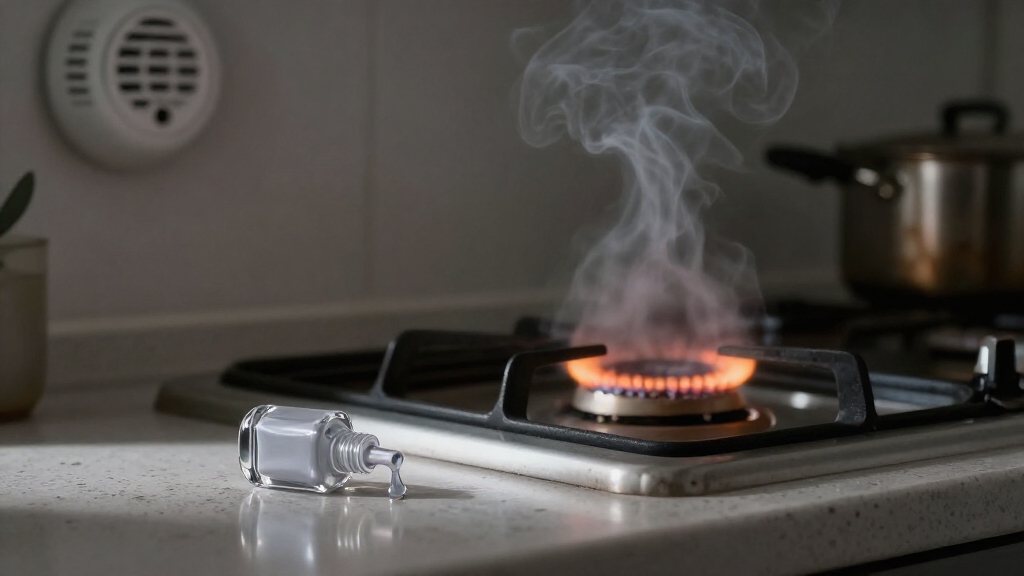
Although you can’t see, smell, or taste it, carbon monoxide forms whenever carbon-based fuels like gas, wood, or charcoal burn incompletely. When combustion lacks sufficient oxygen, carbon atoms fail to oxidize fully into carbon dioxide, producing carbon monoxide (CO) instead.
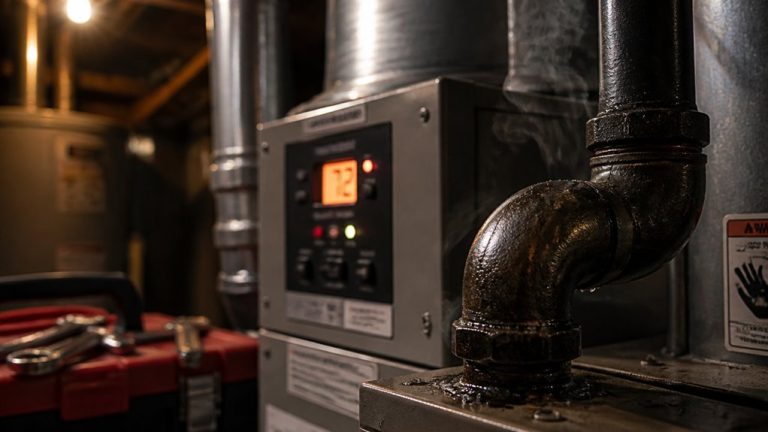
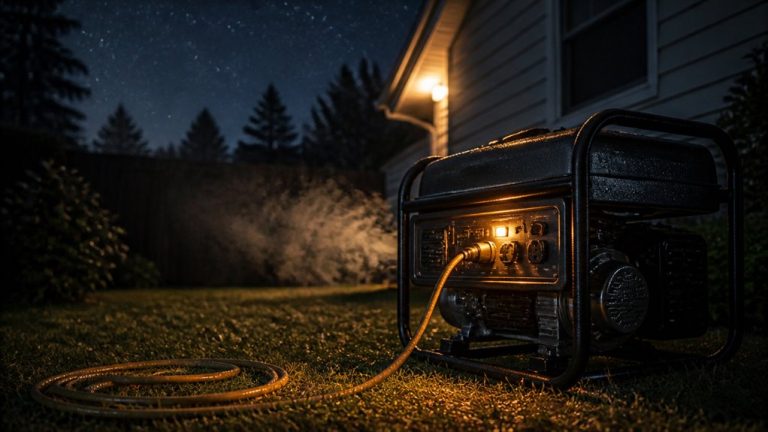
This gas emerges from common sources such as malfunctioning furnaces, gas stoves, vehicle exhaust, and burning charcoal. Because CO binds strongly to hemoglobin in your blood, it disrupts oxygen transport, making it highly toxic.
Its formation depends on variables like fuel type, combustion temperature, and ventilation, which influence oxygen availability. Understanding these factors helps identify risk areas, emphasizing the critical need for proper appliance maintenance and ventilation to minimize CO buildup and prevent poisoning in enclosed spaces. Devices with inefficient venting or poor maintenance are particularly prone to generating dangerous levels of carbon monoxide.
Why Carbon Monoxide Has No Smell?
Understanding how carbon monoxide forms from incomplete combustion sets the stage to examine why you can’t detect it by smell.
Carbon monoxide (CO) is a simple molecule composed of one carbon and one oxygen atom, lacking the complex structure that produces odors detectable by human olfactory receptors.
Its molecular composition renders it odorless, colorless, and tasteless.
This means you won’t smell CO itself, only other byproducts or contaminants that may accompany it.
Imagine:
- A silent gas slipping through cracks unnoticed.
- Invisible fumes filling a closed room.
- A fuel-burning appliance quietly emitting CO.
- Exhaust gases blending harmlessly with the air.
- You breathing without any scent warning.
Because CO is imperceptible, relying on detectors rather than smell is essential for safety. Proper detector placement and maintenance are critical to ensure early warning of carbon monoxide presence.
Common Sources of Carbon Monoxide in Homes and Vehicles
Since carbon monoxide forms from incomplete combustion of carbon-based fuels, common household and vehicle sources often involve fuel-burning appliances and engines.
You’ll find CO produced by malfunctioning furnaces, gas stoves, water heaters, and fireplaces. In vehicles, running engines in enclosed spaces like garages pose significant risks.
Poor ventilation or faulty equipment amplifies CO buildup, making detection difficult without alarms. Air conditioning systems themselves do not produce CO but can circulate it if nearby fuel-burning appliances leak, increasing exposure risk through HVAC ductwork.
| Source Type | Emotional Impact |
|---|---|
| Faulty Furnace | Anxiety over unseen danger |
| Running Car in Garage | Fear of accidental poisoning |
| Gas Stove Left On | Urgency to check appliances |
Recognizing these sources helps you prevent exposure. Rely on detectors, not smell, to guarantee safety from this invisible, odorless threat.
Chemical Smells Often Mistaken for Carbon Monoxide
When you catch a chemical smell in your home, it’s easy to jump to conclusions about carbon monoxide. However, the gas itself is completely odorless.
Often, the odors you notice come from other sources linked to fuel combustion or household chemicals. These smells can mislead you into thinking carbon monoxide is present when it’s not.
Understanding the common chemical smells mistaken for carbon monoxide can help you respond appropriately and avoid unnecessary panic.
- Nail polish remover or acetone-like odors from solvents or cleaning agents
- Gasoline or fuel fumes leaking from appliances or vehicles
- Burning or smoky smells from incomplete combustion in furnaces or fireplaces
- Sooty or chemical odors caused by appliance malfunctions
- Paint or varnish fumes from recent home projects
Recognizing these distinct smells ensures you investigate the right source instead of relying on scent as a carbon monoxide indicator. For reliable safety, consider installing carbon monoxide detectors which provide continuous electronic monitoring and audible alarms for this odorless gas.
Recognizing Symptoms of Carbon Monoxide Exposure
Although carbon monoxide is undetectable by smell or sight, recognizing its symptoms is crucial for timely intervention. Watch for headaches, dizziness, nausea, and weakness; early signs are often mistaken for the flu. If these symptoms improve when you leave an area but recur upon return, suspect carbon monoxide exposure immediately. Proper placement of carbon monoxide detectors in your home can provide early warning and save lives.
| Symptom | Description | Action |
|---|---|---|
| Headache | Persistent, dull pain | Move to fresh air |
| Dizziness | Feeling lightheaded or faint | Seek medical evaluation |
| Nausea | Queasiness or vomiting | Call emergency services |
Prompt response reduces severe outcomes like loss of consciousness or death. Never rely on smell; symptoms are your primary warning.
How to Tell Carbon Monoxide Apart From Other Fuel Odors?
Distinguishing carbon monoxide from other fuel odors requires understanding that carbon monoxide itself is odorless, colorless, and tasteless. Any smell you notice likely originates from incomplete combustion or other gases.
To tell them apart, focus on the source and characteristics of the odor rather than assuming the presence of carbon monoxide. A faint, sulfur-like or rotten egg smell often indicates natural gas leaks.
A sharp, chemical odor may come from solvents or fuel additives. Soot or smoky smells suggest incomplete combustion in appliances.
A musty or stale odor could signal old fuel or ventilation issues. Persistent odors near heaters or engines often point to fuel leaks, not carbon monoxide.
Always rely on detectors, not smell, for accurate carbon monoxide detection. Since carbon monoxide detectors do not sense natural gas, it is important to use separate natural gas detectors to identify methane leaks.
Why Smell Isn’t a Reliable Way to Detect Carbon Monoxide?
Understanding the characteristics of fuel odors helps clarify why relying on smell to detect carbon monoxide can be dangerously misleading.
Carbon monoxide is odorless, colorless, and tasteless, making it impossible for your senses to identify its presence.
Any smells you notice in a space where carbon monoxide is present usually stem from incomplete combustion or fuel leaks, not the gas itself.
These odors might mimic chemical scents like nail polish, but they’re unrelated to carbon monoxide.
You can’t trust smell as an early warning because harmful levels of carbon monoxide can accumulate silently without any detectable odor.
To protect yourself, you must use reliable detection methods rather than depending on scent, which can create a false sense of security and delay necessary action.
Installing a CO detector outside each sleeping area is crucial for early warning during sleep, when you are most vulnerable.
Protecting Yourself From Carbon Monoxide With Detectors and Safe Appliances
Regularly installing and maintaining carbon monoxide detectors is essential for your safety. These devices provide the only reliable early warning of dangerous CO levels.
Installing and maintaining carbon monoxide detectors is crucial for early and reliable warning of hazardous CO levels.
Since carbon monoxide is odorless and colorless, relying on your senses isn’t enough. You should place detectors near sleeping areas and on every floor.
Additionally, using safe, well-maintained appliances markedly reduces risks. Make certain proper ventilation and schedule professional inspections annually.
To protect yourself effectively:
- Install detectors according to manufacturer guidelines.
- Test detectors monthly and replace batteries yearly.
- Use appliances certified for safety and efficiency.
- Avoid using fuel-burning devices indoors without ventilation.
- Have heating systems inspected and serviced regularly.
These steps combine detection with prevention, minimizing your exposure risk. Keeping the fireplace damper fully open during use is also crucial to prevent carbon monoxide buildup.
Frequently Asked Questions
Can Pets Detect Carbon Monoxide Before Humans Do?
Pets can sometimes sense carbon monoxide exposure before you do because they’ve more acute senses, especially smell and hearing.
However, since carbon monoxide is odorless and invisible, they can’t detect the gas itself. Instead, pets might react to secondary signs like dizziness or discomfort caused by the gas.
You shouldn’t rely on pets to warn you. Install carbon monoxide detectors and maintain appliances to guarantee safety.
How Long Does Carbon Monoxide Stay in the Blood?
Carbon monoxide stays in your blood as carboxyhemoglobin, and its half-life is about 4 to 6 hours when you breathe fresh air.
If you receive 100% oxygen, the half-life shortens to around 60 to 90 minutes.
With hyperbaric oxygen therapy, it drops to about 20 to 30 minutes.
This means carbon monoxide can linger for hours but clears faster with treatment.
Are Certain People More Sensitive to Carbon Monoxide Exposure?
Yes, you can be more sensitive to carbon monoxide exposure depending on factors like age, health, and activity level.
Infants, elderly individuals, pregnant women, and people with heart or respiratory conditions tend to experience symptoms sooner and more severely.
Your body’s reduced ability to cope with low oxygen levels makes you more vulnerable.
Understanding your risk helps you take precautions, like using detectors and ensuring proper ventilation, to protect yourself effectively.
Can Carbon Monoxide Poisoning Cause Long-Term Health Effects?
Yes, carbon monoxide poisoning can cause long-term health effects, including cognitive impairments, memory loss, and neurological damage.
You might experience persistent headaches, fatigue, or mood changes even after recovery.
The severity depends on exposure duration and concentration.
Because carbon monoxide binds to hemoglobin, it reduces oxygen delivery to essential organs, causing lasting harm.
It’s imperative you seek immediate treatment to minimize these risks and undergo follow-up evaluations for potential chronic effects.
What Should I Do if My Carbon Monoxide Detector Keeps Beeping?
If your carbon monoxide detector keeps beeping, don’t ignore it.
First, ventilate the area by opening windows and doors immediately.
Evacuate everyone to fresh air outside.
Call emergency services to report a potential carbon monoxide leak.
Check the detector’s battery and replace it if low, but assume the alarm is real until proven otherwise.
Have a qualified technician inspect your appliances and ventilation system promptly to guarantee your safety.
Does Carbon Monoxide Smell Like Nail Polish? Final Facts
You might think carbon monoxide smells like nail polish or other chemicals, but it’s actually odorless. This makes it a silent threat lurking in your home or car.
Relying on your nose alone is like chasing shadows; you’ll never catch it. Instead, trust carbon monoxide detectors and maintain appliances regularly.
These tools give you a clear, evidence-based shield against danger, ensuring you don’t fall prey to this invisible, deadly gas. Stay vigilant and protect your health.