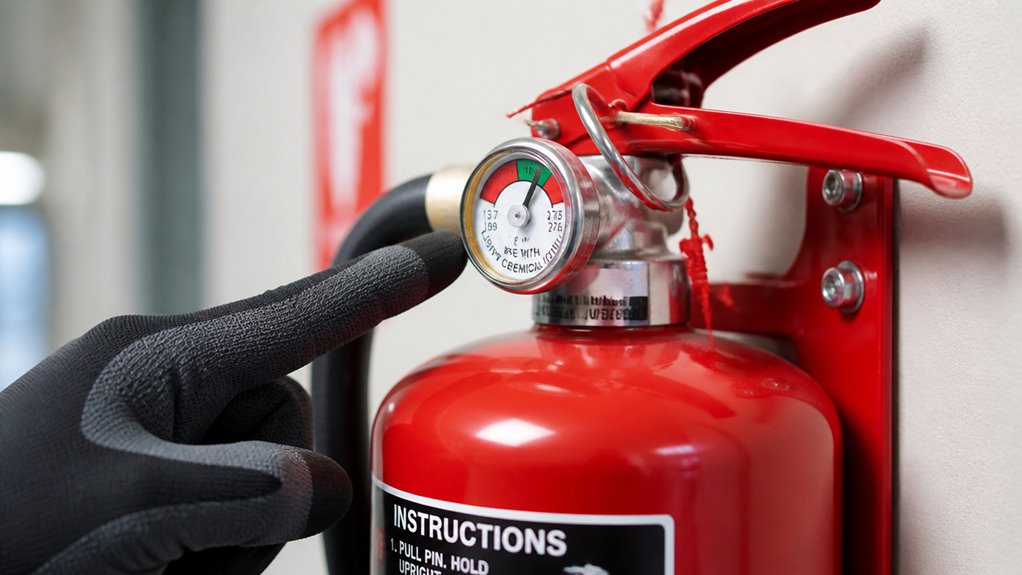

You should inspect your dry chemical fire extinguisher monthly, checking the pressure gauge, seals, hose, and nozzle for damage or blockage.
Shake it regularly to prevent powder compaction and secure free flow.
Schedule professional servicing annually and after any use, including recharge and hydrostatic testing as required.
After discharge, remove the unit from service and clean residue carefully to prevent corrosion.
Proper storage and adherence to manufacturer and NFPA standards guarantee readiness.
Explore further to master complete maintenance essentials.
Key Takeaways
- Inspect pressure gauge, hose, nozzle, and tamper seals monthly to ensure extinguisher is fully charged and undamaged.
- Shake extinguisher monthly to prevent powder settling and verify powder flow to avoid clogging during use.
- Schedule annual professional servicing, recharge after any discharge, and perform hydrostatic testing as required.
- Follow manufacturer instructions and document all inspections, maintenance, and compliance actions consistently.
- Remove extinguisher from service immediately after use, clean dry chemical residue properly, and evaluate nearby equipment for damage.
Inspect Your Dry Chemical Fire Extinguisher Regularly
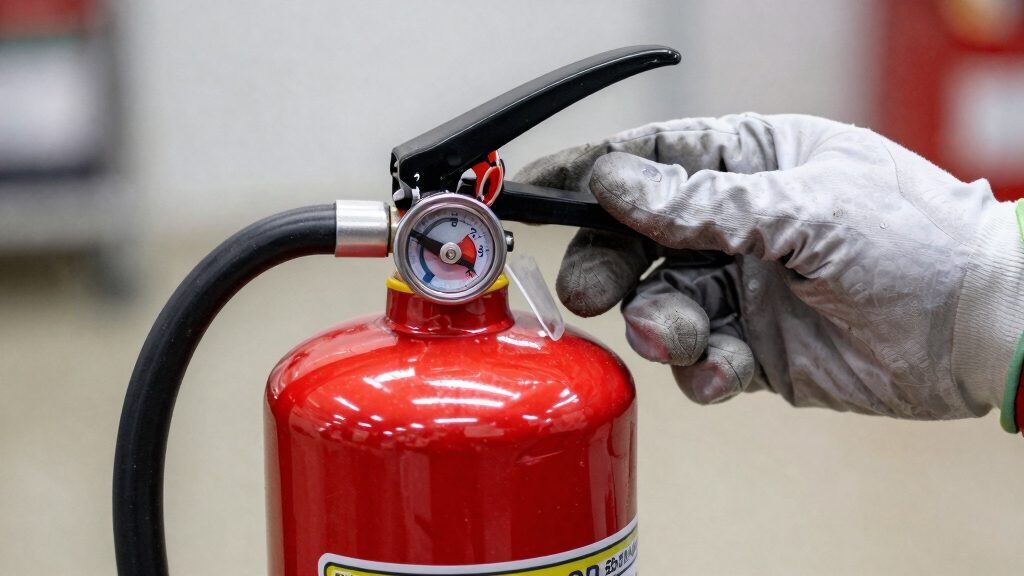
You should inspect your dry chemical fire extinguisher regularly to make sure it’s fully charged, accessible, and operational.
Start by checking the pressure gauge; the needle must be within the green zone, indicating adequate charge.
Begin your inspection by ensuring the pressure gauge needle stays firmly within the green zone for proper charge.
Confirm the pull pin and tamper seal are intact, and the hose and nozzle show no signs of blockage or damage.
Assure the extinguisher is unobstructed and mounted in a visible, easily reachable location.
Examine the cylinder’s exterior for dents, rust, leaks, or chemical deposits, as these can compromise functionality.
Regular inspection helps identify defects early and assures readiness during emergencies.
Maintain a consistent inspection schedule, documenting findings and addressing any deficiencies immediately to comply with safety standards and preserve extinguisher reliability.
Remember that monthly visual inspections and annual certified technician service are essential parts of proper maintenance schedule.
Prevent Powder Settling Inside Your Dry Chemical Fire Extinguisher
To keep your dry chemical fire extinguisher in top shape, it’s a good idea to give it a shake every month.
This helps prevent the powder from settling and ensures that it will discharge effectively when you need it.
Just remember to always follow the manufacturer’s instructions so you don’t accidentally damage the unit.
And while you’re at it, make sure to regularly check the powder flow.
You want it to remain free-flowing and ready for action whenever it’s needed.
Additionally, if you notice any signs such as a damaged safety pin or pressure gauge outside the green zone, it’s important to get a professional refill and inspection.
Monthly Shaking Importance
Regularly shaking your dry chemical fire extinguisher helps prevent the powder inside from settling and compacting over time. This secures the powder remains free-flowing, maintaining discharge effectiveness during an emergency.
You should perform this monthly, following manufacturer guidance, to avoid clumping that can obstruct the nozzle or reduce pressure.
| Benefit | Impact |
|---|---|
| Prevents powder settling | Maintains discharge efficiency |
| Secures free-flowing powder | Reduces clogging risk |
| Supports extinguisher readiness | Enhances emergency reliability |
Neglecting this step can compromise extinguisher performance when needed most. Make shaking part of your routine inspection to guarantee operational readiness. Proper maintenance also helps preserve the stored-pressure design that ensures reliable discharge and operation within a broad temperature range.
Manufacturer Instructions Compliance
Although shaking your dry chemical extinguisher monthly is widely recommended to prevent powder settling, it’s essential to follow the specific manufacturer instructions for your model. Each manufacturer provides tailored guidance based on the extinguisher’s design and powder type, assuring peak performance and safety.
Ignoring these instructions can lead to ineffective discharge or damage. To comply effectively, you should:
Verify shaking frequency recommended for your extinguisher.
Use proper shaking techniques specified by the manufacturer.
Avoid excessive force that may damage internal components.
Inspect for manufacturer updates or recalls.
Document compliance during routine maintenance checks.
Strict adherence to manufacturer instructions maintains extinguisher reliability. It prevents powder compaction and guarantees readiness during emergencies. Always prioritize the original guidance over generic advice. Additionally, regular professional servicing is necessary to ensure extinguisher integrity and performance over time.
Checking Powder Flow
Following manufacturer guidelines on shaking your dry chemical extinguisher helps reduce powder compaction, but verifying powder flow inside the cylinder confirms its effectiveness.
To check powder flow, gently invert and tilt the extinguisher, listening for free movement of the powder. If you hear no movement or suspect caking, the powder may have settled or compacted, which can impair discharge.
Perform this check monthly, especially if your extinguisher is stored in a static position. Avoid vigorous shaking that could damage internal components.
If powder flow appears restricted, schedule professional servicing or replacement immediately. Maintaining free-flowing powder guarantees your extinguisher will discharge effectively during emergencies, meeting safety standards and manufacturer requirements.
Regular verification is critical to sustaining operational readiness and fire suppression performance. For lithium battery fires, remember that dry chemical agents may work for small fires but specialized agents are recommended for larger incidents.
Maintain and Service Your Dry Chemical Fire Extinguisher on Schedule
To keep your dry chemical fire extinguisher in top shape, it’s really important to schedule annual maintenance. This helps ensure it stays fully functional and meets all safety standards.
And remember, if you ever use your extinguisher—even just a little—you should service and recharge it right away. This way, you’ll be ready for anything.
If you skip these steps, you not only risk the performance of your extinguisher but also run afoul of industry regulations. So, let’s keep safety first!
Regular inspection and professional servicing are essential to maintain the extinguisher’s reliability and effectiveness.
Annual Maintenance Requirements
When you maintain and service your dry chemical fire extinguisher on schedule, you make certain it remains fully operational and compliant with safety standards.
Annual maintenance includes a thorough inspection, testing, and servicing to detect and correct faults before they impair functionality. You’ll want to confirm the extinguisher’s pressure gauge is in the green zone and check for physical damage or corrosion.
Key annual maintenance actions include:
- Verifying the extinguisher’s charge and operability.
- Inspecting hose, nozzle, pull pin, and tamper seal integrity.
- Checking for powder settling and following manufacturer shaking instructions.
- Performing hydrostatic testing as required by service life schedules.
- Addressing any detected defects or low charge conditions immediately.
Adhering to these steps guarantees reliable performance during emergencies. Regular maintenance ensures the extinguisher will effectively interrupt the chemical reaction to stop fires when used.
Immediate Service After Use
Annual maintenance keeps your extinguisher ready for action, but immediate attention after any use guarantees it stays fully functional. Recharge the extinguisher immediately, even if only partially discharged.
Clean dry chemical residue promptly to prevent corrosion and damage to nearby equipment. Inspect for damage, assure the pressure gauge is in the green zone, and check hose, nozzle, and seals. If defects or low charge are found, service or replace the unit without delay.
Regular inspections and maintenance must follow NFPA 10 standards to ensure reliability and compliance.
| Action | Description |
|---|---|
| Recharge | Refill extinguisher post-use |
| Clean Residue | Remove powder with HEPA vacuuming |
| Inspect | Check pressure, hose, nozzle, seals |
| Evaluate Equipment | Assess exposed electronics |
| Service or Replace | Address defects or damage promptly |
Act Immediately After Using Your Dry Chemical Fire Extinguisher
Act quickly to recharge your dry chemical fire extinguisher immediately after any use, no matter how small the discharge.
Prompt recharging restores full operability and prevents corrosion caused by residual chemicals. Waiting risks powder settling and internal damage, compromising future effectiveness.
After discharge, you must:
- Remove the extinguisher from service promptly.
- Arrange professional inspection and recharge without delay.
- Check for any mechanical damage or leaks.
- Confirm the pressure gauge needle is in the green zone post-servicing.
- Replace tamper seals and pull pins to secure readiness.
Taking these steps guarantees your extinguisher is fully prepared for the next emergency and complies with NFPA maintenance standards.
Don’t delay; immediate action maintains safety and operational reliability. Proper inspection and maintenance are crucial to ensure extinguisher safety and functionality, especially under heat exposure.
Clean Up Dry Chemical Fire Extinguisher Residue Safely
Cleaning up dry chemical fire extinguisher residue requires careful handling to prevent dust from spreading and causing further contamination.
Use a HEPA vacuum to remove powder efficiently while minimizing airborne particles.
Avoid dry sweeping unless you apply dust suppression materials to reduce dispersion.
Wet mopping should be your last option, as it can smear the residue and complicate cleanup.
If surfaces are damp, neutralize the residue with a basic pH cleaner or deionized water to prevent corrosion.
Collect all contaminated residue and disposal materials in sealed plastic bags to guarantee safe handling and disposal.
Pay special attention to electronic equipment exposed to residue, as professional inspection may be necessary.
Prompt, thorough cleanup protects equipment and extends the service life of your fire extinguisher system.
Always ensure proper ventilation during cleanup to minimize the risk of respiratory irritation from airborne particles.
Store, Test, and Comply With Dry Chemical Fire Extinguisher Requirements
When you store dry chemical fire extinguishers, make certain they remain in visible, easily accessible locations to enable immediate use. Proper mounting and placement support rapid response during emergencies.
You must comply with hydrostatic testing schedules to verify cylinder integrity and safety. Follow NFPA guidelines that specify testing intervals based on extinguisher type, commonly five or twelve years.
Remove any extinguisher showing corrosion, damage, or unsafe conditions from service immediately.
Key points to guarantee compliance and readiness:
- Mount extinguishers in conspicuous, unobstructed areas.
- Adhere to manufacturer and NFPA testing intervals.
- Perform hydrostatic testing to confirm cylinder safety.
- Inspect for corrosion, leaks, and physical damage regularly.
- Replace or service extinguishers failing safety or operability checks promptly.
Frequently Asked Questions
Can I Use a Dry Chemical Extinguisher on Electrical Fires?
Yes, you can use a dry chemical extinguisher on electrical fires. These extinguishers are designed to handle Class C fires involving energized electrical equipment safely because the dry chemical powder is non-conductive.
Just make sure the extinguisher is fully charged, accessible, and in good condition before use. After discharge, clean any residue promptly to prevent corrosion or equipment damage. Always follow manufacturer instructions and safety protocols when operating the extinguisher.
How Do I Dispose of an Expired Dry Chemical Extinguisher?
Imagine a bulky extinguisher, its pressure gauge long past green, standing silent and useless.
To dispose of it, first, fully discharge any remaining contents outdoors, away from ignition sources.
Then, contact your local hazardous waste facility or fire department for proper disposal instructions.
Never throw it in regular trash; the dry chemical residue and pressurized cylinder pose environmental and safety risks.
Follow local regulations to guarantee safe, responsible disposal.
What Are the Differences Between Dry Chemical Extinguisher Types?
Dry chemical extinguishers differ mainly by their chemical agents and intended fire classes.
ABC types use monoammonium phosphate for fires involving ordinary combustibles, flammable liquids, and electrical equipment.
BC types use sodium bicarbonate or potassium bicarbonate, targeting flammable liquids and electrical fires only.
Purple-K is a specialized BC agent with enhanced effectiveness on flammable liquid fires.
Selecting the right type depends on the specific fire hazards you face.
Can Extreme Temperatures Affect Extinguisher Performance?
Don’t assume your extinguisher will work perfectly in extreme heat or cold. Temperature swings can compromise its performance.
Excessive heat might increase internal pressure, risking damage or discharge failure. Freezing temperatures can cause powder caking or pressure drops, reducing effectiveness.
You need to store and inspect extinguishers within recommended temperature ranges to guarantee reliability during emergencies. Ignoring this can leave you vulnerable when you need protection most.
Are There Special Considerations for Storing Extinguishers Outdoors?
Yes, when storing extinguishers outdoors, you must protect them from extreme temperatures, moisture, and direct sunlight to prevent corrosion and damage.
Use weatherproof cabinets or enclosures that allow quick access while shielding the unit. Regularly inspect for rust, dents, or leaks, and make certain the pressure gauge stays in the green zone.
Outdoor storage demands more frequent checks and maintenance to guarantee reliability during emergencies.
Protect Your Property with Proper Extinguisher Maintenance
You inspect your dry chemical fire extinguisher regularly. Just as powder settling threatens its effectiveness, your timely maintenance prevents failure.
When you act immediately after use and clean residue safely, you guarantee readiness for the next emergency.
Storing, testing, and complying with requirements aren’t just tasks; they’re your guarantee of protection.
Proper upkeep coincides perfectly with safety, making certain your extinguisher performs flawlessly when you need it most.
Don’t wait; maintain it now.