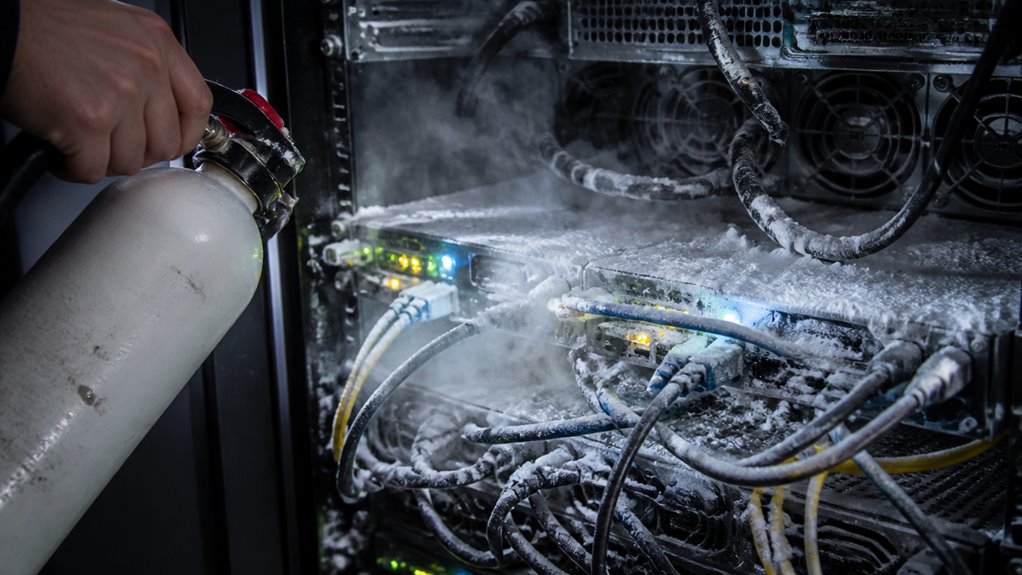

You should avoid dry chemical and water-based extinguishers near electronics.
Dry powders like monoammonium phosphate leave corrosive residues that infiltrate micro-gaps, impair heat dissipation, and accelerate corrosion.
Water-based agents introduce moisture, causing short circuits and delayed component failures.
Both types promote long-term mechanical wear and reliability loss.
Instead, consider CO2 or clean agent extinguishers that minimize residue and electrical risks.
Exploring their distinct impacts will help you protect sensitive electronic equipment effectively.
Key Takeaways
- Dry chemical extinguishers leave corrosive powder residues that damage metal contacts and impair electrical functionality.
- Water-based extinguishers cause short circuits, immediate component damage, and long-term corrosion due to moisture exposure.
- Dry chemical powders penetrate micro-gaps, causing insulating buildup that increases thermal stress and risks electronic failure.
- Residues from monoammonium phosphate and bicarbonate powders create acidic environments that accelerate corrosion and mechanical wear.
- Abrasive particles from dry chemicals harm moving parts, increasing mechanical wear and reducing device lifespan.
How Dry Chemical Extinguishers Damage Electronics?
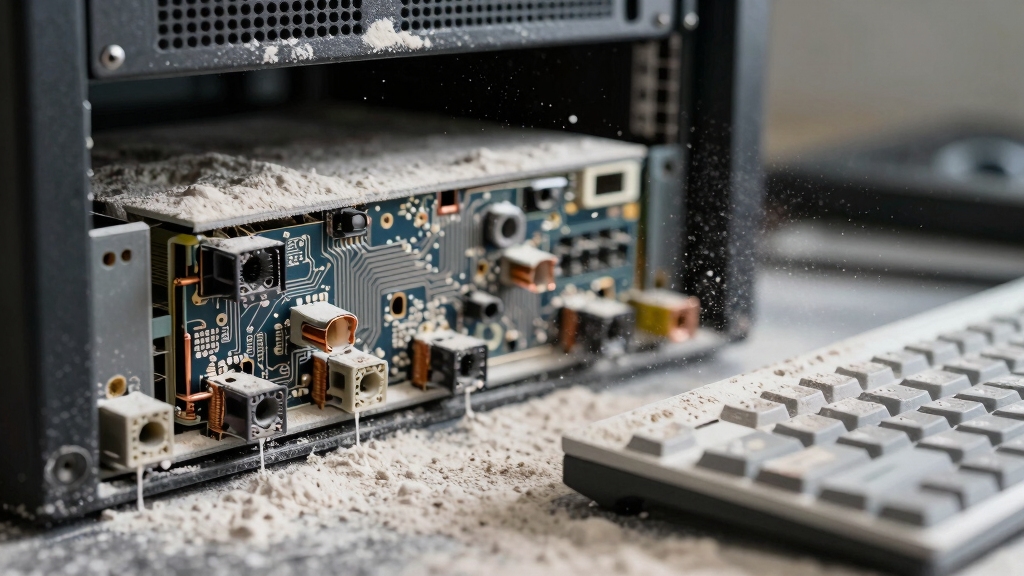
Dry chemical extinguishers frequently cause significant damage to electronic equipment due to the fine powder they release, which penetrates delicate components and leaves corrosive residues.
When you use ABC extinguishers containing monoammonium phosphate or BC types with sodium or potassium bicarbonate, the powder disperses widely, infiltrating intricate parts.
This residue isn’t just surface-level; it corrodes metal contacts and connectors, undermining electrical integrity.
You’ll find cleanup challenging since the powder’s fine particles embed deeply, often worsening contamination over time.
Additionally, residue-induced corrosion accelerates equipment degradation, increasing failure risk even after initial fire suppression.
You must consider these effects when selecting extinguishing methods for sensitive electronics, as improper use can lead to costly repairs or replacements due to chemical damage rather than fire itself.
For this reason, it is crucial to use extinguishers that are appropriate for electronics and to follow professional servicing guidelines to minimize damage.
How ABC Powder Affects Circuit Boards and Heat Dissipation?
Exposing circuit boards to ABC powder alters their thermal behavior in critical ways.
Initially, you might observe a cooling effect as the powder blankets components, but this coating markedly impedes heat dissipation afterward.
The monoammonium phosphate residue forms an insulating layer, reducing the circuit board’s ability to transfer heat away from active elements.
This thermal retention can cause components to overheat, accelerating failure rates exponentially.
You’ll find that even after the fire is extinguished, contaminated boards maintain elevated temperatures longer, compromising reliability.
The powder’s fine particles penetrate micro-gaps on the board, exacerbating thermal resistance and promoting hotspots.
Hence, ABC powder contamination not only hampers immediate heat management but also sets the stage for progressive electronic degradation.
This makes circuit boards vulnerable to premature malfunction.
Additionally, the powder residue can become corrosive when exposed to moisture, potentially damaging sensitive electronic metals over time, highlighting the importance of thorough residue cleanup procedures.
How Dry Chemicals Harm Mechanical Parts in Electronics?
Mechanical components in electronic devices often suffer accelerated wear and corrosion when coated with dry chemical powders like monoammonium phosphate.
When you encounter ABC dry chemical residue, it acts abrasively on motors, switches, and mechanical linkages. This increases friction and reduces lifespan.
Additionally, the powder’s corrosive nature compromises unprotected metal surfaces. This further degrades mechanical reliability, even in areas untouched by fire.
Cleanup is challenging; residual particles can remain embedded, promoting ongoing wear and corrosion.
It is important to note that the monoammonium phosphate powder used in ABC extinguishers is non-conductive, which helps prevent electrical shock during use on energized equipment.
| Effect on Mechanical Parts | Result |
|---|---|
| Abrasive action | Increased wear on moving parts |
| Corrosive residue | Metal surface degradation |
| Powder penetration | Contamination of assemblies |
| Residual buildup | Long-term mechanical failure |
You should consider these effects carefully when choosing extinguishers for sensitive equipment.
How Water-Based Extinguishers Damage Electronics?
Water-based extinguishers can actually pose some serious risks, especially when it comes to electronics. You see, they’re electrically conductive. This means that if water comes into contact with live equipment, it can create shock hazards. Not ideal, right?
When that water touches energized components, you can end up with short circuits, and that can lead to immediate damage. But it doesn’t stop there. Even after the fire’s been put out, the residual moisture can lead to corrosion. This kind of secondary failure can sneak up on you long after the initial incident. So, it’s definitely something to keep in mind!
Additionally, water’s ability to absorb and dissipate heat through cooling and evaporation is highly effective for fires but can exacerbate damage to sensitive electronics when used improperly.
Electrical Conductivity Risks
While water-based extinguishers effectively suppress fires, they pose significant electrical conductivity risks when used on energized equipment.
When you apply water or water-based agents to live electrical devices, the liquid acts as a conductor, creating unintended current paths. This can lead to short circuits, damaging components beyond the original fire damage.
You risk electrical shock hazards not only to the equipment but also to anyone nearby. The conductive properties of water allow electrical energy to travel through the extinguishing agent, increasing the likelihood of arcing or further circuit failure.
Because of this, water-based extinguishers are unsuitable for live electrical fires. You should always select extinguishing agents that minimize conductivity to protect sensitive electronics and personnel safety during fire suppression. Additionally, the typical discharge time of water extinguishers ranges from 20 to 40 seconds, so rapid and careful application is critical to reduce risks.
Secondary Moisture Damage
Even after a fire is extinguished, water-based agents can cause significant secondary moisture damage to electronic equipment. When you use water or foam extinguishers, moisture penetrates sensitive circuitry. This leads to corrosion, short circuits, and permanent component failure. The risk multiplies if equipment remains powered or inadequately dried post-incident.
| Effect | Cause | Impact |
|---|---|---|
| Corrosion | Moisture exposure | Metal degradation |
| Short Circuit | Conductive water | Equipment malfunction |
| Component Failure | Residual dampness | System downtime |
You must avoid water-based extinguishers on live electronics to prevent these damages. Instead, choose non-conductive agents to safeguard your equipment’s integrity and operational reliability. For precise fire detection in electronic environments, consider alarms with photoelectric technology that reduce false alarms and provide early warning for smoldering fires.
How CO2 Extinguishers Protect Electronics?
How does a CO2 extinguisher safeguard sensitive electronics during a fire? It displaces oxygen rapidly without introducing moisture or conductive materials, minimizing the risk of electrical short circuits.
CO2 is chemically inert and leaves no residue, so it won’t corrode metal surfaces or interfere with circuit board functionality post-discharge. By avoiding powder or liquid agents, it prevents contamination that could alter heat dissipation or damage moving parts.
Additionally, CO2’s non-conductive properties guarantee it’s safe around energized equipment, reducing shock hazards. While it suppresses flames effectively, it doesn’t cool components significantly, so you should still assess heat damage separately.
Proper storage within the manufacturer’s specified temperature range helps maintain the extinguisher’s integrity and ensures reliable performance when protecting electronics.
Why Clean Agent Extinguishers Are Better for Electronics?
Why should you choose clean agent extinguishers for protecting sensitive electronics?
Clean agents, typically halocarbon-based, extinguish fires without leaving harmful residue. This prevents corrosion and contamination that dry chemicals cause.
They preserve equipment functionality and reduce downtime, especially in server rooms or data centers. Although more expensive, their benefits justify the investment by minimizing damage and cleanup.
| Feature | Benefit |
|---|---|
| No residue | Eliminates corrosion risk |
| Non-conductive | Safe for energized equipment |
| Fast evaporation | Avoids moisture damage |
| Designed for electronics | Maintains operational integrity |
Using clean agent extinguishers guarantees your electronic components remain intact and reliable after a fire incident.
This effectively safeguards critical systems. Clean agents are also electrically non-conductive, allowing them to suppress fires safely around energized equipment without risk of electrical damage.
How Dry Chemical Residue Causes Long-Term Corrosion?
Although dry chemical extinguishers effectively suppress fires, the residue they leave behind initiates long-term corrosion processes on electronic components and metal surfaces.
Dry chemical extinguisher residue triggers prolonged corrosion on metals and electronic parts beyond immediate fire suppression.
You’ll find that the monoammonium phosphate or bicarbonate powders spread widely, penetrating tight spaces within devices. This residue acts as a corrosive agent, accelerating metal oxidation and degrading solder joints.
Over time, this leads to increased electrical resistance and potential circuit failure.
Key corrosion factors include:
- Chemical residues create acidic environments on metal surfaces.
- Fine powders attract moisture, enhancing electrochemical reactions.
- Residue infiltration alters thermal dissipation, stressing components.
- Abrasive particles contribute to mechanical wear on moving parts.
Understanding these mechanisms helps you appreciate why dry chemical residue poses significant risks to electronic reliability long after firefighting ends. Additionally, ABC powder residue is highly corrosive to sensitive equipment and can penetrate tight spaces, necessitating extensive cleaning to prevent damage.
Key Factors When Choosing Fire Extinguishers for Electronics
When selecting fire extinguishers for environments housing electronics, you must prioritize agents that minimize residue, conductivity, and corrosive effects.
Avoid dry chemical extinguishers like ABC powders, which leave abrasive, corrosive residues that impair heat dissipation and cause component failures.
Water-based agents are unsuitable due to electrical conductivity and moisture-induced short circuits.
Instead, opt for CO2 extinguishers; they’re non-conductive and leave no residue, markedly reducing contamination risks.
Clean agent extinguishers, though more costly, offer halocarbon-based suppression with minimal residue and corrosion potential.
This makes them ideal for sensitive data centers and server rooms.
You should evaluate the extinguisher’s chemical properties, residue behavior, and compatibility with electronic materials to guarantee prime fire suppression without compromising equipment reliability and longevity.
Additionally, certain fire extinguisher foams rated for Class C hazards can be used cautiously on electrical fires if verified safe and non-conductive.
Best Practices to Reduce Damage After Extinguisher Use
It’s super important to act quickly when it comes to cleaning up any extinguisher residue. If you wait too long, you could run into corrosion and equipment failure down the line, which nobody wants.
So, make sure you follow strict inspection protocols. This helps you spot any contamination or mechanical wear before you get things back up and running.
By prioritizing these steps, you can really minimize long-term damage and keep your system reliable.
Immediate Residue Cleanup
Promptly addressing residue after using a dry chemical extinguisher is critical to minimizing electronic damage. The fine powder can corrode metals and impair heat dissipation on circuit boards, accelerating failure.
To mitigate this, follow these immediate cleanup steps:
- Power down equipment to prevent electrical shorts and further damage.
- Use a vacuum with a HEPA filter to remove loose powder without dispersing it.
- Dry thoroughly to avoid moisture-related corrosion or conductivity issues.
Acting swiftly reduces abrasive wear and corrosion risks, preserving mechanical and electronic integrity after discharge. Neglecting cleanup promotes exponential increases in component failures and operational unreliability.
Equipment Inspection Protocols
Establish thorough equipment inspection protocols immediately after extinguisher discharge to identify and mitigate potential damage.
Begin by visually evaluating affected components for residue, corrosion, or physical wear, especially if dry chemical agents were used.
Employ diagnostic tools like thermal imaging and electrical testing to detect compromised heat dissipation or shorts in circuitry.
Prioritize inspection of moving mechanical parts, checking for abrasive residue buildup and lubrication loss, which can impair function.
Document contamination extent and categorize affected equipment by risk level to guide cleaning or replacement decisions.
Engage qualified technicians to perform detailed assessments, ensuring no latent damage persists.
Implement routine follow-up inspections to monitor long-term effects of residue or moisture exposure.
This structured approach minimizes downtime and prevents progressive failures caused by residual contaminants after extinguisher use.
Frequently Asked Questions
Can Fire Extinguishers Damage Electronics if Used Incorrectly?
Yes, fire extinguishers can damage electronics if you use them incorrectly.
Dry chemical agents leave abrasive, corrosive residue that compromises circuit boards and mechanical parts.
Water-based extinguishers cause short circuits and moisture damage.
To protect sensitive equipment, you should choose CO2 or clean agent extinguishers.
These options don’t leave residue or conduct electricity, minimizing contamination and corrosion risks during fire suppression.
Proper extinguisher selection is critical to prevent further electronic damage.
Are There Specific Extinguisher Brands Safer for Delicate Electronics?
You should choose CO2 or halocarbon-based clean agent extinguishers for delicate electronics.
CO2 extinguishers leave no residue and don’t conduct electricity, minimizing contamination and shock hazards.
Clean agent extinguishers, while more costly, are specifically formulated to avoid corrosion and residue buildup. This helps preserve sensitive components like circuit boards.
Avoid ABC or BC dry chemical brands, as their powders cause abrasion, corrosion, and heat dissipation issues. These factors can degrade electronic reliability over time.
How Quickly Should Electronics Be Cleaned After Extinguisher Discharge?
Time is of the essence when cleaning electronics after extinguisher discharge.
You should start cleanup immediately, ideally within hours, to prevent corrosive residues from causing irreversible damage.
Delaying allows powders or moisture to penetrate deeper, impairing heat dissipation and increasing failure risk exponentially.
Act swiftly with appropriate solvents and tools because, as they say, “a stitch in time saves nine,” minimizing downtime and preserving your equipment’s reliability and longevity.
Can Combining Extinguishers Improve Safety for Electronic Devices?
You shouldn’t combine extinguishers for electronic devices, as mixing agents can worsen contamination or create hazardous residues.
Each extinguisher type has specific properties optimized for certain fires. Combining them risks chemical reactions or residue buildup that could damage sensitive components.
Instead, choose a single, appropriate extinguisher like CO2 or a clean agent designed for electronics. This will minimize harm, guarantee effective suppression, and simplify cleanup without compromising device safety.
What Personal Protective Equipment Is Needed When Cleaning Extinguisher Residue?
You’ll need gloves, goggles, and a respirator when cleaning extinguisher residue.
Gloves protect your skin from abrasive powders and chemical irritants.
Goggles shield your eyes from airborne particles.
A respirator prevents inhalation of fine dust, especially from dry chemical agents like ABC powder, which can be harmful.
Additionally, wear long sleeves and pants to minimize skin exposure.
Using proper PPE guarantees safety against chemical irritation, respiratory hazards, and mechanical abrasion during cleanup.
Protect Electronics From Fire and Residue Damage
When protecting your electronics, think of fire extinguishers as tools. Some, like dry chemical powders, act like corrosive sandstorms, eroding delicate circuits and mechanical parts.
Water-based agents are akin to floods, causing short circuits and damage. CO2 and clean agents, however, function like gentle mists, preserving integrity while quelling flames.
Choosing wisely safeguards your technology’s lifeblood, preventing silent decay and ensuring resilience beyond the immediate fire threat.