
You shouldn’t use an ABC powder fire extinguisher on combustible metal fires or cooking oil fires, as it’s ineffective and can worsen these hazards. Avoid it in confined spaces due to respiratory irritation risks from powder inhalation.
Never deploy damaged or corroded units or those stored above safe temperatures, since they may fail or rupture. Also, avoid using it near sensitive electronics or in aircraft due to corrosive residue.
Understanding these limits helps secure proper fire safety choices.
Key Takeaways
- Do not use ABC powder extinguishers on combustible metal (Class D) fires due to risk of violent reactions and ineffective suppression.
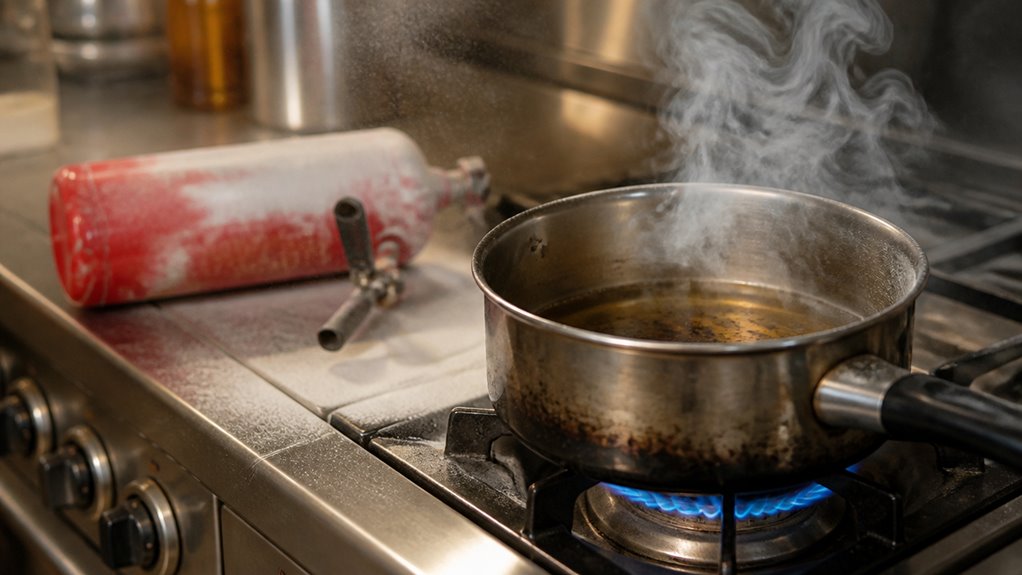
- Avoid using ABC powder on grease or cooking oil (Class K) fires as it can cause flare-ups and fire spread.
- Do not use ABC powder extinguishers in confined or poorly ventilated spaces to prevent respiratory irritation and toxicity buildup.
- Avoid using ABC powder on sensitive electronics or aircraft due to corrosive residue and damage risks.
- Do not use ABC powder if the extinguisher is damaged, corroded, or stored above 120°F to prevent malfunction or rupture.
Limitations and Safety Concerns of ABC Powder Extinguishers
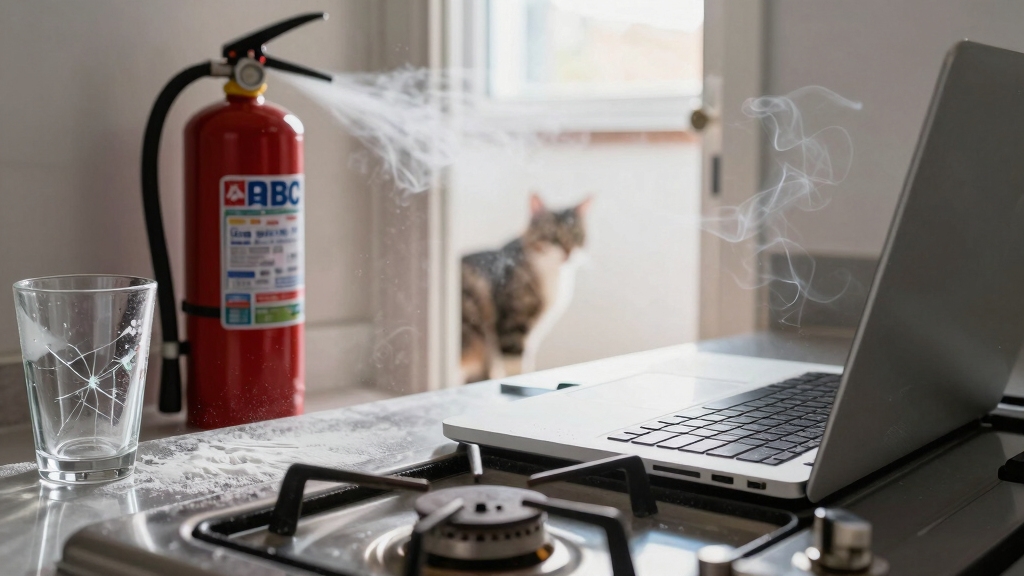
While ABC powder fire extinguishers are versatile for many fire types, you should be aware of their significant limitations and safety concerns.
ABC powder fire extinguishers are versatile but come with important safety limitations to consider.
You must avoid using them in poorly ventilated areas because the powder dust can cause respiratory irritation and toxicity buildup, posing serious health risks.
Always operate in well-ventilated environments and wear appropriate protective gear such as dust masks, goggles, and gloves to prevent eye, skin, and respiratory irritation.
Also, never use an ABC extinguisher if it’s damaged, corroded, or stored above 120°F, as the pressurized contents risk puncture or failure.
In addition, powder residue is highly corrosive to sensitive equipment and electronics, requiring extensive cleaning afterward.
Understanding these constraints guarantees safe, effective fire response and prevents hazardous outcomes.
Proper maintenance schedule and regular inspections are essential to ensure extinguisher reliability and safety.
Why ABC Powder Is Unsafe for Metal Fires?
You really shouldn’t use ABC powder extinguishers on combustible metal fires. Why? Well, the powder just doesn’t do a good job at smothering those materials.
In fact, using ABC powder can actually make things worse. It might spread the fire or even trigger an explosion, especially with reactive metals like magnesium.
ABC extinguishers are designed for Class A, B, and C fires and are not effective for Class D metal fires due to their multi-purpose composition and design.
Ineffectiveness On Combustible Metals
Because ABC powder extinguishers rely on smothering flames with a dry chemical, they fail to suppress fires involving combustible metals such as magnesium or titanium.
These metals burn at extremely high temperatures and react violently with many extinguishing agents, including ABC powders.
Using ABC powder on metal fires can exacerbate the situation, causing the fire to spread or even trigger explosions.
You should never attempt to control Class D fires with ABC extinguishers; instead, use specialized Class D extinguishers designed to absorb heat and isolate the metal fuel.
These employ dry powders like sodium chloride or copper-based agents that chemically interrupt metal combustion.
Relying on ABC powder for metal fires isn’t only ineffective but also dangerous, increasing risks of injury and property damage.
Class D extinguishers use specialized dry powders that smother metal fires by forming a barrier between the metal fuel and oxygen, effectively isolating the fire source.
Risks Of Fire Spread
When tackling combustible metal fires, using an ABC powder extinguisher markedly increases the risk of fire spread. The powder fails to smother metals like magnesium effectively, allowing sparks or molten fragments to disperse, which can ignite secondary fires.
Its chemical composition can react violently with burning metals, potentially causing explosions or flare-ups. You must avoid ABC powders in these scenarios because they lack the specialized agents needed to isolate metal combustibles and interrupt the oxidation process.
Instead, you should use dedicated Class D extinguishers designed to form a crust that suffocates the fire without dispersing hazardous particles. Relying on ABC powders in metal fires not only compromises fire suppression but also endangers personnel and property by facilitating uncontrolled fire propagation.
Purple K extinguishers, by contrast, are ineffective and potentially dangerous on combustible metal fires, underscoring the need for specialized Class D agents in these situations.
How ABC Powder Makes Kitchen Fires Worse?
ABC powder can quickly flare up kitchen fires instead of putting them out, especially those involving cooking oils and fats.
When you apply ABC powder to a grease fire, the powder disperses violently, disturbing the burning oil’s surface and causing the fire to spread rapidly.
Unlike Class K extinguishers designed to saponify and cool oils, ABC powder lacks this mechanism, leading to flare-ups and increased fire intensity.
Additionally, the powder doesn’t effectively smother the flames or reduce heat, allowing the fire to reignite.
Using ABC powder on deep fat fryer fires can exacerbate the hazard, increasing risk to people and property.
For kitchen fires involving fats or oils, you should rely on Class K extinguishers specifically engineered for these conditions to guarantee safe and effective suppression.
It is important to use the PASS method when operating any fire extinguisher to ensure safe and effective fire control.
Health Hazards of ABC Powder in Confined Spaces
Kitchen fires involving oils and fats present specific challenges that render certain extinguishing agents ineffective and hazardous.
When using ABC powder extinguishers in confined spaces, you risk inhaling fine dust particles that irritate your respiratory tract. Without adequate ventilation, the powder accumulates, increasing the likelihood of coughing, breathing difficulties, and even toxic effects like chemical pneumonitis.
Using ABC powder extinguishers in confined spaces risks inhaling irritant dust and severe respiratory issues without proper ventilation.
You must wear proper protective gear, including dust masks and goggles, to minimize exposure. Additionally, powder contact can irritate your eyes, skin, and mucous membranes, necessitating immediate rinsing if contact occurs.
Operating ABC powder extinguishers indoors without airflow compromises your safety by exacerbating respiratory irritation and toxicity. Always ensure well-ventilated environments when deploying ABC powders and avoid their use in confined spaces to prevent serious health hazards.
Moreover, avoid using combustible powders like ABC powder on lithium battery fires, as these can worsen the fire and complicate suppression efforts.
ABC Powder’s Impact on Electronics and Aircraft
Although ABC powder extinguishers effectively suppress many fire types, you should avoid using them around sensitive electronics and aircraft components. The powder causes irreparable corrosion on metals and delicate circuits, compromising functionality and safety.
In aviation, the dust residue is especially corrosive, infiltrating hard-to-clean areas and necessitating extensive disassembly for thorough removal. Consider the following impacts:
- Corrosive residue damages electronic circuits and metal surfaces.
- Powder penetrates tight spaces, leading to hidden contamination.
- Cleaning requires full disassembly, increasing maintenance time and cost.
- Use of ABC powder in aircraft is prohibited; Halon or CO2 extinguishers are preferred.
Always choose extinguishing agents compatible with sensitive equipment to avoid costly damage and operational downtime. Additionally, the discharge time of ABC powder extinguishers typically ranges from 14 to 25 seconds, which requires careful use to maximize effectiveness while minimizing collateral contamination.
Risks of Using Damaged ABC Powder Extinguishers
Using a fire extinguisher that’s damaged or corroded poses significant dangers during an emergency. Damage compromises the extinguisher’s pressure integrity and discharge reliability, increasing failure risk when you need it most.
Corrosion can clog the nozzle or weaken the cylinder, resulting in incomplete powder release or sudden rupture. You must inspect extinguishers regularly for dents, rust, or leaks to guarantee operational safety.
| Damage Type | Risk |
|---|---|
| Corrosion | Nozzle blockage, powder clumping |
| Physical dents | Pressure loss, cylinder rupture |
| Seal failure | Leakage, loss of extinguishing agent |
| Valve damage | Inconsistent powder discharge |
Using damaged ABC extinguishers jeopardizes fire suppression effectiveness and your safety. Replace or service them promptly. Failure to address these issues can lead to complete extinguisher failure during critical moments.
When High Temperatures Make ABC Powder Unsafe?
When temperatures exceed 120°F (49°C), ABC powder fire extinguishers become unsafe due to the increased pressure inside their cylinders. This elevated pressure raises the risk of rupture or accidental discharge, compromising your safety and effectiveness during emergencies.
You should be aware of these critical hazards:
- Cylinder integrity weakens under sustained high heat, increasing explosion risk.
- Powder clumping or degradation can occur, impairing discharge flow.
- The extinguisher’s valve and seals may fail, causing leaks or malfunctions.
- Handling or storing extinguishers in hot environments, such as near furnaces, amplifies these dangers.
Always check storage locations and avoid placing ABC powder extinguishers where temperatures surpass this threshold. Doing so guarantees operational reliability and prevents catastrophic failures due to thermal stress.
Regular maintenance requirements including inspections and hydrostatic testing help ensure extinguisher safety and performance under varying temperature conditions.
Recommended Alternatives to ABC Powder for Special Fires
When it comes to fire extinguishers, it’s important to know what to use and what to avoid. You definitely shouldn’t use ABC powder extinguishers on combustible metal fires or cooking oil fires.
They just won’t do the trick and might even make things worse!
So, what’s the best alternative? For metal fires, go with a Class D extinguisher. These are specifically designed to handle those tricky situations safely.
And if you’re dealing with a kitchen grease fire, a Class K extinguisher is your best bet.
Choosing the right extinguisher is crucial. It not only ensures effective suppression but also helps reduce the risk of the fire spreading or causing injuries.
For flammable liquid fires like gasoline, a Class B extinguisher with foam, CO2, or dry powder agents is the recommended choice. Stay safe out there!
Class D Extinguishers
Although ABC powder extinguishers serve well for many fire types, they’re ineffective and unsafe against combustible metal fires classified as Class D.
When dealing with metals like magnesium or sodium, ABC powders can worsen the fire or cause explosions.
Instead, you need a dedicated Class D extinguisher designed to smother these fires safely.
Key features of Class D extinguishers include:
- Specialized dry powders that absorb heat and isolate oxygen.
- Non-reactive agents tailored for specific combustible metals.
- Application methods that prevent dispersing metal particles.
- Compliance with strict safety standards to avoid fire propagation.
Using the correct Class D extinguisher is critical for controlling metal fires effectively and preventing hazardous outcomes that ABC powders can’t address.
Class K Solutions
Since ABC powder extinguishers are ineffective and potentially dangerous on cooking oil and fat fires, you must rely on Class K extinguishers specifically engineered for these hazards.
Class K solutions use a specialized wet chemical agent that rapidly cools the fire and forms a soapy foam. This effectively smothers flames and prevents re-ignition.
Unlike ABC powders, Class K agents don’t cause violent flare-ups or spread grease fires. This makes them ideal for commercial kitchens and deep-fat fryer incidents.
When you face fires involving cooking oils or fats, employing a Class K extinguisher guarantees safe suppression without exacerbating the hazard.
Always recognize the limitations of ABC powders and choose Class K extinguishers to comply with fire safety standards. This protects both personnel and property from these unique fire risks.
Frequently Asked Questions
Can ABC Powder Extinguishers Be Used on Electrical Vehicle Fires?
You shouldn’t rely solely on ABC powder extinguishers for electrical vehicle fires.
While ABC powder can suppress electrical fires temporarily, EV fires often involve lithium-ion batteries.
These require specialized suppression agents to prevent re-ignition and chemical hazards.
Using ABC powder mightn’t fully extinguish the battery fire and could expose you to toxic fumes.
Instead, seek Class D or foam-based extinguishers designed for lithium battery fires.
Always prioritize professional intervention.
How Long Does ABC Powder Residue Remain After Use?
ABC powder residue can linger for weeks after use, depending on environmental conditions like humidity and airflow.
This residue is highly corrosive and abrasive, meaning it can cause long-term damage to metals and electronics if not cleaned promptly.
To minimize harm, you’ll want to thoroughly clean affected surfaces as soon as possible, ideally within 24 to 48 hours, to prevent corrosion and operational issues.
Are ABC Powder Extinguishers Safe Around Children and Pets?
ABC powder extinguishers aren’t entirely safe around children and pets.
The fine powder can irritate their eyes, skin, and respiratory systems if inhaled or contacted.
You should always keep them away during and after discharge, as residue can linger and cause coughing or discomfort.
Use protective measures and ventilate the area thoroughly before allowing children or pets back in.
Always prioritize their safety with alternative suppression methods if possible.
What Is the Shelf Life of an ABC Powder Extinguisher?
Think of your ABC powder extinguisher as a ticking clock.
It typically has a shelf life of 5 to 15 years, depending on the manufacturer and storage conditions.
You should regularly inspect it for corrosion, pressure loss, or damage, as these factors can shorten its effective lifespan.
Always follow the manufacturer’s guidelines and professional servicing schedules to make certain it functions reliably when you need it most.
Don’t let time turn safety into a gamble.
Can ABC Powder Extinguishers Be Used Outdoors in Windy Conditions?
You can use ABC powder extinguishers outdoors in windy conditions, but be cautious.
Wind can disperse the powder, reducing effectiveness and potentially blowing it back toward you, causing respiratory irritation.
Always position yourself upwind from the fire to avoid inhaling the powder.
Consider the wind strength; if it’s too strong, the extinguisher’s reach and smothering ability will diminish markedly.
Assess conditions carefully before use.
mart Fire Safety Starts with the Right Tool for the Job
You shouldn’t reach for an ABC powder extinguisher like a Swiss Army knife for every fire.
Just as a key won’t open every lock, ABC powder can worsen metal or kitchen fires, harm electronics, and pose health risks in confined spaces.
When temperatures soar or the extinguisher’s damaged, it’s unreliable.
Know when to choose specialized alternatives. Precision matters in fire safety, and using the right tool can save lives and property with certainty.