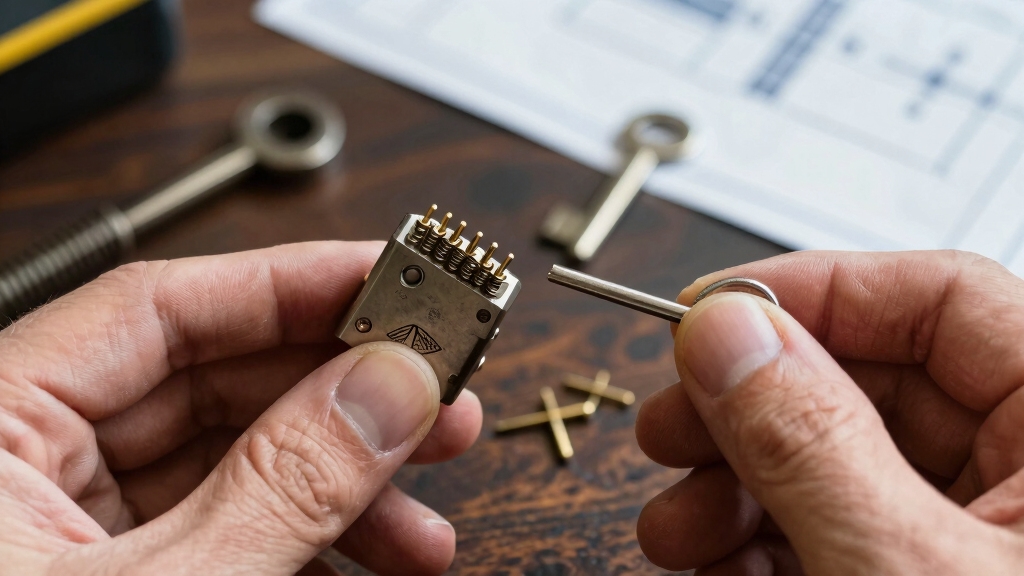

When you use a bump key, its maximum-depth cuts align with the lock’s pins. By inserting the key and applying slight torque, a sudden impact transfers kinetic energy through the pins, momentarily separating driver pins from key pins at the shear line.
This brief gap lets you quickly turn the plug, bypassing normal security. However, effectiveness depends on precise positioning, lock type, and anti-bump features. Understanding these details reveals why some locks resist bumping better than others.
Key Takeaways
- Bump keys with maximum-depth cuts fit into pin-tumbler locks to transfer kinetic energy to driver pins.
- Impact force from striking the bump key causes driver pins to jump above the shear line briefly.
- Light torque applied during bumping allows the plug to rotate during the momentary shear line opening.
- The rapid pin movement and precise timing exploit the lock’s pin geometry to unlock without the original key.
- Bump keys can open many locks sharing the same keyway but require proper positioning and operator skill.
What Is Lock Bumping and How Does It Work?
Lock bumping works by using a specially cut bump key and a controlled impact to momentarily separate the internal pins inside a pin-tumbler lock. This technique exploits the spring-loaded key pins and driver pins arranged within the cylinder to block or clear the shear line.
When you apply a sharp impact, kinetic energy transfers through the key pins to the driver pins. This causes them to jump above the shear line briefly while the key pins remain below.
During this few-millisecond window, you apply rotational torque to turn the plug, retracting the bolt. This covert, non-destructive method is effective on many standard residential and commercial pin-tumbler locks lacking bump-resistant features.
Because bump keys can be made by modifying any normal key for most non-bump-proof systems, the attack is widely accessible and can be executed with minimal tools and practice, making it a significant security concern vulnerability & effectiveness.
Locksmiths often recommend upgrading to bump-resistant locks or employing professional lock installation services to mitigate this risk.
What Makes a Bump Key Different From a Regular Key?
Although both bump keys and regular keys fit into the same pin-tumbler locks, bump keys differ markedly in their cutting pattern and intended function.
You’ll find these key distinctions:
- Cutting Pattern: Bump keys have maximum depth cuts on every pin position, unlike regular keys with varied cuts tailored to a specific lock’s pins.
- Function: Bump keys use impact to separate pins momentarily, while regular keys align pins statically for smooth operation.
- Compatibility: One bump key can operate many locks sharing the keyway, whereas regular keys fit only their unique pinning.
- Physical Modifications: Bump keys often have filed shoulders and rounded teeth to facilitate bumping, unlike unmodified regular keys.
These differences make bump keys specialized tools optimized for rapid, non-destructive entry rather than routine use. They are primarily used for locksmith training, emergency access, and security testing, demonstrating their role beyond everyday key use.
Understanding the vulnerabilities exploited by bump keys highlights the importance of installing reinforced locking systems to enhance security.
How to Prepare and Position a Bump Key for Lock Bumping?
Before you begin bumping, you need to prepare the bump key by filing all cuts to the lowest depth and shaping the tip and shoulder to allow proper movement within the cylinder.
It is crucial that the bump key has the correct spacing and profile to match the target keyway, as this ensures bumping effectiveness. Verify cut spacing matches the target lock’s pin layout. Insert the key fully, then withdraw one click to position it optimally.
Apply light tension via fingers or a tension wrench to maintain pin contact without binding. Proper alignment is essential, similar to ensuring accurate placement in peephole installation for security hardware.
| Step | Detail |
|---|---|
| Filing | All cuts filed to lowest depth |
| Key Position | Insert fully, then withdraw one click |
| Tension Application | Light, consistent pressure applied |
| Pin Contact | Ensure all pins rest on cut slopes |
What Really Happens Inside the Lock When You Bump It?
When you strike a bump key properly positioned inside the cylinder, a rapid transfer of kinetic energy occurs between the key pins and driver pins, momentarily freeing the plug to rotate.
This process unfolds precisely:
- The bump key’s impact sends a kinetic pulse through key pins to driver pins, which absorb most energy.
- Driver pins jump above the shear line, creating a brief gap separating them from stationary key pins.
- Applying slight torque preloads the plug, allowing immediate rotation once driver pins clear the shear line. This technique, which dates back to the 1970s, was originally developed by Danish locksmiths.
- Rotation misaligns pin chambers, trapping driver pins in the shell, maintaining the gap and freeing the plug.
This finely tuned dynamic, lasting fractions of a second, enables the plug’s swift, unobstructed rotation, releasing the mechanism.
Which Locks Are Most Vulnerable to Lock Bumping?
Lock bumping primarily targets standard pin-tumbler cylinders, which are widespread in residential and light commercial settings. These mass-produced locks, commonly sold in hardware stores, often lack anti-bump features and share common keyways, making them highly susceptible.
Keyed-alike sets increase risk since one bump key can open multiple doors. Conventional deadbolts with standard pin-tumbler cylinders remain vulnerable, as bumping attacks the cylinder rather than the bolt mechanism.
Locks with widely used keyway profiles or contractor-keyed systems facilitate easy acquisition or fabrication of compatible bump keys. Even mid-range “bump-resistant” cylinders can be compromised using refined bumping techniques, as they often retain conventional pin geometry.
Incorporating hardened steel anti-drill plates can provide additional protection against physical attacks on the cylinder. Worn or poorly maintained locks further ease bumping by loosening tolerances, demonstrating that many consumer-grade locks provide minimal resistance to this attack method.
Broken or worn-out locks become easier to pick or manipulate over time; maintenance and timely replacement recommended also applies, as small mechanical issues can significantly increase bumping vulnerability.
What Limits the Effectiveness of Lock Bumping?
Although standard pin-tumbler cylinders are widely vulnerable to bumping, several factors limit the technique’s overall effectiveness. You must consider lock type, mechanical design, operational skill, and tooling constraints.
- Lock compatibility: Bumping works only on pin-tumbler cylinders with correct keyway profiles. Other locks and electronic models resist it. Reinforcement methods like tamper-resistant fasteners and multipoint locking systems further reduce vulnerability.
- Mechanical limits: Narrow keyways, tight tolerances, and auxiliary mechanisms reduce energy transfer and prevent full shear-line alignment.
- Skill demands: Precise timing and controlled torque are critical. Environmental factors and model-specific nuances complicate success. Additionally, the continued use of outdated locks increases vulnerability, but many properties have upgraded, limiting bumping effectiveness.
- Tool restrictions: You need properly cut, durable bump keys and optimized strikers. Poor blanks deform quickly, reducing reliability.
How Locks Are Built to Resist Bump Attacks?
Locks are designed to resist bump attacks primarily through the use of specialized security pin designs and integrated anti-bump mechanisms. For instance, security driver pins, like spool or serrated types, create false shear lines. This disruption makes it difficult for the bump key to transfer force effectively.
Additionally, many modern locks incorporate bump-resistant features specifically designed to counteract the speed and stealth of bumping techniques. Installing locks with these features can significantly reduce vulnerability to unauthorized entry.
Additionally, locks may incorporate features such as sidebar mechanisms and multi-axis pins. These elements add a layer of complexity that makes it challenging for the bumping impact alone to manipulate the lock reliably.
So, when you’re looking at locks, these advanced features really enhance their security against bump attacks. Understanding these security mechanisms helps in selecting locks that provide higher protection levels.
Security Pin Designs
Many pin-tumbler locks incorporate specially designed security pins to frustrate bump attacks by exploiting mechanical binding and misalignment at the shear line.
These pins alter the standard driver or key pin shape, creating false feedback and temporary lock-up when subjected to bumping. They are often manufactured by shaping key or driver pins using a drill or rotary tool combined with needle files, a method accessible to hobbyists and locksmiths alike, allowing customization of security features.
Key security pin designs include:
- Spool pins – narrowed centers that catch and bind at the shear line under torque, causing false sets.
- Mushroom pins – beveled, flared profiles that similarly bind and block rotation during manipulation.
- Serrated pins – multiple grooves generate several binding points, increasing pin entrapment.
- Hybrid pins – combine spool, mushroom, and serrated features for complex multi-stage binding effects.
Anti-Bump Mechanisms
Security pins alone cannot fully prevent bump attacks, so manufacturers design locks with integrated anti-bump mechanisms that address the vulnerabilities exploited by bump keys.
One effective example is the BumpStop technology, which prevents transfer of force from the bump key to the pins, thereby blocking cylinder rotation. These mechanisms fall into three main categories: alternative cylinder designs, complex keyway geometries, and advanced spring or chamber engineering.
Many locks also incorporate variable springs and dampers to reduce the chance of successful bumping by disrupting pin movement.
| Mechanism Category | Key Feature |
|---|---|
| Alternative Cylinders | Sidebar bars, rotating disks, electronic locks |
| Keyway Geometry | Paracentric shapes, narrow plugs, offset pins |
| Spring & Chamber Features | Variable springs, differential tension, dampers |
Practical Steps You Can Take to Prevent Lock Bumping
Upgrade your locks to high-security, bump-resistant models to markedly reduce the risk of lock bumping. These locks use specialized pins, sidebars, or anti-bump technology to block manipulation by bump keys.
Additionally, incorporating MIL-standard certified components in your locking mechanisms can enhance durability against intrusion attempts. Beyond upgrading, you should:
- Install protective lock guards or shields to physically prevent bump key insertion. This is ideal when replacing locks isn’t feasible.
- Consider electronic or keyless lock systems that eliminate traditional pin tumblers, offering immunity to bumping and integrated real-time monitoring. Many burglars prefer bumping because it is fast, effective, and nearly undetectable, making pin tumbler locks particularly vulnerable.
- Reinforce doors and frames with solid materials and security film on windows to deter forced entry attempts.
- Enhance exterior visibility by trimming landscaping and adding lighting, which reduces hiding spots for intruders.
Frequently Asked Questions
Can Lock Bumping Damage the Lock or Key Over Time?
Yes, lock bumping can damage your lock and key over time. Repeated impacts cause pin deformation, spring fatigue, and plug wear, leading to rough key action and reduced reliability.
Your bump key’s shoulders and tips also degrade, lowering effectiveness and increasing wear on the lock. Continuous bumping may cause internal misalignment, increased friction, and eventual need for rekeying or cylinder replacement to maintain security and smooth operation.
How Long Does It Take to Learn Lock Bumping Effectively?
You can learn basic lock bumping effectively within a few hours of guided practice using standard bump keys and a practice pin-tumbler lock.
Achieving consistent success on common residential locks typically takes several sessions over a few days.
However, mastering timing, tension control, and strike force to reach high reliability often requires weeks of repeated practice. Your existing locksmithing experience also influences how quickly you adapt and improve.
Are Bump Keys Legal to Own and Carry?
You can legally own and carry bump keys in most U.S. states. In most cases, you can possess them for locksmithing, hobbyist, or educational purposes.
However, you can’t carry them concealed in certain states like Mississippi, nor possess them without a license in Tennessee. States like Illinois and Virginia presume criminal intent without proper authorization.
Always check local laws before carrying bump keys, as legality hinges on intent, licensing, and specific state regulations.
Can Professional Locksmiths Detect if a Lock Has Been Bumped?
Yes, professional locksmiths can detect if a lock has been bumped, but it’s not always straightforward. You’ll need a trained forensic locksmith to inspect internal components using microscopes and tool-mark analysis.
They look for impact marks, abnormal wear, and metal deformation unique to bumping. However, detection depends on lock quality, usage, and skill involved. Some high-grade locks may show minimal evidence, making conclusive identification challenging.
How Does Lock Bumping Compare to Other Lock Picking Techniques?
Think of lock bumping as a lightning strike—fast and direct—compared to the slow, intricate dance of single-pin picking or the repetitive rhythm of raking.
You’ll find bumping opens most standard pin-tumbler locks within seconds with minimal skill or tools. While picking demands refined touch and patience, bumping requires only a bump key and impact tool.
However, high-security locks and anti-bump features blunt bumping’s speed and effectiveness greatly.
Protect Your Property With Smarter Lock Decisions
You’ve learned how lock bumping breaks barriers by briefly boosting the pins inside your lock. While bump keys blend simplicity with surprising skill, savvy security steps can stop such sneaky strikes.
By selecting sturdy, sophisticated locks and staying sharp with preventive practices, you markedly strengthen your safety. Don’t let lock bumping become a looming liability.
Lock down your defenses with deliberate diligence and decisive decisions to deter dangerous disruptions.