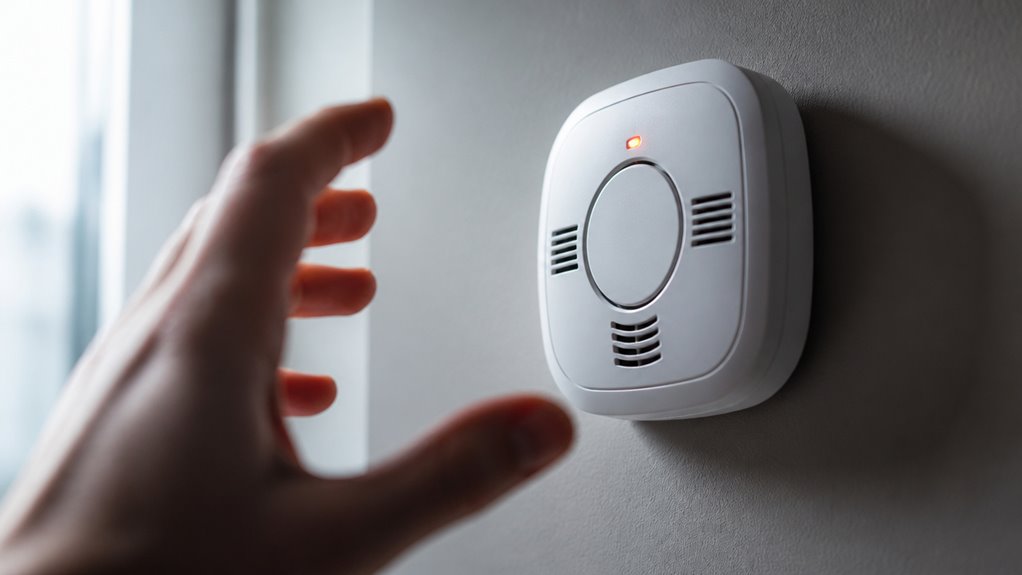

Yes, you can tell a carbon monoxide alarm apart by its distinct repeating four-beep cycle, known as the temporal 4 pattern.
This differs from the three-beep pattern typical of smoke alarms. The CO alarm’s four-tone sequence is loud and designed to wake you up immediately, signaling dangerous CO levels.
Low battery or maintenance issues produce softer, intermittent chirps instead. Understanding these differences helps you respond appropriately and safely.
There’s more to learn about how these alerts work and what to do when they sound.
Key Takeaways
- Carbon monoxide alarms emit a distinctive repeating four-beep cycle called the temporal 4 pattern.
- Smoke alarms typically have a three-beep pattern, differentiating fire alerts from CO alerts.
- Some combination alarms use unique patterns or voice alerts to clearly identify CO hazards.
- CO alarm sounds are loud (around 85 dB) to wake sleeping occupants effectively.
- Maintenance signals like chirps differ from the continuous four-beep CO emergency pattern.
How Does a Carbon Monoxide Alarm Sound Differ From a Smoke Alarm?
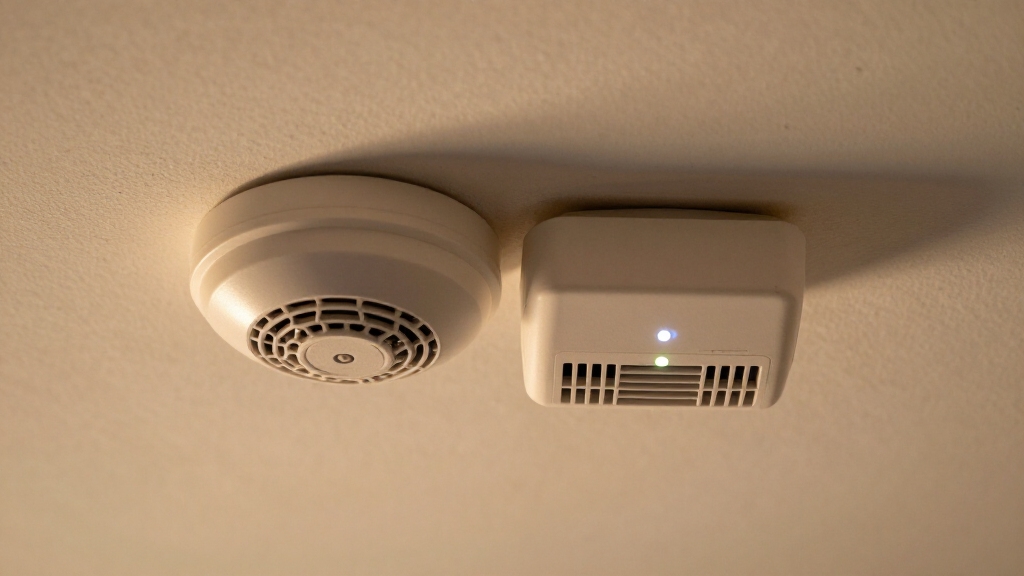
Although both alarms protect your home, a carbon monoxide (CO) alarm sounds distinctly different from a smoke alarm to help you quickly identify the specific danger.
CO alarms typically emit a repeating pattern of four beeps followed by a pause, known as temporal 4. Smoke alarms commonly use three beeps.
This differentiation aligns with UL and NFPA standards, ensuring you can distinguish between fire and carbon monoxide hazards promptly.
Combination smoke/CO alarms generate unique patterns for each threat. The CO alarm’s signal is designed to be loud, around 85 decibels at 10 feet, enough to wake sleeping occupants.
Understanding these distinct sound patterns lets you respond appropriately and quickly to potential carbon monoxide exposure versus fire emergencies.
It is crucial to never ignore or silence a CO alarm, as continuous beeping indicates dangerous CO levels requiring immediate evacuation and emergency contact.
What Is the Typical Carbon Monoxide Alarm Sound Pattern?
When your carbon monoxide alarm goes off, you’ll usually hear a repeating pattern of four beeps followed by a pause.
This distinct sound pattern—known as the temporal 4 signal—sets it apart from smoke alarms, which typically beep three times.
Being able to recognize this difference is really important.
It helps you quickly identify a potential CO threat and respond appropriately.
If you hear this pattern, it is critical to evacuate immediately and call emergency services for your safety.
Typical CO Alarm Pattern
When a carbon monoxide alarm detects dangerous levels of CO, it typically emits a distinct repeating pattern of four loud beeps followed by a pause, then four beeps again. This “temporal 4” pattern guarantees immediate recognition and prompts urgent response.
The sound is designed to be loud enough, around 85 dB at 10 feet, to wake sleeping occupants and signal danger clearly.
You should note:
The four-beep cycle repeats continuously until silenced or the hazard clears. Some models may use variations like three- or four-tone sequences depending on standards.
This pattern differs from smoke alarms, which commonly use three beeps. A single chirp or intermittent beeping usually indicates maintenance, not CO detection.
Recognizing this pattern helps you respond swiftly to potentially lethal carbon monoxide exposure.
If your alarm emits a consistent beep every 30 seconds or displays error codes, this signals end-of-life indicators requiring immediate replacement to ensure safety.
Distinguishing CO Alarm Sounds
Recognizing the typical carbon monoxide alarm sound pattern can help you quickly identify a genuine CO emergency.
Most CO alarms emit a repeating sequence of four beeps, followed by a pause, then four beeps again. This is known as the temporal 4 pattern.
This pattern differs from smoke alarms, which usually produce three beeps. The CO alarm’s sound is loud enough, around 85 dB at 10 feet, to wake sleeping occupants. If you hear a single chirp every 30 to 60 seconds, it typically signals low battery or malfunction, not CO presence.
Because manufacturer patterns vary slightly, always consult your unit’s manual. When you hear the continuous four-beep pattern, treat it as a critical alert indicating dangerous carbon monoxide levels.
For safety, ensure your CO detectors are installed within 10 feet of bedroom doors to guarantee the alarm is loud enough to wake occupants during sleep.
How Can You Identify Carbon Monoxide Alarm Chirps vs. Emergency Alarms?
Although carbon monoxide alarms emit various sounds, distinguishing between chirps and emergency alarms is crucial for safety.
You need to recognize that chirps typically signal maintenance issues like low battery or end-of-life status, while emergency alarms indicate dangerous CO levels.
The key differences lie in sound pattern, volume, and repetition.
Emergency alarms produce a loud, repeating four-beep pattern (temporal 4) designed to alert occupants immediately.
Chirps occur as single, brief sounds every 30 to 60 seconds, signaling battery or unit issues.
Emergency signals reach around 85 dB at 10 feet, loud enough to wake sleepers; chirps are softer and intermittent.
Manufacturer manuals provide exact patterns, so always verify your unit’s specific signals to respond appropriately.
Combination units may also use voice alerts and flashing lights to distinguish between smoke and CO hazards.
What Should You Do If You Hear a Carbon Monoxide Alarm?
If your carbon monoxide alarm goes off, take immediate action to protect yourself and others from potential poisoning.
First, don’t ignore the repeated four-beep pattern signaling dangerous CO levels. Evacuate everyone from the building promptly and move to fresh air outdoors.
Call emergency services to report the alarm and request assistance. Don’t re-enter the premises until professionals have confirmed it’s safe.
Avoid using any fuel-burning appliances or sources of combustion until the situation is resolved. If anyone shows symptoms of CO poisoning, such as headache, dizziness, or nausea, seek medical help immediately.
After the emergency, have a qualified technician inspect your home’s heating systems, vents, and appliances to identify and fix the CO source.
Regularly test and maintain your alarms to ensure they function correctly when needed. Remember that yellow or flickering flames on gas appliances can be an early warning sign of incomplete combustion causing CO buildup.
Why Do Carbon Monoxide Alarms Beep Four Times Instead of Three?
When you hear a carbon monoxide alarm beep four times instead of three, it signals a distinct hazard compared to smoke alarms, which typically use a three-beep pattern.
This four-beep signal is designed to alert you specifically to the presence of dangerous carbon monoxide gas, a colorless and odorless threat.
The repeated four-tone pattern guarantees quick hazard identification and prompt response.
Key reasons for the four-beep pattern include:
- Differentiates CO danger from smoke/fire alerts
- Meets UL 2034 standards for residential CO alarms
- Provides a loud, distinctive “temporal 4” cadence to wake occupants
- Indicates a true emergency, not a low battery or malfunction chirp
Understanding this pattern helps you recognize and react appropriately to carbon monoxide risks.
Vivint carbon monoxide alarms also feature distinct voice alerts that specify CO presence, helping guide appropriate occupant response.
What Standards Define Carbon Monoxide Alarm Sound Patterns?
Standards like UL 2034 play a crucial role in defining carbon monoxide alarm sound patterns to guarantee consistent, recognizable alerts across residential units.
UL 2034 mandates a repeating four-beep pattern followed by a pause, known as temporal 4, to signal carbon monoxide presence. This sound must reach at least 75 dB at the pillow or 15 dB above ambient noise, ensuring it wakes sleeping occupants.
The standard also specifies that the pause duration may increase after several minutes to maintain attention without causing alarm fatigue. While manufacturers may vary the exact cadence, the essential emergency pattern remains a loud, repeated four-tone signal distinct from smoke alarms.
Adhering to these requirements helps you identify carbon monoxide danger promptly and take immediate action. Many combination detectors also include voice alerts that announce the hazard to further distinguish CO alarms from smoke alarms.
How to Avoid Confusing Carbon Monoxide Alarms With Smoke Alarms?
You can easily tell carbon monoxide alarms apart from smoke alarms by listening to their unique sound patterns. For instance, CO alarms usually beep four times in a row, then pause, while smoke alarms typically beep three times.
It’s really important to recognize these differences because each type of alarm is alerting you to a different danger, and knowing how to respond is crucial.
However, since carbon monoxide alarms do not detect natural gas leaks, it is essential to install separate natural gas detectors to ensure comprehensive safety.
Sound Pattern Differences
Although smoke and carbon monoxide alarms both alert you to potential dangers, their sound patterns differ markedly to help you distinguish between fire and CO hazards quickly.
Carbon monoxide alarms typically emit a repeating pattern of four beeps followed by a pause, often called a temporal 4 pattern. Smoke alarms, in contrast, usually sound three beeps. This distinction guarantees you can identify the specific threat promptly.
Key sound pattern differences include:
- CO alarms use four-tone cycles; smoke alarms use three-tone cycles.
- CO alarm signals are louder, designed to wake sleeping occupants.
- Single chirps indicate maintenance, not emergencies.
- Combination alarms may vary patterns for smoke and CO detection.
Understanding these patterns helps you respond correctly to each hazard. Regular testing procedures ensure that the voice alerts and sirens function as intended for continuous safety.
Identifying Alarm Signals
When distinguishing between carbon monoxide and smoke alarms, recognizing their unique sound patterns is essential to avoid misinterpreting signals. Carbon monoxide alarms typically emit four beeps followed by a pause, repeated continuously. Smoke alarms usually sound three beeps.
Chirping signals indicate maintenance issues, not emergencies. Understanding these differences helps you respond appropriately to potential hazards.
| Alarm Type | Sound Pattern | Meaning |
|---|---|---|
| Carbon Monoxide Alarm | 4 beeps, pause, repeat | CO detected, emergency |
| Smoke Alarm | 3 beeps, repeat | Smoke/fire detected |
| Low Battery Chirp | Single chirp every 30-60s | Maintenance needed |
| End-of-Life Chirp | Repeating chirps | Replace alarm |
Always consult your alarm’s manual to confirm patterns and act swiftly on emergency signals.
Frequently Asked Questions
How Often Should Carbon Monoxide Alarms Be Tested for Proper Sound Function?
You should test your carbon monoxide alarm at least once a month to make certain its sound function works properly.
Press the test button until you hear the full alarm pattern, usually four loud beeps repeated, to confirm it’s audible.
Regular testing helps catch battery issues or malfunctions early.
Also, replace batteries annually or as recommended, and follow manufacturer instructions for maintenance and replacement timelines to keep your alarm reliable and effective.
Can Carbon Monoxide Alarm Sounds Vary Between Different Brands or Models?
Think of CO alarm sounds as dialects of the same language. They share the core message but vary slightly.
Yes, carbon monoxide alarm sounds can differ between brands and models in tone patterns and cadence.
While most use a repeating four-beep sequence, some may incorporate three or four-tone signals or voice alerts.
Always consult your specific alarm’s manual to recognize its unique emergency sound accurately and avoid confusion with maintenance chirps.
What Factors Affect the Volume and Audibility of Carbon Monoxide Alarms?
The volume and audibility of carbon monoxide alarms depend on factors like the alarm’s rated decibel output, usually around 85 dB at 10 feet, placement within your home, and ambient noise levels.
Materials in the environment, such as walls or furniture, can muffle sound. Proper installation height and clear surroundings enhance audibility.
Compliance with UL 2034 standards guarantees alarms produce loud, distinct signals, especially in sleeping areas, so you won’t miss a warning.
Do Carbon Monoxide Alarms Have Voice Alerts in Addition to Beeps?
Yes, some carbon monoxide alarms include voice alerts alongside beeps.
These voice alerts clearly announce “Carbon monoxide detected” or similar warnings, helping you quickly identify the hazard.
This feature enhances safety by reducing confusion during an emergency.
However, not all models have voice alerts; many rely solely on distinct beep patterns.
Always check your specific alarm’s manual to understand its alert methods and guarantee you recognize both sound types correctly.
How Long Do Carbon Monoxide Alarms Continue Sounding During an Emergency?
During a carbon monoxide emergency, your alarm will continue sounding the repeating four-beep pattern without stopping until the CO levels drop to a safe concentration or you reset the unit.
This continuous alert is designed to wake you and prompt immediate action. Some alarms may lengthen the pause between beeps after several minutes. However, they don’t stop until the danger passes or the device is manually silenced or powered off.
Does Carbon Monoxide Alarm Sound Different? Final Tips
When your carbon monoxide alarm sings its distinct, rhythmic warning, four sharp chirps cut through silence like a siren’s call.
Don’t hesitate. This sound is your lifeline, a precise signal in the symphony of household alerts.
Unlike smoke alarms’ urgent three-beat drum, CO alarms deliver a measured, unmistakable pattern.
Trust this technical language; it’s designed to save your breath and your life.
Act swiftly, decode the signal, and protect your home from invisible danger.