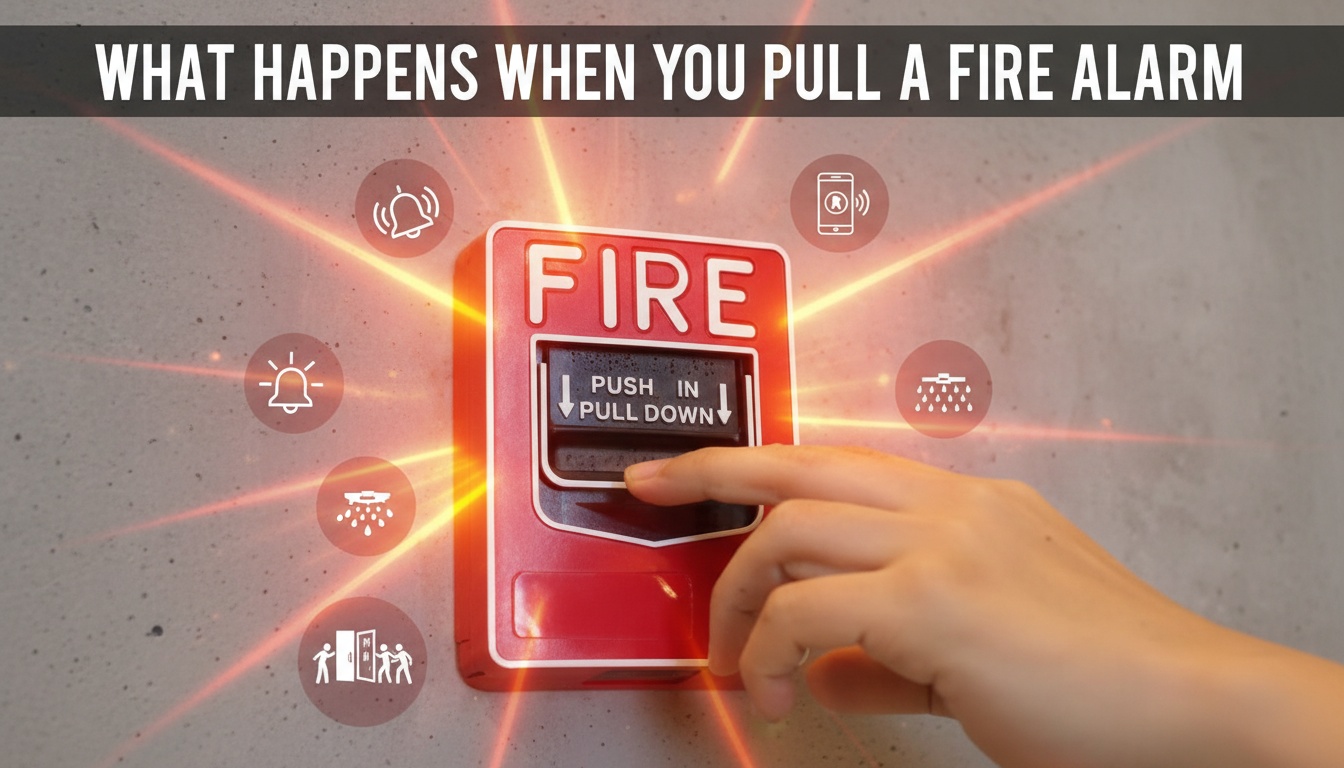

When you pull a fire alarm, you immediately send a signal to the fire alarm control panel, triggering loud sounders and flashing strobes to alert everyone nearby.
Visual flags mark the pull location, and voice messages often guide you to safe exits. The signal may also notify the fire department through a monitoring center.
Staff respond by verifying the alarm and coordinating evacuation. Understanding these steps helps guarantee your safety and proper emergency response in an actual fire event.
Key Takeaways
- Pulling a fire alarm sends an immediate signal to the control panel, triggering the alarm system to enter alarm mode.
- Audible alarms, strobes, and voice messages activate to alert occupants to evacuate promptly and safely.
- The alarm location is displayed on the control panel, helping staff coordinate evacuation and emergency response.
- The signal is relayed to a central monitoring station or fire department if the system is monitored.
- Staff follow procedures to verify the alarm, assist occupants, and facilitate fire brigade access to the site.
How Pulling a Fire Alarm Activates the System?
When you pull a fire alarm, you immediately trigger the manual pull station, which sends a signal to the fire alarm control panel without delay. This activation initiates a rapid communication sequence within the system.
Pulling a fire alarm instantly activates the manual station, sending an immediate signal to the control panel.
Some systems incorporate a brief automatic delay of 15 seconds, allowing for acknowledgment before full alarm notification begins. Visual indicators, such as mechanical flags on the pull station, mark the activation for easy identification.
The control panel processes the signal instantly, ensuring the system moves into alarm mode. This prompt response is vital for occupant safety and compliance with fire safety standards.
Once activated, the system prepares to alert occupants and emergency services, laying the groundwork for swift evacuation and emergency response. Understanding this process highlights the critical role manual pull stations play in fire safety systems.
However, unless the system is monitored, pulling the alarm typically only triggers local audible alerts and does not automatically notify the fire department.
Where Fire Alarm Pull Stations Are Located?
Fire alarm pull stations are strategically placed to guarantee quick access during emergencies, allowing you to activate the alarm without hesitation.
You’ll typically find them installed according to strict safety codes like NFPA 101 section 9.6.2.3, assuring they’re in visible, reachable spots.
They’re usually mounted near exits or along escape routes to facilitate prompt activation during evacuation.
Common locations include:
- Near main entrances and exits for easy access upon entering or leaving a building.
- Adjacent to stairwells and corridors used as primary evacuation paths.
- At regular intervals in large or complex buildings to assure no area is without quick access.
Knowing these placements helps you act swiftly and confidently if an emergency arises, triggering the alarm exactly when and where it’s needed.
For properties requiring enhanced safety, pull stations often integrate with central fire alarm systems to ensure automatic notification to emergency responders.
Immediate Fire Alarm System Response
After you pull a fire alarm station, the system springs into action immediately. The fire alarm control panel receives the signal and initiates an automatic sequence, usually allowing a brief 15-second acknowledgment delay before full notification.
Meanwhile, all sounders throughout the affected zone activate to alert occupants without delay. Simultaneously, the system transmits the alert to central monitoring for emergency response coordination. This immediate system response secures rapid occupant notification and timely intervention.
It’s critical to position fire alarm stations near unobstructed exits to ensure safe evacuation during an emergency.
| Action | Description |
|---|---|
| Signal Transmission | Instant alert sent to fire alarm control panel |
| Acknowledgment Delay | 15 seconds to confirm alarm before full alert |
| Sounder Activation | All horns/speakers in the zone sound immediately |
| Central Monitoring Alert | Signal forwarded to emergency communications |
How Sounders and Visual Alerts Activate?
Sounders and visual alerts activate instantly to grab your attention and signal danger. Once you pull the fire alarm, the system sends an immediate signal to trigger all notification devices throughout the affected area.
These alerts make certain everyone in the building recognizes the emergency without delay. You’ll notice:
- Loud horns or bells sounding a distinct pattern, often a 4-4-4 sequence lasting 15 seconds.
- Bright strobes or flashing lights providing visual cues, especially for those with hearing impairments.
- Mechanical flags or indicators on pull stations marking which unit was activated.
This automatic activation complies with safety codes and guarantees rapid occupant notification. You can rely on these devices to prompt immediate evacuation and keep everyone safe during a fire emergency. Regular testing and maintenance help ensure fire alarm reliability and prevent false alerts.
How Voice Messages Guide Occupants During an Alarm?
When a fire alarm goes off, voice messages kick in to give you clear instructions on how to evacuate safely. They’re designed to help everyone exit in an orderly fashion.
These updates are super helpful because they adapt to what’s happening around you, guiding you away from any danger zones.
It’s important to trust these announcements; they can really help you respond quickly and cut down on any confusion during an emergency. Understanding the fire triangle can also help you grasp why certain evacuation instructions are critical for safety.
Clear Evacuation Instructions
Through clear and direct voice messages, the fire alarm system guides you efficiently during an emergency evacuation.
These announcements give you immediate, unambiguous instructions to guarantee your safety and orderly exit.
You’ll hear specific directions tailored to the situation, minimizing confusion and preventing panic.
The system’s voice messages help you by identifying the safest evacuation routes and exits to use.
They alert you to avoid dangerous areas or hazards within the building.
Additionally, they provide step-by-step guidance on what to do next, such as proceeding to assembly points.
For enhanced safety, it’s important to ensure that alarms are audible within 10 feet of sleeping areas to effectively wake occupants during emergencies, as recommended for alarm audible requirements.
Real-Time Safety Updates
Although alarms signal an emergency instantly, voice messages provide real-time safety updates that keep you informed throughout the event.
When the alarm activates, pre-recorded announcements explain the situation and guide you on the safest course of action, whether to evacuate or relocate.
These messages update continuously, reflecting any changes, such as blocked exits or alternative routes.
You’ll hear clear instructions through speakers strategically placed to reach every occupant, ensuring you know exactly what to do.
This immediate communication reduces confusion and panic, helping you move efficiently to safety.
In critical situations, integrating real-time communication systems with fire alarm protocols enhances response accuracy and occupant safety.
Why You Should Evacuate Immediately After the Alarm Sounds?
When the fire alarm goes off, it’s crucial to get out of the building right away. Your safety is the top priority, and acting quickly helps you avoid any possible danger. Plus, building codes actually require you to leave without wasting time. This isn’t just about you; it’s about keeping everyone safe.
When you follow these guidelines, you’re ensuring that the emergency responders can do their job effectively. They need a clear path to get in and help those in need. So, remember, when that alarm rings, don’t hesitate—get moving! Fire extinguishers, such as dry chemical extinguishers, play a vital role in controlling fires before help arrives.
Immediate Safety Priority
Because fire alarms signal a potential danger, you must evacuate immediately once you hear them.
Delaying your exit can put you and others at serious risk from fire, smoke, or structural hazards. The alarm’s activation triggers an automatic system response designed to alert everyone swiftly and clearly.
You should act quickly because:
The alarm initiates loud sounders and visible strobes, assuring you can’t miss the alert.
Voice announcements often provide essential instructions for safe evacuation routes.
Emergency personnel rely on prompt evacuation to access and control the incident efficiently.
Ignoring or hesitating after the alarm sounds undermines these safety measures.
Your immediate departure assures your protection and helps emergency responders manage the situation effectively.
Modern fire alarms often use photoelectric smoke detection technology to identify smoldering fires early, enhancing overall safety.
Legal Evacuation Requirements
Understanding the legal requirements behind immediate evacuation after a fire alarm clarifies why you must leave without hesitation. Building codes, like NFPA 101, mandate prompt evacuation once the alarm sounds to protect occupants from potential hazards.
Delaying your exit violates these regulations and endangers everyone inside. The law requires you to respond instantly to evacuation signals: horns, strobes, and voice alerts, without seeking confirmation or ignoring warnings.
Emergency procedures rely on your swift compliance to guarantee orderly evacuation to designated assembly points, enabling staff and responders to manage the situation efficiently. Failure to evacuate can result in legal penalties and complicate emergency response efforts.
When the fire alarm activates, your immediate departure isn’t optional; it’s a critical legal and safety obligation designed to save lives. Additionally, ensuring clear walkways and adequate lighting during evacuation routes is essential to prevent falls and injuries while exiting quickly.
How Staff Respond to Fire Alarm Activation?
Staff promptly don yellow vests and grab duty phones as they respond to a fire alarm activation, ensuring clear identification and communication.
Staff immediately wear yellow vests and take duty phones to ensure clear ID and communication during fire alarms.
You’ll first verify the alarm location at the control panel to pinpoint the source quickly. Next, you’ll coordinate evacuation efforts, guiding occupants to assembly points without blocking emergency routes.
Communication is key. You’ll call the communications room to confirm the alarm signal and keep everyone informed.
Key duties include:
- Verifying alarm details at the panel for accurate response
- Ensuring orderly evacuation and clear access for emergency teams
- Escorting fire brigade personnel to the alarm site for swift intervention
Your swift, organized actions help maintain safety and support emergency responders effectively during an alarm event.
How Fire Alarm Signals Notify the Fire Department?
When you activate a fire alarm, what happens next is pretty fascinating. The signal gets sent right away to a central monitoring station, like the communications room. From there, the staff jumps into action and notifies the emergency forces to make sure they respond quickly. It’s all about getting help as fast as possible!
This whole process is automated and follows strict protocols. They double-check to confirm there’s actually a threat before mobilizing the fire department. It’s kind of a well-oiled machine designed to keep everyone safe without wasting any time.
Signal Transmission Process
Through a seamless communication network, fire alarm signals notify the fire department almost instantly after activation.
Once you pull the alarm, the signal travels from the fire alarm control panel directly to a central monitoring station, often called the communications room.
This process assures quick, reliable transmission without manual intervention. You can expect:
- Immediate signal relay via dedicated phone lines, internet, or radio systems
- Automated alerts sent to fire department dispatch centers for rapid response
- Continuous monitoring to confirm signal receipt and prevent false alarms
This efficient transmission process is critical. It guarantees that emergency services receive accurate, timely information, allowing them to mobilize quickly and potentially save lives and property.
Your prompt action triggers a sophisticated system designed to keep everyone safe.
Emergency Forces Notification
Upon receiving the fire alarm signal, the communications room promptly notifies the fire brigade to initiate emergency response.
You can expect this notification to occur via remote monitoring systems such as computer alerts, text messages, or phone calls, ensuring immediate awareness.
The communications team assesses the situation quickly to verify the alarm’s legitimacy before escalating the response.
This process aligns with NFPA 101 emergency forces notification requirements, prioritizing accuracy to avoid false alarms.
Meanwhile, the incident details get logged meticulously in fire logs, duty diaries, and related websites for accountability.
Your role includes cooperating with responders by confirming signal receipt and facilitating their access to the alarm site.
This seamless coordination guarantees a rapid, organized reaction to potential fire emergencies.
Testing and Maintenance After Fire Alarm Activation
Conducting thorough testing and maintenance after a fire alarm activation assures your system remains reliable and fully operational.
Once the alarm has been reset and silenced with fire brigade approval, you must perform detailed inspections to confirm all components function correctly.
Focus on these critical actions:
Test manual pull stations, sounders, strobes, and control panels for responsiveness.
Inspect mechanical flags and visual indicators to ensure proper reset.
Document the cause, location, and results of all system tests in maintenance logs.
Common Causes and Consequences of False Fire Alarms
False fire alarms frequently disrupt building operations and can stem from various causes, including human error, equipment malfunction, or environmental factors like dust and steam.
You might accidentally trigger a manual pull station or encounter sensor faults due to poor maintenance.
Environmental triggers, such as cooking smoke or construction dust, often cause false activations.
These false alarms lead to unnecessary evacuations, interrupt daily activities, and desensitize occupants to real emergencies.
Emergency responders may waste critical resources responding to non-threats, delaying response to genuine incidents.
Additionally, repeated false alarms can result in fines or penalties from authorities.
To minimize these risks, you should guarantee regular testing, proper equipment calibration, and clear occupant training, maintaining a reliable fire alarm system that balances safety with operational continuity.
Frequently Asked Questions
Can Pulling a Fire Alarm Cause Legal Penalties if It’s a False Alarm?
Yes, pulling a fire alarm falsely can lead to legal penalties.
You’re responsible for any disruption or emergency response triggered without cause.
Authorities treat false alarms seriously because they waste resources and endanger safety by causing unnecessary evacuations.
Depending on local laws, fines, criminal charges, or civil liabilities might apply.
It’s vital to only activate alarms during genuine emergencies to avoid legal consequences and guarantee everyone’s safety.
What Should I Do if I Accidentally Pull a Fire Alarm?
Accidentally pulling a fire alarm triggers a full evacuation, affecting hundreds or more.
Immediately notify building staff or emergency personnel about the mistake.
Stay calm and explain the situation clearly to avoid unnecessary panic or delays.
Help staff verify the false alarm at the fire alarm panel.
Follow their instructions and cooperate fully to reset the system.
How Long Does It Take for the Fire Alarm to Reset After Activation?
The fire alarm reset time depends on the fire brigade’s approval after confirming the threat is cleared.
Once they give the go-ahead, you can silence alarms and reset pull stations and the control panel.
If the system doesn’t reset immediately, technicians are dispatched the next workday.
Always document the incident and test the system fully before returning to normal operation.
Are Fire Alarm Pull Stations Accessible to People With Disabilities?
Yes, fire alarm pull stations are designed to be accessible to people with disabilities.
They’re typically installed at a height compliant with ADA standards, allowing wheelchair users to reach them easily.
The design includes clear visual indicators, like mechanical flags, to assist those with hearing impairments.
You’ll find them positioned in accessible locations throughout buildings, ensuring everyone can activate the alarm quickly during emergencies.
How Do Fire Alarm Systems Differentiate Between Real Fires and False Alarms?
You’ll find fire alarm systems use sensors and verification steps to distinguish real fires from false alarms.
Smoke detectors, heat sensors, and manual pull stations trigger signals that the control panel assesses.
The system may allow a short delay for acknowledgment, enabling staff to verify the threat.
Central monitoring and fire brigade assessment further confirm if there’s an actual emergency, reducing false alarms and ensuring an appropriate response before full evacuation.
Respond Right, Stay Safe: The Power of Prompt Fire Alarm Action
When you pull a fire alarm, you promptly prompt protective protocols, proving pivotal for people’s peace and preservation.
You set sounders screaming and signals sending swift alerts to firefighters, sparking safe, structured evacuations.
Staff spring into action, supporting safety steps, while systems stay sturdy through thorough testing and timely maintenance.
Remember, responsible reactions reduce risks and reinforce readiness. Respect the role of fire alarms, react responsibly, and realize their remarkable role in risk reduction.