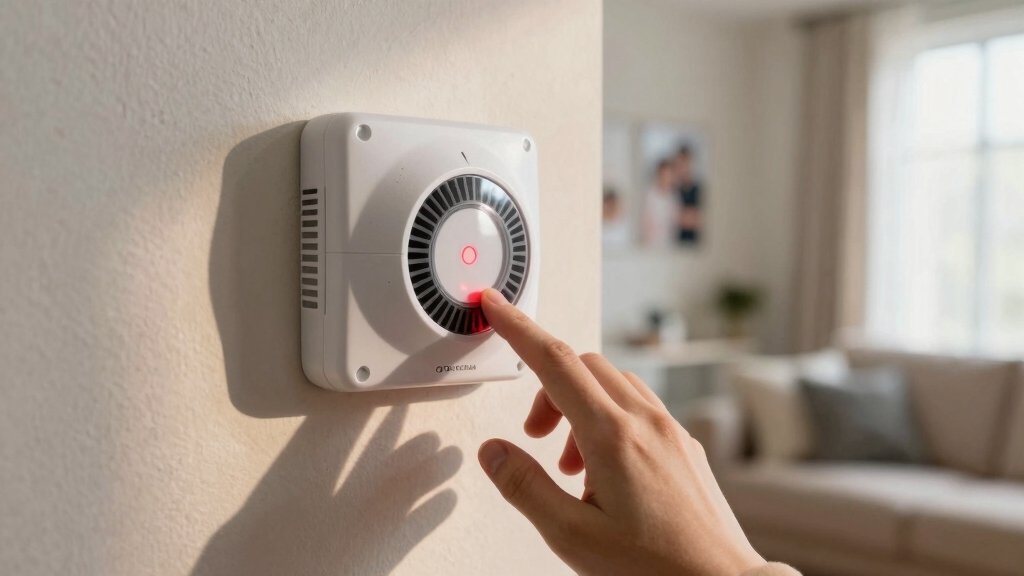

If your carbon monoxide alarm won’t stop beeping, it’s likely warning you of dangerous CO levels, a low battery, or that it has reached end-of-life.
Four short beeps followed by silence mean immediate evacuation is required. A single beep every 60 seconds signals a low battery you should replace promptly.
Continuous or irregular beeping may indicate sensor failure or hazardous conditions. Understanding these signals guarantees your safety.
For detailed troubleshooting and replacement guidance, keep exploring your options.
Key Takeaways
- Four short beeps followed by silence signal dangerous CO levels; evacuate immediately and call 9-1-1 from a safe location.
- Single beep every 60 seconds indicates low battery; replace the battery promptly to stop the beeping.
- Five beeps per minute or erratic beeping may mean the alarm reached end-of-life; replace the entire unit.
- Continuous or irregular beeping can indicate sensor malfunction or hazardous CO; ventilate area and seek emergency help if symptoms occur.
- For hardwired alarms, check power supply and wiring; restore AC power and replace backup batteries to resolve chirping issues.
How To Identify a Carbon Monoxide Emergency Alarm?
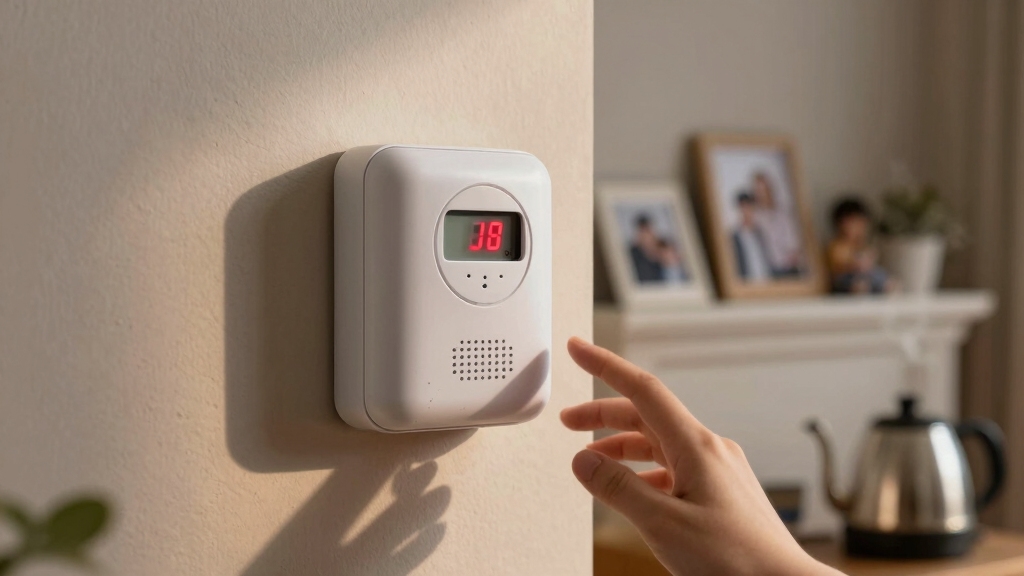
Recognize a carbon monoxide emergency alarm by its distinctive sound pattern: four short beeps followed by a five-second silence, repeating continuously.
This pattern signals dangerous carbon monoxide levels requiring immediate action. When you hear this alarm, evacuate the premises without delay.
Do not ignore or attempt to silence the alarm. Call 9-1-1 from a safe location to alert emergency responders.
Symptoms of carbon monoxide poisoning include headaches, dizziness, nausea, chest pain, and confusion. If you experience any, seek fresh air immediately.
Never re-enter the building until the fire department confirms it’s safe. This alert pattern differs from low battery or end-of-life warnings and indicates a genuine life-threatening hazard demanding urgent response.
Your prompt recognition and reaction can prevent serious injury or death.
Regular maintenance of fuel-burning appliances and ensuring proper ventilation are crucial to prevent carbon monoxide buildup and alarm activation.
Carbon Monoxide Alarm Beep Patterns Explained
Understanding the different beep patterns of a carbon monoxide alarm helps you quickly determine the appropriate response.
Each pattern signals a distinct status or issue, so recognizing them is vital for your safety.
Four short beeps followed by five seconds of silence signal dangerous CO levels. Evacuate immediately and call 9-1-1.
A single beep every 60 seconds indicates a low battery. Replace it promptly to maintain functionality.
Five beeps every minute warn that the unit has reached end-of-life and needs full replacement.
Continuous beeping without a clear pattern may indicate a malfunction or CO presence. Investigate or replace the alarm accordingly.
Knowing these patterns guarantees you act decisively and maintain effective carbon monoxide protection.
For optimal performance, install detectors near bedroom doors to ensure alarms are loud enough to wake occupants during sleep.
Common Causes of Continuous Carbon Monoxide Alarm Beeping
When your carbon monoxide alarm beeps continuously, it often signals the presence of dangerous CO levels or a critical equipment malfunction. Immediate evacuation and contacting emergency services are essential.
Continuous beeping without regular intervals may indicate hazardous CO concentration or sensor failure. Understanding beep patterns helps you respond appropriately.
| Cause | Beep Pattern | Action Required |
|---|---|---|
| Dangerous CO Levels | 4 beeps + 5 sec silence | Evacuate, call 9-1-1 |
| Sensor Malfunction | Continuous, irregular beep | Inspect/replace alarm |
| Power Issues | Unstable beeping | Check wiring or power source |
| End-of-Life Status | 5 beeps per minute | Replace alarm unit |
Recognize these causes to guarantee safety and proper alarm function. Always ensure your carbon monoxide alarm has a reliable backup power source to maintain functionality during power outages.
How To Fix Low Battery Beeping on Your CO Alarm?
Low battery beeping on your carbon monoxide alarm typically occurs once every 60 seconds, signaling that the battery needs replacement. To fix this issue efficiently, follow these technical steps:
Identify the alarm model and check the battery compartment. Remove the old battery and replace it with a fresh one, ensuring correct polarity.
For plug-in detectors with battery backup, replace the backup battery as well. Reset the alarm if required by pressing the test/reset button after battery replacement.
Replacing batteries every six months helps maintain reliable operation. Digital units may display an “Lb” indicator confirming low battery status.
Avoid ignoring the beep, as a depleted battery compromises your alarm’s ability to detect carbon monoxide, risking safety.
Prompt battery replacement restores full functionality and ceases the periodic beeping immediately.
Using sealed 10-year lithium batteries can eliminate frequent replacements by providing long-life power for your alarm.
How To Recognize End-Of-Life Beeping on Your CO Alarm?
After addressing battery-related beeping, it’s important to identify signals that indicate your CO alarm has reached its end-of-life.
Typically, your alarm will emit five beeps every minute or beep every 30 seconds without stopping. These patterns signify the unit’s lifespan has expired, generally around seven years.
Alarms signal end-of-life with five beeps per minute or continuous beeping every 30 seconds, usually after seven years.
Unlike low battery alerts, replacing the battery won’t stop this beeping; the entire alarm must be replaced.
Digital models often display “ERR” or “END” on the screen to confirm this status.
If your alarm is nearing or past the 5-7 year mark, or if you see these signals, prepare to install a new device promptly to guarantee continuous protection against carbon monoxide hazards.
For optimal safety, ensure your alarm is part of a properly maintained fire alarm system that complies with local codes and maintenance schedules.
What To Do If Your CO Alarm Won’t Stop Beeping?
If your CO alarm won’t stop beeping, you must quickly determine the cause to guarantee your safety.
First, identify the beep pattern to distinguish between low battery, end-of-life warning, or CO detection.
Then, take immediate action based on the pattern and symptoms.
Evacuate immediately if the alarm signals dangerous CO levels (four beeps and pause pattern).
Replace batteries promptly if you hear a single beep every 60 seconds or see a low battery indicator.
Plan for full alarm replacement if you detect five beeps per minute signaling end-of-life.
If uncertain, ventilate the area by opening windows and doors.
Contact emergency services if symptoms like dizziness or headache appear.
Prioritize safety by responding promptly to the alarm’s signals without delay.
Regular maintenance, including battery replacement and cleaning, helps prevent false alarms and ensures reliable operation.
How To Check and Fix False Carbon Monoxide Alarm Beeping?
When your carbon monoxide alarm beeps unexpectedly, start by verifying the beep pattern to rule out genuine CO detection or end-of-life signals.
If the alarm chirps once every minute, replace the battery immediately. For sealed battery models, check the unit’s age; alarms older than seven years often emit false end-of-life beeps.
Make certain the device has consistent power supply. Hardwired alarms may chirp if AC power is interrupted.
Ensure your carbon monoxide alarm has a steady power source; power interruptions can cause unexpected chirping.
Clean the sensor and vents gently to remove dust buildup, which can trigger false alarms.
If your alarm has a digital display, review error codes like “ERR” or “END” to confirm malfunction.
After troubleshooting, reset the alarm per manufacturer instructions.
If false beeping persists despite these steps, consult the user manual or contact the manufacturer for further guidance.
Regular maintenance of both the carbon monoxide detectors and nearby combustion appliances helps prevent false alarms and ensures early detection of real CO hazards.
When and How To Replace Your Carbon Monoxide Alarm?
Identifying the right time to replace your carbon monoxide alarm guarantees continued safety and compliance with manufacturer guidelines.
Most alarms have a lifespan of about seven years, after which their sensors degrade and reliability declines. Alarms manufactured after August 1, 2009, include end-of-life warnings, so pay close attention to these signals.
To replace your carbon monoxide alarm effectively, follow these steps:
Note end-of-life indicators: five beeps per minute or error codes like “ERR” or “END” on digital displays.
Check the installation date; alarms installed 5-7 years ago should be replaced promptly.
Purchase a model that meets current safety standards and matches your home’s requirements.
Remove the old unit, install the new alarm per manufacturer instructions, and test it for proper function.
Timely replacement guarantees your alarm remains dependable in detecting dangerous CO levels. Regular testing and proper placement of UL-certified carbon monoxide detectors are essential for early warning of CO hazards in homes with combustion appliances.
Maintaining Combination Smoke and Carbon Monoxide Alarms
Regularly maintaining combination smoke and carbon monoxide alarms secures reliable dual-function protection with minimal effort.
You should replace batteries every six months or as indicated by low battery alerts: single beeps every 60 seconds or “Lb” on digital displays.
For sealed battery units, note the 10-year lifespan and replace the entire device at end-of-life signals, such as five beeps per minute or “ERR” on the screen.
Test alarms monthly using the test button to verify proper operation.
Keep units clean and free of dust or debris, which can cause false alarms or malfunctions.
If alarms chirp due to power loss in hardwired models, restore AC power promptly.
Photoelectric smoke alarms use a light scattering principle to detect smoke early and reduce false alarms, enhancing overall safety.
Prompt action guarantees your combination alarm performs at peak efficiency, safeguarding against both smoke and carbon monoxide hazards.
Frequently Asked Questions
Can a Carbon Monoxide Alarm Be Tested Without Triggering an Emergency?
Yes, you can test a carbon monoxide alarm without triggering an emergency by using the built-in test button.
Press and hold it until the alarm sounds, confirming the unit’s audio and electronics work properly. Avoid using actual CO sources to test it, as that’s dangerous.
If the alarm beeps continuously outside a test, treat it as an emergency and follow safety protocols immediately.
Regular testing guarantees your alarm’s reliability.
How Often Should Carbon Monoxide Alarms Be Professionally Inspected?
You should have your carbon monoxide alarms professionally inspected at least once a year to make sure proper function.
Studies show that alarms older than seven years often fail to detect dangerous CO levels, so annual checks help catch issues early.
Professionals will test sensors, batteries, and electrical connections, making sure your alarm meets safety standards.
Regular inspections prevent malfunctions and false alarms, keeping you and your household protected from carbon monoxide exposure.
Are There Smartphone Apps to Monitor Carbon Monoxide Alarm Status?
Yes, you can monitor carbon monoxide alarm status using smartphone apps designed for smart CO detectors.
These apps let you receive real-time alerts, check battery levels, and view end-of-life warnings remotely.
To use them, make sure your CO alarm supports Wi-Fi or Bluetooth connectivity.
Popular brands like Nest Protect or First Alert Onelink offer dedicated apps.
Always verify compatibility and follow manufacturer instructions for setup and maintenance.
Can Other Household Devices Interfere With Carbon Monoxide Alarm Signals?
Imagine your CO alarm like a radio picking up a clear signal; nearby electronics can sometimes cause static.
Yes, certain household devices, like cordless phones, Wi-Fi routers, or microwaves, may interfere with your alarm’s wireless signals or cause false alerts.
To guarantee accuracy, keep your alarm away from such electronics.
If interference persists, consult the manufacturer’s guidelines or test the alarm in a different location to maintain reliable CO detection.
Is It Safe to Temporarily Silence a Carbon Monoxide Alarm Beeping?
You shouldn’t temporarily silence a carbon monoxide alarm without confirming safety. If it’s beeping due to CO detection, evacuate immediately and call emergency services. Silencing it puts you at risk.
For low battery or end-of-life alerts, you can mute temporarily while replacing batteries or the unit, but address the issue promptly. Never ignore continuous beeping; it signals potential danger requiring immediate action to protect your health.
Safety First: Never Dismiss a Carbon Monoxide Warning
If your carbon monoxide alarm won’t stop beeping, don’t ignore it. Your safety could be at risk. Whether it’s a low battery, end-of-life warning, or a real CO threat, identifying the beep pattern is essential.
You’ve learned how to troubleshoot and when to replace your unit, but what if the alarm persists despite your efforts?
Stay vigilant, act swiftly, and never underestimate the urgency behind that relentless beep. Your life may depend on it.