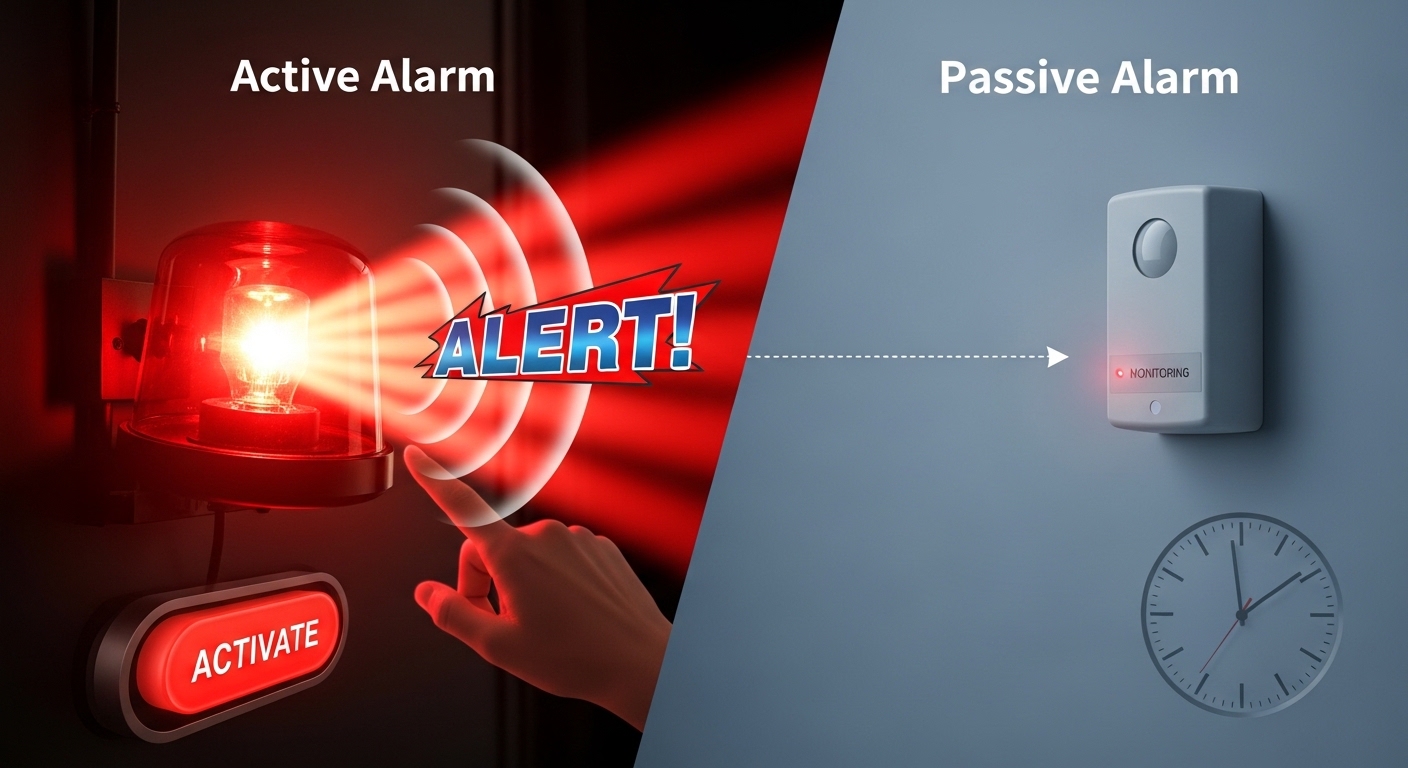

When choosing between active and passive alarms, know that active alarms need you to manually arm them via keypads or apps.
They offer near-real-time alerts, ideal for high-value, high-traffic areas.
Passive alarms activate automatically through sensors like motion detectors, providing continuous, hands-off perimeter security suited for unattended spaces.
Active systems cost more due to advanced communications and backups, while passive setups are simpler and often cheaper.
Understanding these differences helps tailor your security—explore further to find the best fit.
Key Takeaways
- Active alarms require manual arming via keypads or apps, while passive alarms activate automatically through sensors without user input.
- Passive alarms provide continuous, hands-off perimeter monitoring, reducing security gaps caused by user error in activation.
- Active alarms offer near-real-time alerts with multi-path communication and battery backups for immediate response.
- Passive systems perform daily status checks and prioritize uninterrupted perimeter security over frequent fault notifications.
- Active alarms suit high-value areas needing user-controlled protection; passive alarms are ideal for unattended or low-traffic zones.
Comparison Between Active Alarm vs Passive Alarm
Below is a clean, scan-friendly comparison table structured for both reader clarity and SEO performance.
| Feature | Active Alarm | Passive Alarm |
|---|---|---|
| Activation Method | Requires manual arming/disarming | Activates automatically via sensors |
| Monitoring Frequency | Checks system status every 180 seconds | Performs daily status check |
| Real-Time Alerts | Provides near-real-time notifications | Delayed fault detection |
| User Involvement | High — requires user action | Low — hands-off operation |
| Communication Paths | Cellular/IP with battery backup | Dual-path but less frequent supervision |
| False Alarm Risk | Higher due to human error | Lower due to automated activation |
| Best Use Case | High-value, high-traffic areas | Unattended or perimeter-focused spaces |
| Setup Cost | Higher initial investment | More budget-friendly option |
What Are Active and Passive Alarm Systems?
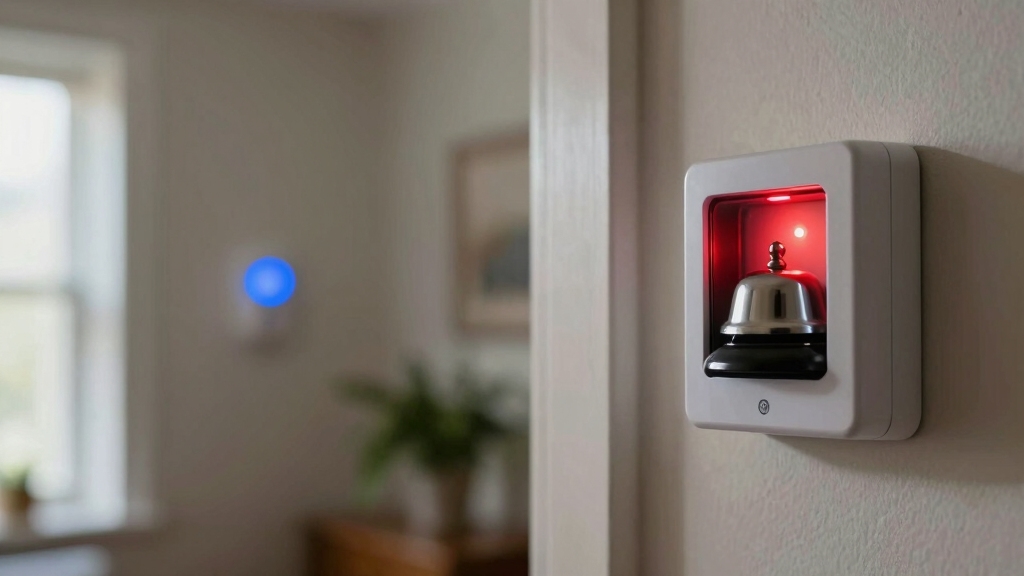
When comparing security solutions, understanding what active and passive alarm systems entail is essential.
Active alarm systems require you to manually activate them using keypads, remote controls, or switches. This user-controlled arming and disarming allows discretionary control but introduces the risk of human error, such as forgetting to arm the system.
In contrast, passive alarm systems activate automatically without your input. They rely on sensors like door/window contacts and motion detectors, as well as automatic immobilizers, providing continuous, hands-off protection.
Passive systems eliminate the need for you to remember activation, ensuring constant security coverage. Both types serve distinct security needs, with active systems enabling real-time intervention and passive systems focusing on uninterrupted perimeter monitoring through automatic triggers.
For properties that may be unoccupied or require rapid emergency response, integrating a central monitoring system can further enhance security by automatically notifying emergency services.
How Do Passive Alarm Systems Work Automatically?
Passive alarm systems work by relying on sensor activation mechanisms, like door and window sensors or motion detectors. These sensors are always on, continuously monitoring the environment. This means you don’t have to do anything manually to keep your space secure. It’s like having a vigilant guard on duty 24/7, ensuring there’s uninterrupted security coverage.
Plus, these systems often come with automatic immobilizers. This feature not only keeps your property protected but also helps reduce the chances of user error.
So, you can have peace of mind knowing that your security system is always working for you, even when you’re not actively managing it. Additionally, these systems benefit from continuous electromagnetic environment surveillance that can detect unauthorized transmissions and enhance overall security effectiveness.
Sensor Activation Mechanisms
Passive alarm systems activate automatically by continuously monitoring environmental conditions through integrated sensors.
These sensors function without requiring any manual input, guaranteeing seamless protection. They detect specific changes or breaches, triggering alarms instantly. You rely on these mechanisms to maintain security without intervention.
Key sensor activation mechanisms include:
- Door and window sensors that detect opening or tampering.
- Motion detectors sensing unauthorized movement within a monitored area.
- Glass break sensors identifying distinct acoustic patterns of breaking glass.
- Automatic immobilizers disabling vehicles or machinery upon unauthorized access.
Each sensor type operates by continuously analyzing physical inputs like motion, vibration, or contact status. When a predefined threshold is exceeded, the system instantly activates an alarm response.
This automated process eliminates human error and guarantees consistent, real-time detection. Similar to how photoelectric smoke alarms detect smoke particles automatically by sensing scattered light, passive alarms rely on continuous sensor monitoring to detect threats promptly.
Continuous Monitoring Features
Through continuous sensor data analysis, alarm systems maintain automatic vigilance without requiring user input.
Passive alarm systems employ door/window sensors, motion detectors, and automatic immobilizers that constantly monitor environmental changes.
These sensors relay real-time data to a control panel which analyzes signals for anomalies, triggering alerts or actions instantly upon detection of unauthorized activity.
The system’s architecture supports redundancy through dual-path communication, ensuring consistent operation even if one channel fails.
Unlike active systems needing manual arming, passive alarms function continuously, reducing human error and ensuring uninterrupted perimeter security.
Monitoring intervals vary: passive systems typically perform daily status checks, while active systems conduct more frequent supervision.
This automatic, hands-off approach guarantees consistent threat detection and documentation, enhancing overall site protection without user intervention or delay.
Furthermore, redundant communication channels are recommended to ensure notifications reach intended recipients when one path fails.
How Do Active Alarm Systems Require Manual Activation?
When setting up an active alarm system, you’ll need to manually activate it to guarantee protection begins. Unlike passive alarms that engage automatically, active systems rely on your direct input to arm or disarm. This control allows you to decide when the system is operational, but it requires discipline to avoid security gaps.
You typically activate active alarms by entering a security code on a keypad, using a remote control or key fob, flipping a manual switch or button, or engaging a smartphone app interface.
Each method demands intentional user action to initiate monitoring. This manual activation guarantees the system only functions when you want, but missing this step can leave your property unprotected.
Many active alarm systems also integrate multi-factor electronic access to enhance security by requiring additional authentication steps before arming or disarming.
How Does Monitoring Differ Between Active and Passive Alarms?
Although both alarm types serve to secure your property, their monitoring approaches differ markedly in frequency and response mechanisms.
Active alarm systems monitor communication channels every 180 seconds, enabling near-real-time detection of faults or breaches. They notify you or the monitoring center within minutes if a failure occurs, supporting immediate intervention.
Conversely, passive alarms perform a single daily check at a predetermined time, relying on dual communication paths, typically cellular and IP networks, to enhance redundancy. This reduces false alarms but delays fault detection.
While active systems use continuous supervision and battery backups to maintain constant vigilance, passive systems emphasize documentation and perimeter monitoring with less frequent status updates.
Your choice depends on whether you prioritize real-time fault detection and response or consistent, lower-maintenance oversight.
Implementing redundant communication paths in passive alarms enhances reliability despite less frequent monitoring.
Which Alarm Type Offers Better Real-Time Threat Detection?
Since active alarm systems constantly monitor communication channels every 180 seconds and notify you immediately upon detecting faults or breaches, they provide superior real-time threat detection compared to passive alarms.
When you rely on an active system, you benefit from proactive security measures that reduce response times and enhance situational awareness.
Key factors making active alarms better for real-time detection include:
- Continuous monitoring enables instant fault detection.
- Immediate alerts allow rapid response to threats.
- Use of cellular/IP networks guarantees reliable communication.
- Battery backups maintain system operation during power failures.
- In contrast, passive alarms check status once daily, delaying fault recognition and response.
Consequently, if you need timely intervention and threat management, active alarms offer a distinct advantage in real-time threat detection.
Certified professionals use signal analysis methods to enhance system diagnostics and threat identification.
How Do Setup Costs Compare for Active and Passive Alarms?
Comparing setup costs reveals that passive alarm systems generally require a lower initial investment, typically ranging from $2,500 to $12,000 per site.
These systems rely on automatic triggers like door/window sensors and motion detectors, minimizing the need for complex user interfaces or manual activation devices. This reduces hardware and installation expenses.
In contrast, active alarm systems demand higher setup costs, usually between $4,000 and $18,000 per site.
This is due to components such as keypads, remote controls, and manual switches that enable user-controlled arming and disarming.
Additionally, active systems often incorporate cellular or IP communication with battery backups, increasing installation complexity and cost.
When budgeting, consider that passive alarms provide continuous, hands-off security at a lower price point. Active alarms invest more upfront to deliver real-time threat intervention capabilities.
Proper identification of system wiring, similar to distinguishing load wires in electrical circuits, is essential to ensure safe and reliable alarm function.
What Are the Best Use Cases for Each Alarm Type?
When it comes to choosing the right alarm system, it really boils down to the type of monitoring you need. Passive alarms are fantastic for continuous perimeter monitoring. They do their job quietly in the background, providing automatic detection with minimal user intervention needed. This means you can set it and forget it, allowing you to focus on other things without worrying about security.
On the flip side, active alarms shine at high-value entry points. These systems require immediate user-controlled responses and deliver real-time alerts. So, if something happens, you’re notified right away and can take action quickly.
Understanding the differences between these two types helps you pick the system that aligns with your security priorities and operational needs. It’s all about finding the right fit for your specific situation! Proper sensor alignment and testing are critical to ensuring the reliability and effectiveness of alarm systems.
Ideal Passive Alarm Scenarios
Determining ideal passive alarm scenarios involves understanding environments where continuous, automatic security is essential without relying on user intervention.
You want a system that activates instantly upon detecting unauthorized access, ensuring no gaps in protection due to human error. Passive alarms excel in settings where constant monitoring is critical and manual arming is impractical.
Consider these ideal use cases for passive alarms:
- Perimeter monitoring of warehouses or large facilities
- Securing entry points in unattended or low-traffic areas
- Detecting unauthorized movement in restricted zones
- Automatic vehicle immobilization in fleet management
To enhance security, passive alarm systems can be integrated with acoustic glass-break sensors to provide rapid detection of forced entry attempts.
Optimal Active Alarm Uses
Active alarm systems frequently serve best in environments where user discretion and immediate response are critical, such as high-value entry points or areas requiring real-time intervention.
You’ll find active alarms ideal when you need manual control over arming and disarming, allowing you to tailor security based on occupancy or operational hours.
They excel in settings demanding instant alerts via cellular or IP networks, enabling rapid law enforcement or security personnel response.
Consider active alarms for locations where transient access occurs, like retail storefronts or executive offices, where user interaction guarantees alarms activate only when necessary.
In contrast, passive alarms suit continuous monitoring but lack your direct control.
Ultimately, you should deploy active alarms where real-time intervention outweighs the risk of human error in activation or deactivation processes.
When Should You Choose a Hybrid Alarm System?
Although passive and active alarm systems each offer distinct advantages, choosing a hybrid alarm system becomes essential when you need a balance between continuous monitoring and real-time intervention.
You should consider a hybrid system if your security requirements include both perimeter surveillance and immediate threat response. This approach integrates passive sensors’ automatic activation with active systems’ user-controlled alerts, optimizing coverage and responsiveness.
Choose a hybrid alarm system when you need thorough site protection combining automatic triggers and manual activation.
It is also cost-effective, blending lower passive setup with active alert capabilities.
Additionally, it enhances reliability through dual monitoring paths and real-time failure notifications.
Finally, it allows for flexible security that adapts to varying threat levels and operational needs.
This hybrid model effectively mitigates risks inherent in purely passive or active setups.
Frequently Asked Questions
Can Passive Alarms Operate Without Internet or Cellular Service?
Yes, passive alarms can operate without internet or cellular service by relying on local sensors like motion detectors and door/window contacts that activate automatically.
They typically record events internally or use dual communication paths for redundancy, often including hardwired or radio frequency connections.
However, without internet or cellular service, you might lose remote monitoring and real-time notifications, limiting your ability to respond immediately to security events but maintaining continuous perimeter protection.
Are Active Alarms More Prone to False Alarms Than Passive Systems?
Imagine a storm of alerts flooding your system.
Active alarms tend to be more prone to false alarms because they rely heavily on manual activation and sensitive sensors like motion detectors.
You might trigger them accidentally by forgetting to disarm or by pets moving around.
Passive systems activate automatically and continuously monitor, reducing this risk by eliminating user error.
They employ more stable detection methods, offering you steadier, more reliable security.
How Do Passive Alarms Handle Power Outages or System Failures?
Passive alarms handle power outages by relying on dual communication paths, such as cellular and IP networks, to maintain system integrity.
They often include backup power sources like batteries to guarantee continuous operation during failures.
You’ll find that passive systems check in once daily, so while they mightn’t notify you instantly of a failure, their redundancy minimizes downtime and guarantees ongoing monitoring despite power interruptions or system malfunctions.
What Maintenance Is Required for Active Versus Passive Alarm Systems?
You know what they say: “An ounce of prevention is worth a pound of cure.”
For active alarms, you’ll perform frequent battery checks, keypad functionality tests, and remote control inspections to guarantee immediate responsiveness.
Passive alarms need daily sensor diagnostics, motion detector calibrations, and dual-path communication verifications to maintain continuous protection.
Both require software updates and system audits, but active systems demand more hands-on user interaction for reliability.
Can Active Alarms Be Integrated With Smart Home Devices?
Yes, you can integrate active alarms with smart home devices.
Active alarm systems often support connectivity via cellular, IP, or Wi-Fi protocols, enabling seamless communication with smart hubs, voice assistants, and mobile apps.
This integration allows you to arm or disarm alarms remotely, receive real-time alerts, and automate security responses.
Confirm compatibility between your alarm system and smart devices by verifying supported platforms and protocols before installation for peak performance.
Choosing the Right System After Comparing Active Alarm vs Passive Alarm
Choosing between active and passive alarm systems depends on your specific security needs.
Did you know that active alarms can reduce response times by up to 60%, providing faster threat mitigation?
While passive alarms operate automatically without manual input, active alarms require your activation but offer enhanced real-time monitoring.
Understanding these differences helps you select the best system or a hybrid approach, balancing cost, responsiveness, and use case for maximum protection.