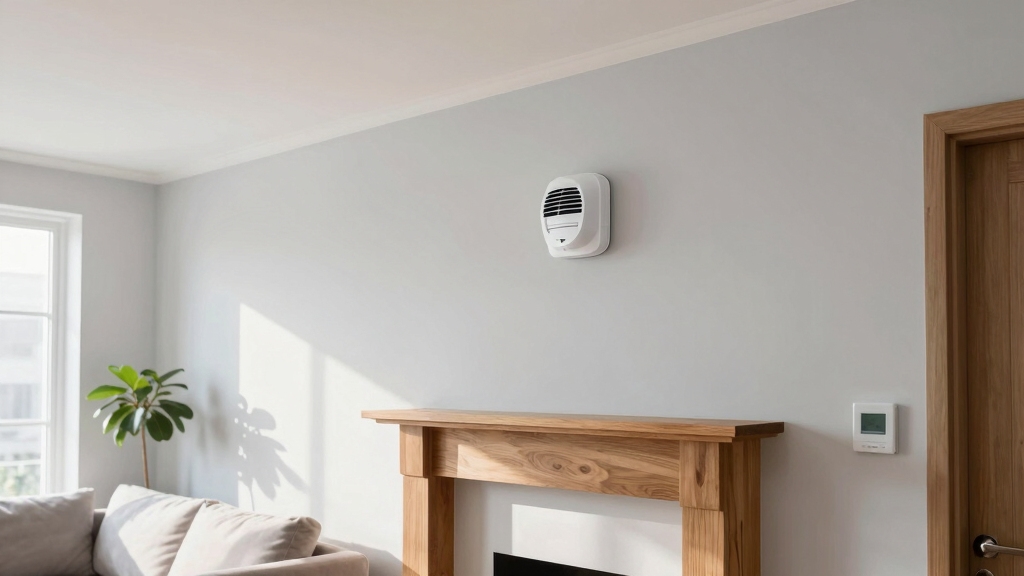

You should place carbon monoxide detectors on every floor of your home, especially near bedrooms within 10 feet, so alarms wake you reliably during sleep.
Mount them about 5 feet high on walls or on ceilings, avoiding corners and drafts. Keep detectors 10–15 feet from fuel-burning appliances to prevent false alarms.
Avoid humid, dusty, or hard-to-reach spots to guarantee lasting performance and easy maintenance. If you want to confidently protect your entire home, understanding these basics is just the start.
Key Takeaways
- Install a CO detector on every floor, especially near stairways, for whole-home coverage and early vertical detection.
- Mount detectors about 5 feet high on walls or on ceilings 4–6 inches from corners to align with the breathing zone.
- Place detectors within 10 feet of bedroom doors to ensure alarms are loud enough to wake occupants during sleep.
- Keep detectors at least 15 feet from stoves, ovens, and fuel-burning appliances to prevent false alarms and sensor damage.
- Avoid humid, dusty, or obstructed locations; ensure easy access for maintenance and monthly testing of detectors.
Why You Need CO Detectors on Every Floor?
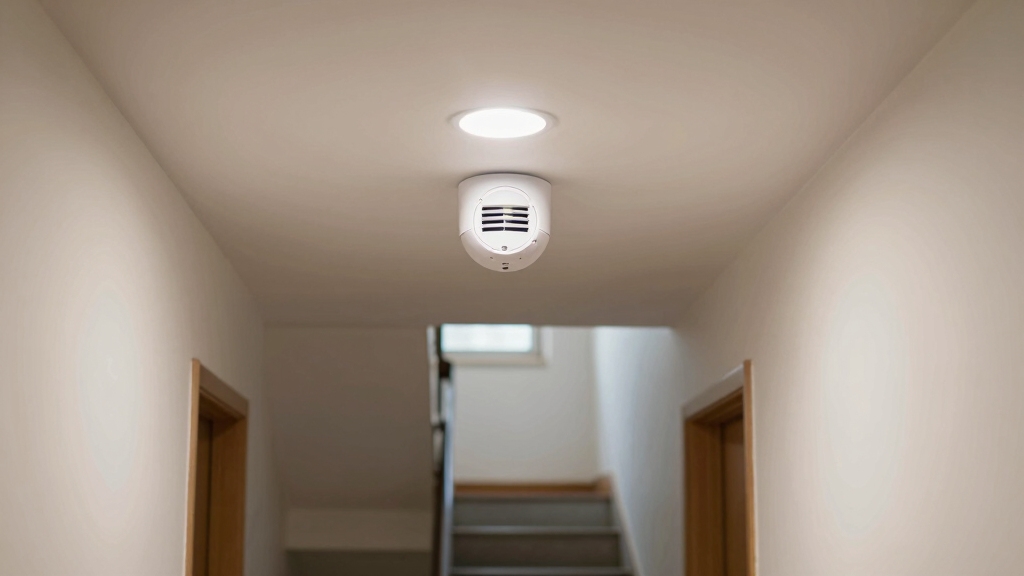
Because carbon monoxide mixes evenly with air and moves freely between floors, you need a detector on every level of your home to guarantee complete protection.
CO doesn’t just rise or settle; it spreads horizontally, creating varying concentrations on different floors.
Multi-story homes often have fuel-burning appliances like furnaces in basements, fireplaces upstairs, or attached garages, each posing a risk. Proper venting systems and regular inspections help reduce these risks.
Common sources include fuel-burning appliances such as gas water heaters and fireplaces, which can produce dangerous levels of CO if not properly maintained.
Installing a detector on each floor makes certain you catch CO no matter where it accumulates. Place detectors near stairways to monitor vertical movement effectively.
This approach aligns with safety standards and regulatory recommendations, giving you thorough coverage. Don’t rely on a single detector; protect every level so you and your family stay safe from this invisible, deadly gas throughout your entire home.
How Close Should CO Detectors Be to Bedrooms?
When it comes to installing carbon monoxide detectors, you’ll want to place them within 10 feet of bedroom doors. This way, if there’s ever an emergency, the alarm will be loud enough to wake you up.
It’s really important to have the detector close to where you sleep to ensure you receive an early warning. State guidelines recommend installing a CO detector outside each sleeping area in the immediate vicinity of bedrooms to maximize safety.
Plus, this placement not only meets building code requirements but also maximizes your safety while you’re resting. Many modern CO detectors use sealed 10-year lithium batteries, providing long-lasting power without frequent replacements.
So, take a few moments to make sure your detectors are positioned correctly; it could make all the difference when it counts!
Proximity To Bedroom Doors
You should install carbon monoxide detectors within 10 feet of every bedroom door to guarantee timely alerts during sleeping hours. This placement ensures you and your loved ones receive early warnings, especially when the risk of CO buildup is highest during sleep.
Additionally, optimal detector placement benefits from interconnection technology to ensure alarms communicate instantly for coordinated warnings. Additionally, for new residences, it is recommended to install interconnected CO alarms so that when one sounds, all alarms sound simultaneously for enhanced safety.
For homes with multiple bedrooms, place a detector near each entrance and interconnect them to sound simultaneously. Mount detectors about 5 feet high on walls or on ceilings, avoiding floor level to effectively catch rising CO gas. Proper mounting height also supports reliable sensor performance and reduces false alarms from non-CO sources.
| Location | Distance to Bedroom Door | Importance |
|---|---|---|
| Near each bedroom | Within 10 feet | Immediate alert in sleeping areas |
| Multiple bedrooms | Near every bedroom | Full home protection |
| Single detector | Near main sleeping area | Minimum safety standard |
| Height placement | 5 feet or ceiling | Ideal CO detection |
Alarm Volume Near Sleep
Alarm volume plays a critical role in ensuring carbon monoxide detectors effectively wake you during sleep. You need alarms producing at least 70–85 decibels at 10 feet to reliably rouse occupants, even with bedroom doors closed.
Since sound can drop 15–25 decibels through standard doors, placing a CO detector near sleeping areas is essential. The detector’s placement should also consider avoiding dead air spaces and obstructions that muffle sound to maintain alarm effectiveness.
Ideally, this should be in hallways or on bedroom walls. Regulations require CO alarms to be installed within 10 feet of sleeping areas to ensure audibility in each bedroom, so multiple alarms may be necessary in larger homes or apartments to meet this placement requirement.
For deeper sleepers or those with hearing challenges, consider supplemental alerts like bed shakers or visual alarms inside bedrooms. Position detectors about 5 feet above the floor or on ceilings to maximize sound reach.
Avoid dead air spaces and obstructions that muffle sound. Ensuring alarm audibility in every sleeping room, regardless of closed doors, is vital for your safety and code compliance.
Ceiling or Wall: Best Mounting Position for CO Detectors
Although carbon monoxide (CO) has nearly the same density as air and diffuses evenly, choosing between ceiling or wall mounting depends on manufacturer guidelines and room dynamics.
Carbon monoxide’s similar density to air means detector placement should follow manufacturer guidelines and room airflow.
You can mount CO detectors on walls about 5 feet above the floor, aligning with the breathing zone and typical air mixing. Some sources recommend wall placement about 5 feet above floor. Regular maintenance, including routine care such as cleaning the detector’s surface, helps ensure optimal function and safety.
Alternatively, ceiling mounting is acceptable if the unit stays 4 to 6 inches away from corners to avoid stagnant air “dead zones.” Some manufacturers prefer wall mounting to prevent confusion with smoke alarms and improve accessibility.
Regardless of position, prioritize placing detectors where airflow is normal, away from drafts or sealed corners. Always follow your detector’s specific installation instructions, as product testing assumes those locations for reliable performance and safety.
How Far to Keep CO Detectors From Appliances?
When installing carbon monoxide detectors, maintaining proper distance from fuel-burning appliances is essential to prevent false alarms and guarantee timely detection. Regular maintenance and monitoring of detectors can also ensure they function correctly over time.
Keep detectors at least 15 ft from stoves or ovens to avoid nuisance alarms from cooking emissions. For furnaces, boilers, and fireplaces, position detectors within 5–20 ft, ideally around 15 ft, ensuring they’re not in direct exhaust paths.
In basements, place detectors about 10 ft from the furnace, respecting manufacturer guidelines. Proper spacing balances early warning with reduced false alerts and reliable sensor function.
Because furnaces typically produce more carbon monoxide than other gas appliances, placing detectors near them acts as a primary alarm for potential furnace-origin CO releases.
Avoid These Spots When Installing Your CO Detector
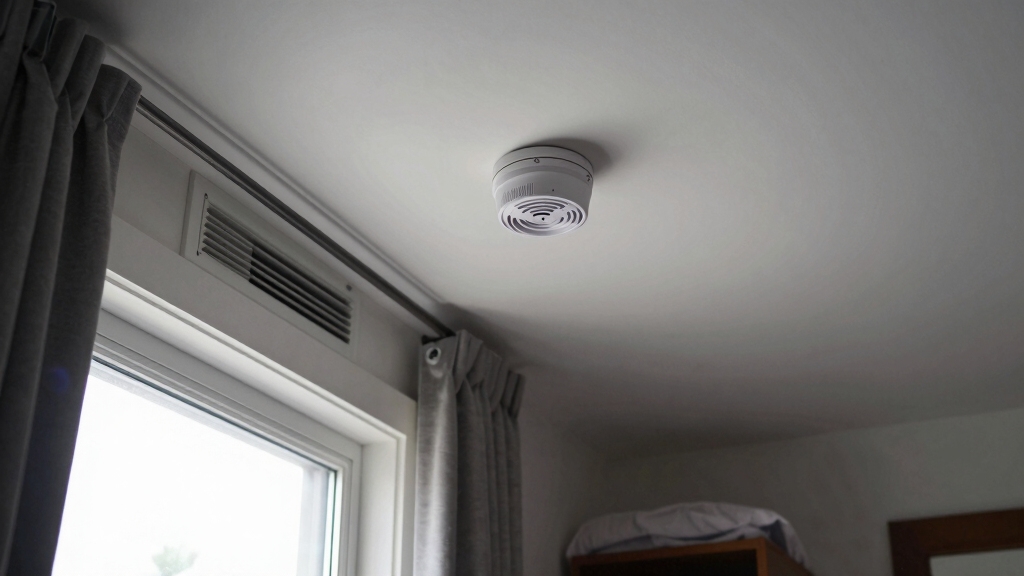
When installing your CO detector, avoid putting it near appliances that give off heat or combustion byproducts. Why? Because that can lead to false alarms and even damage the sensor. So, steer clear of those spots! Proper sensor placement helps prevent false triggers and ensures reliable detection.
Also, think about where you’re placing the detector. Bathrooms or dusty corners might seem like okay spots, but they can be humid or filled with debris. That moisture and dust can really mess with how well the detector works. Additionally, avoid placing detectors too close to windows or doors where drafts can interfere with accurate detection.
Near Appliances
Avoid placing your carbon monoxide detector too close to fuel-burning appliances like furnaces, stoves, or water heaters. These devices can emit brief CO bursts during normal start-up, triggering false alarms and reducing trust in your detector.
Keep your detector at least 15 feet away from these appliances to avoid nuisance alerts and sensor damage from heat or fumes. Regular maintenance, including testing monthly and replacing batteries annually, helps ensure your detector functions properly. Maintenance & Testing
Placing detectors directly above or beside open flames or combustion sources can cause thermal stress, skew readings, and shorten sensor life. Similarly, avoid mounting detectors immediately next to stoves or ovens, where cooking vapors, grease, and steam may degrade sensor accuracy.
Instead, position your CO detector near but not adjacent to fuel-burning appliances, ensuring reliable monitoring of dangerous CO levels without interference from normal appliance operation. Proper placement also helps prevent premature sensor failure caused by environmental factors.
Humid or Dusty Areas
Since carbon monoxide detectors rely on sensitive electronic sensors, placing them in humid or dusty environments can markedly impair their performance.
Avoid installing detectors in bathrooms, saunas, laundry rooms, or near humidifiers and steam sources. High humidity can cause condensation on sensors, leading to corrosion and false alarms, which reduce reliability.
Continuous air sampling in modern detectors can be compromised by such environmental conditions. Moreover, electromagnetic interference from nearby electronics can further degrade sensor accuracy.
Keep detectors at least 10 feet away from these moisture sources. Likewise, dusty areas like workshops or garages can clog vents and coat sensor elements, lowering sensitivity or causing failure. Protective housings designed to reduce electromagnetic interference can help maintain detector performance in challenging environments.
Damp basements and crawl spaces also pose risks due to persistent moisture, which can corrode internal components and disrupt sensor chemistry. For accurate, long-lasting CO detection, choose dry, clean locations away from excessive humidity and airborne contaminants.
How to Secure Your CO Detector Properly?
Getting your carbon monoxide detector firmly in place is essential for reliable operation and safety. First, mount it at least 6 inches below the ceiling on a wall or 6 inches from the ceiling if installed on the ceiling.
Because CO can build up from malfunctions or improper venting, proper placement helps ensure early detection. Avoid areas near heat sources or appliances to prevent false alarms. Secure the detector where kids can’t tamper with it but you can easily access it for battery changes and testing.
Regular inspection frequencies help maintain detector effectiveness and safety.
| Location Criteria | Distance Requirements | Accessibility Tips |
|---|---|---|
| At least 6″ from wall | 10-15 ft from appliances | Eye level for easy reading |
| Near bedroom doors | 5 ft above garage floor | Avoid high or hard-to-reach spots |
| Avoid humid/dusty areas | Away from furnace rooms | Accessible for maintenance |
Frequently Asked Questions
How Often Should I Test My Carbon Monoxide Detector?
You should test your carbon monoxide detector at least once a month by pressing and holding the test button until the alarm sounds.
If it doesn’t, replace the battery and test again. Regular monthly testing guarantees your detector works properly and keeps you safe.
Some manufacturers suggest weekly tests, but monthly is generally sufficient. Don’t ignore any unusual chirping, as it often means battery or device issues needing immediate attention.
What Is the Typical Lifespan of a CO Detector?
You can expect your carbon monoxide detector to serve you well for about 5 to 7 years, with some models lasting up to 10 years.
Remember, the sensor’s sensitivity gently fades over time, so even if your batteries are fresh, the detector mightn’t catch dangers as effectively.
Keep an eye on end-of-life signals like beeps or error codes, and replace the unit promptly to maintain continuous protection.
Can I Install a CO Detector Outdoors?
You shouldn’t install a standard carbon monoxide detector outdoors.
Outdoor air movement dilutes CO levels, and weather exposure damages sensors, causing false alarms or malfunctions.
Instead, place detectors inside your home near attached garages or outside sleeping areas to guarantee accurate detection.
If you need outdoor monitoring in semi-enclosed spaces, use specialized, weather-rated equipment designed for those conditions.
Following manufacturer guidelines keeps your detector reliable and your home safe.
Are Battery-Powered CO Detectors Reliable?
Wondering if battery-powered CO detectors truly keep you safe? They can be reliable, but only if you keep fresh batteries, test them monthly, and replace the unit every 5–10 years as recommended.
Certified models meet strict standards, yet sensors degrade over time, risking failure.
Ignoring low-battery chirps or end-of-life alerts leaves you vulnerable.
How Do I Know if My CO Detector Is Malfunctioning?
You’ll know your CO detector is malfunctioning if it chirps randomly, shows error codes, or won’t respond to tests.
If it beeps continuously despite fresh batteries or displays a faded screen, it likely needs replacing.
Frequent false alarms in clean areas, failure to power on, or an alarm that won’t stop after resetting are clear signs of trouble.
Don’t ignore these; replace or repair promptly for safety.
Proper Placement Makes Your Carbon Monoxide Detector Count
Think of a carbon monoxide detector as your home’s silent guardian, standing watch like a lighthouse in a foggy night. You wouldn’t place a lighthouse where its light is blocked or too far from the shore; the same goes for your CO detector.
Mount it on every floor, close to bedrooms, away from appliances, and never in corners or dead air spots. Secure it properly, and you’ll make certain it’s ready to warn you when you need it most.