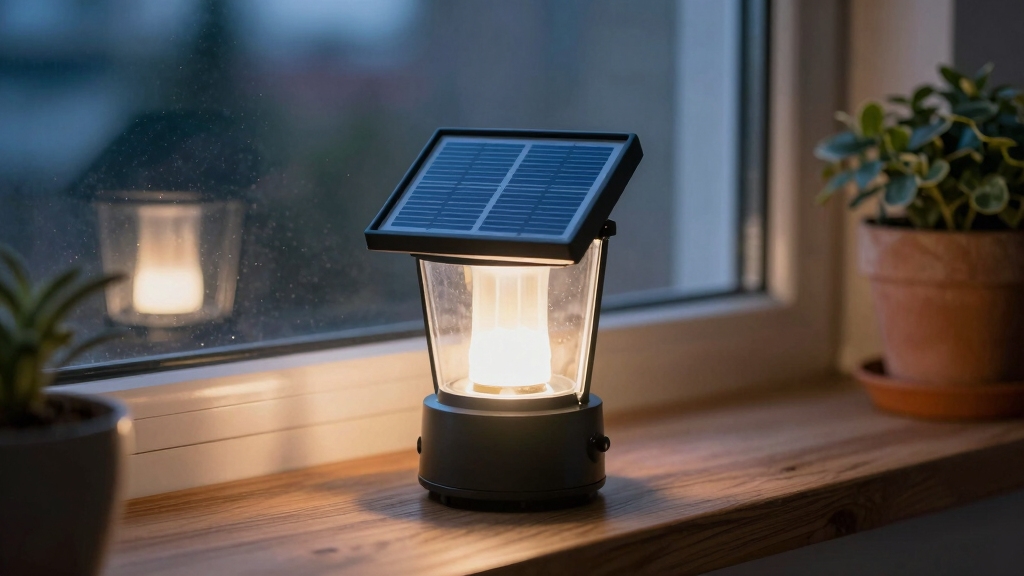

You can charge solar lights indoors, but expect slower rates due to lower light intensity and limited spectrum compared to direct sunlight.
Artificial lights emit fewer photons, reducing photovoltaic efficiency, so placing panels very close to LED or fluorescent sources boosts charging.
Windows filter UV rays and cloudy days further slow energy capture. For faster indoor charging, USB ports or power banks provide stable power.
Explore positioning, light type, and maintenance to optimize your solar light’s indoor performance.
Key Takeaways
- Solar lights can be charged indoors but at much slower rates due to weaker and narrower-spectrum artificial lighting.
- LED and fluorescent lights positioned close and perpendicular to panels improve indoor charging efficiency.
- Charging through windows on cloudy days is possible but less efficient because glass filters UV and light intensity is lower.
- Indoor charging typically requires 8–12 hours or more for substantial battery replenishment compared to a few hours in direct sunlight.
- USB or power bank charging offers a reliable alternative indoors, providing consistent and faster battery recharge without light dependency.
Indoor vs. Sunlight Charging for Solar Lights
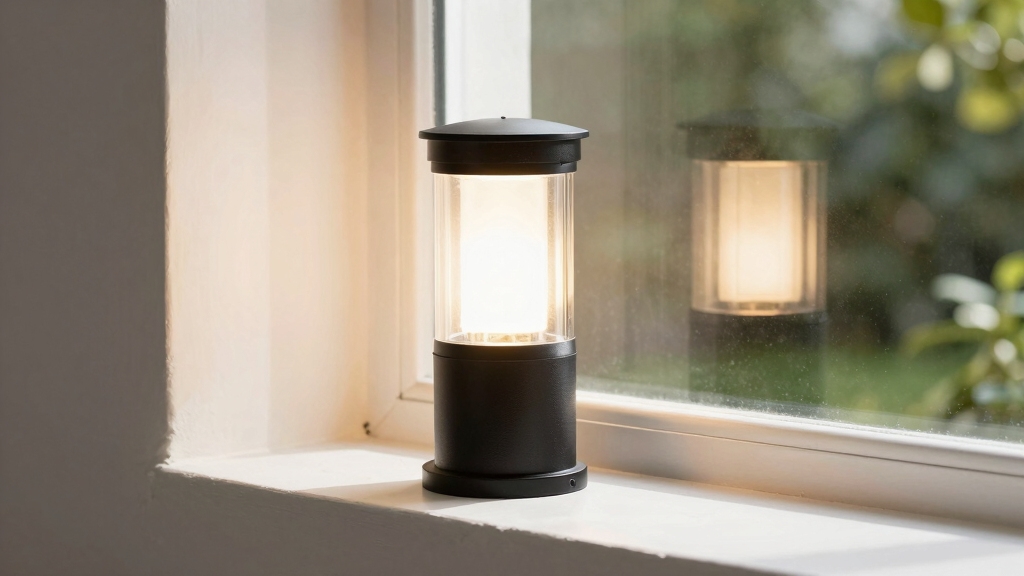
While solar lights can charge indoors under artificial lighting, their efficiency is far lower compared to direct sunlight. Solar panels rely on a broad spectrum of light, including ultraviolet rays, which are abundant in sunlight but limited indoors.
Solar lights charge indoors under artificial light but perform best with the full spectrum of outdoor sunlight.
Artificial light sources emit narrower spectra and lower intensities, reducing the photovoltaic cells’ ability to generate sufficient electric current. Sunlight delivers higher irradiance, typically around 1000 W/m², whereas indoor lighting often provides less than 100 W/m², drastically extending charging times.
Additionally, glass windows filter some light wavelengths, further diminishing energy capture. Although indoor charging can maintain minimal battery levels, it won’t fully replenish capacity or sustain prolonged illumination.
For peak performance, exposing solar lights to direct outdoor sunlight remains essential, as it guarantees maximum energy conversion efficiency and faster battery recharge. Proper light intensity detection is crucial for maximizing energy harvesting in solar lighting systems.
Best Artificial Light Sources for Charging Solar Lights Indoors
Frequently, choosing the right artificial light source can markedly improve the indoor charging performance of your solar lights.
Incandescent bulbs between 60-100 watts provide steady charging but require 8-12 hours due to their limited spectrum.
LED lights, especially those with broader spectral output, often outperform incandescents, delivering effective charging within a similar timeframe.
Fluorescent lights, including CFLs and tube lights, also efficiently stimulate photovoltaic cells, particularly when using 40-100 watt bulbs positioned close to the panel.
The key is selecting light sources that emit wavelengths compatible with the photovoltaic material and maintaining proximity to maximize photon absorption.
While artificial lights can’t replicate full solar spectrum intensity, optimizing source type and wattage guarantees the best possible indoor energy conversion for your solar lights.
For sustainable use, combining solar lighting with maintenance actions tied to broader sustainability goals enhances overall environmental benefits.
Positioning Solar Lights for Optimal Indoor Charging
Because indoor light intensity is markedly lower than direct sunlight, positioning your solar lights strategically is critical to maximize their charging efficiency.
Place the solar panel as close as possible to the artificial light source, within a few inches, to increase photon absorption.
Make certain the light hits the panel perpendicularly to reduce reflection losses and enhance energy conversion.
Position the panel under LED or fluorescent lamps, as their broader spectrum better suits photovoltaic cells. Avoid shadows and obstructions that limit light exposure.
When using incandescent bulbs, proximity is even more important due to lower luminous efficacy.
Additionally, orient the solar panel near windows during daylight to utilize natural indoor light, keeping it perpendicular to the window’s light path.
Careful alignment and proximity optimize the limited indoor light, improving charging rates markedly.
Maintaining an appropriate distance from strong indoor light sources can reduce potential electromagnetic exposure while still providing adequate charging conditions.
Charging Solar Lights Through Windows on Cloudy Days
You can totally charge solar lights indoors by putting them near windows. Glass actually lets enough light through for those photovoltaic cells to do their thing.
Now, on cloudy days, the light intensity isn’t as strong, but don’t worry! Solar panels can still grab some of that diffuse sunlight and generate a bit of charge.
Just a heads up, though: the charging efficiency takes a hit compared to when they’re basking in direct sunlight. But if you place those lights right by the window, you’ll maximize the energy they can soak up, even when it’s overcast.
For optimal performance, ensure the solar panels have adequate light exposure and proper placement to maximize energy absorption indoors.
Window Glass Light Transmission
Although window glass filters some sunlight, it still allows enough light transmission for solar panels to charge indoors, even on cloudy days.
Standard window glass typically transmits around 80-90% of visible light, though it reduces ultraviolet (UV) and infrared (IR) wavelengths, which are less critical for photovoltaic charging.
You should place your solar lights as close as possible to the glass to maximize light absorption.
Even under diffuse lighting conditions, the solar cells can convert available wavelengths into electrical energy, albeit at a reduced rate compared to direct outdoor exposure.
Keep in mind that certain coated or tinted windows may further diminish light transmission, impacting charging efficiency.
Positioning your solar lights near clear windows during daylight optimizes their ability to harness ambient natural light indoors.
However, just as peephole optics rely on the scattering of light to control visibility, the scattering of photons through glass affects how effectively solar panels indoors receive sunlight, influencing light transmission efficiency.
Cloudy Day Charging Efficiency
When cloud cover reduces sunlight intensity, solar panels still capture enough diffuse light through windows to generate a measurable charge.
Although the energy yield decreases compared to direct sunlight, photovoltaic cells remain sensitive to available wavelengths transmitted by glass.
You can expect reduced charging efficiency on overcast days, often extending the required charging duration.
Position your solar lights near south-facing windows to maximize exposure to ambient daylight.
Keep in mind that lower light intensity translates into slower battery replenishment, which may limit nightly illumination duration.
While cloudy day charging won’t fully replace direct sun exposure, it provides a valuable supplemental energy source indoors.
For consistent performance during extended cloudy periods, consider integrating USB charging or artificial light sources to maintain battery levels effectively.
Using low voltage wiring in solar light systems helps ensure safety and efficient energy transfer under varied lighting conditions.
Charging Solar Lights Indoors via USB and Power Banks
You know, charging your solar lights indoors can be super easy! Just plug them into a USB port. It’s a great way to ensure they’re ready to go when you need them, especially when the sun isn’t shining.
Plus, many models can connect to power banks. How convenient is that? You can take them anywhere and charge them on the go! Trust me, using USB and power banks cuts down charging time significantly compared to relying on artificial light.
For best results, always use the recommended battery type to maintain optimal performance and avoid damage.
USB Charging Advantages
Frequently, USB charging stands out as the most efficient method for powering solar lights indoors, especially when natural sunlight is unavailable or insufficient.
When you connect your solar lights via USB, you bypass the limitations of artificial light’s reduced intensity and spectrum.
USB charging delivers consistent voltage and current, optimizing battery recharge rates and reducing downtime.
You can use wall adapters, laptops, or power banks to supply stable power, ensuring faster and more reliable charging than indoor light sources alone.
Additionally, USB charging eliminates dependency on light positioning and duration, providing predictable performance.
This method also safeguards battery health by maintaining controlled charging parameters, preventing overcharging or deep discharge common with artificial light charging.
Using high-quality batteries such as alkaline batteries further enhances the reliability and lifespan of your solar light’s power source.
Power Bank Compatibility
Building on the advantages of USB charging, power banks serve as a highly portable and versatile energy source for charging solar lights indoors. You can connect your solar light’s USB port to a power bank, ensuring consistent energy input independent of sunlight.
Power banks offer stable voltage output, protecting the solar light’s battery from irregular current fluctuations common with artificial light sources. This stability in power delivery is similar to how regulated voltage and current help maintain device performance in smart home systems.
| Feature | Description | Benefit |
|---|---|---|
| Portability | Compact, lightweight design | Easy indoor/outdoor use |
| Compatibility | USB standard interface | Universal charging solution |
| Output Stability | Regulated voltage and current | Protects battery health |
| Convenience | Rechargeable multiple times via USB | Reliable power source anytime |
Using power banks guarantees more efficient and quicker indoor charging than artificial lighting alone.
Why Charging Solar Lights Indoors Takes More Time
Although solar panels can convert artificial light into energy, their efficiency indoors drops markedly due to the lower intensity and narrower spectrum of available light sources compared to direct sunlight.
Artificial lights like LEDs or incandescent bulbs emit fewer photons per square meter, limiting the photovoltaic cells’ ability to generate sufficient current.
Additionally, indoor light sources often lack the full solar spectrum, particularly ultraviolet rays that enhance charge accumulation.
This spectral deficiency reduces the panel’s overall conversion efficiency, causing longer charging durations.
You’ll also find that positioning impacts charging speed; artificial light must be very close and well-aligned to maximize absorption.
Consequently, indoor charging typically requires 8-12 hours or more, substantially longer than the few hours needed under direct sunlight for equivalent energy storage.
Proper maintenance and positioning of solar panels can help improve energy conversion efficiency even under artificial light conditions.
Deep Charging Tips to Improve Solar Lights
When you want to optimize your solar light’s battery performance, deep charging plays a crucial role. It allows the battery to reach its maximum storage capacity during periods of inactivity.
To execute this, turn your solar light completely off and let it rest for 48 to 72 hours without exposure to light or use. This pause halts discharge cycles and encourages internal chemical stabilization, improving charge retention and battery longevity.
Schedule monthly deep charging intervals to restore battery activity and maintain efficiency. Remember, deep charging doesn’t require external light sources; its focus is on internal battery optimization rather than active charging.
Frequently Asked Questions
Can Solar Lights Be Damaged by Overcharging Indoors?
You won’t damage solar lights by overcharging indoors because their built-in charge controllers prevent battery overload.
These controllers regulate voltage and current, stopping excess energy from harming the battery.
However, continual exposure to artificial light for extended periods offers limited charging efficiency, so overcharging risks remain minimal.
Just make sure you use the lights according to manufacturer guidelines to maintain peak battery health and avoid any potential long-term degradation.
How Does Indoor Humidity Affect Solar Light Battery Life?
Indoor humidity can negatively impact your solar light’s battery life by promoting corrosion and moisture buildup inside the casing.
High humidity accelerates chemical reactions within rechargeable batteries, causing capacity loss and reduced efficiency.
To protect your solar lights, make sure they’ve proper sealing and ventilation.
Using silica gel packets or dehumidifiers nearby can also help control moisture levels, prolonging battery longevity and maintaining consistent performance indoors.
Are All Solar Light Batteries Rechargeable Indoors?
Not all solar light batteries are rechargeable indoors; think of them as delicate plants needing specific light to thrive.
Most use rechargeable lithium-ion or NiMH batteries designed for solar charging, but their efficiency indoors depends on battery chemistry and panel sensitivity.
You’ll find models with USB-compatible batteries recharge reliably indoors.
Others struggle due to limited energy conversion from artificial light.
Always check your battery type and charging specs to guarantee peak indoor performance.
Can Indoor-Charged Solar Lights Be Used Outdoors Immediately?
Yes, you can use indoor-charged solar lights outdoors immediately, but expect reduced run time and brightness.
Indoor charging provides limited energy due to weaker artificial light, so your lights won’t perform at full capacity outside.
To maximize effectiveness, charge them under direct sunlight or supplement indoor charging with USB power.
Always make certain your solar lights are fully charged for peak outdoor use and longer illumination periods.
Do Solar Light Warranties Cover Indoor Charging Issues?
Solar light warranties typically don’t cover issues arising from indoor charging because manufacturers expect peak performance under direct sunlight.
If you charge your solar lights indoors using artificial light, any reduced efficiency or battery degradation usually falls outside warranty protection.
You should review your product’s warranty terms carefully to confirm coverage.
To avoid voiding warranties, it’s best to follow the recommended charging conditions outlined by the manufacturer.
Keeping Your Solar Lights Glowing – Even Without the Sun
While solar lights thrive under natural sunlight, you can gently coax a charge indoors using bright artificial sources or strategic window placement.
Remember, indoor charging is a leisurely process, requiring patience and thoughtful positioning.
Embracing techniques like deep charging or USB options subtly enhances efficiency without demanding much change.
By understanding these nuances, you’ll maintain your solar lights’ performance gracefully even when the sun isn’t fully cooperating.