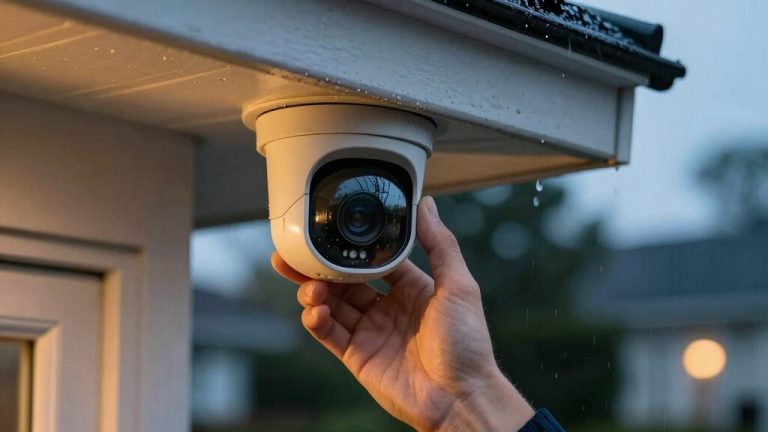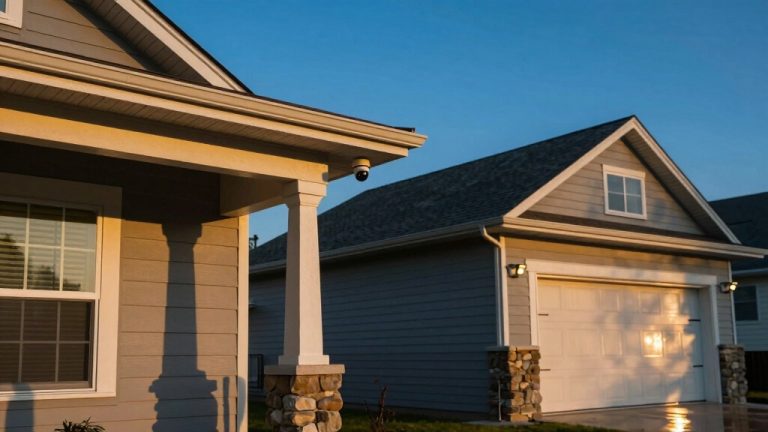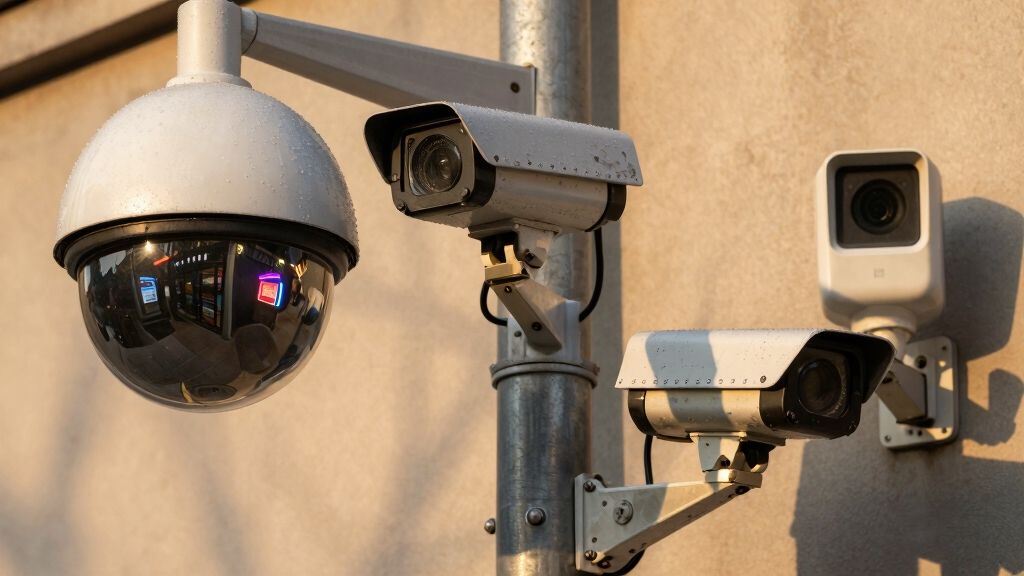

You’ll find several types of security cameras tailored for different needs. Bullet cameras offer durable outdoor coverage with long-range, night vision, and weather resistance.
Dome cameras suit indoor use with vandal resistance and adjustable lenses. Turret cameras reduce glare and improve low-light clarity.
PTZ models provide motorized pan, tilt, and zoom for active monitoring in large areas. Fisheye cameras deliver panoramic views covering wide spaces.
Wireless options ease installation and flexibility. Exploring these options helps match the right camera to your environment and security goals.
Key Takeaways
- Bullet cameras offer long-range, durable outdoor surveillance with visible deterrence and night vision capabilities.
- Dome cameras provide vandal-resistant, low-profile indoor monitoring with adjustable lenses and concealed viewing angles.
- Turret cameras reduce IR glare for improved low-light quality and allow flexible positioning with a three-axis ball mount.
- PTZ cameras enable pan, tilt, and zoom for active tracking in large areas like campuses and parking lots.
- Fisheye cameras deliver panoramic 180–360° coverage, replacing multiple cameras but require software for image correction.
How to Choose the Right Security Camera: Key Factors?
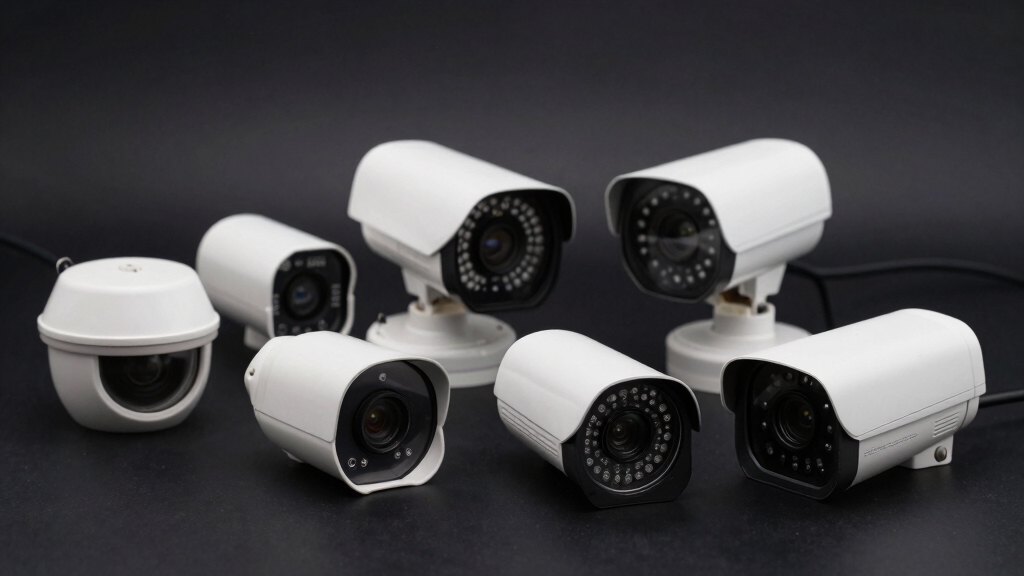
Selecting the right security camera starts by evaluating your specific surveillance needs, including location, coverage area, and lighting conditions.
You’ll want to match camera capabilities to these factors for peak performance.
For instance, consider if you need wide-angle coverage or focused long-range monitoring.
Assess lighting; low-light or night vision features are essential in poorly lit areas.
Determine if the camera must resist environmental elements like dust or moisture, which impacts durability requirements.
Also, think about installation complexity and whether you prefer wired, wireless, or hybrid setups.
Pay attention to lens types—fixed, varifocal, or motorized zoom—to control the field of view.
Additionally, features such as Wide Dynamic Range (WDR) can improve image quality in challenging lighting situations.
Bullet Security Cameras: Durable Options for Outdoor Use
Bullet security cameras excel in outdoor environments where durability and long-range monitoring are essential. Their cylindrical shape provides a visible deterrent, while larger lenses capture detailed images over extended distances, even in low light.
High IP ratings guarantee resistance to dust and water, ensuring reliable performance regardless of weather conditions. Installation is straightforward compared to dome cameras, with many models offering night vision capabilities for 24/7 surveillance.
These cameras suit areas like parking lots, perimeters, and building exteriors, where wide coverage and robustness are priorities. By choosing bullet cameras, you leverage their long-range optics and rugged construction to maintain consistent, high-quality footage outdoors.
This makes them a practical, durable solution for securing your property effectively. Many bullet cameras can also record footage locally using microSD cards or wired recorders, allowing continuous operation even without WiFi.
Dome Security Cameras: Best for Indoor and Vandal-Resistant Protection
While bullet cameras excel outdoors with their long-range and rugged design, dome cameras offer a different set of advantages tailored for indoor environments and vandal-prone areas.
Their enclosed shape resists tampering and conceals the lens direction, deterring potential attackers. Dome cameras come with fixed, varifocal, or motorized-zoom lenses, letting you adjust coverage based on specific needs.
Though primarily indoor, some models withstand outdoor conditions, but watch for reflective surfaces that may affect image clarity. Their discreet, low-profile design blends well into ceilings or walls, maintaining aesthetics.
Ensuring proper lens alignment and unobstructed fields of view is essential to maximize coverage and prevent blind spots with dome cameras.
| Feature | Benefit |
|---|---|
| Enclosed design | Vandal-resistant protection |
| Lens options | Flexible focal length choices |
| Indoor/outdoor use | Versatile installation |
| Low-profile shape | Blends into environments |
| Price range | Fixed lenses are cost-effective |
Turret Security Cameras: Flexible Angles and Low-Light Performance
Adjusting turret security cameras is straightforward thanks to their three-axis ball mount. This feature lets you position the lens exactly where you need coverage.
The design provides flexible angles, making turret cameras suitable for both indoor and outdoor environments. Unlike dome cameras, turret cameras lack an outer shell, eliminating IR glare and distortion.
This guarantees consistent image quality, especially in low-light conditions. Their discreet eyeball shape avoids the traditional, intrusive camera look, blending seamlessly into various settings.
Installation is simplified because you can fine-tune the camera angle without removing it from the mount. With improved low-light performance and versatile positioning, turret security cameras offer a reliable solution for precise monitoring.
You won’t have to compromise visual clarity or ease of adjustment. Additionally, turret cameras often benefit from PoE technology which simplifies power delivery and enhances installation efficiency.
PTZ Security Cameras: Active Monitoring for Large Areas
Turret cameras offer precise, fixed-angle coverage. When you need dynamic monitoring over expansive areas, PTZ cameras provide the necessary flexibility.
You can remotely pan, tilt, and zoom these cameras, enabling you to track movements and zoom in on details without repositioning hardware. Their high-precision motorized motors allow smooth, accurate adjustments that cover warehouses, campuses, or parking lots effectively.
PTZ cameras often come in compact dome-shaped housings, which protect internal components while maintaining a low profile. While they require an operator for active control, this setup guarantees you respond promptly to incidents in real-time.
Keep in mind, PTZ systems tend to be costlier but justify the investment through extensive coverage and detailed monitoring capabilities. Integration with smart home platforms can enhance PTZ functionality by enabling remote control and coordinated responses with other security devices.
Fisheye Security Cameras: Maximum Coverage With One Camera
If you need to monitor an entire room or open space with minimal blind spots, fisheye security cameras deliver panoramic coverage ranging from 180 to 360 degrees.
Their flat, round design captures ultra-wide footage, making them ideal for spaces like retail floors, lobbies, or open offices.
You can replace multiple traditional cameras with a single fisheye unit, reducing installation complexity and costs.
However, the wide-angle lens introduces distortion, so you’ll need de-warping software to convert footage into clear, usable views.
This camera type excels at providing maximum coverage with fewer devices.
Keep in mind it’s best suited for areas where broad surveillance outweighs the need for detailed zoom.
Proper placement guarantees you maximize coverage while minimizing blind spots.
Additionally, ensuring each camera has a unique UID helps maintain secure identification and remote access across your surveillance system.
Wireless Security Cameras: Easy Installation and Mobility Benefits
Wireless security cameras cut down on installation time by eliminating the need for extensive cabling. This makes them an ideal choice for both residential and commercial setups.
Wireless security cameras simplify installation by removing cabling, perfect for homes and businesses alike.
These cameras use Wi-Fi or battery power, allowing flexible placement indoors or outdoors without worrying about wiring constraints.
Remote management lets you access high-resolution footage and integrate with other security systems conveniently. Their mobility suits temporary monitoring needs or areas where wiring is impractical.
Additionally, wireless cameras often pair with wired systems to create hybrid setups, enhancing reliability across larger properties. Variants like doorbell and floodlight cameras leverage battery power or Wi-Fi, broadening functional applications.
When choosing wireless solutions, consider signal range, battery life, and potential interference to maintain consistent performance and security coverage. NVR systems support seamless connectivity over Ethernet or Wi-Fi, making them well-suited for wireless camera integration.
Frequently Asked Questions
How Do Security Cameras Impact Privacy Laws and Regulations?
You must make sure security cameras comply with privacy laws that regulate data collection and surveillance.
You’re required to avoid recording private areas without consent. You need to inform individuals when monitoring occurs.
Your use of cameras must balance security benefits with respecting personal privacy, following regulations like GDPR or local statutes.
Failure to adhere can lead to legal consequences. Always implement clear policies and secure data handling procedures.
What Storage Options Are Available for Recorded Footage?
You can store recorded footage locally on DVRs or NVRs, which offer reliable, secure storage on hard drives.
Alternatively, cloud storage provides remote access, scalable capacity, and off-site backup. However, it depends on internet connectivity and subscription fees.
Hybrid systems combine both methods for redundancy and flexibility.
Choose based on your security needs, budget, and whether you prioritize accessibility or control over your data’s physical location.
Can Security Cameras Integrate With Smart Home Systems?
Long before smartphones, security cameras could only watch silently. Today, you can seamlessly integrate them with smart home systems.
You’ll connect cameras to hubs like Alexa or Google Home for real-time alerts, voice control, and automation. This integration lets you monitor footage remotely and trigger scenes based on motion.
You can also sync with other devices, enhancing security and convenience. Just make certain of compatibility between your camera and smart platform for smooth operation.
How Do Environmental Factors Affect Camera Performance?
Environmental factors like lighting, weather, and physical obstructions directly affect your camera’s performance.
Low light reduces image clarity unless your camera has night vision or infrared.
Rain, dust, and extreme temperatures can degrade lens quality or damage electronics if the camera lacks proper IP ratings.
Wind or foliage can obscure views.
You should choose cameras designed for your environment to guarantee reliability, durability, and consistent image quality under varying conditions.
What Maintenance Is Required to Keep Cameras Functioning Properly?
Think of your security camera like a car. You wouldn’t ignore oil changes.
You need to clean lenses monthly to avoid blurry images. Check for moisture or dust that can degrade performance.
Make certain firmware updates keep software sharp. Regularly inspect mounts for stability and test night vision functions.
Neglecting these steps reduces clarity and reliability, risking blind spots. Staying proactive guarantees your cameras deliver crisp, dependable surveillance every time.
From Understanding to Action: Pick the Best Camera
When choosing a security camera, consider your specific needs, like coverage area and lighting. For example, a small business owner used a turret camera to monitor a dimly lit storefront, benefiting from its flexible angles and strong low-light performance.
By understanding camera types and features, you can select the best option to enhance your security efficiently and cost-effectively. Don’t overlook installation ease or durability based on your environment.