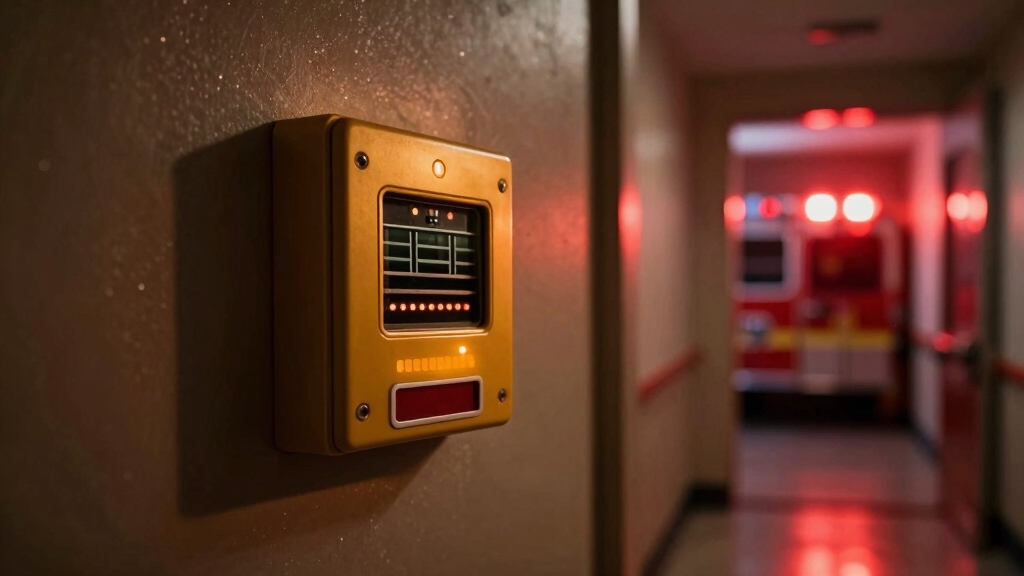

A standard fire alarm doesn’t automatically alert the fire department unless it’s part of a monitored system. Most residential alarms only sound locally, notifying occupants on-site but requiring someone to call 911 manually.
Commercial monitored systems transmit signals instantly to central stations, which then verify alerts and dispatch emergency responders. This ensures faster, verified responses.
Understanding how these systems work and local code requirements helps clarify why immediate occupant action remains vital despite automatic detection.
Further insight explains this essential safety difference.
Key Takeaways
- Single-station fire alarms do not automatically alert the fire department; occupants must call 911 themselves.
- Monitored fire alarm systems transmit signals to a central station that then notifies the fire department automatically.
- Local (unmonitored) alarms only sound on-site and do not send alerts to emergency services.
- Monitored systems reduce emergency response times by 7 to 10 minutes through automatic notification.
- Always call 911 immediately after a local alarm sounds to ensure fire department dispatch and occupant safety.
Do Fire Alarms Automatically Alert the Fire Department?
When a fire alarm sounds, whether it automatically alerts the fire department depends on the system type.
Single-station fire alarm systems connect to smoke detectors and pull stations but don’t notify emergency services automatically. These systems often use photoelectric smoke alarms that detect smoke by sensing scattered light from particles.
Single-station fire alarms alert occupants but require manual calls to emergency services for help.
You must manually call 911 to summon responders. This reliance on human action creates safety gaps, especially when buildings are vacant, as alarms only activate internal notification devices like bells or strobes. Smoke detectors, heat sensors, sprinkler heads, and manual pull stations trigger the alarm.
In contrast, monitored fire alarm systems transmit signals instantly via phone lines or cellular networks to a monitoring station. This station then alerts the fire department without delay.
This automation guarantees emergency responders dispatch promptly, even if no one is onsite. Understanding this distinction is critical for evaluating your building’s fire safety and response capabilities.
How Fire Alarms Work in Residential and Commercial Buildings?
Although both residential and commercial fire alarm systems aim to provide early fire detection and occupant notification, they differ markedly in design, components, and operational complexity to meet varying safety requirements and building scales.
Residential fire alarms are generally simpler and involve lower installation and maintenance costs compared to commercial setups, which can impact overall building safety budgets and planning.
Residential systems rely on standalone or interconnected smoke alarms powered by batteries or household circuits, using ionization or photoelectric sensors to detect smoke. These systems typically incur fewer service call fees and less frequent emergency maintenance than commercial systems.
Commercial systems center on a fire alarm control panel (FACP) networked to multiple detectors, including smoke, heat, flame, and manual pull stations, along with varied notification appliances like horns, strobes, and speakers. These systems use dedicated power circuits with battery backups.
Addressable panels in commercial setups enable precise device identification and system control, while residential alarms provide localized alerts. Both systems activate notification devices immediately upon detection to guarantee occupant safety.
Additionally, commercial fire alarm systems often include monitoring capabilities that enable real-time system status and fault detection to ensure reliable operation.
Local vs Monitored Fire Alarm Systems: What’s the Difference?
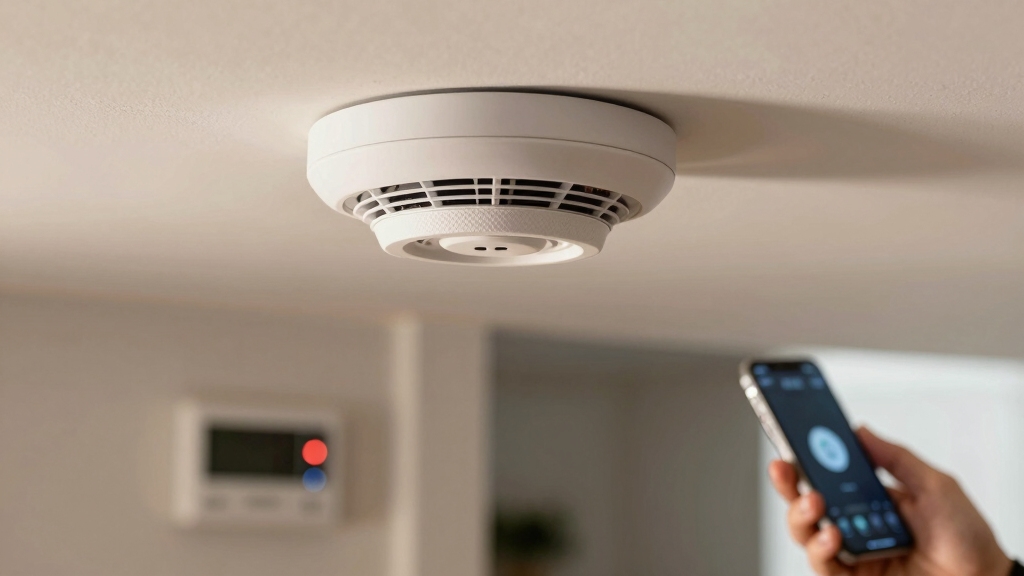
Did you know that local fire alarms only alert people on-site? That means they depend on either the occupants or passersby to call emergency services. It’s kind of a wait-and-see approach, right?
On the other hand, monitored systems are a game changer. They automatically send signals to a central station, which quickly contacts the fire department. This automatic monitoring can actually cut response times by 7 to 10 minutes.
Talk about a significant improvement in safety outcomes! Monitored fire alarms can also reduce property damage by 50–60% according to the National Fire Protection Association.
Local Alarm Characteristics
Regarding local alarm characteristics, these systems activate audible and visual alerts solely within the protected premises without automatically notifying fire departments or monitoring centers.
When triggered by smoke, heat, or manual pull stations, they sound sirens, horns, or strobes on-site only. These alarms lack automatic notification, which means emergency response depends entirely on external intervention.
You won’t find built-in communication paths like phone lines or IP links connecting to external monitoring centers. This means the fire response time depends entirely on someone hearing the alarm and manually contacting emergency services.
Maintenance responsibility for these systems falls entirely on the property owner, which can increase the risk of system failure if not properly managed. Local alarms primarily warn occupants and nearby individuals to evacuate and call 911 themselves.
While cost-effective and common in small, low-risk settings, local systems carry a higher life-safety risk during off-hours or vacancies since no automatic notification expedites fire department intervention.
Monitored System Features
Monitored fire alarm systems stand out by instantly notifying a central station staffed 24/7 with trained operators who verify alarms before alerting fire departments. These operators use advanced technology to confirm genuine emergencies, minimizing false alarms and ensuring prompt fire department dispatch.
The system pinpoints exact detector locations through intelligent addressing and employs multi-sensor technology to detect smoke, heat, and carbon monoxide simultaneously, often powered by reliable CR123A lithium batteries for consistent performance. You also benefit from pre-alarm signals that alert staff before full evacuations, while interconnected building equipment helps contain fire spread.
Remote monitoring lets you receive real-time alerts on mobile devices and off-site stations, maintaining continuous coverage even when the building is unoccupied.
With 24/7 central monitoring, emergency services are dispatched immediately upon verification, reducing firefighter response times. Compliance with NFPA 72 and audit trail documentation further support regulatory adherence and risk mitigation, making monitored systems a superior choice over local alarms.
Response Timing Differences
How quickly can emergency services respond when a fire alarm activates? With local alarms, response depends entirely on occupants noticing the alert and calling 911, causing significant delays. These systems lack automatic signal transmission, which can critically slow emergency intervention.
Monitored fire alarms send an alert to a 24/7 professional monitoring center the moment smoke or heat is detected. Monitored systems automatically notify professionals within 30 seconds, ensuring faster dispatch and reduced damage.
| Feature | Local Fire Alarms | Monitored Fire Alarms |
|---|---|---|
| Notification Method | Audible alert only | Automatic signal transmission |
| Emergency Contact | Manual occupant call | Professional monitoring center |
| Response Time | Variable, often delayed | Typically under 30 seconds |
| Verification Process | None | Alarm verification by operator |
| Impact on Damage | Increased due to delay | Reduced through rapid response |
How Monitored Fire Alarms Notify Fire Departments?
When a fire alarm detects smoke, heat, or sprinkler activation, it immediately sends a signal to a central control panel. This panel then transmits detailed alarm data to a staffed monitoring station using phone lines, cellular networks, or IP connections.
These systems rely on key components such as smoke detectors, heat detectors, and control panels to ensure accurate fire detection. Trained operators receive this data within seconds and classify the event as a fire alarm, prioritizing it accordingly.
The monitoring software guides operators through scripted procedures, which include contacting the local fire department’s dispatch center for verified alarms. Central stations often utilize redundant communication methods to maintain connectivity during emergencies.
Central stations operate 24/7, complying with UL 827 and NFPA 72 standards to guarantee reliable response and documentation. After dispatching emergency services, operators notify site representatives and log all actions with timestamps. This supports regulatory compliance and incident review.
This coordinated workflow markedly reduces fire department notification time and enhances emergency response effectiveness.
Communication Methods That Ensure Reliable Fire Alarm Notification
When it comes to fire alarm notifications, having a backup plan is essential. That’s why relying on redundant communication channels is a smart move.
For instance, combining IP and cellular networks through dual-path signaling ensures that your fire alarm notifications get where they need to go, even if one of those paths happens to fail. This approach mirrors how photocell sensors use multiple inputs to maintain reliable operation in changing conditions.
Plus, your fire alarm control panel is always on the lookout. It continuously monitors these links and will generate trouble signals if there’s any degradation or loss of communication.
This kind of supervision is crucial because it helps maintain signal integrity, ensuring that emergency responders receive prompt and reliable alerts when it matters most. Many systems also incorporate voice evacuation systems to provide clear live instructions after an initial alarm tone, enhancing occupant safety during emergencies.
Redundant Communication Channels
Securing reliable fire alarm notification depends on implementing redundant communication channels that maintain signal transmission even if one pathway fails. These systems often include multi-zone monitoring capabilities to ensure precise fault localization and rapid troubleshooting.
You’ll typically find dual-path systems combining IP with cellular, radio with IP, or POTS/DACT with cellular to diversify failure modes and meet NFPA 72 requirements. Such multi-frequency technologies enhance resilience by reducing blind spots and improving signal integrity across communication paths.
These pathways undergo continuous supervision, often at intervals under an hour, to detect faults and trigger trouble signals promptly. Cellular and IP communicators, classified as performance-based technologies, provide fast, reliable transmission with heartbeat supervision, guaranteeing prompt alarm delivery.
Radio-based paths add wireless resilience, especially where wired infrastructure is unreliable, and remote diagnostics enable timely detection of signal degradation or loss of function. Legacy POTS lines remain in use but are increasingly supplemented by cellular or IP backups to mitigate line cuts or VoIP instability.
Signal Integrity Monitoring
Maintaining continuous supervision of fire alarm communication paths is critical to guaranteeing reliable notification and prompt response. You must make certain all circuits and components, including wiring, network interfaces, radios, and power supplies, are automatically monitored for faults like opens, shorts, grounds, and device failures.
Modern wireless systems are designed and built to match or exceed the reliability of wired systems, ensuring consistent performance even in challenging environments through signal integrity. Additionally, secure communication protocols with encrypted transmission help prevent unauthorized interference or false alarms.
NFPA 72 mandates distinct trouble signals at control units or supervising stations, separate from alarms, to avoid confusion. Backup transmitters maintain communication if primaries fail. You’ll rely on monitor and isolation modules to detect faults immediately and prevent single-point failures from disrupting entire circuits.
Wireless systems incorporate automatic frequency hopping to counter interference. Verification procedures at supervising stations help you differentiate genuine alarms from false signals, reducing unnecessary fire department dispatches. These combined methods uphold signal integrity and ensure fire alarms reliably alert emergency responders.
Local Fire Codes Governing Fire Alarm Notifications
Although national model codes like NFPA 72 provide thorough guidelines for fire alarm notifications, local fire codes govern how these standards are enforced within specific jurisdictions. Understanding local codes is crucial to prevent system failures similar to those caused by poor system design in other safety systems.
Your local authority having jurisdiction (AHJ) often the fire chief or building official adopts and adapts these codes, integrating NFPA 72, IFC, and NFPA 1 provisions into legally binding regulations.
You’ll find local amendments addressing regional risks, building types, and enforcement capabilities, with adoption cycles sometimes lagging behind the latest editions.
Codes typically mandate automatic alarm signal transmission to supervising stations, requiring dual communication paths for reliability. Audible alarms must meet minimum decibel levels, and visible strobes are required for accessibility compliance.
Your fire safety plans must specify notification strategies, while listed supervising stations must comply with NFPA 72’s performance criteria to guarantee effective emergency response coordination.
Why You Still Need to Call 911 After a Fire Alarm Sounds?
Because many fire alarm systems only activate local alerts without notifying emergency services, you should always call 911 immediately after an alarm sounds.
Automatic alarms often lack direct transmission to dispatch, causing delays that increase fire damage and risk. By calling 911 yourself, you reduce response time and provide dispatchers with critical information about the fire’s status and hazards.
| Factor | Automatic Alarm | Human-Initiated 911 Call |
|---|---|---|
| Notification Speed | Delayed (45+ seconds) | Immediate |
| Information Provided | Limited (alarm only) | Detailed (fire conditions, trapped occupants) |
| Impact on Response Time | Increased | Reduced |
Frequently Asked Questions
Can a Fire Alarm System Reduce Insurance Premiums for My Property?
Yes, installing a fire alarm system can reduce your property’s insurance premiums.
Insurers reward properties with early fire detection because they lower risk and potential damage.
If your system includes professional monitoring, advanced sensors, or integrates with sprinklers, you can qualify for discounts ranging from 5% up to 25%, depending on your insurer and system sophistication.
Maintaining and verifying your fire alarm system properly further improves your chances for premium reductions.
How Often Should Fire Alarm Systems Be Tested and Maintained?
Think of fire alarm testing like a heartbeat check for your safety system. You need it regularly.
You should perform monthly visual inspections, quarterly device tests, semi-annual functional tests, and annual full system evaluations.
Follow NFPA 72 and your local Authority Having Jurisdiction’s stricter rules if any. This routine guarantees reliable operation, extends system life, and keeps you compliant.
It also reduces risks and liability during emergencies.
What Causes False Alarms in Monitored Fire Alarm Systems?
False alarms in monitored fire alarm systems often stem from environmental factors like dust, steam, or insects interfering with detectors.
Equipment issues such as faulty sensors, wiring problems, or unstable power supply also cause spurious signals.
Human errors, accidental activations, improper system use, or uncoordinated maintenance contribute substantially.
Finally, poor detector placement and inadequate maintenance can increase nuisance alarms.
You should address these causes through proper design, regular upkeep, and trained operation to minimize false alerts.
Are There Specific Fire Alarm Requirements for Historic Buildings?
Yes, you’ll find specific fire alarm requirements for historic buildings designed to delicately defend delicate details.
Codes like NFPA 914 and 909 demand compliance with NFPA 72, ensuring early warning and immediate external notification.
You’ll need to preserve historic materials by minimizing penetrations and reusing existing hardware.
Performance-based approaches let you balance safety with preservation, crafting customized fire protection plans that protect both people and priceless cultural assets effectively.
How Do Fire Alarm Systems Integrate With Sprinkler Systems?
You integrate fire alarm systems with sprinklers by connecting waterflow and supervisory switches to the fire alarm control panel (FACP).
When sprinklers activate, waterflow switches send signals to the FACP, triggering alarms and notifying monitoring stations.
The FACP processes inputs, controls notifications, and coordinates responses, ensuring valves are supervised and alarms escalate appropriately.
This integration enhances detection, suppression coordination, and regulatory compliance per NFPA standards.
Noise Isn’t Enough: Emergency Action Matters
You might think your fire alarm automatically summons the fire department, but unless it’s a monitored system, it won’t. Ironically, that loud, piercing sound only alerts you and not the professionals you actually need.
So, even with all the tech, you still have to pick up the phone and dial 911 yourself. In emergencies, relying solely on your alarm’s noise could delay help, making your quick action absolutely essential.