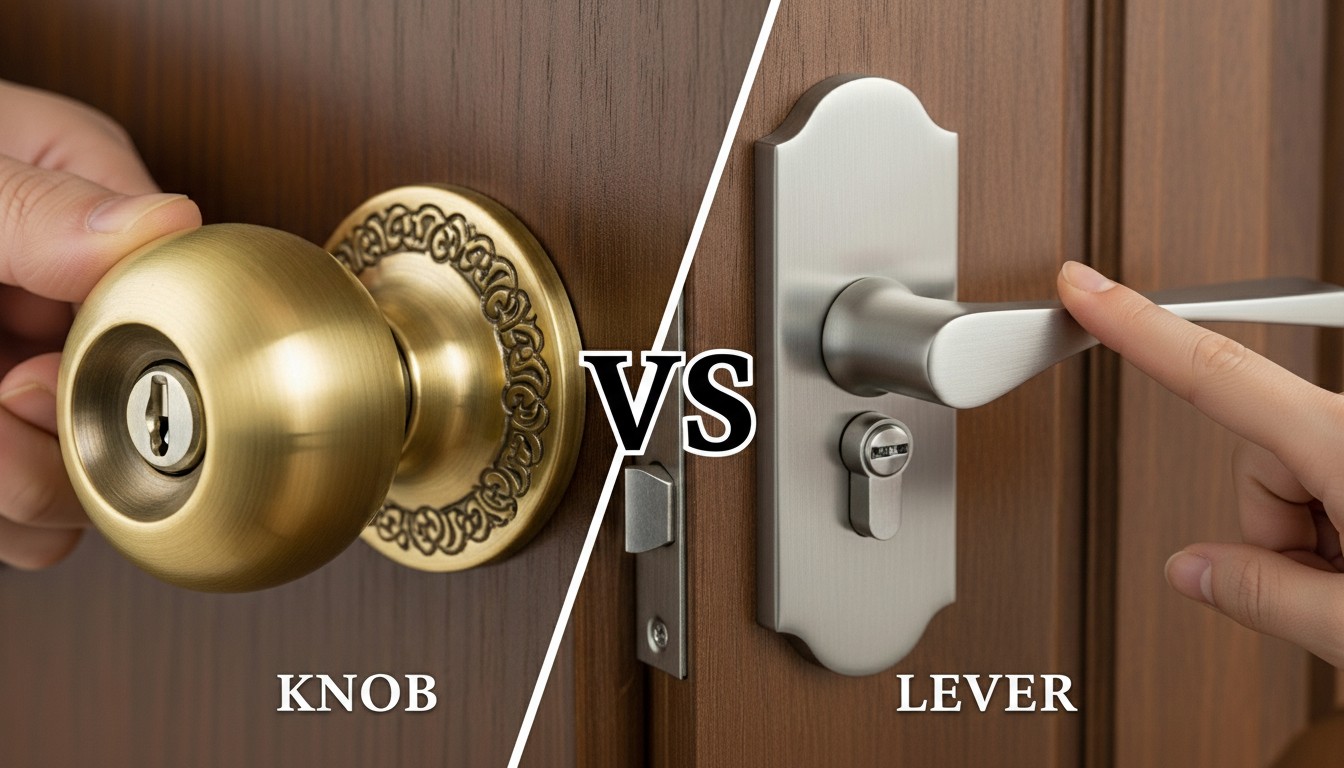

If you want easier, quicker door operation, levers beat knobs hands down. Levers let you push or pull with less effort, great if your hands are full, wet, or if you have limited grip strength.
Knobs require a firm grip and twisting, which can be tough for many people. Levers also install easier but need correct door handing to fit properly.
Keep in mind, maintenance and security factors differ. Exploring those details will help you choose the best fit for your needs.
Key Takeaways
- Door levers require less effort and allow push/pull operation, while knobs need a firm twist and grip to operate.
- Levers are more accessible for people with arthritis, limited grip strength, or when hands are full, unlike knobs.
- Knobs generally have longer durability and minimal maintenance, whereas levers need regular inspection and occasional spring replacements.
- Levers require correct door handing identification before installation, while knobs often need professional fitting for precise measurements.
- Levers can facilitate quicker emergency exit but may snag on clothing, whereas knobs reduce accidental openings by pets or toddlers.
Door Knob vs Lever: Side-by-Side Comparison Guide
| Feature | Door Knob | Door Lever |
|---|---|---|
| Operation Mechanism | Requires twisting motion to retract latch | Uses push-down or pull-up motion |
| Ease of Use | Needs firm grip and wrist strength | Easier with limited grip or full hands |
| Accessibility | Less ADA-friendly | Meets accessibility standards |
| Security Consideration | Harder for pets/toddlers to open | Faster exit in emergencies |
| Installation | Requires precise boring & alignment | Generally DIY-friendly, needs door handing match |
| Maintenance | Minimal upkeep, fewer moving parts | May require spring adjustments |
| Durability | Long-lasting, simple mechanism | More moving parts, occasional sagging |
| Design Style | Traditional & compact look | Modern, sleek, statement style |
| Cost Range | Typically more budget-friendly | Slightly higher depending on design |
How Door Knobs and Levers Work Differently?
Although both door knobs and levers serve the same purpose of opening and closing doors, they operate through distinctly different mechanisms.
When you turn a door knob, you rotate a round handle, which twists the spindle inside the latch mechanism to retract the latch bolt. This requires a firm grip and twisting motion.
Turning a door knob involves twisting a round handle to retract the latch bolt inside the mechanism.
In contrast, a lever handle works by pushing down or pulling up, which directly moves the latch inside without twisting. This linear motion reduces the effort needed and changes the way force is applied.
You’ll find levers operate by rotating around a fixed spindle point, enabling easier control.
Understanding these mechanical differences helps you choose the right hardware based on your needs and physical ability, ensuring a practical and efficient door operation. Installing a door peephole can further enhance door security by allowing you to see visitors without opening the door.
Why Lever Handles Are Easier to Use Than Door Knobs?
When you need to open a door quickly and with minimal effort, lever handles outperform door knobs by requiring just a simple push or pull motion instead of a full twist. This makes levers easier to operate when your hands are wet, greasy, or full. You can even use your elbow or wrist, reducing strain.
Door knobs demand a firm grip and twisting motion, which can be challenging in many situations.
| Feature | Lever Handles |
|---|---|
| Motion Required | Push down or pull up |
| Effort Needed | 2-5 pounds force |
| Grip | No twisting, easier with weak grip |
| Convenience | Operable with elbows or wrists |
Levers offer practical ease, especially when speed and minimal effort matter. Choosing hardware with multi-point locking can also enhance security without compromising ease of use.
Accessibility Advantages of Lever Handles Over Knobs
When you opt for lever handles, you’re really making a smart choice! They’re super easy to operate since all you have to do is push down or pull up. It’s like cutting the effort in half compared to twisting those pesky knobs.
This is especially helpful for folks with arthritis or limited grip strength. Plus, if your hands are full, lever handles can be a real lifesaver!
And guess what? They also meet strict accessibility standards. This means they’re designed to be inclusive and usable for a wider range of people.
Lever handles can also be combined with multipoint locking systems to enhance security without sacrificing ease of use.
Easier Operation Mechanics
Experience how lever handles simplify door operation by requiring only a pushdown or pull-up motion instead of the twisting action knobs demand.
This straightforward movement reduces the effort needed by up to 50%, dropping from 5–10 pounds to just 2–5 pounds of force.
You can easily operate levers with your wrist, elbow, or even a closed fist.
This is perfect when your hands are full or if you have limited grip strength.
Unlike knobs, levers don’t require a full twist, making them more practical when your hands are wet or greasy.
Their position away from the door frame also prevents knuckle scraping.
These mechanical advantages enhance convenience and guarantee safer, more efficient door use for people with arthritis, disabilities, or age-related weakness.
Lever handles also integrate well with mechanical latches, offering reliable and tamper-resistant operation without the need for complex electronic systems.
Inclusive Design Benefits
Although door knobs have been a traditional choice for decades, lever handles offer significant accessibility advantages that make them a smarter option for inclusive design.
You’ll find levers require only a simple push or pull motion, reducing the effort needed by up to 50% compared to twisting knobs. This ease benefits anyone with limited grip strength, arthritis, or disabilities, allowing operation even with an elbow or wrist when your hands are full.
Since one in four U.S. adults experiences such challenges, lever handles comply with accessibility standards in public spaces and Europe. Additionally, levers avoid knuckle scraping and are easier to use with wet or greasy hands, enhancing daily convenience.
Choosing levers means prioritizing inclusivity without sacrificing functionality or style. For enhanced security and safety, installing door hardware near a peephole can provide occupants with a quick way to verify visitors before opening the door.
Security and Safety: Choosing Between Door Knobs and Levers
Since security and safety are top priorities in any building, choosing between door knobs and levers requires careful consideration of their unique features.
Levers with modern locking mechanisms can reduce burglary risk by up to 50%. They also allow quicker exits during emergencies like fires.
However, levers may snag on clothing or bags, posing risks, especially in crowded spaces.
Door knobs are less likely to be accidentally opened by pets or toddlers due to the twisting motion needed, offering added safety in homes.
Improper installation of knobs can compromise security by enabling bidirectional turning, so precision is essential.
Ultimately, you should weigh the enhanced emergency accessibility of levers against the accidental opening resistance of knobs to match your building’s security and safety needs.
Upgrading to bump-resistant locks can further enhance door security by preventing forced entry techniques common in standard pin-tumbler locks.
Installing Door Knobs vs. Lever Handles: What You Need to Know
Balancing security and safety considerations with ease of installation can influence your choice between door knobs and lever handles.
Choosing between door knobs and lever handles depends on balancing security, safety, and installation ease.
When installing door knobs, you’ll need precise measurements and proper door boring, often requiring professional help to guarantee security and smooth operation.
In contrast, lever handles simplify installation; you can usually handle it yourself with basic tools.
Levers also make repairs or replacements easier if needed.
However, levers require matching the door’s handing (left or right), so you must verify this before purchase.
Improper installation of knobs can compromise security due to bidirectional turning, while levers, if installed correctly, avoid this risk.
Overall, if you want a straightforward DIY installation, lever handles offer practicality.
Knobs demand more precision and expertise to install securely.
Certified professionals often verify identity and ownership before servicing locks to maintain security and privacy.
Lever Installation: Matching Door Handing and Style
When you’re getting ready to install lever handles, the first thing you want to do is figure out your door’s handing. This step is super important because it ensures that everything fits and functions just right. Plus, choosing a lever style that matches your door’s orientation and look will really help it blend in nicely.
Oh, and don’t forget some handy installation tips! For instance, make sure to align the lever away from the door frame. This little trick can save you from some knuckle scraping, which nobody wants.
Also, double-check that the lever is compatible with your door’s thickness. It’ll make your installation process go a lot smoother! Proper door hardware installation also involves ensuring the door closer is adjusted for smooth operation by controlling the closing speed to prevent slamming or injury.
Identifying Door Hand Orientation
To install a lever handle correctly, you must first identify your door’s hand orientation, as levers are designed specifically for right- or left-handed doors.
Stand facing the door from the side where it swings toward you. If the hinges are on the right, it’s a right-handed door; if on the left, it’s left-handed.
This guarantees the lever’s latch aligns properly and operates smoothly.
| Door Swing Direction | Hinge Side | Hand Orientation |
|---|---|---|
| Inward, hinges right | Right side | Right-handed door |
| Inward, hinges left | Left side | Left-handed door |
| Outward, hinges right | Right side | Left-handed door |
Accurate identification prevents installation errors and guarantees ergonomic use. Proper installation also ensures compatibility with standard sizes commonly used in door hardware.
Selecting Compatible Lever Styles
Since lever handles must match your door’s handing, selecting a compatible style guarantees smooth operation and ergonomic comfort.
First, determine if your door is left- or right-handed by checking the hinge placement and swing direction.
Choose a lever designed for that orientation to secure proper fit and function.
Many levers are handed, with the curve or angle designed to push down naturally when installed on the correct side.
Installing a mismatched lever can cause awkward grip angles and increased wear.
Also, consider the lever’s style—whether it’s straight, curved, or decorative—making sure it complements your door’s design and avoids snagging on nearby walls or furniture.
Matching handing and style helps you avoid installation errors and enhances daily usability.
Before installation, it’s important to verify door handing accurately to ensure the lever fits and operates as intended.
Installation Tips For Levers
Getting your lever handle installed right starts with confirming the door’s handing and selecting a matching lever style. If you don’t match the lever to the door’s orientation, left or right, it won’t function smoothly or could even frustrate users.
Here’s how to make certain a successful installation:
- Identify your door’s handing by standing on the side where the hinges are visible. If hinges are left, select a left-handed lever.
- Choose a lever style that complements both your door’s thickness and décor.
- Use basic tools like a screwdriver and measuring tape. Most levers come with clear instructions.
- Test the lever’s motion before fully securing it to avoid misalignment or binding.
Following these steps guarantees ease of use and durability.
Maintaining and Repairing Door Knobs and Lever Handles
When maintaining door hardware, you’ll find knobs generally demand less attention than levers.
Knobs mostly require occasional surface cleaning and lubrication if they become sticky. They tend to last longer without much intervention.
Knobs usually need just occasional cleaning and lubrication, lasting longer with minimal maintenance.
Levers, however, need regular inspection for sagging or spring wear, as pressing can cause parts to loosen or break.
You should tighten screws periodically and replace worn springs to prevent drooping.
If a lever handle feels loose or sticks, disassemble it carefully, clean internal components, and check for damaged parts.
For both, use appropriate lubricants like graphite or silicone spray; avoid oil, which attracts dirt.
Fixing knobs is simpler since they’ve fewer moving parts, while lever repairs might demand more attention to alignment and spring mechanisms to ensure smooth operation.
Comparing the Look: Design and Aesthetics of Knobs and Levers
Although both door knobs and lever handles serve the same function, their design and aesthetics convey very different styles that can influence your space’s overall look. When choosing between them, consider how each complements your décor and personal taste.
- Knobs offer a classic, compact charm perfect for traditional or vintage interiors, adding subtle elegance.
- Levers provide a modern, transitional appeal with versatile shapes that suit contemporary and minimalist spaces.
- Knobs tend to blend seamlessly without drawing too much attention, ideal if you want understated hardware.
- Levers, often larger and more sculptural, can act as statement pieces, enhancing your door’s visual impact.
Your choice affects not just functionality but the character and emotion your room conveys.
Cost Comparison of Door Knobs vs. Lever Handles
Many factors influence the cost difference between door knobs and lever handles, including material choice, installation complexity, and maintenance needs.
Typically, door knobs come with a lower upfront price, often ranging from $140 to $350 installed per door. Their simpler design usually means less installation hassle, saving you on labor costs.
Lever handles, while sometimes pricier initially, offer easier DIY installation but require careful matching to door orientation. Over time, lever handles might demand more maintenance, like spring replacements, which can add to expenses.
Knobs tend to last longer with minimal upkeep, keeping ongoing costs down. When budgeting, consider not only the purchase price but also installation and future maintenance to decide which option aligns best with your needs and wallet.
How to Choose the Right Door Hardware for Your Home or Business?
When you’re picking out door hardware, it’s super important to think about accessibility and ease of use. For instance, lever handles are a great option because they need less force to operate. This can be really helpful if your hands are full or if you have limited grip strength.
Also, don’t forget about the installation aspect! Levers are usually easier to fit and maintain. On the other hand, knobs might require some precise drilling and could need a bit of professional help.
Accessibility And Usability
Choosing door hardware that balances accessibility and usability can markedly improve daily convenience and safety in your home or business.
Lever handles excel here. They require less effort, needing just a pushdown or pull-up motion instead of twisting. This reduction in force makes them ideal if your hands are full or if you have limited grip strength.
Consider these benefits:
- Operate levers with your wrist or elbow, perfect when carrying items.
- Cut door-opening effort by up to 50%, easing strain for elderly or disabled users.
- Avoid knuckle injuries since levers sit away from door frames.
- Open doors easily even with wet or greasy hands, reducing dirt transfer.
Choosing levers enhances accessibility without sacrificing style or function.
Installation And Maintenance
Although installing door hardware might seem straightforward, selecting between knobs and levers markedly impacts the ease and accuracy of installation, as well as future maintenance demands.
Levers are generally easier to install yourself with basic tools, but you must match the door’s handing. Knobs often require precise measurements and professional help.
Maintenance-wise, knobs need minimal upkeep, mainly lubrication, while levers require regular inspection for spring sagging or wear.
| Aspect | Door Knob |
|---|---|
| Installation | Precise boring, pro help |
| Maintenance | Minimal, lubrication |
| Durability | Long-lasting |
| Repair | Less frequent needed |
| Aspect | Door Lever |
| Installation | DIY-friendly, door-specific |
| Maintenance | Regular spring checks |
| Durability | Prone to breakage |
| Repair | Easier to replace |
Frequently Asked Questions
Can Lever Handles Be Used on Exterior Doors With Weather Exposure?
Yes, you can use lever handles on exterior doors exposed to weather, but you’ll want to pick high-quality, weather-resistant models.
Look for materials like stainless steel or brass with protective finishes to prevent rust and corrosion.
Also, make certain the lever’s internal mechanism is sealed against moisture.
Proper installation and regular maintenance will keep your lever handles functioning smoothly despite outdoor conditions.
This combination of accessibility and durability is effective for your exterior doors.
Are Lever Handles Compatible With Smart Lock Systems?
Yes, lever handles are compatible with many smart lock systems. When choosing a smart lock, make certain it fits the lever’s size and orientation, as levers come in right- or left-handed versions.
Many smart locks offer adaptable designs to work with lever handles, preserving accessibility benefits. Just verify the lock’s specifications for lever compatibility, and you’ll enjoy easy integration without sacrificing convenience or security.
Do Door Knobs or Levers Affect Energy Efficiency of Doors?
Imagine you notice drafts around your door despite a new handle.
Door knobs and levers themselves don’t materially impact energy efficiency; it’s the door’s seal and frame that matter most.
However, levers positioned away from the frame might reduce accidental damage to weatherstripping, preserving insulation.
How Do Door Knobs and Levers Impact Pet Accessibility?
You’ll find levers much easier for pets to manage since they operate with a simple push or pull motion. Pets can accidentally open lever handles unless an upward lock is used.
Door knobs, on the other hand, require twisting, which pets usually can’t do, keeping doors more secure from their curious paws.
Are There Child Safety Features Unique to Door Knobs or Levers?
Imagine a lock that’s a fortress for your little explorers: door knobs naturally resist toddlers because they require twisting strength many young children haven’t developed.
Levers, however, can be easier for kids to open, but you can add childproof covers or upward locks to prevent accidental openings.
Choosing Between Door Knobs and Levers with Confidence
Choosing between door knobs and levers is like picking the right tool from a toolbox. Each has its purpose.
Imagine struggling with a stubborn jar lid (door knob) versus effortlessly flipping a lever. Levers offer ease, especially if you’ve got your hands full or mobility challenges.
Keep in mind, levers often bring better accessibility and style. So, weigh your needs carefully to open the perfect fit for your space and peace of mind.