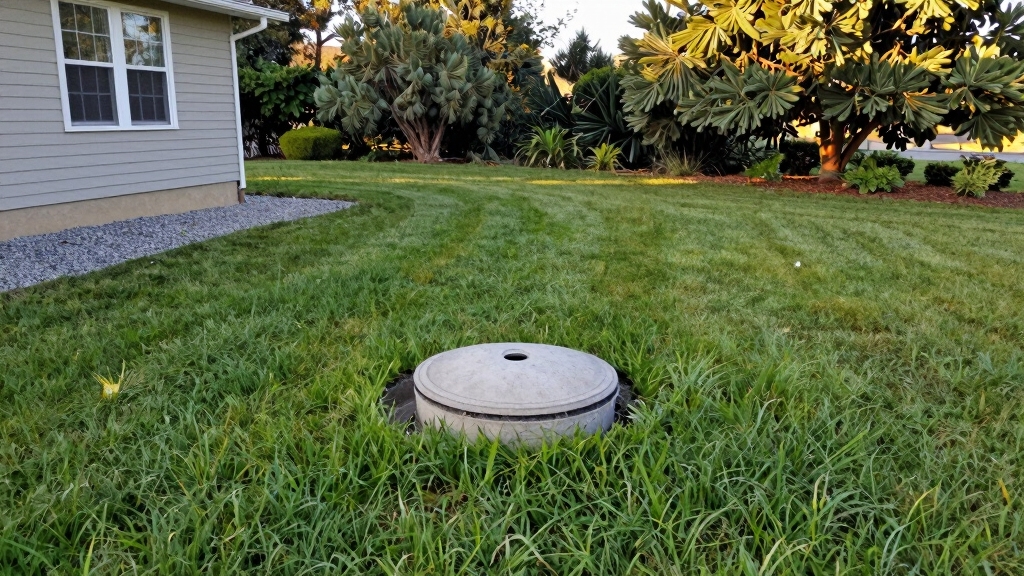

You should place your septic tank at least 10 to 30 feet from your house foundation to balance system efficiency, property protection, and maintenance access.
Local codes often require a minimum distance around 10 feet, but 20 to 30 feet is recommended to avoid foundation damage and guarantee serviceability.
Placement also depends on soil type and terrain to prevent operational issues. Understanding these factors helps you optimize septic system function and comply with regulations.
Key Takeaways
- Septic tanks should be installed at least 10 feet away from the house foundation to prevent structural damage and plumbing issues.
- Ideal placement is typically between 20 to 30 feet from the house for better maintenance access and system efficiency.
- Local regulations often specify minimum distances ranging from 10 to 25 feet depending on soil and topography conditions.
- Maintaining consistent grading and exact distances helps avoid long-term operational problems and protects the property.
- Position the tank on level ground with clear access paths to facilitate routine inspections, pump-outs, and repairs.
How Far Should a Septic Tank Be From the House Foundation?
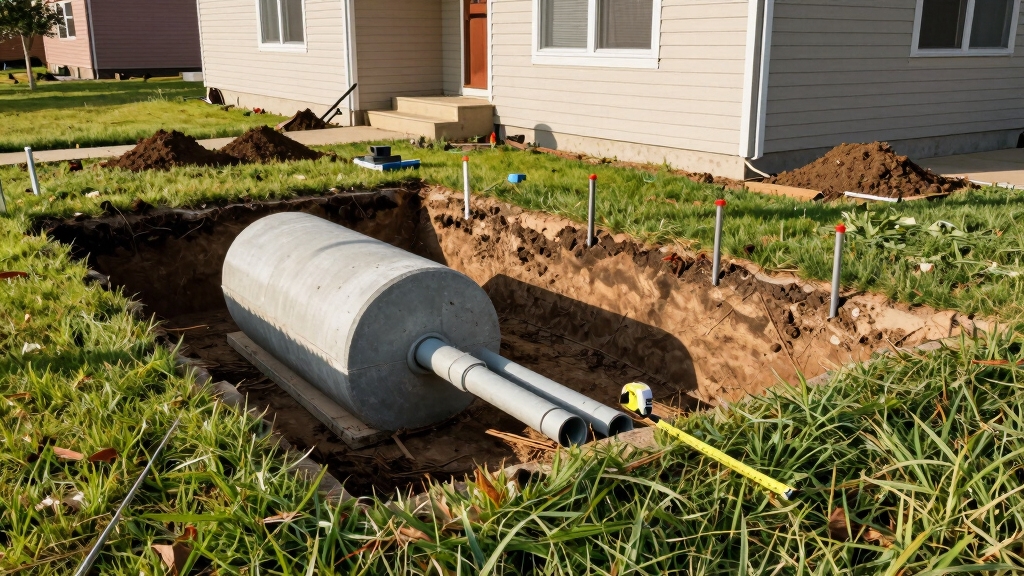
When installing a septic tank, you should position it at least 10 feet from your house foundation to prevent structural damage and guarantee proper system function.
Place your septic tank at least 10 feet from your foundation to protect your home and ensure system efficiency.
This minimum distance accommodates soil absorption and reduces risks of leaks impacting your home’s base. Ideally, situate the tank 20 to 30 feet away to optimize maintenance access and system efficiency.
Local codes typically mandate distances between 10 and 25 feet, depending on soil conditions, topography, and property layout. You’ll need to make certain the tank aligns properly with the plumbing outlet, generally located about 10 feet from the foundation.
Maintaining this spacing prevents undue pressure on your foundation, allows for solids settling in level ground, and facilitates inspections or pump-outs without interfering with your house’s structural integrity or underground utilities.
Before installation, it is essential to consult septic permits and as-built drawings to ensure compliance with local regulations and optimal tank placement.
How Far Should Septic Tanks Be From Property Lines?
When it comes to placing your septic tank, it’s generally a good idea to keep it at least 25 to 50 feet away from property lines.
But here’s the thing – the exact distance can really depend on local regulations, so it’s smart to check those out first.
These setbacks are super important because they help create buffer zones.
This way, you minimize the risk of contamination and also protect your neighbors’ properties.
Plus, understanding and following your area’s specific codes isn’t just about safety; it also keeps you on the right side of the law.
Additionally, proper setback distances help prevent root intrusion that can damage pipes and tanks.
Minimum Property Line Distances
Septic tanks must maintain specific minimum distances from property lines to comply with local regulations and prevent potential environmental and legal issues.
Typically, you need to position your septic tank at least 25 to 50 feet away from the property boundary. This spacing helps avoid contamination risks to neighboring properties and guarantees proper system function.
Consider these key minimum distances:
- Keep 25 to 50 feet from property lines to prevent cross-contamination and legal disputes.
- Position tanks at least 10 feet from other structures like fences or buildings on your property.
- Avoid placing tanks near trees or shrubs with invasive roots that could damage the system.
- Make certain accessibility for maintenance without encroaching on adjacent properties.
Adhering to these precise setbacks safeguards both your property and neighbors.
Local Regulation Variations
Although minimum distances from property lines are generally established, local regulations often dictate specific setback requirements that vary markedly by jurisdiction.
When planning your septic tank placement, you must consult local health codes, as states and municipalities impose different minimum distances to guarantee safety and environmental protection.
| Jurisdiction | Minimum Setback from Property Line | Regulatory Authority |
|---|---|---|
| New Hampshire | 25 feet | NHDES |
| Louisiana | 30 feet | State Building Code |
| California | 20 feet | Local Health Department |
| Texas | 25 feet | County Environmental Office |
| Vermont | 30 feet | State Environmental Agency |
Buffer Zones Importance
Local regulations set specific distances from property lines to protect both the environment and neighboring properties. These buffer zones are critical in preventing contamination, structural damage, and disputes.
When placing your septic tank, you must consider these setbacks carefully to comply with legal and environmental standards.
- Maintain a minimum distance of 25 to 50 feet from property lines as required by most codes.
- Make certain the septic system doesn’t encroach on adjacent properties, avoiding legal conflicts.
- Buffer zones reduce groundwater contamination risks by allowing natural filtration.
- Proper setbacks facilitate maintenance access and reduce odor and noise impact on neighbors.
- Additionally, understanding environmental wear effects can help optimize septic tank placement to extend its lifespan and minimize maintenance issues.
Why Must Septic Tanks Be Set Back From Wells and Water Sources?
When placing a septic tank, maintaining a considerable setback from wells and water sources is vital to prevent contamination of drinking water supplies. You must guarantee that effluent and potential pathogens do not seep into groundwater or surface waters.
Proper setbacks reduce risks of infiltration, protecting public health and complying with regulations.
| Contamination Risk | Setback Reason |
|---|---|
| Pathogen intrusion | Prevents well water pollution |
| Chemical leaching | Protects aquatic ecosystems |
| Groundwater taint | Maintains potable water quality |
| Regulatory compliance | Meets legal environmental standards |
What Are the Health and Safety Risks of Placing Septic Tanks Too Close?
Maintaining proper setbacks from wells and water sources helps protect water quality, but placing septic tanks too close to your house or other structures introduces distinct health and safety hazards.
Proper setbacks from wells protect water quality; septic tanks too close to structures pose health and safety risks.
You risk structural damage and potential contamination that directly impacts your living environment.
Here are four key risks you face:
- Foundation damage: Leaks or soil saturation can undermine your home’s structural integrity.
- Pathogen exposure: Faulty tanks may release harmful bacteria and viruses near your living spaces.
- Unpleasant odors: Proximity increases the chance of foul smells infiltrating your home.
- Utility interference: Septic systems too close can disrupt underground utilities, causing hazards or costly repairs.
You need to maintain adequate distance to minimize these risks and guarantee both safety and system longevity.
In cases where underground utilities are involved, it is crucial to call 811 before starting work to have them marked, ensuring safe excavation and placement of septic systems.
How Does Soil and Terrain Affect Septic Tank Placement?
When it comes to placing a septic tank, evaluating the soil type is super important. You see, the permeability of the soil directly affects how well it absorbs wastewater and how efficiently the system works. So, taking a good look at what kind of soil you have is essential.
Now, let’s talk about the terrain. The slope of the land can really make a difference. If the slope is too steep, you might run into issues with runoff and erosion. On the flip side, if the terrain is too flat, it could prevent proper drainage.
So, both the soil type and terrain slope play a big role in figuring out the best spot for your septic tank. This way, you can keep everything functioning smoothly and protect your property at the same time.
Additionally, just as precise measurements are critical when installing sliding doors, ensuring exact distances from the house and consistent grading can help avoid long-term issues with your septic system’s operation and maintenance, highlighting the importance of accurate site preparation.
Soil Type Importance
Understanding soil composition and terrain characteristics critically influences septic tank placement, as these factors determine drainage efficiency and system longevity.
You need to evaluate soil texture, permeability, and organic content to guarantee proper wastewater absorption and prevent system failure.
Here’s what to keep in mind:
- Permeability: Sandy soils allow rapid drainage but may require larger drain fields. Clay soils drain slowly, risking surface pooling.
- Soil Depth: Adequate unsaturated soil depth beneath the drain field is essential for effluent treatment.
- Water Table: High water tables reduce soil absorption capacity, increasing contamination risk.
- Soil Stability: Avoid soils prone to erosion or compaction, which can impair system function.
Since soils with varying metal content and composition can affect the performance of detection equipment, understanding soil electromagnetic properties is important when planning septic tank placement near sensitive monitoring devices.
Terrain Slope Impact
Although soil characteristics play a crucial role, terrain slope greatly influences septic tank placement by affecting effluent flow and system stability.
You must evaluate slope steepness: excessive incline can cause rapid effluent runoff, reducing absorption and increasing failure risk.
Conversely, flat or mild slopes promote ideal settling and drainage. Local codes often require specific slope ranges to guarantee system longevity and environmental safety.
| Terrain Slope | Impact on Septic Tank |
|---|---|
| Flat (0-2%) | Ideal for effluent absorption |
| Moderate (2-10%) | Requires careful design slope |
| Steep (>10%) | Risk of runoff, erosion issues |
| Variable/Uneven | May need terracing or grading |
Assess terrain slope precisely to determine safe distance and system configuration. Considering reinforced structural elements, such as reinforced frames, can enhance system stability on challenging terrain.
What Local Codes and Permits Govern Septic Tank Setbacks?

Local health departments and building authorities set the specific codes and permits that govern septic tank setbacks, ensuring compliance with safety and environmental standards.
You must adhere to these regulations to avoid contamination risks and structural damage. Typically, codes specify minimum distances from dwellings, property lines, and water sources.
Before installation, you need to obtain permits following a thorough site evaluation.
Key regulatory requirements include:
- Minimum setback distances from the house, usually 10 to 25 feet, based on local code.
- Required isolation from wells and water bodies, often 50 to 100 feet.
- Compliance with zoning laws affecting placement relative to property lines and other structures.
- Mandatory inspections and approvals during and after installation to verify adherence.
Understanding and following these rules protects health and property effectively. Additionally, reinforcing critical components with tamper-resistant fasteners can enhance system durability and prevent unauthorized access during maintenance.
How to Plan Septic Tank Location for Easy Maintenance?
When planning your septic tank location, prioritize accessibility to simplify routine inspections, pump-outs, and repairs.
Position the tank on level ground with clear, unobstructed access paths for maintenance vehicles and personnel.
Maintain the recommended 20 to 30 feet distance from your house to balance operational efficiency and serviceability.
Avoid areas with dense tree roots or steep slopes that complicate excavation or risk damage.
Make certain the site complies with local setbacks from property lines, wells, and water bodies to meet regulatory requirements.
Plan for proper pipe slope, typically 1/8 inch per foot, to facilitate waste flow without blockages.
Also, consider potential emergency service fees that may arise if maintenance requires urgent attention outside regular hours.
Frequently Asked Questions
What Materials Are Best for Septic Tank Construction?
You’ll find concrete, fiberglass, and polyethylene are the best materials for septic tank construction.
Concrete offers durability and strength but can crack over time.
Fiberglass is lightweight, corrosion-resistant, and easier to install.
Polyethylene is flexible, resistant to rust and corrosion, and cost-effective.
Your choice depends on soil conditions, budget, and local regulations.
Always make certain the tank material meets structural integrity standards and complies with permitting requirements for long-term performance.
How Often Should a Septic Tank Be Inspected?
A stitch in time saves nine. You should inspect your septic tank every 3 to 5 years to prevent costly issues.
Frequency depends on tank size, household usage, and soil conditions. Regular inspections make certain solids aren’t accumulating excessively, avoiding system failure or contamination.
A licensed professional evaluates sludge levels, baffles, and structural integrity, helping you maintain safe, efficient operation. Don’t wait for signs of trouble; proactive checks save both money and headaches.
Can Trees or Plants Be Planted Near a Septic Tank?
You shouldn’t plant trees or plants with invasive roots near your septic tank, as roots can penetrate pipes and the tank, causing blockages or damage.
Keep trees and shrubs with aggressive root systems at a safe distance, typically 10 feet or more, depending on species.
Opt for shallow-rooted, non-invasive plants to avoid costly repairs.
Always consider local regulations and consult a professional to make certain landscaping won’t impair your septic system’s function and longevity.
What Is the Average Lifespan of a Septic Tank?
You can expect a septic tank to last 20 to 40 years, depending on maintenance, usage, and materials.
You’ll need regular inspections, proper waste disposal, and timely pumping to maximize its lifespan.
You’ll avoid corrosion, cracks, and system failures by preventing chemical flushes and root intrusion.
You’ll monitor soil conditions, tank integrity, and drainage patterns to safeguard efficient operation.
Proper care extends function and reduces costly replacements.
How Is Septic Tank Size Determined for a Household?
You determine septic tank size based on your household’s daily water usage and number of bedrooms.
Typically, a tank holds 1,000 to 1,500 gallons for a standard family. Local codes often specify minimum capacities, factoring in peak flow and retention time to guarantee solids settle properly.
Soil type and system design also influence sizing. Consulting a licensed engineer guarantees your tank meets regulatory standards and handles your household’s wastewater efficiently.
Plan the Right Septic Tank Distance to Protect Your Home
When placing your septic tank, remember it should be at least 10 feet from your house foundation to prevent structural damage and contamination.
Curiously, studies show that improper septic setbacks contribute to nearly 30% of groundwater pollution cases.
By adhering to local codes and considering soil and terrain, you not only protect your health but also guarantee system longevity.
Proper planning makes maintenance easier and safeguards your property’s safety and value.