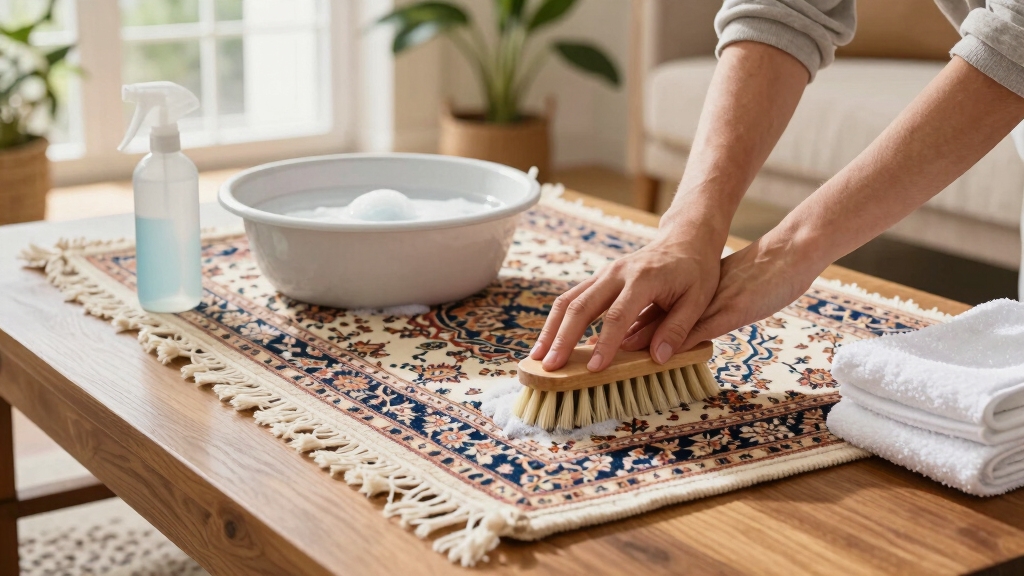

To clean your oriental rug at home, first move it to a ventilated area and vacuum both sides gently, avoiding direct suction on fringes. Test a mild, neutral pH cleaning solution on a hidden spot to verify colorfastness.
Spot-treat stains with a vinegar-water mix, blotting instead of rubbing. Wash small sections with a soft brush and rinse well, then dry flat in shade to prevent damage.
Follow these steps carefully, and you’ll get a deeper understanding of maintaining your rug’s beauty.
Key Takeaways
- Vacuum both sides gently using a soft brush attachment, avoiding direct vacuuming of fringes to protect delicate fibers.
- Test a mild, natural cleaning solution on a hidden area before full application to ensure colorfastness.
- Spot clean stains with diluted white vinegar or a baking soda paste, blotting gently rather than rubbing.
- Clean small sections with a soft brush and neutral pH solution, moving with the rug fibers and avoiding harsh scrubbing.
- Air dry the rug flat in a shaded, well-ventilated place for 1–2 days, avoiding direct sunlight and moisture buildup.
Preparing Your Oriental Rug for Cleaning
Before you begin cleaning your Oriental rug, you need to prepare it properly to guarantee effective and safe maintenance.
First, move the rug to a well-ventilated area with enough space to work comfortably.
Begin by relocating your rug to a spacious, well-ventilated spot for easy and safe cleaning.
Remove any furniture or objects resting on the rug to avoid damage.
Next, inspect the rug carefully for fragile areas, loose threads, or delicate fringes that need special attention.
Check for colorfastness by testing a small hidden section with water or your cleaning solution.
This prevents unwanted color bleeding or fading during cleaning.
Finally, gather all necessary cleaning materials, such as soft bristle brushes, gentle cleaning solutions, and clean towels, so you won’t interrupt your process.
Proper preparation sets the foundation for a thorough, damage-free cleaning session.
Increase ventilation by opening windows and doors to ensure good air circulation during and after cleaning.
Vacuuming Your Oriental Rug Properly
Regularly vacuuming your Oriental rug helps prevent dirt from embedding deeply into the fibers, preserving its appearance and longevity.
Use a vacuum with adjustable suction and a soft brush attachment to avoid damaging the delicate fringe. Vacuum both the front and back of the rug to remove embedded debris.
Be careful not to vacuum the fringes directly; instead, gently shake or beat them outside if needed.
| Action | Method | Reason |
|---|---|---|
| Vacuum front side | Soft brush attachment | Protects fibers and colors |
| Vacuum back side | Low suction or handheld | Removes base dirt and dust |
| Avoid fringes | No vacuum on fringes | Prevents breakage |
| Fringe cleaning | Shake or beat outside | Safely dislodges dirt |
For a sustainable approach, consider using washable and reusable filters in your home environment to reduce waste and maintain air quality.
Choosing Safe Cleaning Solutions for Oriental Wool Rugs
When selecting cleaning solutions for your Oriental wool rug, you’ll want to choose products that preserve the fibers’ integrity and vibrant colors.
Opt for natural, neutral pH liquid cleaners diluted in cool water to guarantee gentle cleaning. Avoid harsh chemicals, high pH detergents, and boiling water, as these can damage wool fibers and cause color fading.
Choose natural, neutral pH cleaners diluted in cool water to gently clean and protect wool fibers and colors.
Before fully applying any solution, test it on a small, hidden area of the rug to check for colorfastness. For routine cleaning, dilute soap with water to create a mild sudsy mixture for gentle wiping.
White vinegar mixed with warm water can also be safe for treating minor stains while maintaining fiber health. Using these safe solutions helps keep your Oriental rug looking fresh without risking long-term damage.
Additionally, it is important to use gentle cleaning techniques to avoid surface damage while maintaining cleanliness.
How to Spot Clean Stains on Your Oriental Rug?
Maintaining your Oriental rug’s appearance means addressing stains promptly and carefully to prevent permanent damage.
Start by applying a quarter cup of white vinegar mixed with warm water to the stained area using a clean cotton cloth. Let the solution sit for a few minutes to break down the stain.
For tougher stains, mix white vinegar and baking soda, apply it to the spot, and let it sit for about an hour.
Alternatively, create a paste from baking soda and water, apply it on stubborn spots, and leave it for 10 to 20 minutes.
Gently scrub the paste with a soft brush, then rinse with a warm water spray. Always blot rather than rub to avoid fiber damage and test solutions on a hidden area first.
For best results, ensure the rug is dried thoroughly after cleaning to prevent moisture buildup, similar to how regular moisture removal is important in other cleaning tasks.
Gently Washing and Rinsing Your Oriental Rug
Start by working in small, manageable sections—about one square foot at a time—to guarantee thorough and even cleaning.
Clean your rug in small, manageable sections to ensure every part is thoroughly and evenly treated.
Use a soft bristle brush or cloth, applying a diluted, neutral pH cleaning solution gently, always moving in the direction of the rug fibers.
Avoid hard scrubbing to protect delicate threads. Once you’ve agitated the suds lightly, employ a squeegee aligned with the fibers to remove dirt and excess detergent. If suds remain, lightly spray water and squeegee again.
Lay dry white towels on the wet area and walk gently over them to absorb moisture. Avoid over-saturating your rug to ease drying later.
For best results, work slowly and carefully to maintain control and avoid damage, similar to the importance of controlled drilling techniques when installing hardware.
Drying and Protecting Your Oriental Rug After Cleaning
Although drying your oriental rug thoroughly may seem straightforward, it requires careful attention to prevent damage such as shrinkage, color bleeding, or mold growth.
After cleaning, avoid steam or hose drying, as excessive heat or trapped moisture can harm fibers and dyes. Instead, focus on controlled air drying and moisture removal.
To dry and protect your rug properly:
- Blot excess water immediately with clean, dry towels.
- Lay the rug flat in a shaded, well-ventilated area to air dry for 1-2 days.
- Avoid direct sunlight to prevent color fading.
- Rotate the rug occasionally to make certain even drying.
- Skip baking soda for deodorizing; its grit can wear fibers prematurely.
Be mindful that humidity and moisture can cause damage similar to false alarms in fire safety, so maintaining proper ventilation is essential. Following these steps preserves your rug’s beauty and longevity.
Frequently Asked Questions
Can I Use a Steam Cleaner on My Oriental Rug?
You shouldn’t use a steam cleaner on your oriental rug.
The heat and moisture from steam cleaning can cause the fibers to shrink and the colors to bleed, damaging your rug’s delicate materials.
Instead, opt for gentle cleaning methods like using cool water with neutral pH cleaners, spot treating stains carefully, and air drying thoroughly.
Avoiding steam cleaning preserves your rug’s beauty and longevity.
How Often Should I Professionally Clean My Oriental Rug?
You should professionally clean your oriental rug every three to five years, or sooner if it faces heavy foot traffic or noticeable stains.
Regular vacuuming and spot cleaning in between help maintain its beauty, but deep cleaning removes embedded dirt and restores fibers.
If you have pets or allergies, consider cleaning every two years. Scheduling professional care at these intervals guarantees your rug stays vibrant, preserving its elegance and longevity.
What Should I Do if My Rug Has Moth Damage?
If your rug has moth damage, start by thoroughly vacuuming both sides to remove larvae and eggs, using a soft brush attachment to protect fibers.
Next, isolate the rug in a sealed plastic bag or container to starve remaining moths.
Consider applying a professional moth treatment or natural repellents like cedar chips.
Repair any holes promptly to prevent further damage, and store the rug in a clean, dry place to avoid reinfestation.
Are Synthetic Fiber Rugs Cleaned the Same Way as Wool Rugs?
Synthetic fiber rugs aren’t cleaned exactly like wool rugs.
You can use slightly warmer water and a wider range of mild detergents since synthetics tolerate chemicals better.
Avoid harsh scrubbing to protect fibers, but you don’t have to be as cautious about pH levels or heat sensitivity as with wool.
Always test cleaners on a hidden area first, and dry thoroughly to prevent mold.
Tailor your approach to the rug’s material for best results.
How Can I Prevent Color Fading in My Oriental Rug?
Imagine your oriental rug as a vibrant painting under sunlight. Protect its colors by avoiding harsh chemicals and boiling water that can dull its brilliance.
Always test cleaners on a hidden spot before full use. Vacuum gently with a soft brush attachment and keep it out of direct sunlight to prevent fading.
Use cool water with neutral pH cleaners and never steam clean, as heat can cause colors to bleed and fibers to shrink.
Maintain Vibrant Rugs Without Professionals
Cleaning your oriental rug at home might seem intimidating, but with careful steps and the right products, it’s entirely doable without professional help.
You don’t have to worry about damaging delicate fibers; just prepare your rug properly, use gentle cleaning solutions, and handle it with care during washing and drying.
By following these precise methods, you’ll keep your rug vibrant and well-maintained, saving money while preserving its beauty for years to come.