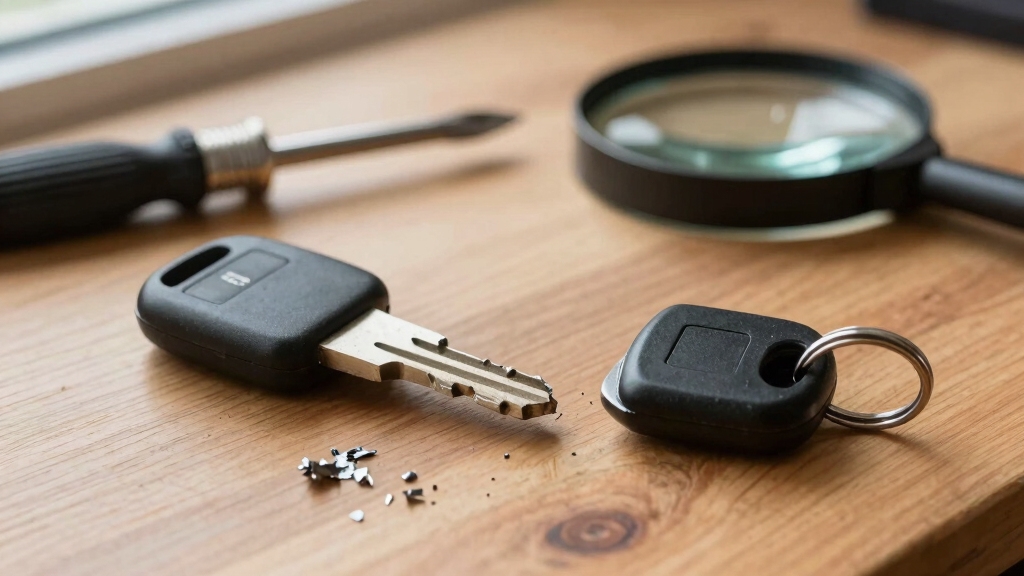

To fix a broken car key, first straighten and align the pieces carefully on a solid surface without over-flattening.
Then, solder the key halves together using a soldering iron while securing them in a vice grip for accuracy.
After cooling, duplicate the repaired key precisely with a cutting machine, ensuring grooves and cuts match the original.
You can also restore a damaged loop with epoxy putty. If your key fob is faulty, consider reprogramming or replacing it, depending on the issue.
Learn more about each step to guarantee a reliable fix.
Key Takeaways
- Straighten and align broken key pieces carefully on a solid surface before attempting to reassemble or duplicate the key.
- Use solder and a vice grip to securely join key fragments, ensuring precise alignment and avoiding overheating.
- Duplicate the repaired key using a key cutting machine, cutting both sides accurately to match the original key profile.
- Repair broken key loops with epoxy putty by cleaning surfaces, molding the putty, and allowing it to fully cure.
- Replace or reprogram a damaged key fob when physical faults or programming issues occur, verifying compatibility and battery status.
Straighten and Prepare a Broken Car Key
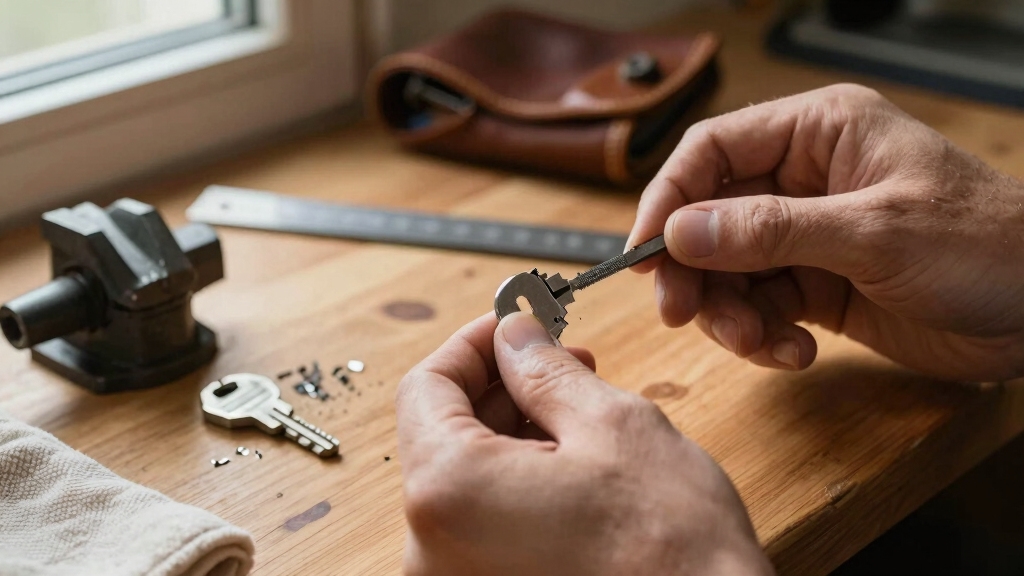
Begin by carefully straightening the broken key pieces on a solid steel surface using a hammer.
Start by gently straightening the broken key fragments on a sturdy steel surface with a hammer.
Position each fragment flat, focusing on the main blade portion rather than the head, as this area is critical for accurate duplication.
Gently tap the pieces to flatten both faces and corners without over-flattening, which can cause damage.
Align the grooves as closely as possible; perfect straightness isn’t essential but closer alignment guarantees better duplication accuracy.
Work methodically, checking frequently to avoid warping. Flattening both halves prepares them for examination and eventual duplication.
By prioritizing precision and avoiding excessive force, you maintain the key’s structural integrity while readying it for the next repair steps.
This approach optimizes the chances of a successful key restoration.
Remember to keep the key dry and clean during the process to prevent moisture or dirt from affecting the internal components, similar to best practices for maintaining key fob reliability.
Solder and Reassemble Broken Car Key Pieces
When you’re ready to reassemble the broken key pieces, tin both halves with solder using a soldering iron to guarantee a strong bond. Secure the pieces in a vice grip to maintain precise alignment before applying heat.
Gradually heat the key and carefully flow solder into the gap, ensuring full penetration without excess. Allow the solder to cool between steps to solidify the joint and maintain structural integrity. This method works effectively for various key types, including Volkswagen models.
Key points to remember:
- Use a steady hand to avoid overheating and damaging the key’s cut pattern.
- Maintain alignment in the vice grip to preserve the key’s functional shape.
- Cool the assembly progressively to prevent warping or weak joints.
For complex lock systems, professional locksmiths often employ specialized tools and techniques to ensure any repairs do not compromise the key’s or lock’s functionality.
Duplicate and Recut a Broken Car Key
After soldering and aligning the broken key pieces, you can proceed to duplicate and recut the key to restore full functionality.
First, secure the reassembled key firmly in the machine jaws, guaranteeing perfect alignment to avoid inaccuracies during cutting.
Use safety goggles before operating the key cutting machine.
Cut one side of the key precisely, then flip it to cut the opposite side, maintaining consistent depth and groove patterns.
After cutting, test the key in the lock; if you notice any minor dips or misalignments caused by the break, re-duplicate the key from the newly cut blank to refine the cuts.
This process guarantees the duplicated key matches the original profile, restoring reliable operation without compromising the structural integrity of the repaired key.
Keep in mind that key replacement and programming costs can vary widely depending on the complexity of the vehicle’s locking system.
Fix a Broken Car Key Loop With Epoxy Putty
Repairing a broken car key loop with epoxy putty requires careful preparation and handling to guarantee durability.
Start by thoroughly cleaning the broken surfaces to assure proper adhesion.
Thoroughly clean broken surfaces to ensure strong adhesion before repairing your key loop.
Mix the two-part epoxy putty by kneading until it reaches a uniform color, indicating it’s ready.
Mold the putty carefully around the broken loop section, reshaping it to restore the loop’s original form.
Before applying, protect the key blade with tape to avoid residue buildup.
Keep these points in mind:
Wear gloves to prevent skin contact during mixing and application.
Allow the epoxy to cure fully as per manufacturer instructions for maximum strength.
Avoid stressing the repaired loop during the curing phase to prevent bond failure.
This method provides a robust, lasting solution for key loop repair.
For added security and convenience, consider installing a wide-angle peephole to monitor your entryway effectively.
When to Replace or Reprogram Your Car Key Fob Instead of Repairing?
While epoxy putty can effectively restore a broken key loop, electronic components like your car key fob require a different approach.
If your key fob’s battery isn’t the issue, consider reprogramming before opting for replacement. Reprogramming saves cost and avoids compatibility problems common with unverified online fobs.
Replace your fob if it suffers physical damage, unrepairable circuit faults, or if reprogramming fails. Replacement costs vary between $50 and $400, plus $50-$100 for programming by a locksmith or dealer.
Specialized fobs, like those with breathalyzer systems, almost always require professional intervention. Always verify compatibility with your vehicle’s frequency to prevent functionality loss.
Since car key fobs operate on low voltage circuits, ensuring proper battery and circuit integrity is key to maintaining their function.
Frequently Asked Questions
Can a Broken Key Damage My Car’s Ignition System?
Yes, a broken key can damage your car’s ignition system if you try to force it in.
Misaligned or jagged edges might jam the ignition cylinder, causing internal component wear or breakage.
To prevent damage, avoid inserting a broken key fragment and instead use proper tools or professional services to extract or repair the key.
Ensuring smooth key duplication and careful handling protects your ignition’s integrity and functionality.
How Long Does It Typically Take to Repair a Broken Car Key?
If you break your key in the ignition, expect repairs to take about 30 to 60 minutes.
For instance, a locksmith once straightened a snapped Volkswagen key by flattening the pieces and soldering them together, a process completed within an hour.
The timeline depends on damage extent and whether duplication or reprogramming is needed.
Simple fixes like epoxy for a broken loop might take less, while electronic fob repairs could take longer.
Are There Specific Car Models With Keys That Are Harder to Fix?
Yes, certain car models like luxury brands (BMW, Audi, Mercedes) have keys with complex transponder chips or integrated electronics, making repairs trickier.
You’ll find keys with laser-cut blades or remote fobs harder to fix due to specialized programming and cutting equipment.
Also, models with breathalyzer ignition systems require locksmith expertise. For these, you’ll often need professional tools and software, so DIY fixes mightn’t work well or risk damaging the key further.
What Tools Should I Have on Hand for Emergency Key Repairs?
You should have a small hammer, solid steel surface, soldering iron, vice grip, micrometer, and safety goggles for emergency key repairs.
Also, keep two-part epoxy putty and gloves for loop fixes. A key duplication machine helps recut broken keys precisely.
For electronic keys, carry fresh batteries and a programming tool if possible. These tools let you realign, solder, duplicate, and restore keys efficiently on the spot.
Can Insurance Cover the Cost of Car Key Replacement or Repair?
Yes, some insurance policies cover car key replacement or repair, but it depends on your coverage.
Full-coverage or roadside assistance plans often include key loss or damage, though deductibles may apply.
You should check your policy details or contact your insurer directly to confirm.
Keep in mind, coverage might exclude certain key types like smart fobs or require proof of loss. Knowing this upfront helps avoid unexpected expenses during replacement or repair.
From DIY Fixes to Reprogramming: Making the Right Choice
Sometimes, just as you think a broken car key is a lost cause, a simple fix like straightening or soldering can save the day. If you’re handy, duplicating or using epoxy putty might be your best bet.
But coincidentally, when these repairs fail or your key fob acts up, replacing or reprogramming it is often quicker and more reliable. Knowing when to repair or replace guarantees you’re never stranded unexpectedly.