
Foam insulation is an excellent choice if you want superior thermal performance and energy efficiency.
It provides a high R-value that keeps heat in during winter and blocks unwanted heat in summer.
Its ability to form a continuous airtight and moisture-resistant barrier means less energy loss, reduced HVAC strain, and protection against mold and structural damage.
Though it costs more upfront, the long-term savings and durability make it a smart investment.
You’ll find even more advantages as you explore further.
Key Takeaways
- Closed-cell spray foam has a high R-value of approximately 6.5 per inch, making it an excellent thermal insulator.
- It forms a continuous airtight barrier that effectively stops air leaks and drafts, enhancing energy efficiency.
- The foam acts as a moisture barrier, preventing condensation, mold growth, and water damage inside walls and ceilings.
- Its insulating properties reduce HVAC workload, lowering energy bills and extending system lifespan.
- Closed-cell foam maintains consistent thermal resistance and durability for 80 to 100 years without degrading.
Why Foam Insulation Offers Superior Thermal Performance
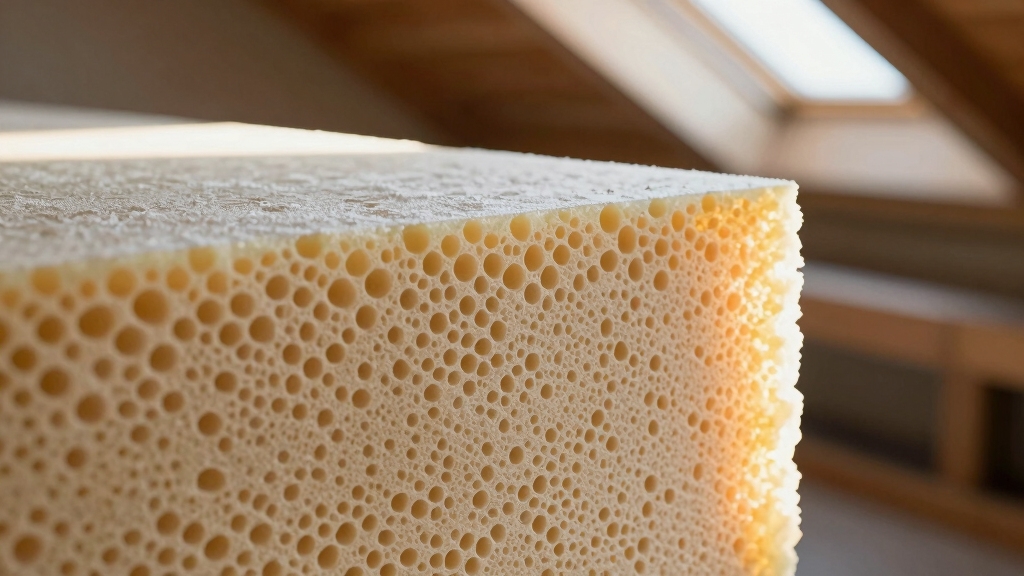
Because closed-cell spray foam boasts one of the highest R-values of around 6.5 per inch, it delivers superior thermal performance compared to traditional insulation materials like fiberglass or cellulose.
Closed-cell spray foam offers exceptional insulation with an R-value of about 6.5 per inch, outperforming traditional materials.
When you install foam, you markedly reduce thermal transfer. This keeps heat inside during winter and blocks unwanted heat in summer.
This high R-value means your HVAC system won’t have to work as hard to maintain comfortable temperatures, directly lowering your energy bills.
Unlike fiberglass or cellulose, spray foam forms a continuous insulation layer that stays firmly in place over time, preserving consistent thermal resistance.
By choosing foam insulation, you guarantee long-lasting, efficient temperature regulation that outperforms other materials on a per-inch basis.
Ultimately, this maximizes your building’s energy efficiency and comfort.
In addition, optimizing insulation complements thermostat functions by reducing the frequency of heating and cooling cycles, enhancing system stability and energy savings.
How Foam Insulation’s Air Sealing Boosts Energy Efficiency?
Sealing every crack and crevice is essential to maximizing your building’s energy efficiency. Foam insulation excels at this task. Its expansive nature fills gaps unreachable by traditional materials, creating a continuous airtight barrier.
This stops air leaks and drafts, stabilizing indoor temperatures and reducing HVAC workload. With less air infiltration, you prevent energy loss and maintain consistent climate control, which directly cuts energy bills.
Additionally, integrating foam insulation with automatic activation systems can further optimize energy use by ensuring lighting and other devices operate only when necessary.
| Feature | Benefit |
|---|---|
| Expands to fill gaps | Eliminates air leakage |
| Continuous airtight seal | Maintains stable indoor temperature |
| Prevents drafts | Reduces HVAC energy consumption |
| Enhances insulation | Boosts overall energy efficiency |
Why Foam Insulation Provides Better Moisture Protection?
Alongside superior air sealing, foam insulation excels at managing moisture, a factor that markedly impacts building durability and indoor air quality.
Closed-cell foam acts as an effective moisture barrier, preventing water vapor infiltration that traditional materials often fail to address.
By forming a continuous, impermeable layer, it halts moisture migration and minimizes condensation risks within walls and ceilings.
This resilience protects structural components from mold growth and water damage, especially in humid climates where moisture control is critical.
Unlike fiberglass or cellulose, foam doesn’t absorb water or degrade when exposed to humidity, maintaining its insulating properties over time.
When you choose foam insulation, you enhance long-term building performance and reduce costly repairs linked to moisture-related deterioration, making it a technically superior and reliable moisture management solution.
Additionally, selecting washable and reusable filters in HVAC systems complements foam insulation by reducing waste and promoting sustainability in building maintenance.
Evaluating Foam Insulation’s Cost Versus Long-Term Savings
While foam insulation demands a higher upfront investment compared to traditional materials, its long-term financial benefits markedly outweigh initial costs.
You’ll benefit from substantial energy savings due to foam’s superior R-value and airtight seal, which reduce HVAC workload and maintenance expenses.
Over time, these savings offset the initial price premium, delivering a favorable return on investment.
| Cost Factor | Impact |
|---|---|
| Upfront Installation | Higher initial expense |
| Energy Savings | Significant reduction in utility bills |
| Maintenance & Longevity | Lower HVAC repair and replacement costs |
Investing in foam insulation means you’re effectively minimizing energy waste and future expenses. Proper heat management in insulation applications also helps maintain system efficiency and longevity.
This makes it a cost-effective solution for sustainable building performance.
How Durable Is Foam Insulation Over Time?
Because foam insulation forms a stable and continuous barrier, it maintains its effectiveness without sagging or settling over decades.
You’ll benefit from consistent thermal resistance, as foam doesn’t degrade or shift like fiberglass or cellulose.
Properly installed closed-cell foam lasts 80 to 100 years, delivering reliable energy savings year after year.
Its inherent resistance to pests and environmental factors further prolongs durability, minimizing maintenance and replacement needs.
Additionally, foam’s airtight and moisture-resistant properties prevent mold growth and structural damage, preserving both insulation performance and building integrity.
When you invest in foam insulation, you get a long-term solution that holds up under various conditions, reduces system strain, and guarantees stable indoor environments.
This durability makes foam a superior, cost-effective choice for sustainable insulation over time.
For continuous protection, similar to how hardwired smoke detectors require battery backups to maintain functionality during outages, foam insulation provides uninterrupted thermal resistance throughout its lifespan.
Frequently Asked Questions
Can Foam Insulation Be Safely Installed by Homeowners?
You can install foam insulation yourself, but it’s tricky and requires careful handling.
Closed-cell spray foam involves chemicals that need protective gear and precise application to avoid health risks and ensure proper expansion.
Mistakes can compromise insulation effectiveness or cause damage.
If you’re inexperienced, hiring certified professionals is safer and guarantees peak performance, longevity, and energy savings.
DIY foam insulation isn’t recommended unless you fully understand the technical and safety aspects.
How Does Foam Insulation Impact Indoor Air Quality?
Foam insulation improves your indoor air quality by creating a continuous airtight seal that stops drafts, dust, and outdoor pollutants from entering your home.
Its air-sealing properties reduce humidity and prevent mold growth, keeping the air healthier.
Unlike traditional insulation, foam doesn’t harbor allergens or moisture, minimizing contaminants.
Is Foam Insulation Environmentally Friendly to Produce and Dispose Of?
Think of foam insulation as a long-lasting battery for your building’s energy needs.
While producing it involves chemicals that aren’t the greenest, its exceptional lifespan and energy-saving properties markedly cut carbon emissions over time.
You’ll reduce waste since it rarely needs replacement.
What Types of Foam Insulation Are Best for Different Climates?
You’ll want closed-cell spray foam in humid or cold climates since it offers superior moisture resistance and the highest R-value, keeping heat in and moisture out.
Open-cell foam, with lower density and R-value, suits moderate climates where breathability is beneficial.
By selecting foam types based on your region’s temperature extremes and humidity, you optimize thermal performance, reduce energy costs, and prevent moisture issues.
This ensures durable, efficient insulation tailored to your climate.
Does Foam Insulation Require Special Maintenance or Inspections?
Think of foam insulation as a high-performance shield. It rarely needs special maintenance or inspections once properly installed.
You’ll want to check it occasionally for physical damage or moisture intrusion.
Its durability and resistance to sagging, pests, and moisture keep it stable for decades.
Regular visual inspections during routine home maintenance are usually enough to ensure it performs at its best without demanding costly upkeep or frequent professional attention.
Foam Insulation: A Future-Proof Choice for Energy Efficiency
So, you want the cold out and the cash saved? Foam insulation’s got your back with premium thermal performance, airtight sealing, and moisture defense.
Sure, it might cost a bit upfront, but who doesn’t love a long-term money hug?
Durability? It sticks around longer than your last New Year’s resolution.
If you’re serious about energy efficiency, foam isn’t just good—it’s practically your home’s superhero in disguise.
Why settle for less?