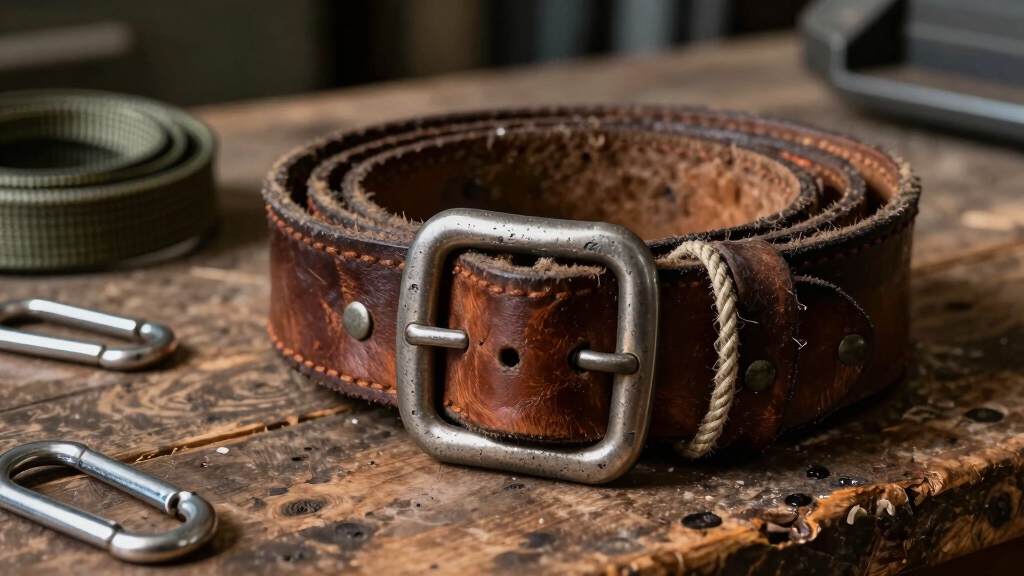

A rigger belt is a heavy-duty utility belt designed for strength and safety in demanding tactical or emergency scenarios.
You rely on its reinforced 1000D nylon webbing and forged metal buckles to bear loads up to several thousand pounds without sagging or failure.
Its quick-release buckles and strong attachment points let you carry gear securely or use it as a backup rappelling harness.
Understanding its material quality and construction nuances guarantees you trust it when lives depend on it.
Key Takeaways
- A rigger belt is a heavy-duty tactical belt designed for load-bearing and safety-critical tasks like rappelling and rescue operations.
- It functions both as a utility belt and an emergency rappelling harness with quick-release and adjustable sizing features.
- Constructed from durable materials like 1000D nylon webbing with water-resistant coating and reinforced stitching for high tensile strength.
- Equipped with military-grade hardware, including forged Cobra buckles and steel D-rings, ensuring secure load support and quick release.
- Rated to handle tensile strengths typically between 5,000 and 8,000 pounds for reliable use in tactical, outdoor, and emergency scenarios.
Definition and Key Characteristics of a Rigger Belt
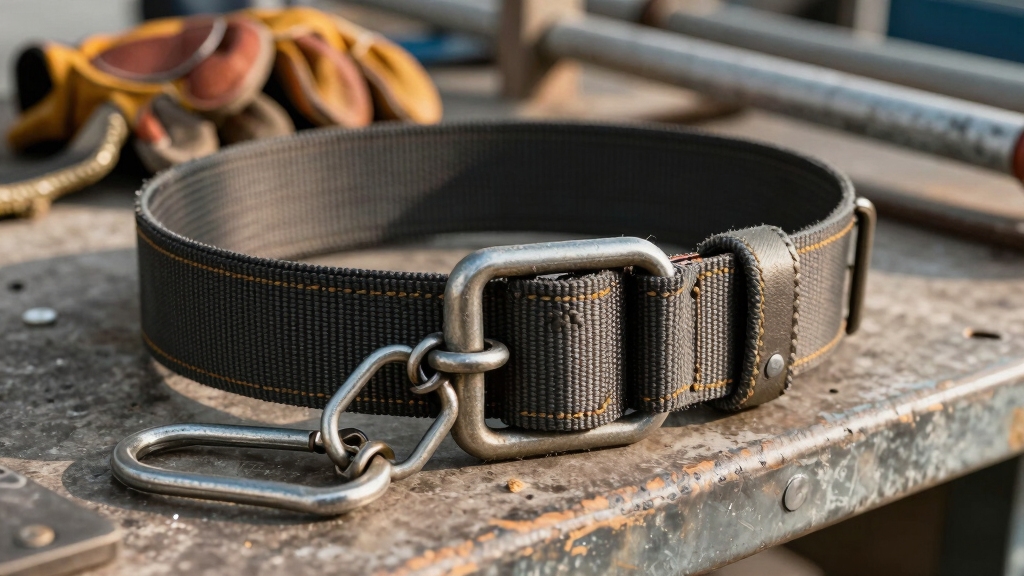
When you choose a rigger belt, you select a heavy-duty tactical belt designed specifically for durability and strength in demanding environments. You’re relying on a belt engineered with a quick-release buckle for fast adjustments and emergency removal.
Its load-bearing capacity supports significant weight, fitting tactical, rescue, and outdoor applications. You’ll find D-ring or loop attachment points, enabling secure gear and safety harness connections.
The belt’s tensile strength varies by model, ranging from 500 to over 7,000 pounds, with military-grade options rated at 5,000 pounds minimum breaking strength. This belt distributes weight better than standard leather belts, enhancing comfort and safety.
Its construction meets rigorous standards, incorporating reinforced buckles and hardware to guarantee reliability during critical operations. Originally developed by parachute riggers using leftover materials, the rigger belt has since evolved from a niche military tool to a popular choice among survivalists and outdoor enthusiasts.
Materials Used in Rigger Belt Construction
Although rigger belts come in various designs, their effectiveness largely depends on the materials used in construction.
The strength and durability of rigger belts hinge on the quality of materials used in their construction.
You’ll often find high-grade polyester webbing, valued for its double thickness and extra durability, typically rated to 150kg. This material is commonly found in belts designed for work restraint in demanding environments like TV & Film crews and rescue teams, ensuring reliable performance under stress due to its high grade polyester webbing construction. Proper maintenance and timely replacement are crucial to preserve the belt’s durability and safety.
Alternatively, 1000D nylon webbing with a polyurethane coating offers water resistance and is favored in tactical and rappel belts for its heavy-duty strength.
Polypropylene also appears in heavy-duty rigger belts, prized for its longevity in demanding conditions.
Some advanced models incorporate thermoplastic composites, providing lightweight stiffness and puncture resistance without cracking under extreme temperatures.
For components, you’ll encounter vegan cowhide leather paired with steel or zinc alloy buckles, ensuring both comfort and secure fastening.
Each material choice carefully balances strength, durability, and usability, allowing you to select a belt suited to your specific needs.
Tensile Strength and Load-Bearing Capacity
Hey there! So, when it comes to rigger belts, it’s important to know that they usually have tensile strengths that can range anywhere from 5,000 to over 8,000 pounds. Pretty impressive, right? This strength really affects how much weight the belt can handle safely during those crucial tasks. The materials used in construction, such as reinforced core materials, play a significant role in determining the belt’s overall tensile capacity and reliability.
Now, here’s the thing: you definitely want to think about how durable the belt is, especially when it’s under repeated stress. That durability is key to ensuring it performs reliably, especially in demanding environments. Many high-quality rigger belts use redundant stitching to enhance their durability and hold up under the worst situations.
Tensile Strength Range
Because tensile strength directly impacts a rigger belt’s reliability, understanding its range is essential for guaranteeing safety and performance.
You’ll find that most nylon webbing used in rigger belts offers tensile strengths between 5,000 and 8,000 pounds. The variation depends on the webbing type and construction quality. Equally important are the buckles and components, which must match or exceed the webbing’s strength to prevent failure. Proper selection ensures the belt maintains integrity under stress, similar to how load-bearing capacity is critical in other safety gear.
Key tensile strength considerations include:
Nylon webbing tensile strength ranges from 5,000 pounds (MultiCam) up to 8,000 pounds (air-frame grade). Buckles typically withstand around 2,000 pounds but are often reinforced with parachute-quality materials. Harness-grade nylon with MIL-standard certification ensures consistent, reliable performance under load. The Condor CQB Rigger Rappel Belt, for example, uses 1¾” nylon webbing with 7,000 lbs tensile strength and forged steel buckles rated at 2,000 lbs tensile strength to maintain high durability.
You should always verify the combined strength ratings of webbing and hardware before relying on a rigger belt.
Weight Load Support
Understanding tensile strength lays the groundwork for evaluating a rigger belt’s overall weight load support. This support combines both tensile capacity and load-bearing design. Installation of safety equipment, much like securing a peephole, requires attention to load-bearing components to ensure stability and safety.
You need to take into account not only the webbing’s pull strength but also the buckle’s load capacity. Additionally, consider the belt’s structural features that distribute weight evenly, preventing sagging and maintaining stability under heavy loads. The Wilde Custom Gear Rigger Belt uses Mil Spec parachute harness-grade webbing rated for over 6,000 lbs pull strength, ensuring exceptional durability and reliability.
| Component | Load Capacity / Feature |
|---|---|
| Webbing | 6000-7000 lbs tensile strength |
| Buckle | Up to 2000 lbs tensile strength (Cobra) |
| Load Distribution | Warp Strength™ Technology, five rows stitching |
Durability Under Stress
Although tensile strength forms the foundation of a rigger belt’s durability, the load-bearing capacity depends equally on the materials and hardware used.
Equally critical are the mil-spec forged steel or parachute-grade buckles, which typically withstand up to 2,000 pounds. Proper inspection and maintenance of these components are essential to ensure safety and longevity under repeated use, similar to the maintenance protocols found in fire extinguisher safety.
The integration of reinforced stitching and abrasion-resistant liners further extends durability, especially at high-stress points. For example, the Blackhawk CQB Riggers Belt uses parachute-grade buckles and adapters to ensure high-strength connections.
Key durability factors to consider include:
- Nylon webbing tensile strength and classification
- Buckle and hardware certification and load ratings
- Reinforced stitching and abrasion resistance measures
This combination guarantees a rigger belt worthy of tactical and emergency applications.
Design Features That Enhance Durability
When you rely on a rigger belt for critical tasks, its durability hinges on specific design features engineered to withstand extreme conditions.
High-strength webbing, such as 1.75-inch Mil-Spec parachute-grade nylon, offers tensile strength exceeding 6,000 pounds. The Condor Riggers Belt utilizes 1.75″ nylon webbing with a tensile strength of 7,000 lbs, ensuring superior durability. Proper maintenance and regular inspection frequencies are essential to preserve these strength properties over time.
Abrasion protection, like Hypalon liners, minimizes hardware wear, extending belt life without compromising flexibility.
| Feature | Benefit |
|---|---|
| Double-layer webbing | Enhances load capacity and flexibility |
| Five rows bonded stitching | Maintains shape under stress |
| Forged steel buckle | Provides secure, high-strength closure |
These combined elements guarantee a durable, reliable rigger belt for demanding environments.
Tactical Applications in Military and Law Enforcement
Since tactical operations demand reliable gear, rigger belts serve critical roles across military and law enforcement applications.
You rely on these belts for secure equipment carry and life-saving support during rappelling or dynamic entry. Their MIL-standard certified components guarantee durability and safety under extreme stress.
You’ll find them indispensable when your mission requires:
- Supporting heavy gear like handguns and radios without sagging, thanks to 7000 lbs-rated nylon webbing and forged steel buckles.
- Serving as a backup harness during rappelling, with D-rings designed for carabiner attachments and 5000 lbs tensile strength.
- Providing versatile anchor points for fast roping or zip lining in first responder scenarios.
Rigger belts are constructed from robust materials such as 1000D nylon coated with polyurethane to ensure water resistance and long-lasting performance.
Choosing a rigger belt means equipping yourself with a tool engineered for critical, high-stakes environments demanding unwavering performance and security.
Utility and Everyday Carry Benefits
Rigger belts are pretty cool, right? They come with all sorts of gear attachment points like D-rings and MOLLE loops. This makes it super easy to keep your tools and essentials organized and secure. Their design principles are somewhat analogous to how a peephole uses a combination of lenses to provide a clear inside view while maintaining outside visibility limitations.
Plus, they’re designed for everyday wear, so you won’t have to choose between strength and comfort. You can carry your gear around without feeling restricted or sacrificing your mobility. Their rugged construction ensures they can support heavy equipment without drooping, making them reliable for various tasks rugged construction.
Gear Attachment Options
Gear attachment options on rigger belts open up versatile utility and everyday carry benefits by enabling secure and efficient mounting of essential tools.
You can rely on MOLLE compatibility for firm pouch attachment via vertical slits, ensuring tighter holds than standard MOLLE methods. Integrated D-rings replace traditional v-rings, allowing quick clips and balanced weight distribution during movement. The Ultimate Riggers Belt features a sewn-in attachment point that replaces the traditional parachute v-ring, enhancing durability and reliability. sewn-in attachment point Proper placement and secure attachment reduce strain and improve overall comfort during prolonged wear.
Additionally, quick-access mounts enhance retrieval speed and reduce hand strain with adjustable, purpose-built holders.
Key benefits include:
- MOLLE and D-ring versatility: Secure, dual-method mounting with balanced weight shifting.
- Quick-access systems: Faster tool retrieval under high-stress conditions.
- Ergonomic padding options: Minimize pressure points without compromising MOLLE support.
These features guarantee your gear stays stable, accessible, and comfortable during extended use. Using ergonomic features is essential to maintain comfort and reduce fatigue during long operations.
Everyday Wear Advantages
Although everyday carry demands vary widely, a rigger belt‘s durability and load-bearing capability make it a reliable choice for consistent use.
Its nylon webbing resists wear, fading, and degradation, ensuring longevity even under harsh environmental conditions. You can trust the tension-locking buckles and robust hardware to support heavy equipment without sagging.
The adjustable fit offers precise customization, eliminating pressure points and allowing natural movement throughout your day. Additionally, the belt’s design promotes thermal regulation by positioning weight on your hips, reducing heat buildup and discomfort. This placement leverages the hip and leg muscles which provide the greatest power, shock absorption, and mobility.
Quick-release buckles and MOLLE-compatible loops provide swift access to gear, enhancing readiness without cumbersome adjustments. Overall, a rigger belt combines resilience, comfort, and functionality, making it a prudent option for everyday carry without compromising performance or convenience.
Comparison With Duty and Casual Tactical Belts
When comparing rigger belts with duty and casual tactical belts, you’ll notice distinct differences in purpose and construction.
Rigger belts emphasize emergency safety with dual-layer webbing and metal buckles. Duty belts focus on gear-carrying capacity using stiffer single-ply webbing and plastic buckles. Casual tactical belts prioritize comfort and versatility for everyday use, often featuring quick-release buckles. Proper routine care and maintenance can extend the lifespan of these belts and ensure their reliability.
Rigger belts serve as backup safety devices, not for heavy gear carrying. Duty belts offer modularity and stiffness for tactical equipment support. Casual tactical belts provide lightweight comfort with limited carrying capacity. Additionally, tactical belts are often made from robust materials like nylon or reinforced polyester to balance durability and comfort.
Understanding these distinctions helps you select the right belt: rigger belts for life-saving applications, duty belts for professional tactical needs, and casual belts for general everyday wear.
Construction Techniques and Hardware Components
Since a rigger belt must reliably support safety-critical applications, its construction employs robust materials and carefully engineered hardware components.
A rigger belt’s design prioritizes strength and reliability for critical safety applications.
You’ll find the belt made from 1000D nylon webbing, coated with polyurethane to resist water and mildew. This double-layer webbing offers tensile strengths ranging from 500 to 7,000 lbs, reinforced with precise stitching for durability.
Buckles often use forged zinc alloy in a Cobra design, meeting military-grade standards for secure, quick release. Reinforcement includes forged steel rings, such as D-rings, O-rings, pear rings, and shouldered eyebolts, secured with self-locking nuts to prevent slippage.
Assembly involves threading through belt loops or gear, with an inner/outer belt system and Velcro lining to maintain position. This system provides good retention and mobility similar to combat belts and ensures gear stays stable during use.
These components and techniques guarantee the belt withstands heavy loads without compromising safety or function.
Versatility in Outdoor and Emergency Situations
You can count on a rigger belt to adapt seamlessly across outdoor and emergency scenarios, thanks to its robust construction and thoughtful design.
Its high tensile strength nylon webbing and forged steel buckle provide dependable load capacity and security, vital for demanding situations.
Whether you’re rappelling, performing rescue operations, or maneuvering tactical environments, the belt’s quick-release mechanism and adjustable sizing guarantee both safety and comfort. The Cobra Buckle widely used in military and government safety harnesses ensures that the buckle will not open under load, providing critical reliability.
Key versatile features include:
- Compatibility with standard climbing and rappelling hardware for emergency descent and rescue.
- Dual functionality as a utility belt and emergency rappelling harness in military and field applications.
- Lightweight, durable design supporting extended outdoor activities without compromising mobility.
Maintenance and Longevity Tips for Rigger Belts
Keeping your rigger belt in top shape is pretty straightforward!
First off, make it a habit to clean it regularly. Just wipe off any dirt and grease you see; this simple step helps prevent material degradation and slippage. Regular maintenance like this can significantly extend the operational lifespan of your equipment.
Next, think about where you store it. You’ll want to keep it in a cool, dry place. This helps maintain its flexibility and keeps it away from any extreme conditions that could cause damage. Proper storage also helps prevent excessive wear.
And here’s a tip: make daily inspections part of your routine. Just take a quick look for any signs of wear or damage. Catching issues early can really extend the life of your belt.
Cleaning and Care
When maintaining a rigger belt, hand washing with mild soap and warm water guarantees material integrity while removing dirt and sweat.
Avoid bleach and machine washing to prevent fiber degradation and structural damage.
After cleaning, wipe excess moisture with a clean cloth and air dry the belt away from direct sunlight, hanging it similarly to rope care methods.
To make certain proper cleaning and care:
- Use mild soap and warm water; never bleach or machine wash.
- Air dry completely away from direct sunlight; avoid damp storage.
- Keep the belt clear of sharp objects, chemicals, and excessive UV exposure.
Following these precise steps will extend your belt’s service life while maintaining safety and performance standards.
Storage and Inspection
Regularly inspecting and properly storing your rigger belt markedly extends its service life and guarantees safety during use.
Store belts indoors in cool, dry areas below 85°F with humidity under 70%, away from direct sunlight and ozone.
Support belts upright on crescent-shaped pegs or rods to prevent distortion; avoid laying flat or stacking heavily.
Keep edges elevated to prevent moisture contact and maintain original packaging until use.
Before use after cold storage below 32°F, condition belts at 50°F for 24 hours per ISO 5285.
Inspect for corrosion, camber, and damage regularly, discarding belts older than five years or outside two-year manufacturing validation.
Employ FIFO inventory rotation and clear labeling to track age and condition, ensuring reliable performance and preventing premature wear or failure.
Frequently Asked Questions
Can Rigger Belts Be Customized With Patches or Insignias?
Yes, you can customize rigger belts with patches or insignias using Velcro-backed, iron-on, or embroidered options.
Just remember, text space is limited, so keep designs clear and concise.
Laser-cut Mil-Spec patches offer durable, precise customization, while handmade parachute rigger patches provide unique flair.
Pricing varies, and some custom designs require artwork fees.
Always make sure your choices fit practical usage and any official guidelines tied to your gear.
Are Rigger Belts Suitable for Children or Only Adults?
You might be tempted to contemplate a rigger belt for a child, but don’t.
These belts demand adult strength, coordination, and judgment.
The heavy-duty materials and high load capacities far exceed what a child needs or can safely handle.
Misuse risks increase dramatically without proper training.
So, if safety matters to you, stick to adult users only.
These belts are designed for mature professionals, not for children’s use or size.
Do Rigger Belts Come in Colors Other Than Black or Tan?
Yes, rigger belts come in colors beyond black and tan.
You’ll find options like Coyote Brown, Olive Drab, AF Blue, MultiCam, and Wolf Grey offered by brands such as High Speed Gear, Tactical Tailor, Glendale, and SPEC-OPS.
These colors maintain the same durability and strength standards as the traditional black and tan belts.
This means you can select a color that fits your tactical or aesthetic needs without compromising performance or safety.
Can Rigger Belts Be Used Safely for Climbing Sports?
You shouldn’t rely on rigger belts for climbing sports as primary safety gear.
They lack leg support and aren’t designed to absorb dynamic falls, making them unsafe for typical climbing scenarios.
However, in emergencies, you can use them with locking carabiners and prusik backups for short rappels or bailouts.
Always prioritize certified climbing harnesses for sport climbing to guarantee your safety and proper load distribution.
Are There Specific Brands Known for the Best Rigger Belts?
You’ll find High Speed Gear offers top-tier durability, while Blackhawk provides budget-friendly reliability.
5.11 Tactical balances performance with competitive pricing, yet relies on imported parts.
If you want American-made quality, SPEC-OPS and Jones Tactical stand out, but at higher costs.
Viking Tactics and Grey Ghost Gear bring specialized designs.
Choose based on your priorities: durability, price, or origin, since no single brand dominates all aspects perfectly.
Choosing the Best Rigger Belt for Durability, Safety, and Comfort
You’ll find that a rigger belt’s robust resilience and reliable reinforcement make it a remarkable resource for rigorous roles.
Crafted carefully with durable designs and dependable hardware, it delivers distinct durability and dependable duty performance.
Whether you’re negotiating tactical tasks or tackling tough terrains, this belt balances strength with versatility.
Remember, routine maintenance maximizes its lifespan, ensuring sustained support. Choose your rigger belt cautiously to confidently count on consistent, competent capability.