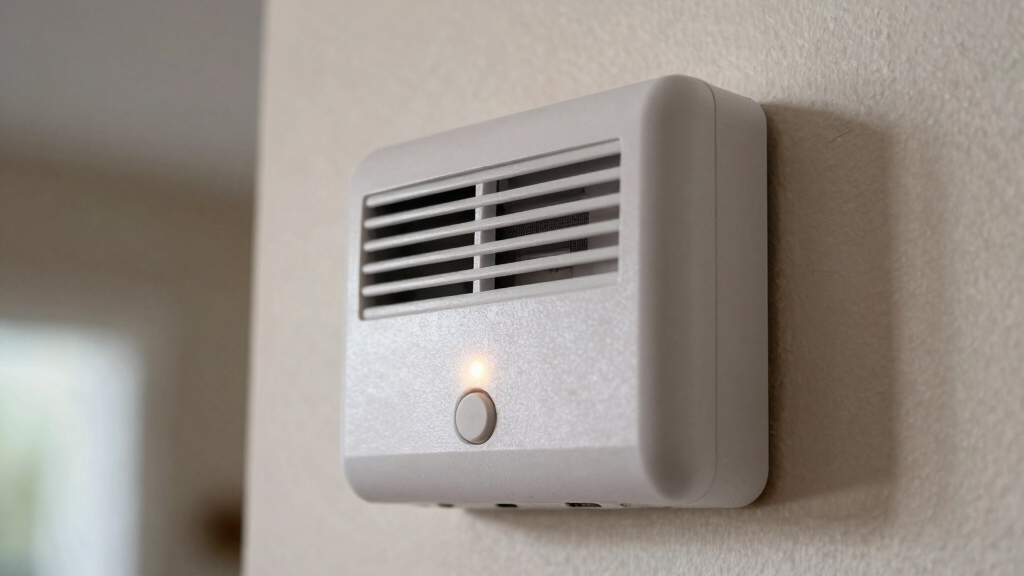

You can tell if your smoke detector also senses carbon monoxide by checking its label and raised lettering for terms like “CO,” “carbon monoxide,” or “combination.”
Look for dual sensor ports or an electrochemical sensor inside if you open it. Test the unit’s button for distinct CO alert sounds or voice warnings. Also, verify model numbers online or in the manual.
Keeping your detector’s age in mind guarantees reliable CO protection. More details can help you confidently identify these features.
Key Takeaways
- Check the label for “carbon monoxide,” “CO,” or “combination” wording, often in raised or embossed text for authenticity.
- Look for two distinct sensor ports or design features indicating separate smoke and CO sensors inside the unit.
- Test the detector’s alarm patterns; CO alerts usually emit four beeps followed by silence, while smoke alarms beep three times.
- Inspect manufacturer details, model numbers, or battery compartments for mentions of CO detection capabilities.
- When unclear, disassemble the unit to identify an electrochemical CO sensor alongside ionization or photoelectric smoke sensors.
Identifying Carbon Monoxide Features on Smoke Detector Labels
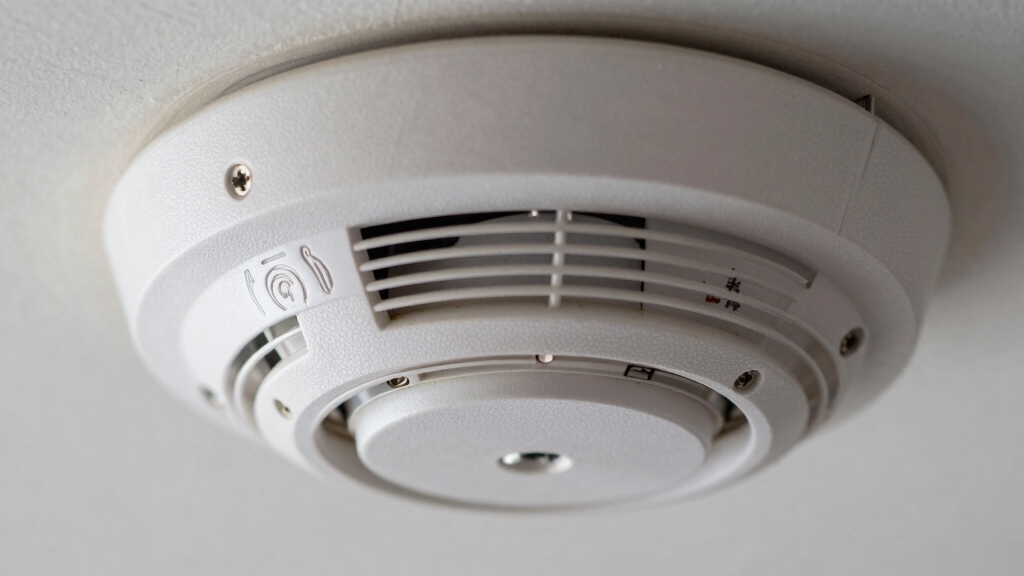
When checking your smoke detector for carbon monoxide detection, start by examining the label closely.
Look specifically for any mention of carbon monoxide or “CO” on the label.
Check the label carefully for any mention of carbon monoxide or “CO” detection.
Smoke-only detectors won’t mention CO at all, while combination units clearly list both smoke and carbon monoxide detection capabilities.
Pay attention to the lettering color and style; for example, some First Alert/BRK combination models use black lettering to indicate CO detection, unlike their smoke-only counterparts.
If you don’t see any indication of carbon monoxide on the label, the detector likely doesn’t have that feature.
This initial label check gives you a reliable, straightforward way to identify whether your smoke detector includes carbon monoxide monitoring without needing to inspect internal parts.
Keep in mind that carbon monoxide sensors have a typical lifespan of 5 to 7 years before needing replacement to ensure continued accuracy.
Reading Raised Lettering and Manufacturer Text for CO Info
Although labels provide initial clues, reading the raised lettering and manufacturer text on your smoke detector offers another reliable method to identify carbon monoxide capabilities. Shine a flashlight at an angle to reveal raised or embossed lettering, which often indicates important features.
For example, First Alert and BRK combination units use black raised text to signal CO detection, while smoke-only models lack this marking. Look closely for words like “Carbon Monoxide,” “CO,” or “Combination” embossed on the detector’s casing.
Additionally, manufacturer details inside or on the back frequently specify CO functions. This tactile text is harder to alter or wear off than printed labels, making it a trustworthy source. By carefully examining these subtle markings, you can confidently determine if your smoke detector also protects against carbon monoxide.
For comprehensive safety, remember that many hardwired combination detectors also include battery backup systems to ensure continuous protection during power outages.
Identifying Combination Units by Ports and Design
You can spot combination smoke and carbon monoxide detectors pretty easily. Just look for two distinct ports—one for smoke sensing and the other for CO detection. It’s a smart move to pay close attention to the labeling and any raised lettering. They usually spell out both functions clearly, making it easier for you to know what you’re dealing with.
Now, let’s talk about the sensor types. There are two main types for smoke detection: ionization and photoelectric. For carbon monoxide, it’s typically an electrochemical sensor. Being aware of these different sensor types can really help you confirm whether the unit you’re looking at covers both hazards.
So, keep that in mind when you’re making your choice! Combination units integrate both features, often ceiling-mounted, labeled accordingly, and may use different patterns or voice alerts to specify the hazard, ensuring comprehensive hazard detection.
Dual Port Features
By examining the ports and design of your alarm, you can quickly identify whether it’s a combination smoke and carbon monoxide detector.
Combination units typically feature two distinct ports: one dedicated to smoke detection and another for carbon monoxide sensing.
These ports accommodate different sensor types—ionization or photoelectric for smoke and electrochemical for CO.
Some ceiling-mounted detectors have visible labeling near the ports, while others require you to look closely or even disassemble the unit to confirm.
Plug-in CO detectors connect via a standard wall receptacle, distinguishing them from smoke-only models.
The dual-port design guarantees each hazard is accurately detected and alerts you accordingly.
This makes it a reliable way to verify if your alarm covers both smoke and carbon monoxide threats.
Many combination detectors include backup battery features to ensure continuous operation during power outages.
Labeling And Lettering
Understanding the design and port configuration helps, but the quickest way to identify a combination smoke and carbon monoxide detector lies in its labeling.
You’ll find clear wording indicating “carbon monoxide” or “CO” on combo units, while smoke-only detectors omit this. Look closely for raised lettering, which becomes visible when you shine a flashlight at an angle.
For example, First Alert and BRK combination alarms use black lettering to distinguish themselves from smoke-only models. Ports also reveal clues: combo detectors have two distinct openings, one for smoke sensors and another for CO sensors.
If the labeling isn’t obvious, check for this dual-port design. Remember, a well-marked label is your most reliable, immediate indicator that the device protects against both smoke and carbon monoxide hazards.
For safety, it is important to install these detectors at least 10 feet away from sources of interference to ensure accurate detection and avoid false alarms related to sensor placement guidelines.
Sensor Types Explained
Although labeling provides quick identification, the sensor types and port designs offer definitive clues about a detector’s functions.
Combination units feature two distinct ports: one housing a smoke sensor (ionization or photoelectric) and the other an electrochemical CO sensor.
You’ll notice ceiling-mounted CO detectors often clearly marked, while plug-in CO units connect directly to wall outlets.
If the detector lacks clear labeling, you may need to disassemble it to confirm its sensors.
Smoke-only detectors have a single sensor and port.
Understanding these design elements helps you differentiate between standalone and combination alarms without guesswork.
Advanced smart alarms can also send phone notifications to identify the specific unit sounding the alert.
How Smoke and Carbon Monoxide Sensors Differ?
Sure! Here’s a more conversational version of your text:
You know, smoke and carbon monoxide sensors actually work in pretty different ways. Smoke detectors typically use either ionization or photoelectric methods. They’re designed to sense smoke particles or changes in light caused by smoke. On the other hand, carbon monoxide sensors rely on electrochemical cells to detect that sneaky, invisible gas.
It’s interesting to think about how these different technologies come together, especially in combination units. These devices have distinct sensor types all packed into one. Understanding how each one works really helps you appreciate their roles in keeping you safe!
Photoelectric smoke detectors, for example, use light scattering within an optical chamber to detect smoke particles early, especially from smoldering fires.
Sensor Technology Differences
Since smoke and carbon monoxide are fundamentally different hazards, their detectors use distinct sensor technologies tailored to each threat.
Smoke detectors primarily rely on ionization or photoelectric sensors. Ionization sensors detect small smoke particles from flaming fires, while photoelectric sensors respond to larger particles from smoldering fires.
Carbon monoxide detectors use electrochemical sensors, which measure CO gas concentration through chemical reactions. This fundamental difference means smoke sensors focus on particulate detection, while CO sensors respond to invisible, odorless gas levels.
Combination units integrate both technologies, featuring separate sensor ports to accurately detect each hazard. Understanding these sensor distinctions helps you identify whether your alarm can detect carbon monoxide in addition to smoke, ensuring all-encompassing home safety.
For optimal protection, it is important to install CO detectors near bedroom doors to ensure early detection and effective warnings.
Detection Mechanism Comparison
When you examine how smoke and carbon monoxide sensors operate, you’ll find they use fundamentally different detection mechanisms tailored to their specific hazards.
Smoke detectors typically use ionization or photoelectric sensors. Ionization sensors detect tiny smoke particles by disrupting an electrical current, while photoelectric sensors sense smoke through light scattering.
In contrast, carbon monoxide detectors rely on electrochemical sensors that react chemically with CO gas, producing an electrical signal proportional to the gas concentration.
This distinction is vital because smoke sensors respond quickly to visible or ionized particles, while CO sensors detect an invisible, odorless gas.
Combination units house both sensor types in separate compartments, ensuring accurate detection of each threat.
Understanding these mechanisms helps you identify and verify whether your device covers both smoke and carbon monoxide hazards effectively.
For optimal safety, proper placement of these detectors is essential to maximize early warnings and ensure reliable protection.
Recognizing Voice Alerts That Indicate Carbon Monoxide Detection
Modern combination alarms use clear voice alerts that specify the hazard. When detecting carbon monoxide, the device announces “warning carbon monoxide” or similar phrases, distinguishing it from a fire alert.
Smoke alarms typically emit three beeps, while CO alarms produce a distinct pattern of four quick beeps followed by five seconds of silence.
This audio difference helps you immediately recognize the type of threat. If your alarm uses voice alerts, listen carefully for these specific announcements during an alarm.
This feature provides definitive identification, eliminating confusion between smoke and carbon monoxide alerts, ensuring you take the correct action promptly.
In case of a carbon monoxide alarm, it is crucial to evacuate immediately and call emergency responders to ensure your safety.
Testing Detectors to Confirm CO and Smoke Functions
Press the test button on your detector to quickly verify its smoke and carbon monoxide functions. This test activates the alarm’s sensors and voice alerts, guaranteeing both hazards are monitored.
Press the test button to ensure your detector’s smoke and carbon monoxide sensors and alerts are working properly.
Listen carefully for distinct patterns or voice announcements specifying smoke or carbon monoxide. To confirm your detector’s full capabilities:
Expect a series of three beeps for smoke detection. Listen for a lower-pitched beep or “warning carbon monoxide” announcement.
Note if the alarm alternates between smoke and CO signals. Observe if the test button triggers both electrochemical and ionization/photoelectric sensors.
Check for clear voice alerts or distinct beep patterns indicating combination functionality. Regular testing guarantees your alarm reliably protects against both smoke and carbon monoxide threats.
Where to Place Carbon Monoxide Detectors in Your Home?
To make certain your home stays safe from carbon monoxide, place detectors strategically on every level, especially near sleeping areas where you spend the most vulnerable time.
Install CO detectors about 5 feet above the floor since carbon monoxide mixes with air and tends to remain at breathing height.
Position them close to fuel-burning appliances like furnaces, water heaters, or fireplaces but not directly above or beside them to avoid false alarms.
Avoid placing CO detectors in kitchens or bathrooms where humidity or fumes could interfere.
If you use combination smoke and CO units, install them on the ceiling or high on walls following manufacturer guidelines.
Regularly check and replace detectors every 10 years to guarantee peak performance and continuous protection against this invisible, deadly gas.
Understanding Alarm Sound Patterns for Smoke vs. CO
Although both smoke and carbon monoxide detectors alert you to danger, their alarm sound patterns differ distinctly to prevent confusion. Recognizing these patterns helps you respond appropriately and quickly.
Here’s what you need to know:
Smoke alarms typically emit three rapid beeps followed by a pause.
Carbon monoxide alarms sound four quick beeps, then five seconds of silence before repeating.
Combination detectors differentiate alerts with distinct beep sequences for smoke and CO.
Some units use voice alerts, announcing “fire” or “warning carbon monoxide” for clarity.
Test buttons reveal the type of alarm by sounding specific patterns or voice messages.
Why Detector Age Matters for Carbon Monoxide Safety?
Since carbon monoxide detectors rely on sensitive sensors to detect this odorless gas, their effectiveness diminishes as they age. Over time, the electrochemical sensor inside the detector gradually degrades, reducing its ability to accurately sense dangerous CO levels.
Carbon monoxide detectors lose sensitivity over time as their electrochemical sensors degrade.
You should check the manufacture date on your alarm and replace any unit older than 10 years to guarantee reliable protection. Using an outdated detector puts you at risk because it might fail to alert you during a carbon monoxide leak.
Even if your detector looks fine, aging components can cause false readings or missed alerts. Regular replacement guarantees your safety by maintaining peak sensor performance and compliance with safety standards.
Don’t wait for warning signs. Replace old detectors proactively to keep your home and family safe.
When to Disassemble Alarms to Verify CO Detection Capability?
When you encounter a smoke detector without clear labeling or voice alerts indicating carbon monoxide detection, disassembling the unit may be necessary to confirm its capabilities.
Carefully remove the detector from its mounting base and inspect the internal components. Look specifically for:
- Two distinct sensor ports: one for smoke, one for CO.
- An electrochemical sensor, which indicates CO detection.
- Manufacturer markings or part numbers that specify combination alarms.
- Raised lettering visible under flashlight shadow naming CO detection.
- Wiring or battery compartments designed for dual-sensor units.
Disassembly is your last resort after checking labels, voice alerts, and test button signals. Always follow safety precautions when handling electrical devices.
Consult the user manual or manufacturer support if uncertain. This assures you accurately identify if your alarm protects against carbon monoxide.
Frequently Asked Questions
Can Carbon Monoxide Detectors Also Detect Natural Gas Leaks?
No, carbon monoxide detectors don’t detect natural gas leaks. They’re designed specifically to sense carbon monoxide, an odorless, colorless gas.
Natural gas detectors are separate devices that identify methane or propane leaks by sensing their unique chemical signatures.
If you want protection against both hazards, you need dedicated natural gas detectors alongside your CO alarms.
Relying on a CO detector alone won’t alert you to natural gas leaks.
How Often Should Carbon Monoxide Detector Batteries Be Replaced?
You should replace your carbon monoxide detector batteries at least once a year to ensure dependable operation.
Some models have low-battery alerts, but don’t rely solely on those. If your alarm starts chirping or beeping intermittently, replace the batteries immediately.
For combo smoke and CO detectors, follow the manufacturer’s instructions. Some have sealed long-life batteries needing replacement every 7-10 years instead of regular battery swaps.
Are There Smart Smoke and CO Detectors With Mobile Alerts?
Yes, smart smoke and CO detectors with mobile alerts are a game-changer for home safety. You can receive instant notifications on your phone if smoke or carbon monoxide is detected, even when you’re miles away.
These devices often combine both sensors, offer voice alerts, and integrate with smart home systems. They keep you connected and informed, giving you peace of mind no matter where you are.
Can Pets Trigger Smoke or Carbon Monoxide Alarms?
Yes, pets can trigger smoke alarms, especially if they’re dusty or have hair near the sensor. If the detector uses photoelectric sensing, pets can cause small particles or movement that trigger it.
Carbon monoxide alarms are less likely to be triggered by pets, as they detect gas, not particles or motion.
Still, keep detectors clean and in proper locations to avoid false alarms caused by your furry friends.
What Maintenance Is Required to Keep CO Detectors Accurate?
Keeping CO detectors accurate is like tuning a musical instrument. Regular care guarantees perfect performance.
You should test your detector monthly using the test button to verify sound and voice alerts.
Replace batteries annually or when low battery signals sound.
Clean the unit gently with a soft brush to remove dust.
Replace the entire detector every 7-10 years, as sensor sensitivity declines over time. This ensures reliable carbon monoxide detection.
Know Your Detectors, Safeguard Your Family
Remember, “an ounce of prevention is worth a pound of cure.” By knowing how to identify if your smoke detector also senses carbon monoxide, you protect your home and loved ones from unseen dangers.
Always check labels, listen for voice alerts, and understand alarm patterns. Don’t wait; ensure your detectors are up-to-date and placed correctly. Taking these steps now gives you peace of mind and safety tomorrow.
Stay vigilant and proactive.