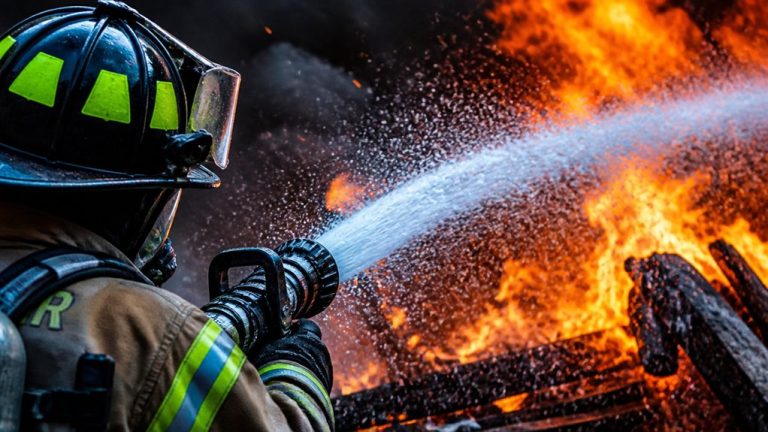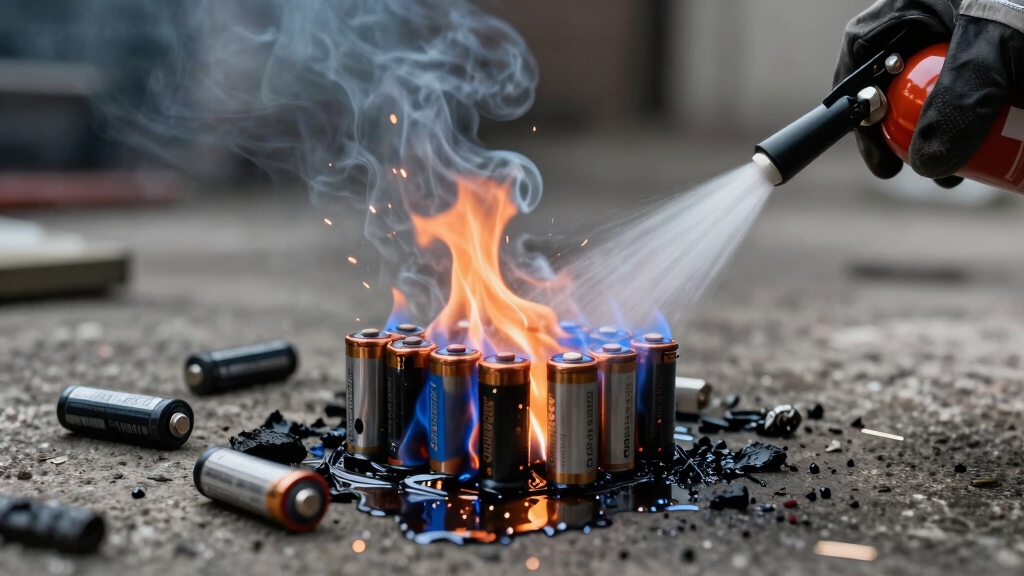

When a lithium battery fire starts, act swiftly to suppress flames using a suitable fire extinguisher like dry chemical, CO2, or water foam. Aim at the flame base with short bursts.
Immediately cool cells by pouring water into device openings or submerging the battery while wearing heat-resistant gloves. Keep a safe distance.
Monitor closely for reignition and toxic gases, as thermal runaway can cause flare-ups even after flames subside. Understanding these critical steps guarantees safer and more effective fire control.
Key Takeaways
- Act quickly with a fire extinguisher, aiming at the base of flames and device openings to cool internal cells and prevent spread.
- Use water to pour into device openings or submerge the battery for rapid cooling, while monitoring for flare-ups and reignition.
- Specialized agents like F-500 or Lith-Ex effectively cool and interrupt thermal runaway by penetrating internal battery components.
- Wear full PPE with respiratory protection to avoid burns, inhalation of toxic fumes, and chemical exposure during firefighting and cleanup.
- Evacuate if fire grows beyond control, as lithium battery fires can reignite repeatedly despite aggressive cooling and suppression efforts.
What To Do Immediately When a Lithium Battery Catches Fire?
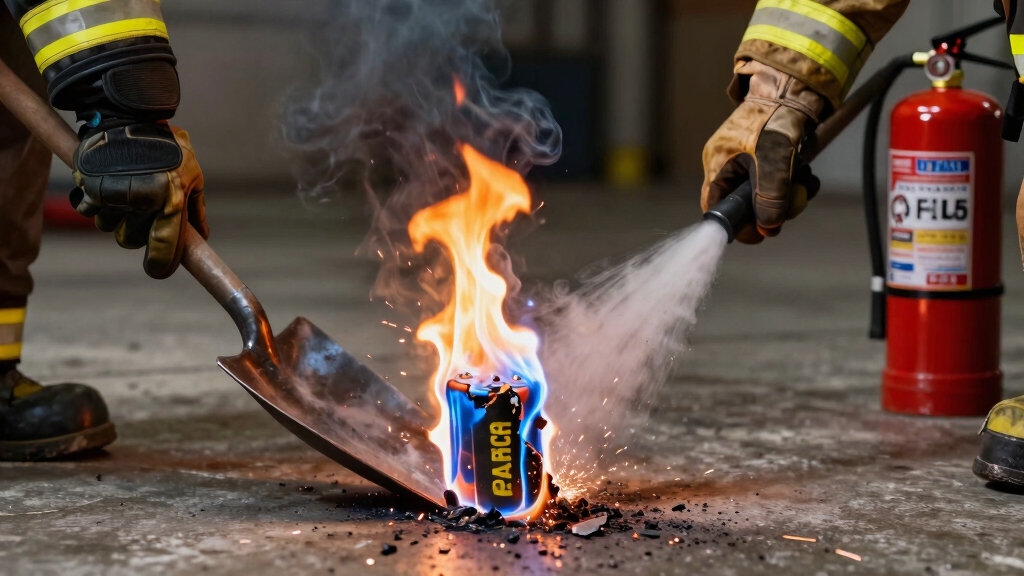
When a lithium battery catches fire, act quickly and aggressively to prevent the blaze from spreading to adjacent cells.
Use a fire extinguisher immediately to remove visible flames, focusing on direct application into device openings to cool internal cells faster.
Applying water directly onto cells helps dissipate heat and halt thermal runaway; pour water into ports or submerge the battery if possible.
Be prepared for multiple flare-ups as cells release combustible gases intermittently.
Remember, rapid cooling to room temperature is essential to stop propagation.
Avoid delay; thermal runaway can escalate swiftly, threatening surrounding materials.
Monitor the fire closely, ensuring you maintain a constant water supply and remain vigilant for signs of reignition.
Taking these steps immediately improves your chances of containing the incident effectively.
Additionally, avoid using substances like flour, sugar, or baking powder, as they can worsen the fire by adding combustible material.
First Responder Safety Gear for Lithium Battery Fires
A full set of personal protective equipment (PPE) and self-contained breathing apparatus (SCBA) is essential for first responders tackling lithium battery fires. These incidents expose you to toxic gases, intense heat, and chemical hazards.
You must wear flame-resistant turnout gear, gloves, and boots designed to resist chemical penetration and thermal exposure. The SCBA protects you from inhaling harmful vapors released during thermal runaway.
Eye protection and helmets are equally critical to guard against splashes and debris. Always make certain your PPE is properly fitted and maintained before entering the hazard zone. Proper maintenance and cleanup of chemical residues after extinguishing is vital to ensure responder safety and prevent corrosion or irritation.
How to Identify a Lithium Battery Fire Quickly?
To quickly identify a lithium battery fire, keep an eye out for some key visual signs. Things like bulging, smoke, or even flames are big red flags. And don’t forget about your sense of smell! If you catch a whiff of burning plastic or a chemical odor from the electrolyte, that’s a crucial warning signal.
Another handy tip? Consider using thermal imaging. This can help you spot hotspots before flames actually break out, giving you a chance to intervene faster. It’s all about being proactive and staying alert!
If you are exposed to extinguisher powder during firefighting, be aware that inhalation can cause respiratory irritation and you should move to fresh air immediately.
Recognize Visual Indicators
Although lithium battery fires can escalate rapidly, you can quickly identify them by recognizing key visual indicators. Early detection is vital to contain the fire and prevent thermal runaway from spreading.
Look for these signs:
1. Bulging or swollen battery casing
This indicates internal pressure buildup from overheating or gas formation.
2. Visible smoke or vapor emission
White or gray smoke often signals electrolyte leakage and chemical reactions inside the cell.
3. Intermittent flames or sparks
Fire may flare unpredictably as gas is released and ignited during cell discharge.
Spotting these visual cues allows you to act decisively and apply appropriate extinguishing methods before the situation worsens. Always prioritize safety and evacuate if the fire grows beyond immediate control. For effective fire suppression, use a Class K fire extinguisher when dealing with lithium battery fires to help limit damage and protect safety.
Detect Chemical Odors
Frequently, detecting chemical odors provides an early warning of a lithium battery fire before flames or smoke become visible.
You’ll notice a sharp, acrid smell resembling burning plastic, ammonia, or rotten eggs, indicating electrolyte leakage or thermal decomposition.
These chemical odors result from volatile gases released during thermal runaway and signify imminent fire hazards.
Don’t ignore faint but persistent chemical smells near battery devices.
If you detect these odors, act immediately by evacuating the area and alerting emergency responders.
Relying solely on visual cues delays response time and increases risk.
Your ability to identify these distinct chemical odors quickly is critical to preventing fire escalation, protecting property, and ensuring personal safety.
Always maintain vigilance for unusual smells around lithium batteries to catch fires in their earliest stage.
For enhanced safety, consider installing gas leak detectors to provide continuous monitoring and early alerts.
Use Thermal Imaging
Employing thermal imaging allows you to quickly detect abnormal heat patterns that indicate a lithium battery fire before flames or smoke appear. This early identification is vital to prevent thermal runaway from spreading to adjacent cells.
When using thermal imaging, focus on these key actions:
- Scan the battery surface and device openings for hotspots that exceed normal operating temperatures.
- Monitor temperature changes over time to spot rapidly increasing heat, signaling imminent fire risk.
- Use thermal data to guide targeted cooling efforts, such as directing water into specific openings for faster suppression.
Thermal imaging enhances situational awareness, enabling you to act swiftly and decisively to contain lithium battery fires before they escalate. However, it is important to note that thermal imaging cannot see through glass, so positioning cameras outside glass barriers is essential for optimal detection.
How to Cool Lithium-Ion Battery Fires Safely With Water?
When tackling lithium-ion battery fires, applying water directly to the cells plays a critical role in quickly removing heat and halting thermal runaway.
You should pour water into device openings or submerge the battery entirely to maximize cooling efficiency. This rapid heat removal prevents fire propagation and reduces flare-ups as cells release gases.
Always guarantee a continuous water supply and approach with full PPE.
Be sure to keep a safe distance and use heat-resistant gloves when handling the battery to protect yourself from burns and smoke.
| Action | Purpose |
|---|---|
| Direct water on cells | Rapid heat dissipation |
| Pour into ports/jacks | Faster internal cooling |
| Submerge battery | Complete fire suppression |
When and How to Use Fire Extinguishers on Lithium Battery Fires?
After cooling lithium-ion battery fires with water, you may need to use fire extinguishers to control flames and prevent further ignition.
Fire extinguishers help remove initial flames and reduce the risk of thermal runaway spreading to adjacent cells.
Use them cautiously and effectively by following these steps:
1. Choose the right extinguisher: Use dry chemical, CO2, or water foam extinguishers per ERG Guide 147 recommendations for small lithium-ion fires.
Avoid water on lithium-metal batteries due to reactivity.
2. Aim at the base of flames: Direct the agent precisely at burning areas to suppress fire quickly.
3. Apply in short bursts: This prevents reignition and allows you to monitor flare-ups closely.
Be aware that the typical spray duration of most extinguishers ranges from 8 to 30 seconds, so use controlled bursts to maximize effectiveness.
How Specialized Agents Like F-500 and Lith-Ex Extinguish Lithium Battery Fires?
Although traditional extinguishing agents can control lithium battery fires to some extent, specialized agents like F-500 Encapsulator Agent and Lith-M Lith-Ex offer more effective solutions.
They not only suppress flames but also cool and interrupt thermal runaway reactions.
When you apply F-500, it encapsulates burning materials while rapidly cooling cells. This halts heat buildup and gas release.
Similarly, Lith-Ex forms a cooling, runny liquid that penetrates internal battery components. This disrupts the chemical reactions fueling the fire.
Both agents reduce flammability, explosivity, and toxicity risks more efficiently than dry chemicals or foam alone.
By using these agents at recommended concentrations and targeting device openings, you accelerate heat removal and flame suppression. This minimizes fire propagation.
This proactive approach is essential for managing lithium battery fires safely and effectively.
Additionally, the physical cooling via water content in these agents helps reduce the fuel surface temperature, enhancing fire suppression effectiveness.
Handling Electrolyte Spills After Lithium Battery Fires
After a lithium battery fire, it’s super important to contain any electrolyte spills right away. This helps prevent further hazards from developing. You’ll want to use appropriate diking materials, and make sure to follow the safe cleanup procedures that are laid out in the emergency response guidelines.
Always remember to wear full protective equipment during this process. It’s crucial for your safety.
And when it comes to disposal, be sure that qualified personnel are the ones handling it. This really helps minimize exposure risks for everyone involved.
Expired or damaged fire extinguishers should never be used in these situations due to their reduced chemical effectiveness and potential failure during critical moments.
Electrolyte Spill Containment
When handling electrolyte spills from lithium battery fires, act swiftly to contain and isolate the hazardous material.
Electrolyte fluids are corrosive and toxic, posing risks to health and the environment. Follow these essential steps:
- Dike the Spill: Use absorbent barriers or sand to prevent electrolyte from spreading beyond the immediate area.
- Isolate the Zone: Establish a perimeter to restrict access, minimizing exposure to personnel and preventing contamination of water or drains.
- Ventilate the Area: Ensure proper ventilation to dissipate harmful fumes released by the electrolyte, reducing inhalation risks.
Safe Cleanup Procedures
Handling electrolyte spills safely requires prompt, methodical action to minimize health risks and environmental impact.
First, isolate the spill by diking it with absorbent materials or barriers to prevent spread.
Always wear full PPE, including gloves and respiratory protection, since electrolyte fluids contain toxic and corrosive compounds.
Avoid direct skin contact and inhalation of fumes.
Use neutralizing agents recommended for lithium battery electrolytes to stabilize the spill.
Collect contaminated materials carefully and place them in sealed, labeled containers for hazardous waste disposal.
Thoroughly ventilate the area to dissipate residual gases.
Never attempt cleanup without proper training or equipment.
If the spill is extensive, call qualified hazmat professionals.
Continuous monitoring post-cleanup guarantees no residual hazards remain, protecting both personnel and the environment.
Monitoring for Reignition and Toxic Gases After a Lithium Battery Fire
Keep a close watch on the site following a lithium battery fire, as reignition remains a significant threat even after flames die down.
You must continuously monitor temperatures and look for signs like bulging, popping, or venting cells. Toxic gases can linger for hours or days, posing serious health risks.
Focus on these critical steps:
- Use thermal imaging to track hot spots and detect any temperature spikes indicating potential reignition.
- Employ gas detectors to identify flammable or toxic emissions, ensuring safe air quality before re-entry.
- Maintain perimeter control and avoid disturbing the battery until professionals confirm it’s fully stable.
Always prioritize safety, as lithium battery fires can reignite and release hazardous gases long after initial extinguishment.
Key Differences Between Lithium Battery Fires and Other Fires?
You’ll notice lithium battery fires behave differently, and that’s primarily because of something called thermal runaway. This is where heat spreads rapidly between the cells, making the fire much harder to control.
Now, when it comes to extinguishing these fires, you can’t just use any common fire-fighting agents. Many of them simply won’t do the trick or can’t stop the fire from reigniting.
Unique Thermal Runaway Behavior
Although lithium battery fires share some characteristics with conventional fires, their thermal runaway behavior sets them apart in critical ways you must understand.
Unlike typical fires, lithium battery fires can rapidly escalate due to internal chemical reactions, making them unpredictable and persistent.
Here are three unique aspects to note:
- Self-Sustaining Reaction: Once initiated, thermal runaway creates a chain reaction, causing adjacent cells to ignite without external heat.
- Multiple Flaring: Cells discharge flammable gases, leading to intermittent flare-ups even after initial flames subside.
- Oxygen Generation: Lithium batteries produce their own oxygen during combustion, enabling the fire to burn intensely, even underwater.
Recognizing this distinct behavior helps you appreciate the urgency and complexity involved in managing lithium battery fires safely and effectively.
Specialized Extinguishing Requirements
Because lithium battery fires behave fundamentally differently from conventional fires, they demand specialized extinguishing methods tailored to their unique hazards.
You must act quickly and aggressively to stop thermal runaway before it spreads to adjacent cells.
Unlike typical fires, lithium batteries generate their own oxygen, so simply smothering flames won’t suffice.
Applying water directly to cells cools them rapidly, preventing further reactions, but avoid water on lithium-metal batteries due to dangerous reactivity.
Use specialized agents like F-500 Encapsulator or Lith-Ex extinguishers that cool, interrupt, and encapsulate hazards effectively.
Dry chemical or CO2 extinguishers can be effective for small fires but aren’t suitable for large-scale events.
Always prioritize cooling and interrupting chemical reactions rather than just suppressing flames, since lithium fires can flare repeatedly as gases discharge.
Persistent Reignition Hazards
When dealing with lithium battery fires, you must recognize that extinguishing visible flames doesn’t eliminate all danger. Lithium batteries can reignite due to residual heat and ongoing chemical reactions inside cells.
Unlike typical fires, these batteries generate their own oxygen, fueling combustion even underwater. You should be aware of these key differences:
- Thermal Runaway Persistence: Cells can spontaneously flare multiple times as they discharge gases.
- Hidden Heat Sources: Internal temperatures remain high long after flames subside, requiring continuous cooling.
- Reignition Risk: Batteries may vent toxic, flammable gases hours or days post-fire, demanding ongoing monitoring.
To effectively manage these hazards, maintain vigilant temperature checks. Avoid premature overhaul or transport until the risk has passed.
Limitations and Risks When Fighting Large Lithium Battery Fires
You’ll face significant challenges fighting large lithium battery fires because these fires generate their own oxygen, allowing them to burn even underwater. This makes fully extinguishing batteries larger than handheld size nearly impossible.
Large lithium battery fires self-sustain with oxygen, making them nearly impossible to fully extinguish, even underwater.
Thermal runaway can persist, causing repeated flares and reignition despite aggressive cooling and suppression efforts. Water can cool cells but won’t stop internal oxygen-driven combustion. Some lithium-metal batteries react dangerously with water.
You must prioritize evacuation and alert professionals equipped with specialized agents and protective gear. Remember, these fires carry explosion and toxic gas risks long after visible flames vanish.
Continuous temperature monitoring and securing the area are critical. Your best approach is containment and cooling to prevent spread, not complete extinguishment, recognizing the inherent limitations and hazards in managing large lithium battery fires.
Frequently Asked Questions
How Should Lithium Battery Fires Be Prevented During Transportation?
To prevent lithium battery fires during transportation, you should make certain batteries are properly packaged to avoid short circuits and physical damage.
Use approved containers with insulation and cushioning. Keep batteries at room temperature, avoiding extreme heat.
Label shipments clearly, follow regulatory guidelines, and avoid mixing damaged or recalled batteries.
Regularly inspect and monitor for swelling or leaks. Train handlers on safe procedures to minimize risks during transit.
What Are the Environmental Impacts of Extinguishing Lithium Battery Fires?
You might think extinguishing lithium battery fires is straightforward, but it has significant environmental impacts.
When you douse these fires, toxic gases and electrolyte spills can contaminate air, soil, and water.
Using water or chemical agents risks spreading hazardous materials, requiring careful containment.
You must monitor for reignition and toxic emissions, as these fires release persistent pollutants.
Can Lithium Battery Fires Cause Long-Term Structural Damage to Buildings?
Yes, lithium battery fires can cause long-term structural damage to buildings. The intense heat from thermal runaway can weaken steel, concrete, and other materials, compromising structural integrity.
Additionally, the toxic gases and corrosive electrolyte spills can deteriorate surfaces and finishes. If you encounter such a fire, act quickly to control it and have professionals conduct thorough inspections afterward.
This ensures that any hidden damage is assessed and repaired to keep the building safe.
Are There Specific Training Programs for Handling Lithium Battery Fires?
Yes, you can find specialized training programs for handling lithium battery fires. These courses teach you to identify battery chemistries and use appropriate extinguishing agents.
They also cover safety protocols like full PPE and SCBA. The emphasis is on quick, aggressive action, cooling techniques, and post-fire monitoring to prevent reignition.
You’ll learn evacuation procedures and containment measures. Such training is vital because lithium battery fires behave uniquely and pose distinct risks compared to conventional fires.
How Do Battery Manufacturers Design Cells to Minimize Fire Risks?
Battery manufacturers design cells with safety features like separators that prevent short circuits and thermal runaway.
They use stable electrolyte formulations and integrate protective circuitry to monitor temperature and voltage.
You’ll find pressure relief vents to release gases safely and robust casings to contain internal failures.
These designs minimize fire risks by controlling heat, preventing propagation, and managing gas buildup.
This helps you avoid dangerous chain reactions during abnormal conditions.
Fighting Fire with Knowledge: Handling Lithium Battery Hazards
When a lithium battery fire sparks, you’re facing a challenge that demands respect and caution. With the right protective gear and quick, informed actions, you can keep the flames from spreading their mischief.
Remember, cooling with water and using appropriate extinguishers can tame these stubborn fires. Stay vigilant afterward, watching for any sneaky reignition or toxic whispers.
Handling these fires isn’t just about putting out flames; it’s about mastering a delicate dance with danger itself.