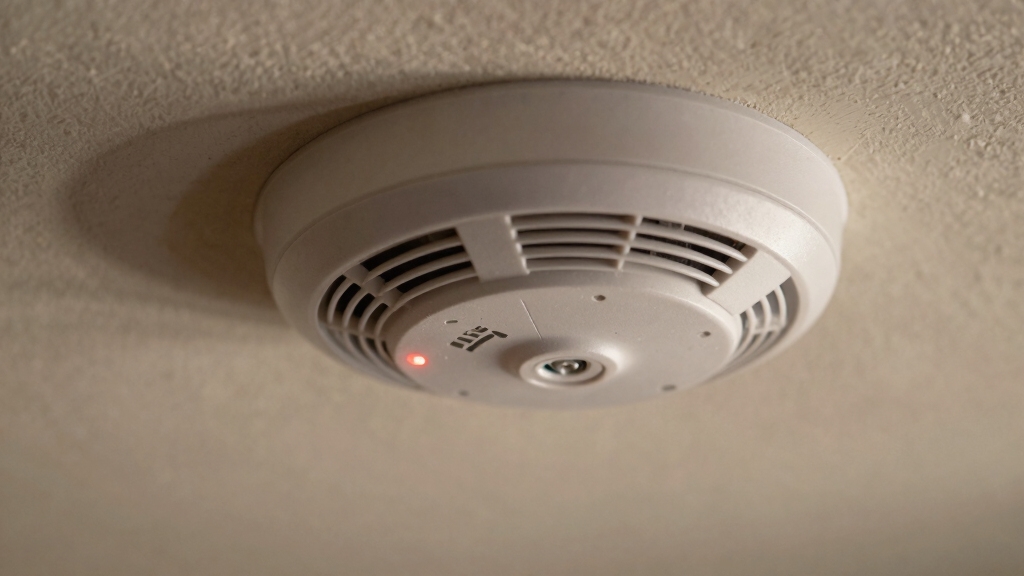

Your First Alert smoke alarm beeps to warn you of smoke, carbon monoxide, low battery, malfunction, or end-of-life status.
Three loud beeps signal smoke detection, demanding immediate evacuation. Intermittent chirps typically mean low battery; replace batteries promptly.
Three chirps per minute indicate device malfunction, often caused by dust or wiring issues. Five chirps per minute warn the unit is at the end of its lifespan and needs replacement.
Understanding these patterns helps guarantee your safety and unit reliability.
Key Takeaways
- Intermittent chirps usually indicate low battery; replace the battery promptly to stop the beeping.
- Three chirps per minute often signal a malfunction, possibly from dust or wiring issues, needing cleaning or inspection.
- Five chirps per minute mean the unit has reached end-of-life (~10 years) and must be replaced immediately.
- Three loud beeps repeated continuously indicate smoke detection, requiring immediate evacuation and safety checks.
- Regular cleaning and pressing the test/reset button weekly help prevent false alarms and maintain proper function.
Understanding First Alert Smoke Alarm Beeps
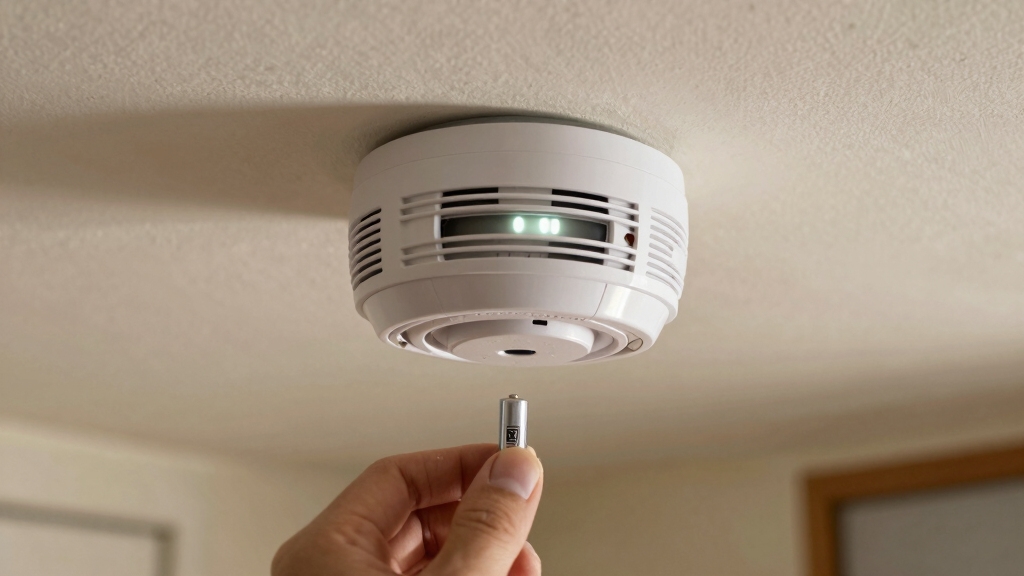
Although hearing your First Alert smoke alarm beep can be alarming, understanding the distinct beep patterns helps you quickly identify the issue.
Hearing your smoke alarm beep can be alarming, but recognizing beep patterns helps identify issues quickly.
A series of three loud beeps followed by a pause signals smoke detection, demanding immediate evacuation and emergency response.
A single chirp every 30 to 60 seconds typically indicates a low battery, requiring prompt replacement to maintain functionality.
Five chirps each minute denote the alarm’s end-of-life, signaling that the unit has reached its 10-year lifespan and must be replaced.
Three chirps every minute suggest a device malfunction, often caused by dust buildup or wiring issues, necessitating cleaning or replacement.
Regular testing and maintenance guarantee reliable performance, following National Fire Protection Association guidelines for ideal placement and function throughout your home.
If you need to reset a smoke alarm, remember that the reset must be done physically at each unit and cannot be performed through an app.
Identifying Emergency Smoke Alarm Beeps
When your First Alert smoke alarm beeps three times loudly and then pauses, it’s a serious signal: you need to evacuate immediately.
Don’t hesitate—leave your home right away!
Once you’re outside, meet up at your designated spot and call 911 from a safe location.
It’s really important to understand these beep patterns.
Knowing what they mean can help keep you and your loved ones safe.
And once the threat has passed, make sure you know how to reset the alarm.
It’s all about being prepared!
If the alarm continues to beep with no smoke or fire present, it may indicate a low battery or end-of-life status requiring prompt attention.
Smoke Alarm Beep Patterns
Recognize the distinct beep patterns of your First Alert smoke alarm to respond appropriately to emergencies. Each pattern signals a specific issue, from life-threatening smoke detection to maintenance needs. Understanding these guarantees timely and correct action.
| Beep Pattern | Meaning | Action Needed |
|---|---|---|
| 3 loud beeps + pause | Smoke detected | Evacuate immediately, call 911 |
| Single chirp every 30-60s | Low battery | Replace battery promptly |
| 5 chirps every minute | End-of-life warning | Replace entire unit |
Learn these signals to maintain safety and keep your alarm functioning at its best. Regular testing and prompt battery changes prevent false alerts and guarantee readiness for emergencies. For persistent chirping, follow the post-reset maintenance steps to ensure your alarm is fully functional.
Emergency Evacuation Signals
Understanding the specific beep patterns of your First Alert smoke alarm prepares you to respond swiftly during emergencies. When you hear three loud beeps followed by a pause, that signals smoke detection requiring immediate evacuation.
You must exit your home without delay and call 911 once safely gathered at your designated meeting spot. This beep pattern repeats continuously until the smoke clears or the alarm is silenced by emergency responders.
Recognizing this pattern lets you avoid confusion with low battery or malfunction signals, which have different chirp sequences. Make certain your alarms are installed per NFPA guidelines on every level, inside bedrooms, and outside sleeping areas to maximize safety.
Regular testing confirms your alarm’s readiness to alert you effectively during critical smoke events. For optimal protection, ensure detectors are interconnected so all alarms sound simultaneously when smoke is detected.
Alarm Reset Procedures
Although hearing your First Alert smoke alarm’s three-beep emergency signal demands immediate action, knowing how to reset the alarm afterward guarantees your system returns to full functionality without delay.
First, confirm the environment is safe and smoke has cleared completely. Silence the alarm by pressing the test/reset button firmly. This interrupts the signal and resets the internal circuitry.
If the alarm doesn’t reset, remove the battery or disconnect power, wait 15 seconds, then reinstall. For hardwired models, turn off the circuit breaker before resetting.
After resetting, test the alarm using the test button to confirm full operation. Regular resets after emergency alerts maintain reliability and prevent false alarms, assuring your First Alert device functions ideally during future incidents.
To keep your smoke alarm working optimally, regularly clean the alarm to remove dust and debris that can cause false alarms.
Low Battery Chirps: Identification and Action
You’ll know your battery is low when you hear a single chirp every 30 to 60 seconds.
That chirp is a signal that it’s time to replace the battery right away. Make sure to grab a fresh 9-volt or AA battery for the job.
And here’s a handy tip: stick to a replacement schedule every six months to a year.
Keeping up with this maintenance not only prevents those annoying chirps but also ensures your smoke detector is working reliably. It’s a small effort for peace of mind!
Ignoring these chirps risks detector failure and leaves occupants vulnerable during fires, so always address low battery alerts promptly.
Recognizing Low Battery Chirps
Low battery chirps typically occur every 30 to 60 seconds, signaling that your smoke alarm’s power supply is running low and needs immediate attention.
You’ll hear a single, high-pitched beep or chirp repeating consistently at these intervals. It’s vital to recognize this pattern as an urgent indicator rather than a false alarm.
Ignoring low battery signals can compromise your safety by disabling timely smoke detection. Your First Alert smoke alarm relies on a stable power source; any drop triggers this warning.
The chirp’s frequency helps differentiate it from other alerts like smoke detection or device malfunctions. Once you identify this pattern, you should promptly address the power issue to maintain your smoke alarm’s peak functionality and ensure continuous home protection.
Most First Alert models use sealed 10-year lithium batteries that provide maintenance-free, long-lasting power to minimize low battery warnings.
Battery Replacement Guidelines
Many smoke alarms start signaling a low battery with a single chirp every 30 to 60 seconds. When you hear this, replace the battery immediately to maintain proper function.
Follow these steps to guarantee effective battery replacement:
- Identify the battery type, typically a 9-volt or AA, and use a fresh, compatible replacement.
- Open the alarm’s battery compartment, remove the old battery, and insert the new one, ensuring correct polarity.
- Press the test button after replacement to confirm the alarm sounds properly and the chirping stops.
Replace batteries at least every six months or immediately when chirping indicates low power to keep your smoke alarm reliable.
Preventing Future Chirping
Maintaining smoke alarm batteries regularly prevents the annoying chirping signals that indicate low power. You should replace batteries every six to twelve months using fresh 9-volt or AA batteries, depending on your model.
Press the test button weekly to confirm proper function and promptly address any chirps. Clean the unit monthly with compressed air to avoid dust buildup, which can cause false alerts.
If chirping persists after battery replacement and cleaning, verify the alarm’s age. Units over ten years require full replacement.
Make certain proper installation per National Fire Protection Association guidelines by mounting alarms on every level, inside bedrooms, and outside sleeping areas.
Consistent maintenance and timely battery replacement are essential to prevent low battery chirps and maintain reliable smoke detection in your home.
Remember to dispose of old batteries at designated recycling or hazardous waste facilities to ensure safety and environmental responsibility.
End-of-Life Warnings on Your First Alert Alarm
When your First Alert smoke alarm emits five chirps every minute, it signals that the device has reached the end of its 10-year lifespan. You must replace the entire unit promptly to maintain reliable fire detection. Continuing to use an expired alarm compromises your safety.
Follow these steps for proper end-of-life handling:
- Confirm the chirping pattern: five chirps per minute indicates expiration, distinct from low battery signals.
- Replace the whole alarm if it has a sealed battery or persistent chirping after a battery change.
- Install a new unit following manufacturer guidelines to guarantee compliance with safety standards.
Ignoring end-of-life warnings risks loss of fire protection. Regularly monitor your alarm’s chirps and replace units after 10 years to maintain effective emergency detection.
Smoke alarms must be fully operational and compliant with local fire codes to ensure safety and legal adherence during property transactions.
Troubleshooting Common Device Malfunctions
Although First Alert smoke alarms are designed for reliability, device malfunctions can occur and require prompt attention. If your alarm chirps three times every minute, it signals a malfunction. Dust buildup often causes this; vacuum the unit monthly using clean compressed air, avoiding water or solvents.
Persistent chirping after battery replacement indicates a fault; check wiring or consult a professional. Use the test button after cleaning or battery changes to verify function.
| Symptom | Cause | Solution |
|---|---|---|
| 3 chirps/minute | Dust or debris | Vacuum with compressed air |
| Persistent chirping | Faulty wiring or hardware | Inspect wiring, replace device |
| Intermittent chirps | Low battery | Replace battery |
| False alarms | Improper mounting | Reinstall securely |
| No response to tests | Device failure | Replace smoke alarm |
First Alert Carbon Monoxide Alerts vs. Smoke Beeps
How can you quickly distinguish between First Alert carbon monoxide alerts and smoke beeps? Recognizing the difference is critical for your safety. Here’s how to identify each alert pattern:
- Smoke Alarm: Emits three loud beeps followed by a pause. This pattern repeats continuously and signals detected smoke. Immediate evacuation is required.
- Carbon Monoxide Alarm: Produces four quick beeps followed by a pause. This distinct pattern repeats until the CO clears, indicating a dangerous carbon monoxide presence.
- Action Steps: For either alert, evacuate immediately and call 911 once safe. Don’t ignore these signals, as both represent life-threatening hazards.
Understanding these specific beep patterns guarantees you respond appropriately and swiftly to First Alert alarms. This will protect yourself and others from fire or carbon monoxide dangers.
Testing Your First Alert Smoke Alarm
To make certain your First Alert smoke alarm functions correctly, you should test it regularly using the built-in test button. Press and hold this button until the alarm emits a loud series of beeps confirming both smoke detection and carbon monoxide sensors work.
Regularly test your First Alert smoke alarm using the built-in button to ensure both smoke and carbon monoxide sensors work.
Perform this test weekly, especially after installing new batteries, to verify all internal components operate properly. If the alarm fails to sound or emits irregular chirps, immediately inspect batteries and wiring connections.
Testing guarantees readiness to detect emergencies and prevents false alarms caused by malfunctions. Avoid disabling the alarm during testing; instead, conduct tests in a controlled environment.
Document testing dates for maintenance records and comply with National Fire Protection Association recommendations to install alarms on every level and near sleeping areas.
Maintaining Your First Alert Smoke Alarm
Maintain your First Alert smoke alarm by regularly inspecting and cleaning it to guarantee reliable operation. Proper maintenance prevents false alerts and ensures timely warning during emergencies. Follow these key steps:
- Clean Monthly: Use a vacuum or compressed air to remove dust and debris from vents and sensors. Avoid water or solvents that can damage components.
- Check Battery: Replace batteries every six months to one year, even if the low-battery chirp hasn’t started. Press the test button weekly after replacement.
- Inspect Mounting and Wiring: Make certain the alarm is securely mounted and wiring is intact. Loose connections may cause intermittent chirping or malfunction signals.
Consistent upkeep aligns with NFPA guidelines. This maintains your smoke alarm’s effectiveness and prolongs its functional lifespan.
When to Replace Your First Alert Smoke Alarm?
Although your First Alert smoke alarm is designed to provide reliable protection for up to 10 years, you should replace it promptly once it reaches its end-of-life or exhibits persistent warning signals.
Specifically, five chirps every minute indicate the unit has reached its 10-year lifespan and must be replaced to maintain safety.
If your alarm continues chirping after battery replacement or cleaning, this signals a malfunction or failure that also requires replacement.
Never ignore persistent beeping patterns, as they compromise your protection.
Follow the National Fire Protection Association’s guidelines by installing new alarms on every level, inside bedrooms, and outside sleeping areas.
Regular testing and timely replacement guarantee peak functionality and prevent false alarms, keeping your home safe from fire hazards.
Frequently Asked Questions
Can Extreme Temperature Affect My First Alert Smoke Alarm’s Beeping?
Yes, extreme temperatures can affect your First Alert smoke alarm’s beeping.
High heat or cold may cause false low-battery chirps or malfunctions by impacting internal sensors and battery performance.
If you notice irregular beeping during temperature extremes, relocate the alarm to a more stable environment.
Regular maintenance, including cleaning and battery replacement, helps prevent temperature-related issues and guarantees reliable operation.
How Do I Silence False Alarms Caused by Cooking or Steam?
To silence false alarms caused by cooking or steam, press and hold the alarm’s hush or silence button for 8-10 seconds. This temporarily disables the alarm for up to 10 minutes, allowing steam or smoke to clear.
Make sure proper placement; install alarms away from kitchens and bathrooms to reduce false triggers.
Regularly clean the unit to prevent dust buildup, which can exacerbate false alarms. If false alarms persist, consider relocating the device.
What Is the Impact of Humidity on First Alert Smoke Alarms?
Humidity can cause your First Alert smoke alarm to beep or give false alarms. Moisture from high humidity or steam can trigger sensor sensitivity, leading to intermittent chirping or full alarms.
To minimize this, avoid installing alarms near bathrooms or kitchens without proper ventilation.
Regularly clean your unit to prevent dust and moisture buildup, which can interfere with sensor function and cause malfunctions or false alerts.
Can Pets Trigger My First Alert Smoke Alarm to Beep?
Pets won’t pull your First Alert smoke alarm’s trigger like a mischievous child pulling a fire alarm cord.
However, pet dander, hair, and dust stirred up by your furry friends can settle inside the sensor chamber. This can cause false beeps or intermittent chirping.
Regularly vacuum the alarm’s vents and clean around your pets’ areas to maintain peak function. Keep batteries fresh and test weekly to guarantee reliable, uninterrupted protection.
How Do I Reset My First Alert Alarm After Power Outages?
To reset your First Alert alarm after a power outage, first unplug the unit or turn off the circuit breaker.
Remove the battery, then press and hold the test/silence button for 15-20 seconds to discharge residual power.
Reinstall the battery, restore power, and press the test button to confirm normal operation.
This process clears any fault codes and guarantees the alarm resets properly after power interruptions.
From Warning to Action: Ensuring Your Family’s Safety Every Day
Your First Alert smoke alarm beeping is like a lighthouse warning ships of nearby danger. It’s essential to pay attention. Whether it’s a low battery chirp, an end-of-life alert, or a signal of smoke or carbon monoxide, you need to act promptly.
Regular testing and maintenance keep your alarm reliable. When it’s time to replace it, don’t hesitate. Staying vigilant guarantees your safety and peace of mind.