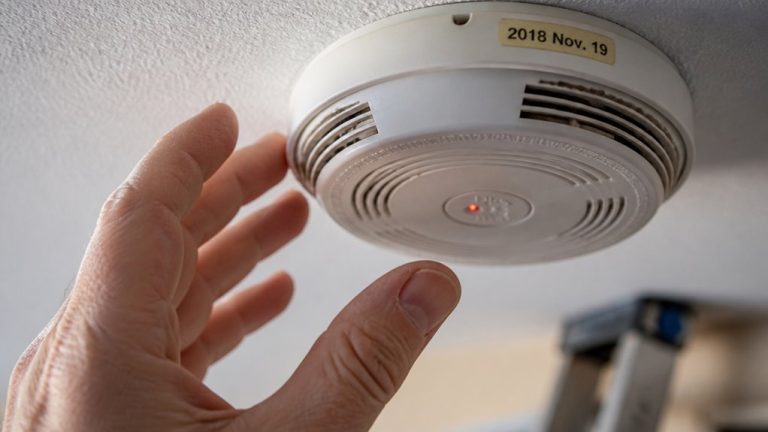

Before turning off your apartment’s fire alarm, check carefully for any signs of fire: smoke, flames, or unusual heat. Then press the hush button to temporarily silence false alarms.
If smoke triggered it, ventilate the area by opening windows or using fans. For battery-powered units, remove batteries safely after confirming no danger.
In a networked system, contact building management to properly silence alarms. Follow these steps to make certain safety; you can explore more detailed solutions next.
Key Takeaways
- Check for visible fire, smoke, or burning odors before attempting to silence the alarm; evacuate and call emergency services if danger is present.
- Press the hush button on the detector to temporarily silence the alarm, usually for 5 to 10 minutes, after confirming no fire hazard exists.
- Ventilate the area by opening windows and doors to clear smoke or steam that may have triggered a false alarm.
- For battery-powered alarms, remove batteries after confirming no fire risk, then reset the unit by holding the reset button before reinserting batteries.
- Contact building management to silence interconnected alarms that cannot be turned off individually, ensuring they follow proper safety protocols.
Check for Fire Before Silencing Your Apartment Alarm
Before you silence your apartment fire alarm, make sure you thoroughly check for any signs of an actual fire.
Quickly look around your unit for visible smoke, flames, or unusual heat.
Use your sense of smell to detect burning odors that mightn’t be immediately obvious.
This quick but thorough assessment helps you avoid ignoring a real emergency.
If you find any indication of fire, evacuate immediately and call emergency services.
Don’t risk silencing the alarm prematurely, as false alarms can mask genuine dangers and put your safety at risk.
Remember, life safety always comes first; never prioritize convenience over a careful evaluation.
Taking these steps guarantees you respond appropriately and keep yourself and others safe.
Additionally, be aware that nearly 30% of fire alarms are false, often triggered by cooking or steam, so ventilate and verify safety before resetting when sure.
Use the Hush Button to Temporarily Silence Your Fire Alarm
When you’ve confirmed there’s no real fire hazard, you can silence your apartment fire alarm temporarily by pressing the hush button located on the device’s front or side.
This button is designed to pause the alarm for 5 to 10 minutes, giving you time to address minor triggers like cooking smoke or steam without disabling safety features.
Generally, a single press activates the hush function, but check your alarm’s labeling in case it requires holding the button down.
Remember, the alarm will reactivate if smoke or debris remains, ensuring ongoing protection. Use this method only after verifying safety to avoid masking genuine dangers.
The hush button provides a quick, authorized way to reduce noise while maintaining your fire alarm’s essential alert capabilities.
Hush mode typically lasts for 8 to 9 minutes, during which the alarm monitors smoke levels but suppresses loud alerts.
Clear Smoke and False Triggers With Ventilation
By opening windows and doors, you create airflow that helps clear smoke or particles triggering your fire alarm. This ventilation dilutes and removes irritants like cooking smoke or steam, reducing false alarms.
Enhance airflow by turning on exhaust fans or manually waving a towel near the detector to disperse lingering particles. These combined methods speed up clearing the air around the sensor.
Typically, the alarm should reset within a few minutes once the smoke or irritants dissipate. Always confirm there’s no actual fire before silencing the alarm.
Proper ventilation is a safe, effective way to resolve false triggers without disabling your device. Remember, clearing the air protects both your safety and your apartment’s alarm system functionality.
Keep in mind that steam can trigger false alarms by scattering light particles inside photoelectric detectors, so ventilation is key to reducing this effect.
Remove Batteries Safely From Battery-Powered Alarms
If ventilation doesn’t stop your battery-powered fire alarm from sounding, you’ll need to remove the batteries carefully to silence it.
First, make certain no smoke or fire hazards exist by visually and olfactorily checking the area.
Ensure your safety first by thoroughly checking for smoke or fire hazards before silencing the alarm.
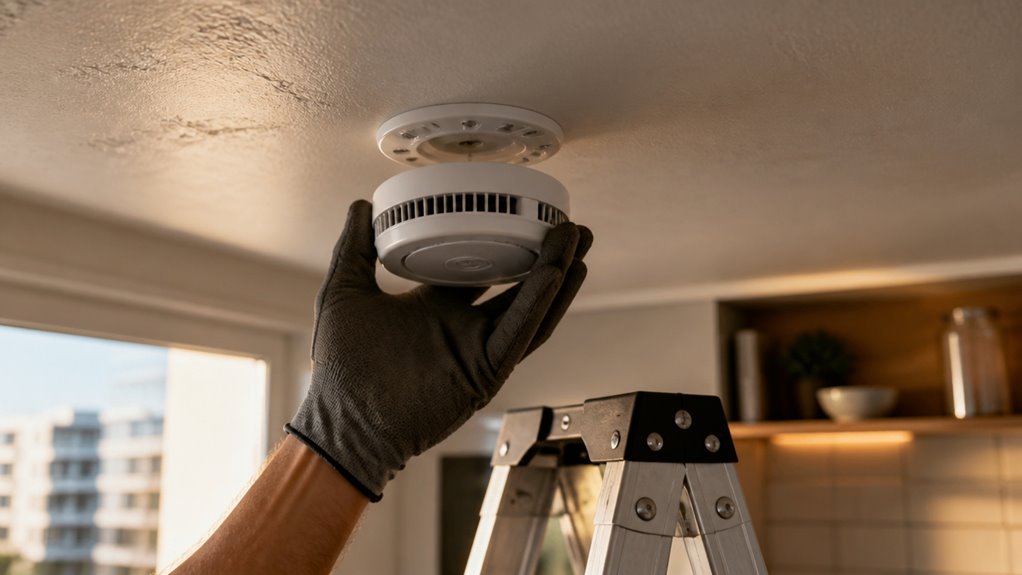
Then, twist the alarm housing counterclockwise to release it from its mounting base.
Open the battery compartment and remove the batteries, waiting 20 to 30 seconds to let residual power discharge fully.
This pause prevents the alarm from immediately reactivating.
When you’re ready to restore power, hold the reset button for about 20 seconds before reinserting the batteries to reset the unit’s capacitor.
Removing batteries provides a more permanent silence than the hush button.
Always confirm the environment is safe before disabling your fire alarm to avoid risking your safety.
For continued safety, it’s important to dispose of old batteries properly at designated recycling facilities to prevent environmental harm.
When and How to Contact Building Management for Networked Alarms?
In apartment buildings with interconnected fire alarm systems, you’ll need to reach out to building management to address alarms that won’t silence from your unit alone.
These systems are controlled centrally, often requiring security codes or keys that only management possesses.
Before contacting them, confirm there’s no actual fire by quickly checking for smoke or heat.
If the alarm persists despite your efforts, notify the front desk or maintenance staff immediately.
Explain the situation clearly, so they can access the central panel to silence the networked alarms.
Prompt communication prevents unnecessary panic across neighboring units and confirms proper professional intervention.
Always ensure that management follows proper silencing procedures to maintain safety and compliance.
Frequently Asked Questions
How Often Should I Test My Apartment Fire Alarm for Proper Function?
You should test your apartment fire alarm at least once a month to make certain it functions correctly.
Press the test button on the unit to check the sound and alert system.
Also, replace batteries annually or when the low-battery warning sounds.
Regular testing helps catch malfunctions early, keeping you safe.
Don’t forget to clean the alarm periodically to prevent false alarms caused by dust or debris buildup.
Can I Replace My Fire Alarm With a Different Model in My Apartment?
You can replace your apartment fire alarm, but remember that 60% of residential fires occur at night, so your new alarm must be reliable.
Always check with your building management first, since many apartments require specific models or interconnected systems for safety compliance.
Choose alarms that meet local fire codes and have proper certifications.
Improper replacements risk legal issues and endanger your safety, so prioritize approved units and professional installation.
What Should I Do if the Fire Alarm Beeps Intermittently Without Smoke?
If your fire alarm beeps intermittently without smoke, first check the battery. Low power often causes chirping.
Replace the battery promptly after twisting off the detector base. Clean the unit to remove dust or debris that might trigger false alerts.
If it’s hardwired, confirm power and battery backup are intact. Don’t ignore the beeping; it signals maintenance needs to ensure your safety is uncompromised.
Are There Legal Requirements for Fire Alarm Types in Apartment Buildings?
You might be surprised, but yes, there are strict legal requirements for fire alarm types in apartment buildings. Building codes and fire safety laws mandate specific alarms, often smoke detectors with interconnected systems, to guarantee quick detection and warning.
These rules vary by location but usually require hardwired, battery-backed units meeting national standards. You’ll want to check your local codes or consult building management to confirm compliance and keep everyone safe.
How Long Do Fire Alarm Batteries Typically Last Before Needing Replacement?
You can expect fire alarm batteries to last about 6 months to a year before needing replacement, depending on usage and battery type.
Some long-life lithium batteries can last up to 10 years in certain models.
However, you should test your alarms monthly and replace batteries as soon as you hear low-battery chirps or warnings.
Staying proactive guarantees your alarm remains reliable and keeps you safe.
Stay Safe: Key Takeaways Before Turning Off Your Alarm
Before silencing your fire alarm, always check for fire to keep everyone safe. Use the hush button to quiet false alarms temporarily, but don’t forget to ventilate and clear any smoke causing the trigger.
If your alarm runs on batteries, remove them carefully to avoid damage. For networked alarms, contact building management promptly.
Remember, handling fire alarms isn’t just pressing a button; it’s like steering a ship through stormy seas, requiring caution and precision.