
The best way to extinguish a fire is to quickly identify its class: A, B, C, or K, and use the appropriate extinguisher or method. For example, use water or foam for wood fires, CO2 or dry powder for electrical fires, and never use water on grease fires.
Always aim at the base, use the PASS technique, and ensure safety by staying upwind with an exit path. Following these steps effectively stops combustion. Understanding specific situations helps you handle fires even better.
Key Takeaways
- Identify the fire class to choose the appropriate extinguishing agent for effective and safe fire suppression.
- Use water or foam for Class A fires, avoiding water on flammable liquid or electrical fires.
- Apply non-conductive agents like CO2 or dry powder for Class C electrical fires after power is off.
- For kitchen grease fires, smother flames with a metal lid or use salt/baking soda; never use water.
- Drown outdoor fires with water, stir ashes to expose hot spots, and ensure complete coolness before leaving.
Identifying Different Fire Classes
Understanding fire classes is essential for choosing the right extinguishing method. You need to quickly identify the fire type to act effectively and avoid worsening the situation.
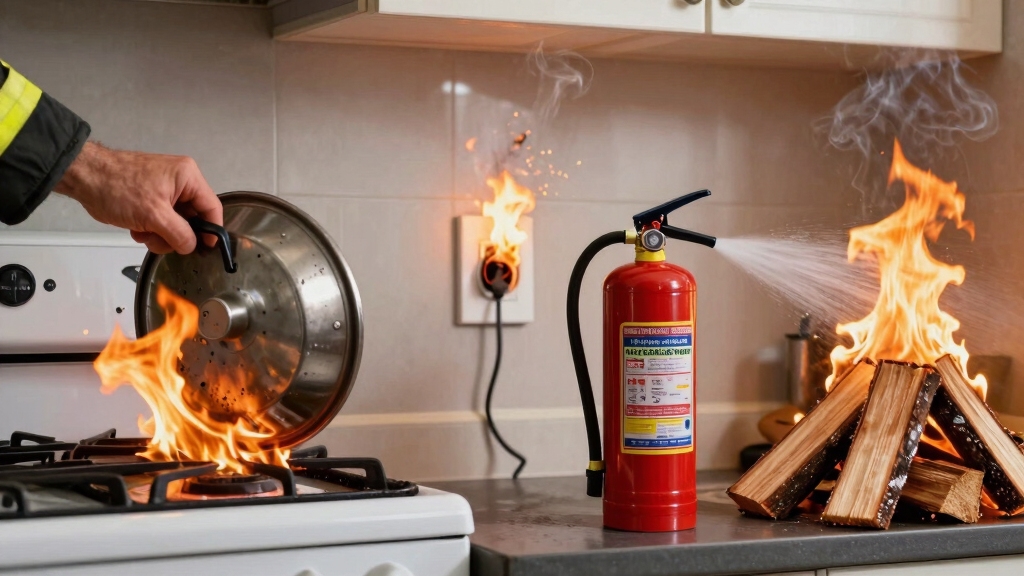
Class A fires involve ordinary combustibles like wood, paper, and cloth. Class B fires deal with flammable liquids such as gasoline or oil. Class C fires involve energized electrical equipment, which requires special care due to shock hazards.
Class A fires burn ordinary materials, Class B involve flammable liquids, and Class C include energized electrical equipment.
Each class demands a specific approach because extinguishing agents effective on one class can be dangerous or ineffective on another. Recognizing these distinctions helps you select the proper response, protecting yourself and property.
You’ll avoid mistakes like using water on electrical fires or allowing flammable liquids to spread. Accurate fire classification is your first critical step toward safe, efficient extinguishing. Always ensure you use a Class C-rated extinguisher specifically designed for electrical fires to prevent shock hazards.
Choosing the Right Extinguisher for Each Fire Class
When you face a fire, choosing the right extinguisher can make all the difference between quickly putting it out and making things worse.
For Class A fires involving wood or paper, water or foam extinguishers cool and smother flames effectively.
Avoid water on Class B fires fueled by flammable liquids. Instead, use foam, CO2, or ABC dry powder to starve oxygen and interrupt combustion.
Electrical fires (Class C) demand non-conductive agents like CO2 or dry powder, but only after power is cut.
Water risks electrocution and fire spread.
The versatile ABC dry powder extinguisher covers multiple classes, making it a reliable choice when in doubt.
Always match your extinguisher to the fire class to extinguish safely and efficiently.
Portable extinguishers work by targeting critical points in the fire triangle to stop combustion quickly and minimize damage.
Using the PASS Technique to Put Out Fires Safely
Master the PASS technique to handle fires quickly and confidently.
First, pull the pin to disengage the extinguisher’s trigger. Aim the nozzle at the base of the fire, where fuel meets oxygen, to interrupt combustion effectively.
Squeeze the lever to release the extinguishing agent; release it to stop the flow. Sweep the nozzle side-to-side or back-and-forth across the fire’s base, maintaining a safe 6 to 8 feet distance.
This guarantees you cool, smother, or starve the flames efficiently. Always stand upwind and position yourself with an accessible exit behind you.
If the fire doesn’t subside quickly, evacuate immediately. Using PASS correctly maximizes your safety and increases your chances of putting out the fire before it spreads.
Remember to inspect extinguishers monthly and ensure you are trained to use the appropriate extinguisher type for the fire you face.
Kitchen Grease Fires: What Works and What Doesn’t
Kitchen grease fires can flare up quickly, catching you off guard if you’re unprepared. The key to putting them out is cutting off oxygen immediately.
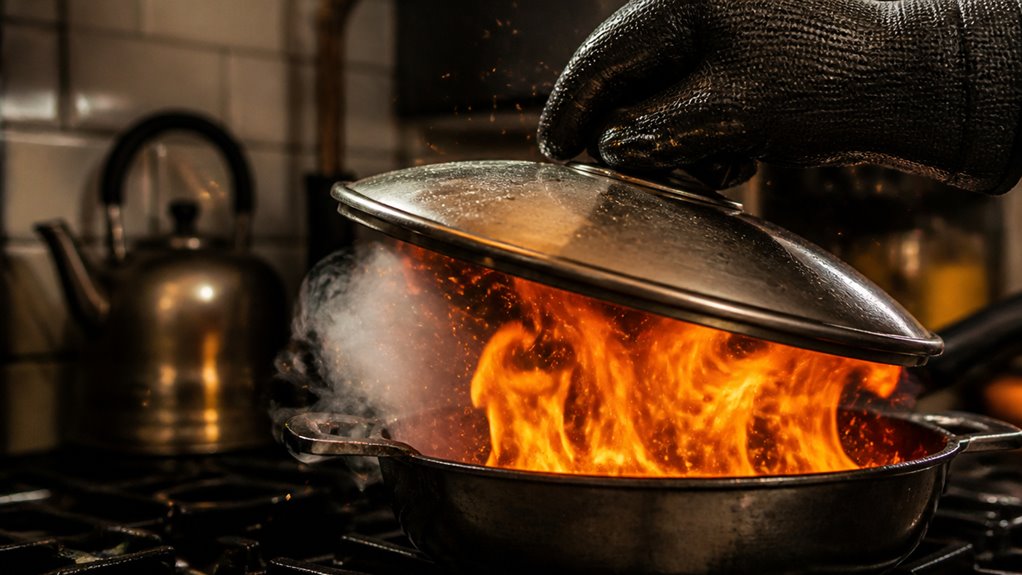
Turn off the heat source and smother the flames by covering the pan with a metal lid or a cookie sheet. You can also safely throw salt or baking soda on the fire; these release CO2, suffocating the flames.
Avoid water at all costs; it causes explosive steam bursts that spread fire and can cause severe burns. Never use flour or baking powder, as these can ignite or explode.
If the fire gets out of control, evacuate and call emergency services. Remember, quick, calm action focusing on oxygen deprivation is your best defense against kitchen grease fires. Using a Class K extinguisher is recommended for safely extinguishing cooking oil fires if available.
How to Fully Extinguish Campfires and Outdoor Fires?
You should always drown campfires with plenty of water until the hissing stops to fully extinguish them. This guarantees the fire cools below ignition temperature, removing heat from embers.
Next, stir the ashes with a stick or shovel to expose hidden hot spots. Apply more water, repeating until no steam or heat remains.
Avoid using dirt or sand alone, as they can trap heat and reignite embers. Finally, carefully feel the ashes with the back of your hand to confirm they’re cool.
Never leave a fire unattended until it’s completely out. Fully extinguishing your campfire prevents wildfires and protects the environment.
Follow this method every time you put out outdoor fires to stay safe and responsible.
In addition, it is important to remain nearby for at least 30 minutes after extinguishing to monitor for flare-ups and ensure the fire is fully out.
Frequently Asked Questions
Can Water Be Used on All Types of Fires Safely?
No, you can’t use water safely on all fires. It works great on Class A fires like wood or paper by cooling them down.
But never use water on grease fires or flammable liquid fires. It causes dangerous splashes or explosions.
Also, avoid water on electrical fires since it conducts electricity and can shock you. For those, use CO2 or dry powder extinguishers after cutting power.
Always match the extinguisher to the fire type.
How Does Removing Oxygen Stop a Fire From Burning?
Removing oxygen stops a fire because oxygen fuels combustion; without it, the fire can’t keep burning.
When you smother a fire, you cut off its air supply, breaking the fire triangle’s oxygen side. This halts the chemical reaction, causing flames to die out.
You can do this by covering the fire with a lid, using a fire blanket, or applying substances like baking soda or salt that release CO2, suffocating the flames effectively.
Why Is Baking Soda Effective on Small Electrical Fires?
You might think water’s better for quick action, but baking soda’s actually safer and more effective on small electrical fires.
When you sprinkle it, baking soda releases carbon dioxide, which smothers flames by cutting off oxygen.
Plus, it’s non-conductive, so it won’t cause electrical shocks or worsen the fire.
This makes it a practical, safe choice for putting out electrical fires without risking sparks or electrocution.
What Happens if You Throw Dirt on a Campfire?
If you throw dirt on a campfire, it might smother some flames but won’t fully extinguish the embers.
Dirt alone can trap heat and oxygen, causing the fire to smolder and potentially reignite later.
You should drown the fire with water until hissing stops, then stir the ashes to expose embers.
Repeat this process and feel for coolness before leaving. Avoid relying just on dirt for safety.
How Far Should You Stand From a Fire When Using an Extinguisher?
You should stand about 6 to 8 feet away from the fire when using a fire extinguisher.
This distance keeps you safe while allowing effective targeting at the fire’s base.
Pull the pin, aim low, squeeze the lever, and sweep side-to-side to cover the flames.
If the fire doesn’t subside, move closer carefully while maintaining control.
Always prioritize your safety and have an escape route ready.
Quick Action and Proper Tools Make All the Difference
When it comes to putting out fires, knowing the right extinguisher and method is key. You don’t want to add fuel to the fire. Always identify the fire class first, then use the appropriate extinguisher with the PASS technique.
For kitchen grease fires, never use water; smother them instead. When you’re done with campfires, make certain they’re cold to the touch. Staying prepared guarantees you’re ready to act quickly and safely every time.