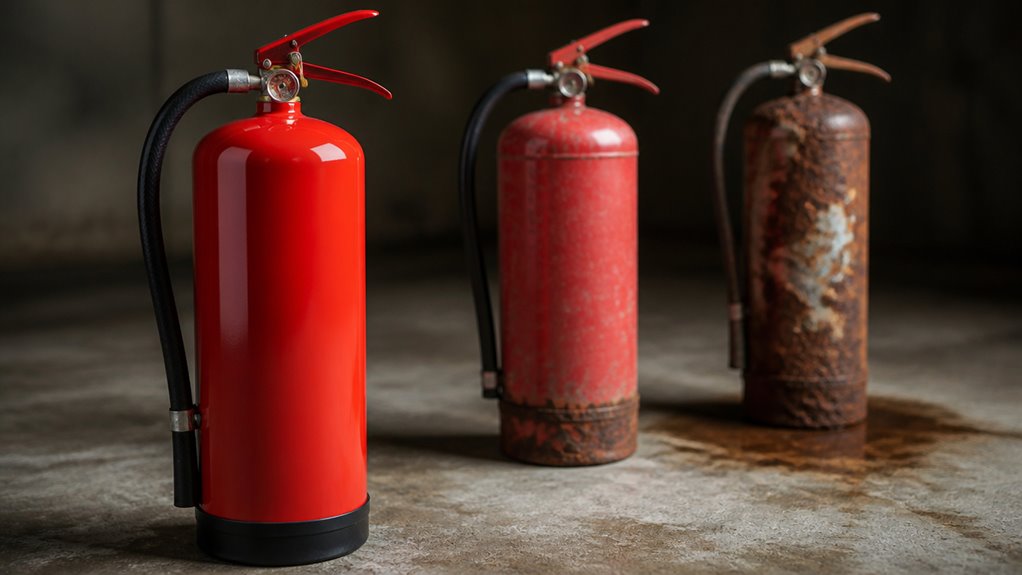

Yes, fire extinguishers do go bad, typically after 10 to 12 years. Over time, pressure can leak due to seal failure or corrosion. The chemical agent may also degrade or compact, reducing effectiveness.
Damaged or expired units risk malfunction and won’t reliably suppress fires. Regular inspections and maintenance help extend lifespan and assure safety.
Understanding causes of failure, maintenance steps, and replacement guidelines is essential to keep your extinguisher ready when you need it most.
Key Takeaways
- Fire extinguishers typically have a service life of 10 to 12 years and require replacement afterward.
- Pressure loss from seal failure or leaks can render extinguishers ineffective over time.
- Chemical agents can degrade, settle, or clump, reducing discharge performance.
- Physical damage, corrosion, or expired inspection tags indicate the extinguisher may no longer be reliable.
- Regular inspections, maintenance, and hydrostatic testing are essential to ensure operational readiness.
How Long Do Fire Extinguishers Last Before They Go Bad?
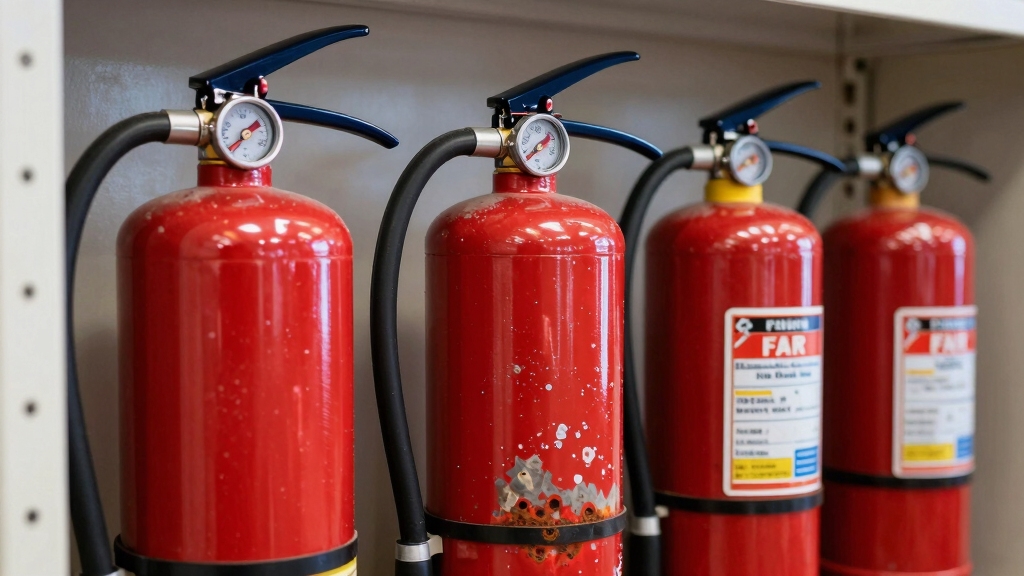
Although fire extinguishers don’t have traditional expiration dates like perishable goods, they typically last between 10 and 12 years from the manufacture date before they go bad.
Fire extinguishers generally remain effective for 10 to 12 years from their manufacturing date.
You’ll find most extinguishers stamped with a manufacturing date or expiration recommendation in line with NFPA service life standards.
Disposable models require replacement after this period, while rechargeable units can reach the same lifespan if you maintain and service them regularly.
Proper maintenance includes routine inspections, pressure checks, and timely recharging to guarantee operational readiness.
Keep in mind that these lifespans assume optimal storage conditions and professional upkeep.
If you’re managing fire safety equipment, tracking these dates and adhering to inspection schedules helps you avoid the risks of relying on extinguishers that no longer meet performance standards.
Regular hydrostatic testing every 5 to 12 years is also essential to ensure the structural integrity of the extinguisher and prolong its safe use.
What Causes Fire Extinguishers to Expire or Fail?
Fire extinguishers expire mainly because of pressure loss over time and the degradation of the chemical agent inside. It’s pretty interesting how these factors come into play, isn’t it?
Environmental conditions also play a significant role. Things like humidity, extreme temperatures, and corrosive environments can really speed up the deterioration process.
When that happens, the extinguisher’s performance can be compromised. Regular inspections and adherence to safety standards are essential to confirm extinguisher integrity before reuse.
Pressure Loss Over Time
When a fire extinguisher loses internal pressure, it can no longer expel its extinguishing agent effectively. This directly compromises its functionality during an emergency.
Pressure loss occurs gradually and is a primary reason extinguishers expire or fail. You must recognize these critical factors:
- Seal Failure: The neck seal can degrade or break, allowing gas to escape and pressure to drop.
- Gas Leakage: Carbon dioxide and other propellants can slowly leak, reducing the force needed to discharge the agent.
- Settling Powder: In dry chemical extinguishers, powder compacts at the bottom, hindering proper expulsion despite remaining pressure.
Regular inspections guarantee pressure gauges stay in the green zone, signaling readiness. Ignoring pressure loss risks extinguisher ineffectiveness and safety hazards during a fire event. Additionally, temperature extremes can impact internal pressure, with high heat increasing pressure and extreme cold lowering pressure and discharge force.
Chemical Agent Degradation
Beyond pressure loss, the chemical agent inside a fire extinguisher also degrades over time, undermining its ability to suppress fires effectively.
Dry chemical powders can settle and compact at the cylinder’s bottom, reducing discharge flow and coverage. Without regular agitation during maintenance, this compaction impairs the agent’s dispersal.
In CO2 extinguishers, the gas can slowly leak through seals, lowering agent volume and pressure simultaneously.
Rechargeable extinguishers face risks as internal chemical compounds can break down or clump, especially if exposed to moisture or temperature fluctuations.
This chemical degradation compromises extinguishing efficiency and may cause clogging or misfiring.
To guarantee reliability, you must adhere to inspection schedules, agitate powders if applicable, and replace or recharge extinguishers before the agent deteriorates beyond functional limits.
Regular inspection and maintenance are essential to prevent such degradation and ensure the extinguisher’s continued effectiveness.
Environmental Impact Effects
Although fire extinguishers are designed for durability, environmental conditions markedly influence their longevity and reliability. You need to account for factors that accelerate wear and cause failure beyond normal service life.
Consider these critical environmental effects:
- Humidity and Corrosion: High moisture levels promote internal and external corrosion. This weakens the extinguisher’s structural integrity and risks pressure loss.
- Temperature Extremes: Exposure to freezing or excessive heat degrades chemical agents and seals. This compromises discharge effectiveness.
- Contaminants and Physical Damage: Corrosive substances or mechanical impacts can damage the extinguisher’s components. This can lead to malfunction or leakage.
Regular inspections and servicing are essential to detect and address these environmental impacts before they cause extinguisher failure.
How to Spot Signs Your Fire Extinguisher Is No Longer Safe?
It’s a good idea to regularly check your fire extinguisher. You’ll want to look for any visual damage, like rust, cracks, or dents. These could really compromise its integrity, so keep an eye out!
Next up, check the pressure gauge. Make sure the needle is in the green zone—this shows that there’s adequate pressure inside. If it’s not, that could be a problem.
Oh, and don’t forget to verify the inspection tag! If it’s outdated, it might mean that maintenance has been missed, which could lead to potential failure when you need it most. Better safe than sorry, right?
Regular monthly pressure gauge checks are recommended to ensure your extinguisher maintains optimal performance and spray consistency.
Visual Damage Indicators
Regularly inspecting your fire extinguisher for visual damage is essential to guarantee it remains safe and effective. Visual damage can compromise its integrity and operational readiness, so you must identify these signs promptly.
Look specifically for:
- Corrosion or Rust: Check the cylinder and metal parts for any rust or corrosion. This can weaken the structure and cause leaks.
- Physical Deformations: Dents, cracks, or bulges on the body indicate internal damage or pressure issues. These make the extinguisher unsafe.
- Damaged Components: Inspect the hose and nozzle for cracks, blockages, or wear. These issues could obstruct agent discharge.
Also, note that maintenance includes hydrostatic testing every 12 years to ensure the cylinder’s integrity and safety.
Pressure Gauge Check
Monitor the pressure gauge closely to make certain your fire extinguisher maintains peak operating pressure. The gauge needle should rest firmly within the green zone, indicating sufficient internal pressure for effective discharge.
If the needle falls outside this range, in the red undercharged or overcharged zones, your extinguisher may fail during use. Low pressure often results from a compromised seal or slow leaks, while excessive pressure can cause structural damage.
Regularly inspect the gauge for cracks, fogging, or a stuck needle, all signs that the gauge itself may be faulty. Address any abnormalities immediately by scheduling professional maintenance or replacement.
Maintaining correct pressure guarantees the extinguisher’s chemical agent will deploy efficiently, preserving your safety during emergencies. Proper storage within the recommended temperature range (−65°F to 120°F) also ensures reliable performance and prevents pressure fluctuations.
Inspection Tag Status
When inspection tags show outdated dates, your fire extinguisher likely hasn’t undergone the necessary maintenance checks. This neglect increases the risk of pressure loss, chemical degradation, and mechanical failure.
Regularly updated inspection tags confirm that professionals have verified internal pressure, physical condition, and recharge status, ensuring reliability during emergencies.
To accurately spot signs your extinguisher is no longer safe, check:
- Inspection date stamps; ensure annual inspections are current, especially for dry chemical models.
- Maintenance notes; look for documented recharges or repairs within the past 6 years.
- Condition indicators; verify seals are intact and no physical damage or corrosion is noted.
Ignoring inspection tag status compromises compliance and puts lives at risk. Regular inspections of valve and hose integrity are essential to confirm functionality and safety.
Why Proper Maintenance Extends Fire Extinguisher Lifespan?
Proper maintenance markedly extends a fire extinguisher’s lifespan by preventing internal pressure loss, chemical degradation, and mechanical failures that compromise functionality.
When you perform regular inspections, you guarantee the pressure gauge stays in the optimal green zone, confirming adequate internal pressure.
Agitating dry chemical powder during servicing prevents compaction, maintaining effective dispersal.
You also protect seals and valves from deterioration, reducing leaks of extinguishing agents like CO2.
Timely recharging every six years for rechargeable models replenishes lost pressure and chemicals, preserving operational readiness.
Additionally, addressing rust, corrosion, or damaged components during inspections prevents structural failure.
By adhering to manufacturer guidelines and NFPA standards, you maximize your extinguisher’s performance and service life.
This ensures it functions reliably during emergencies without premature replacement due to unnoticed degradation.
Regular hydrostatic testing and maintenance ensure the structural integrity and functionality of pressure relief systems, preventing catastrophic failures.
When and How to Replace Your Fire Extinguisher Safely?
Although fire extinguishers can last up to 12 years with maintenance, you should replace them immediately if you detect signs of damage, corrosion, or pressure loss.
Fire extinguishers last up to 12 years but require immediate replacement if damaged, corroded, or losing pressure.
Timely replacement guarantees functionality and compliance with NFPA standards. To replace your extinguisher safely, follow these steps:
- Verify the manufacture date and inspect for visible wear, rust, or broken seals.
- Remove the extinguisher from service, guaranteeing no pressure remains by following manufacturer instructions or consulting a professional.
- Purchase a replacement that matches your fire risk classification and install it according to local fire codes.
Regular inspections and adherence to these protocols maintain your fire safety readiness.
Never delay replacement once critical degradation signs appear to guarantee effective fire suppression during emergencies.
What Happens If You Use an Expired Fire Extinguisher?
Using an expired fire extinguisher can severely compromise your ability to control a fire effectively.
Expired units often suffer from reduced internal pressure, chemical degradation, and clogged nozzles. This leads to misfires or failure to discharge.
This not only endangers you but also risks property damage and legal liabilities. Understanding these risks helps you prioritize timely replacement or maintenance.
| Issue | Cause | Impact |
|---|---|---|
| Pressure loss | Seal failure, leaks | Ineffective discharge |
| Chemical degradation | Settling powder, breakdown | Reduced extinguishing power |
| Physical damage | Corrosion, cracks | Misfiring or blockage |
| Inspection failure | Missed maintenance | Compliance and safety risks |
Don’t rely on expired extinguishers. Make certain regular inspections and replacements to guarantee safety.
Frequently Asked Questions
Are There Specific Fire Extinguisher Brands Known for Longer Durability?
You’ll find that brands like Kidde, Amerex, and Ansul are recognized for manufacturing durable fire extinguishers.
These brands follow strict quality standards and often provide models with robust materials and reliable pressure gauges.
Still, durability depends on maintenance and environmental conditions, so even top brands need regular inspections and servicing to guarantee longevity.
Choosing a reputable brand helps, but you must stay proactive with upkeep to maximize extinguisher lifespan.
Can Fire Extinguishers Be Safely Recycled or Disposed Of?
Yes, you can safely recycle or dispose of fire extinguishers, but you need to follow specific procedures.
First, fully discharge the extinguisher in a safe, controlled environment. Then, contact your local hazardous waste facility or fire department for guidance on disposal or recycling.
Many components, like steel cylinders, are recyclable. However, the chemical agents require careful handling to prevent environmental harm and comply with regulations.
Never throw them in regular trash.
How Do Environmental Factors Uniquely Affect Different Extinguisher Types?
Environmental factors hit each extinguisher type like a tailor-made storm.
You’ll find water-based extinguishers freeze in cold temps, losing their punch.
Dry chemical ones suffer powder compaction in humidity, causing clogging.
CO2 extinguishers leak gas faster under heat stress, dropping pressure.
Corrosive or salty air invites rust and damage, especially for metal parts.
You must store and inspect them carefully to maintain their peak function and lifespan.
Is It Necessary to Replace Fire Extinguishers After Accidental Discharge?
Yes, you need to replace or recharge a fire extinguisher after accidental discharge.
Once discharged, even partially, the internal pressure drops, compromising its effectiveness.
The extinguishing agent can settle or deplete, and seals may be damaged.
Rechargeable extinguishers require professional servicing to restore full functionality.
Disposable units must be replaced entirely.
Never rely on an extinguisher that hasn’t been properly inspected or recharged after use.
Do Warranty Periods Affect Fire Extinguisher Expiration Timelines?
Warranty periods don’t directly affect fire extinguisher expiration timelines.
You should rely on manufacturer guidelines and NFPA service life standards, which recommend replacing or servicing extinguishers every 10–12 years.
Maintenance, inspections, and environmental conditions primarily determine lifespan.
While warranties may cover defects or repairs during a set time, you still need to follow regular servicing and replacement schedules to guarantee safety and compliance.
Don’t confuse warranty length with effective operational life.
Small Maintenance Steps Today Can Prevent Major Fire Risks Tomorrow
Fire extinguishers don’t last forever, and neglecting their maintenance can compromise your safety. You need to regularly check for signs of wear, corrosion, or pressure loss to reassure reliability.
Why risk using an expired extinguisher when proper care can extend its lifespan markedly?
By understanding when to replace and how to maintain your extinguisher, you’re actively protecting your property and loved ones from preventable hazards. Stay vigilant and stay safe.