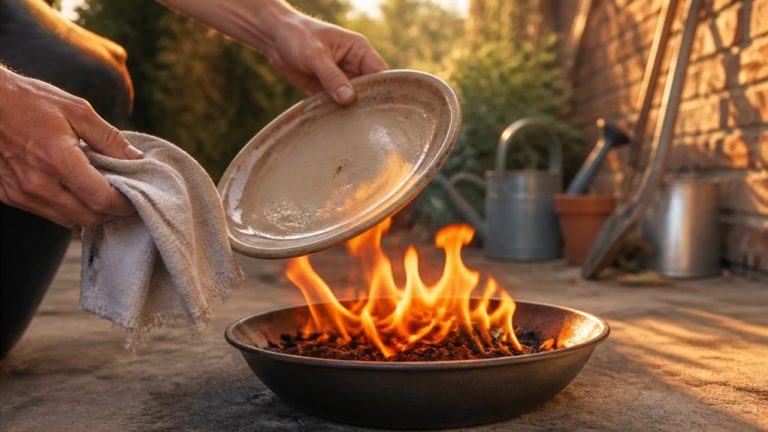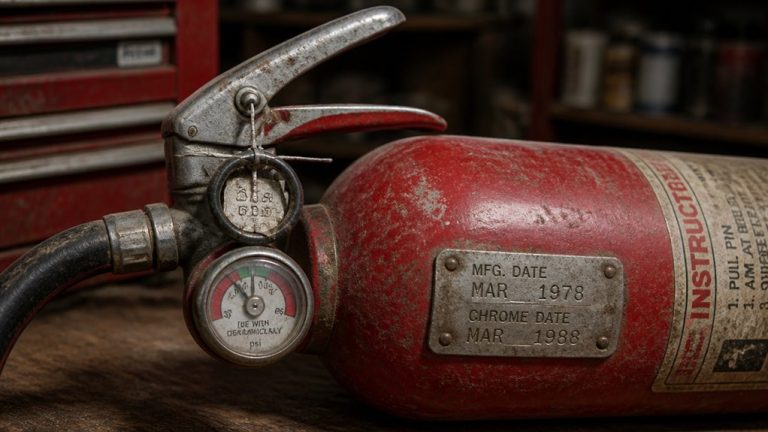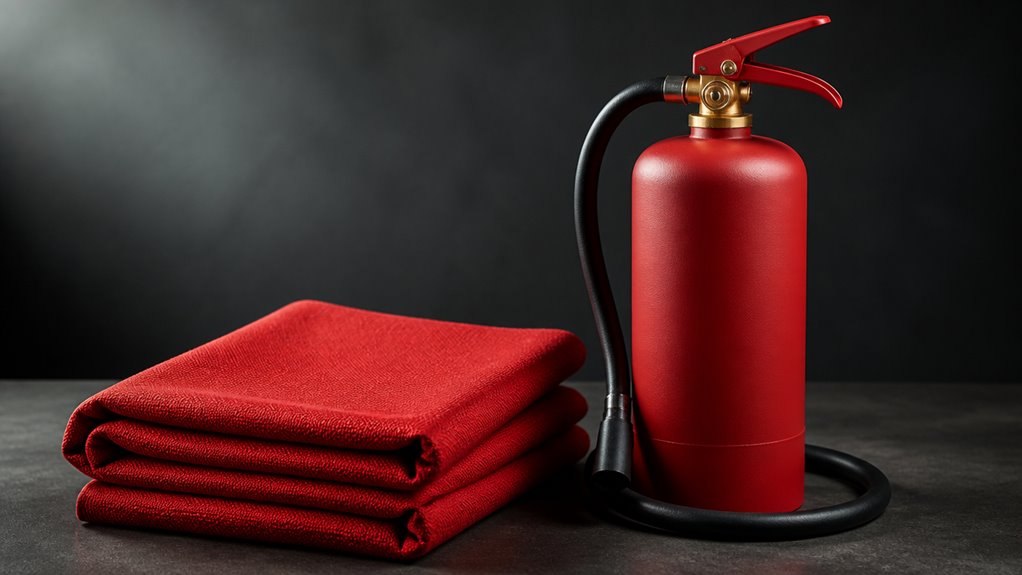

You should use a fire blanket for small, contained fires like kitchen grease or clothing fires. It smothers flames by cutting off oxygen without leaving residue.
Fire extinguishers work better on larger or spreading fires involving solid materials and require specific types matched to fire classes.
Blankets are compact and easy to use without training. Extinguishers need skill and maintenance.
Understanding their distinct roles and limitations will help you choose the right tool for different fire emergencies.
Key Takeaways
- Fire blankets are best for small, contained fires like kitchen grease or clothing fires, while extinguishers handle larger or spreading fires.
- Blankets smother flames by cutting off oxygen without leaving residue; extinguishers use chemicals that may leave harmful residue or damage appliances.
- Fire blankets require no training and deploy quickly, whereas extinguishers need practice using the PASS technique for safe and effective use.
- Blankets are lightweight, compact, low-cost, and maintenance-free for up to 7 years; extinguishers are heavier, costlier, and need regular inspection and servicing.
- Fire blankets are safe for use on people and sensitive equipment; extinguishers are unsafe for direct human use and may corrode electronics.
Fire Blanket vs Fire Extinguisher: Complete Side-by-Side Comparison
| Feature | Fire Blanket | Fire Extinguisher |
|---|---|---|
| Primary Use | Smothers small fires by cutting off oxygen | Suppresses fires using extinguishing agents |
| Best For | Kitchen grease fires, clothing fires, small contained fires | Larger or spreading fires involving various fire classes |
| Fire Classes | Small Class B/F and clothing fires | Class A, B, C, D, or K (depending on extinguisher type) |
| Suppression Method | Oxygen deprivation | Cooling, chemical interruption, or oxygen displacement |
| Residue After Use | None | Often leaves chemical residue |
| Safe for People | Yes, can be wrapped around a person | No, not intended for direct use on people |
| Safe for Electronics | Yes | May damage sensitive electronics |
| Ease of Use | Very easy; no training required | Requires PASS technique and basic training |
| Deployment Speed | Instant | Slightly slower |
| Weight | About 1–2 lbs | About 5–10 lbs |
| Storage | Compact wall-mounted pouch | Wall bracket or floor stand |
| Maintenance | Virtually maintenance-free | Requires regular inspections and servicing |
| Lifespan | Up to 7 years (unused) | Typically 5–15 years with maintenance |
| Portability | Excellent | Good |
| Cost | Lower | Higher |
| Best Environment | Kitchens, homes, laboratories | Homes, offices, workshops, commercial buildings |
| Main Advantage | Simple, clean, and safe for small fires | Handles larger and multiple fire types |
| Main Drawback | Limited to small, contained fires | Requires training and periodic maintenance |
Choosing Between Fire Blankets and Fire Extinguishers
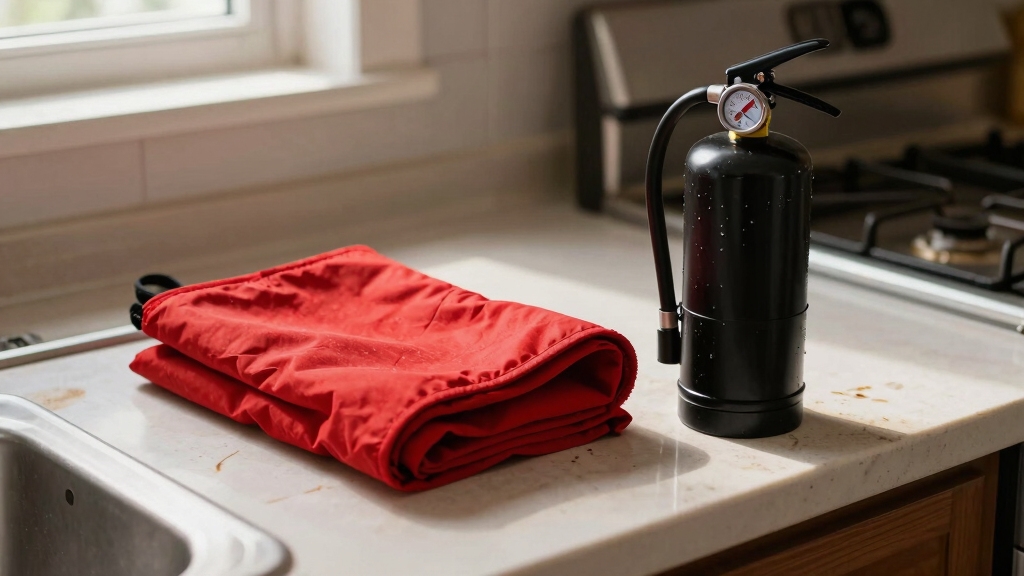
When deciding between a fire blanket and a fire extinguisher, you should consider the fire’s size, type, and location.
Fire blankets are ideal for small, contained fires, such as kitchen grease or clothing fires, where you can quickly smother flames by cutting off oxygen. They’re lightweight, easy to deploy without training, and cause no residue damage.
Fire extinguishers, however, suit larger or spreading fires where chemical agents cool flames or disrupt combustion.
Extinguishers require more effort to operate and need distance due to heat intensity. You’ll also factor in storage space: blankets hang flat and compact, while extinguishers are bulky.
Understanding these distinctions helps you select the right tool for rapid, effective fire suppression in your specific environment. Purple K fire extinguishers are especially effective against Class B and C fires, providing rapid suppression with minimal residue.
Fire Types Best Controlled by Blankets or Extinguishers?
Choosing the right fire suppression tool depends heavily on the specific type of fire you’re dealing with.
Fire blankets excel at controlling small, contained fires, especially kitchen grease or oil fires (Class B/F).
Fire blankets are ideal for quickly containing small fires, particularly kitchen grease or oil fires (Class B/F).
They’re also your best option for clothing fires, allowing you to smother flames safely without chemical exposure.
On the other hand, fire extinguishers handle larger, spreading fires involving solid materials like wood, paper, or fabric (Class A).
Extinguishers are essential when you can’t approach closely due to intense heat, using various agents to cool or interrupt combustion chemically.
While blankets work immediately by cutting off oxygen, extinguishers provide chemical intervention vital for diverse fire classes.
Selecting the correct tool based on fire type improves safety and effectiveness in emergency response.
For maximum safety, regularly maintain and inspect fire suppression tools to ensure they are ready when needed, as proper fire safety maintenance is crucial.
Fire Suppression Mechanisms: Blankets vs Extinguishers
Understanding how fire blankets and extinguishers suppress flames helps you select the most effective tool for a given fire scenario. Fire blankets smother flames by creating an airtight seal that deprives fire of oxygen, acting like a lid on a pot.
In contrast, fire extinguishers interrupt the chemical reaction via cooling agents or oxygen displacement, using dry chemicals, foam, or water. Blankets prevent reignition without residue; extinguishers may leave debris.
Imagine stopping flames instantly with a simple drape. Feel confident knowing chemical agents cool and suppress combustion.
Picture protecting a loved one by smothering flames safely. Understand how oxygen deprivation halts fire spread immediately.
Recognize the power of precise chemical intervention in larger fires.
It is crucial to match extinguisher type to the fire class for effective suppression and safety.
Size, Weight, and Storage Options
Having a clear grasp of how fire suppression works, it’s equally important to take into account the physical characteristics of fire blankets and extinguishers.
Fire blankets weigh between 1 to 2 pounds and measure approximately 39″ x 39″, making them lightweight and compact for quick access.
Fire blankets are lightweight and compact, measuring 39″ x 39″ and weighing just 1 to 2 pounds.
You can easily hang them on wall hooks, optimizing storage space without clutter.
In contrast, fire extinguishers typically weigh 5 to 10 pounds and come as bulky metal cylinders.
They require dedicated floor stands or wall mounts that consume more space.
The heavier weight of extinguishers demands more effort to maneuver during emergencies.
When selecting your fire safety equipment, consider how size and weight impact accessibility and storage convenience to ensure rapid deployment when needed.
For most residential homes, a 5 lb ABC extinguisher is recommended due to its balance of capacity and ease of use.
Ease of Use and Training Requirements
You don’t need any specialized training to use a fire blanket. It’s super simple—just pull the tabs and cover the fire. Easy, right?
On the other hand, fire extinguishers are a bit more complex. You really need to be familiar with the PASS technique—Pull, Aim, Squeeze, and Sweep—to use them effectively and safely.
Following the PASS sequence ensures proper operation and maximizes the extinguisher’s effectiveness.
Training Needs Comparison
Mastering fire safety tools hinges substantially on their ease of use and training demands. Fire blankets require no formal training; you just pull the tabs and cover the fire, making them instantly accessible during emergencies. In contrast, fire extinguishers depend on the PASS technique: Pull, Aim, Squeeze, Sweep, which you must learn and practice to operate effectively under stress. This difference impacts your readiness and confidence in a fire event.
Feel empowered with simple blanket deployment; no second thoughts. Avoid panic by mastering the PASS method for extinguishers. Save valuable seconds when every moment counts. Reduce anxiety knowing you can act correctly without complex steps. Gain peace of mind with straightforward, intuitive fire safety tools.
Choosing the right device involves weighing your ability to learn and recall these essential procedures. Regular extinguisher inspection is also critical to ensure your equipment will function properly when needed.
Deployment Simplicity
The ease with which you deploy a fire safety device can determine how quickly and effectively you respond to a fire incident.
Fire blankets offer unparalleled simplicity: you just pull the tabs, remove the blanket, and drape it over the fire to smother flames instantly.
No specialized training is necessary, making them ideal for emergency use by untrained individuals.
In contrast, fire extinguishers require you to remember and execute the PASS technique: Pull the pin, Aim at the base, Squeeze the handle, and Sweep side to side.
This sequence demands prior training and composure under stress.
Additionally, extinguishers are heavier and bulkier, which can complicate quick deployment.
Understanding the PASS technique is essential for safe and effective extinguisher use.
User Safety Considerations
Although both fire blankets and extinguishers serve critical fire safety roles, their ease of use and training requirements differ markedly, impacting user safety during emergencies.
Fire blankets require no prior training; you just pull tabs and drape them over flames, making them accessible to anyone.
Fire extinguishers demand familiarity with the PASS technique (Pull, Aim, Squeeze, Sweep) and can be intimidating under stress.
Your safety hinges on your readiness and knowledge.
Consider these points:
Quick, instinctive use of fire blankets saves precious seconds.
Extinguishers need practice to deploy effectively.
Fire blankets pose no chemical hazards to users.
Incorrect extinguisher use risks spreading fire or injury.
Confidence with equipment reduces panic and enhances control.
Regular hands-on training is essential to build muscle memory and confidence for effective extinguisher use.
Safety of Fire Blankets and Extinguishers for People and Appliances
When dealing with fire emergencies involving people or sensitive appliances, you’ll find fire blankets offer a safer option than fire extinguishers.
Fire blankets can be draped over individuals with clothing on fire, minimizing burn injuries without exposing them to harmful chemicals.
They create an airtight seal, suffocating flames while avoiding toxic residue that could damage electronics or copper surfaces.
In contrast, fire extinguishers discharge chemical agents that pose inhalation risks and can corrode or stain appliances.
These chemicals make extinguishers unsafe for direct use on humans.
Fire blankets are also non-toxic to children and pets, enhancing household safety.
Consequently, when protecting both people and delicate equipment, fire blankets provide a controlled, residue-free approach that reduces secondary hazards linked to extinguisher chemicals.
In addition, regular maintenance and proper storage of fire blankets ensure their effective lifespan and reliability during emergencies.
Cost and Maintenance Comparison
Understanding cost and maintenance differences is essential when choosing between fire blankets and fire extinguishers. Fire blankets come with a lower upfront cost and require virtually no maintenance, lasting up to 7 years unused.
In contrast, fire extinguishers demand regular inspections, refills after use, and have expiration dates, increasing long-term expenses. You’ll also need training to use extinguishers effectively, while blankets deploy instantly without instruction.
You want reliability without recurring costs. You need hassle-free readiness in emergencies. You desire a safety tool that’s always operational. You prefer straightforward maintenance over technical checks. You value budget-friendly safety equipment that lasts.
Unlike traditional models, some fire extinguishers like the Element use a maintenance-free design, eliminating the need for annual servicing but requiring full replacement after use.
This cost and upkeep distinction directly impacts your choice based on your facility’s needs and budget constraints.
Frequently Asked Questions
Can Fire Blankets Be Reused After Extinguishing a Fire?
You generally shouldn’t reuse a fire blanket after it’s been used to extinguish a fire.
Once deployed, the blanket’s fibers may be compromised by heat or contamination, reducing its effectiveness and safety in future emergencies.
Inspect it carefully for damage or burns; if any are found, replace it immediately.
For reliable protection, always have a new, intact fire blanket ready rather than risking diminished performance from reuse.
How Long Does It Take for a Fire Extinguisher to Discharge Fully?
A fire extinguisher typically takes between 8 to 25 seconds to discharge fully, depending on its size and type.
For example, a standard 5-pound extinguisher often lasts around 10 to 15 seconds.
You should aim to sweep the nozzle side to side during this time for effective coverage.
Keep in mind that using the extinguisher properly and efficiently within this discharge window is essential to controlling the fire quickly.
Are Fire Blankets Effective on Electrical Fires?
When battling electrical fires, you’re often walking on thin ice. Fire blankets can be effective if the fire is small and contained, as they smother flames by cutting off oxygen without conducting electricity.
However, they only work on fires smaller than the blanket itself. For larger or spreading electrical fires, a Class C-rated extinguisher is safer and more reliable. Always make sure the power source is turned off before using a fire blanket on electrical fires.
Can Pets Be Safely Protected Using a Fire Blanket?
Yes, you can safely protect pets using a fire blanket. Fire blankets are non-toxic and don’t release harmful chemicals, making them safe for animals.
When a small fire occurs near your pet, you can quickly drape the blanket over them to smother flames or shield them from heat and smoke.
Just make sure the blanket fully covers the affected area to cut off oxygen and prevent burns or inhalation injuries effectively.
What Is the Recommended Placement Height for Fire Blankets?
You should mount your fire blanket at about eye level, roughly 4 to 5 feet (1.2 to 1.5 meters) from the floor.
This height allows quick and easy access during emergencies, ensuring you can grab and deploy it without bending or stretching.
Keep it in a visible, unobstructed spot, ideally near the kitchen or areas with fire risk.
Avoid placing it too high or low to prevent delays when you need it most.
The Key to Better Fire Safety Starts With Preparation
When it comes to fire safety, the choice between a fire blanket and extinguisher isn’t always clear-cut.
You might think one is superior, but their effectiveness depends on the fire type, size, and your environment.
Before you decide, consider how each suppresses flames, their storage needs, and ease of use.
The real question is: are you prepared to make the right choice when every second counts?
Your safety depends on it.