
You can expect to pay between $20 and $1,500 for a security camera, depending on resolution, features, and installation complexity.
Budget indoor models start around $20, while premium 4K or business-grade cameras exceed $700.
Outdoor, weatherproof designs and wireless setups typically cost more.
Installation labor varies from $25 to $200 per unit, influenced by wiring needs and mounting difficulty.
Additional monthly fees for cloud storage and monitoring can further impact overall expenses.
Exploring these factors will clarify your best options.
Key Takeaways
- Security cameras range from $20 for budget models to over $1,500 for business-grade, professional installations.
- Outdoor and wireless cameras generally cost more due to weatherproofing and connectivity features, typically $80–$400.
- Installation labor varies from $25 for wireless cameras to $200 for complex wired setups per camera.
- Ongoing subscriptions for cloud storage and monitoring add $10–$100 monthly, increasing total costs over time.
- Features like 4K resolution, night vision, AI analytics, and weatherproofing significantly raise camera prices.
How Much Do Security Cameras Cost? Typical Price Ranges
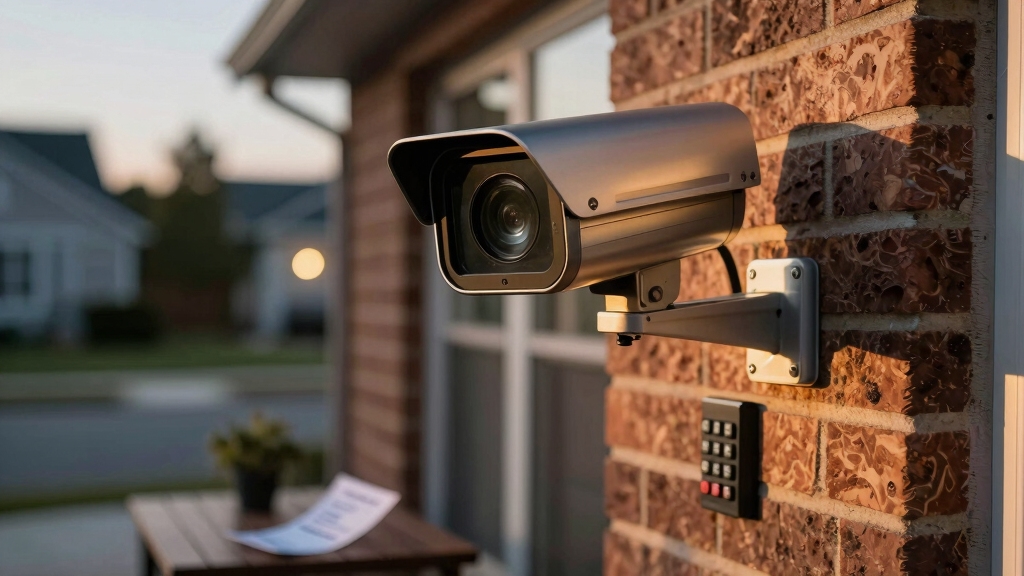
When evaluating security camera options, understanding typical price ranges helps you make informed decisions based on your needs and budget.
Budget cameras fall between $20 and $50 per unit, suited for basic monitoring. Mid-range models range from $100 to $200, offering enhanced features like improved resolution and motion detection.
Budget cameras cost $20-$50 for basic use, while mid-range $100-$200 models offer better resolution and motion detection.
Premium 4K cameras cost from $250 to $500, delivering high-definition clarity essential for detailed surveillance. High-end outdoor cameras exceed $400, incorporating weatherproofing and advanced sensors.
Business-grade cameras can cost $700 to $1,500 installed, reflecting professional-grade reliability and integration capabilities.
Pricing also varies by camera type: indoor plug-in models start around $20 to $100, while outdoor wireless units can reach up to $400.
Recognizing these price brackets allows you to align camera performance with your security objectives efficiently.
For optimal protection, it is important to consider smart placement of cameras to cover all critical entry points and minimize blind spots.
Total System Costs for Home and Business Setups
Calculating the total cost of a security camera system requires considering both equipment and installation expenses tailored to your specific environment.
For a typical four-camera home setup, expect to invest between $600 and $1,600. This balances mid-range cameras priced from $100 to $200 each with moderate installation fees.
Larger residential or business systems can escalate to $3,000 to $10,000, driven by higher-end cameras costing $700 to $1,500 installed per unit and more complex wiring or network integration.
Installation labor often adds $80 to $200 per camera, with wireless options reducing these costs.
Don’t forget ongoing expenses like cloud storage and professional monitoring, which may add $10 to $100 monthly.
Your final budget depends on system scale, camera resolution, feature set, and installation complexity, demanding a precise cost-benefit analysis.
Planning your system based on coverage estimates ensures you purchase an adequate number of cameras without unnecessary redundancy.
Indoor vs Outdoor Cameras: Cost Differences Explained
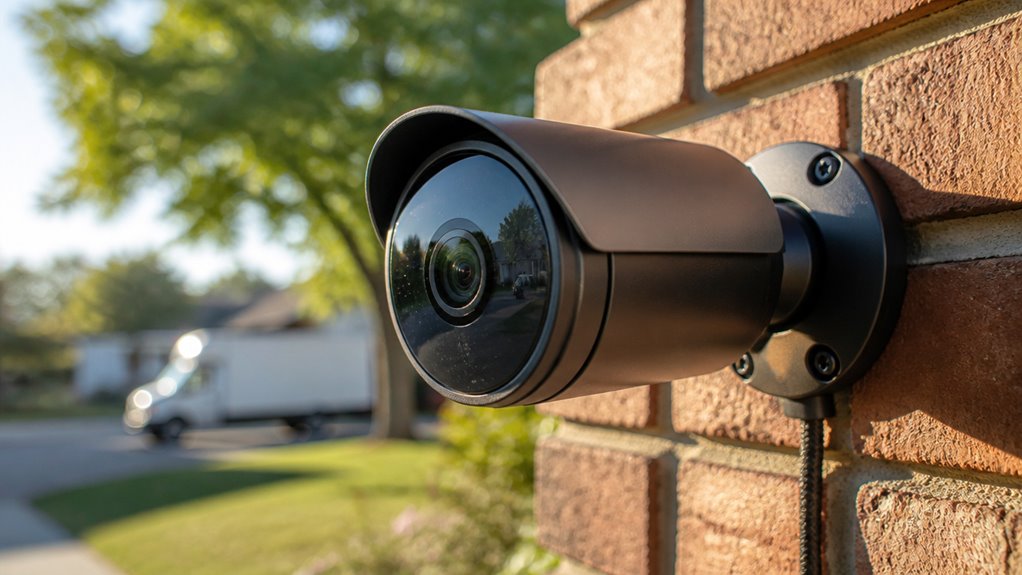
You’ll notice that outdoor cameras usually come with a higher price tag compared to indoor ones. This is mostly because they’re built to withstand the elements and often have more advanced features.
When it comes to installation, things can get a bit tricky. Outdoor setups usually require more labor and special weatherproofing, which can drive up costs even further.
Additionally, selecting cameras with weatherproof housings rated IP65 or higher is essential for durability and can influence the overall price.
Price Range Comparison
Although indoor and outdoor security cameras serve similar surveillance purposes, their price ranges differ markedly due to variations in design, durability, and installation requirements.
Outdoor models demand weatherproofing, enhanced materials, and advanced features, driving costs higher than indoor units. When comparing price ranges, consider these factors:
Indoor plug-in cameras typically cost between $20 and $100.
Outdoor wireless cameras range from $80 to $400 due to rugged construction.
Mid-range indoor cameras fall within $30 to $150, while outdoor mid-range models reach $50 to $200.
Premium outdoor cameras with 4K resolution and analytics can exceed $400.
Business-grade outdoor systems regularly surpass $700 per camera.
Additionally, choosing between DIY vs. professional monitoring can significantly impact both upfront and ongoing costs.
Installation Cost Variations
Price differences between indoor and outdoor security cameras extend beyond the units themselves and into installation expenses, which vary based on environment-specific challenges.
Installing outdoor cameras generally costs more due to weatherproofing requirements and more complex wiring.
Often, there’s a need for mounting on exterior walls or rooftops. These factors increase labor time and material costs.
Indoor camera installation is typically simpler, with easier access to power sources and fewer environmental factors to mitigate.
This results in lower labor costs, often $25 to $35 per wireless camera compared to $80 to $200 per outdoor wired unit.
Additionally, outdoor setups may require conduit or protective housings, further elevating expenses.
When budgeting, consider these installation complexities alongside equipment costs to get an accurate total for your security system.
Outdoor cameras often require IP65+ rated housing to ensure durability and clear image quality in harsh weather conditions.
Features That Increase Security Camera Costs
When selecting a security camera, the features it offers directly influence its cost and overall value.
Choosing the right security camera means balancing features with cost to maximize your investment.
You’ll find that advanced capabilities increase both upfront and ongoing expenses, so understanding these is essential for budgeting effectively.
Key features that elevate security camera costs include:
- Resolution quality: Higher-definition and 4K cameras demand premium pricing.
- Night vision: Infrared or color night vision enhances visibility but raises costs.
- Motion detection and AI analytics: Smart detection and alerts require more sophisticated hardware and software.
- Connectivity options: Wireless and cloud integration add convenience but increase price.
- Durability and weatherproofing: Outdoor-rated cameras with rugged builds cost more.
These features add complexity and technology that justify higher prices. Consider which you truly need to optimize your investment. Additionally, subscription plans that enable AI-powered threat detection and cloud storage can significantly impact ongoing costs.
Security Camera Installation Costs and What to Expect
Understanding the features that influence your security camera’s cost helps set expectations for installation expenses. Installation costs vary widely, typically ranging from $591 to $2,040 nationally, with an average around $1,293.
Wireless cameras usually incur lower labor fees, about $25 to $35 per unit. Professional installation for wired or complex systems can add $80 to $200 per camera.
For residential setups, expect $500 to $2,000 for a four-camera system, depending on wiring complexity and mounting requirements. Small, basic systems might cost $200 to $1,000 total.
Key drivers include camera quantity, type (wired vs. wireless), and site-specific challenges like hard-to-reach locations or integration with existing systems. Planning for these factors guarantees accurate budgeting and smoother installation. It is also important to consider mounting height and camera placement for optimal performance and durability.
Security Camera Subscriptions and Monitoring Fees
Although you’ve already invested in your security cameras and installation, ongoing subscription and monitoring fees substantially impact your total cost of ownership.
These fees cover cloud storage, advanced alert features, and professional monitoring services that enhance security but add recurring expenses. Understanding these costs helps you budget accurately and avoid surprises.
Subscription fees include essential services that boost security but require ongoing financial commitment.
Key factors influencing subscription and monitoring fees include:
Cloud storage plans typically range from $3 to $25 per month.
Professional monitoring services add approximately $10 to $100 monthly.
Pricing depends on storage duration, camera count, and alert sophistication.
Combined first-year fees can raise costs by $200 to $1,500 beyond hardware.
Opting out of subscriptions may limit features like video retention and remote access.
Evaluate these fees carefully to align your security needs with ongoing expenses.
Regularly updating your camera firmware and enabling strong encryption can help maintain security while managing these costs.
Choosing Security Cameras: Balancing Cost and Quality
Selecting the right security cameras requires careful analysis of your specific surveillance needs against your budget constraints.
You must weigh resolution, features, and installation complexity to optimize cost-efficiency without sacrificing quality.
For example, high-resolution 4K cameras cost more but provide superior detail, while budget models cover basic needs at lower prices.
Outdoor wireless cameras usually demand a higher investment due to weatherproofing and connectivity.
Choosing cameras with Wide Dynamic Range (WDR) can improve image clarity in challenging lighting, which may affect overall cost.
| Feature | Cost Impact |
|---|---|
| Resolution (HD vs 4K) | Moderate to High |
| Installation Type | Low to Moderate |
| Camera Location | Moderate to High |
Balance these factors by prioritizing critical areas first, then expand coverage based on available funds.
This systematic approach ensures you get reliable surveillance without overspending.
Frequently Asked Questions
How Long Do Security Cameras Typically Last Before Needing Replacement?
Security cameras typically last between 5 to 10 years before needing replacement. You’ll find that factors like build quality, exposure to elements, and technological advancements influence their lifespan.
Outdoor cameras tend to wear out faster due to weather, while indoor models often last longer.
You should also consider firmware updates and component degradation, which can affect functionality over time.
Regular maintenance can extend your camera’s effective life markedly.
Are There Any Tax Credits or Rebates for Installing Security Cameras?
You typically won’t find federal tax credits specifically for installing security cameras.
However, some local governments or utility companies offer rebates or incentives for home security upgrades, especially if tied to energy-efficient smart home systems.
You should check state and municipal programs, as eligibility varies widely.
Also, businesses might deduct security expenses as a business cost.
Always consult a tax professional to explore potential deductions or credits tailored to your location and situation.
Can Security Cameras Function During Power Outages?
Yes, security cameras can function during power outages if they’ve battery backup or are connected to an uninterruptible power supply (UPS).
Without these, most cameras reliant on mains power will stop working.
Some wireless models include built-in batteries, allowing limited operation during outages.
To guarantee continuous surveillance, you should select cameras with backup power options or integrate external battery systems for uninterrupted monitoring during power failures.
What Privacy Laws Affect Security Camera Usage in Homes?
Imagine your neighbor installs cameras capturing your backyard. This breaches privacy laws. You must follow laws like the Video Privacy Protection Act and state-specific regulations that prohibit recording areas where people expect privacy, such as inside homes or neighbors’ properties.
You’re allowed to monitor your property but can’t intrude on others’ privacy. Understanding these rules helps you avoid legal issues while ensuring your security setup respects privacy rights.
How Do Weather Conditions Impact Outdoor Camera Performance?
You’ll find that weather conditions markedly affect outdoor camera performance.
Rain, snow, and fog reduce image clarity and can trigger false motion alerts.
Extreme temperatures may cause hardware malfunctions or shorten camera lifespan.
Humidity and dust can degrade lenses and internal components if not weather-sealed.
To maintain peak function, choose cameras with robust IP ratings, weatherproof housings, and heaters or fans for temperature regulation in harsh environments.
Final Thoughts on Security Camera Costs
You might think the cheapest security camera is your best bet, but ironically, cutting corners often costs more in the long run.
Balancing upfront expenses with quality features guarantees you’re not just buying a camera, but real protection.
Installation, subscriptions, and durability all add layers to the total cost; don’t overlook them.
Ultimately, investing wisely means you’re not just saving money, but safeguarding what truly matters.