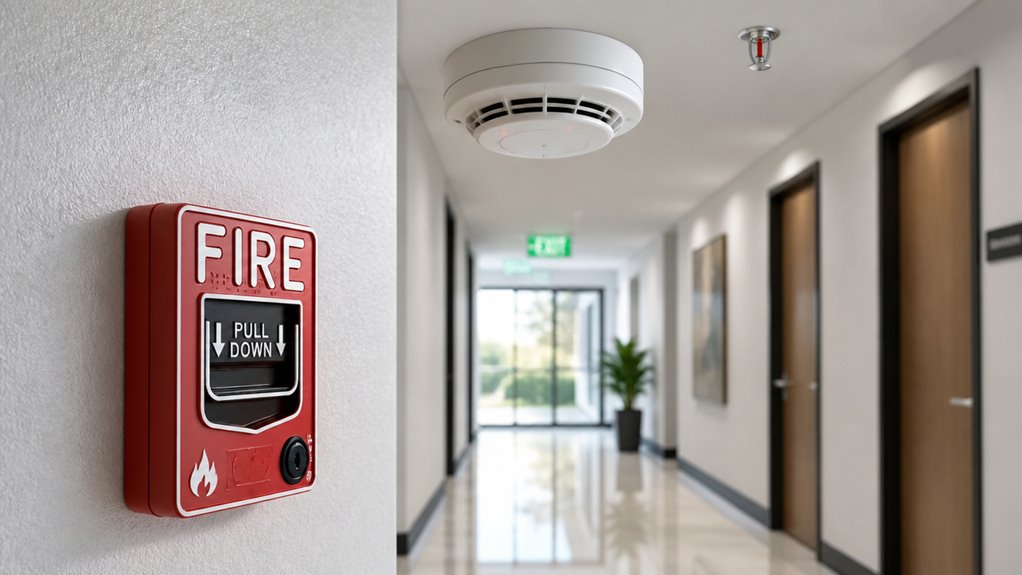

You need to install fire alarm systems when building codes like NFPA 72 and IBC 907.2 require them based on occupancy type, size, and layout.
For example, assembly areas over 50 occupants or business buildings taller than three stories trigger installation.
Hazardous zones and complex floor plans also demand alarms.
Audible and visible notifications must meet ADA and safety standards for all occupants.
Understanding these criteria helps guarantee compliance and safety. You can explore how specific conditions influence these requirements further.
Key Takeaways
- Fire alarm systems are required in buildings exceeding size or occupancy thresholds set by codes like NFPA 72 and IBC 907.2.
- Assembly spaces with over 50 occupants and business buildings taller than three stories must have fire alarm systems installed.
- Retail stores with more than 500 occupants or 100+ occupants above exit levels trigger fire alarm requirements.
- Special-use areas with hazardous materials, historic artifacts, or remote controls require specialized fire alarm detection and monitoring.
- Audible and visible notification devices are mandatory to accommodate all occupants, including those with hearing impairments, per ADA 215.1.
Fire Alarm Code Requirements Overview
While fire alarm requirements vary by occupancy type and building characteristics, you must understand the core regulatory codes that govern their installation and maintenance.
Fire alarm requirements differ by building type, making knowledge of core regulatory codes essential.
Standards like NFPA 72 specify design, performance, and upkeep of fire alarm systems. The International Building Code (IBC) 907.2 mandates system installation based on occupancy and size thresholds.
You’ll also need to comply with the Regulatory Reform Order 2005, which emphasizes risk assessments to tailor alarm needs. The Americans with Disabilities Act (ADA) 215.1 requires audible and visible notification devices to accommodate all occupants.
Local Authorities Having Jurisdiction (AHJ) enforce these mandates, ensuring adherence. A thorough grasp of these codes helps you design compliant, effective fire alarm systems that address building use, occupant load, and hazard levels.
This approach mitigates fire risks through precise, code-driven implementations. Effective project management requires rigorous adherence to NFPA 72 standards and coordination with AHJs to ensure compliance throughout the project lifecycle.
When Do Occupancy Types Need Fire Alarm Systems?
Because fire alarm requirements vary markedly by occupancy type, understanding specific triggers for each classification is essential. You need fire alarms in assembly spaces exceeding 50 occupants, business buildings taller than three stories, and retail stores with over 500 occupants.
Other criteria include occupant load above or below exit levels and specific use cases like ambulatory care or high-hazard materials.
| Occupancy Group | Trigger Condition | Example |
|---|---|---|
| Group A (Assembly) | 300+ occupants or 100+ above exit | Theaters, restaurants |
| Group B (Business) | Buildings >3 stories or 50+ above exit | Offices, ambulatory care |
| Group M (Retail) | 500+ occupants or 100+ above exit | Large stores, merchandising |
Knowing these thresholds helps you guarantee compliance and safety efficiently. Selecting the appropriate system type, such as addressable systems, can optimize location identification and maintenance in complex or critical facilities.
How Building Size and Layout Affect Fire Alarm System Installation?
Considering building size and layout plays a critical role in determining fire alarm system requirements.
You must evaluate the building’s total square footage and number of stories. Structures exceeding 30,000 square feet or three stories typically mandate alarm systems.
Complex floor plans and high-rise configurations increase detection needs due to evacuation challenges and coverage gaps.
Additionally, new constructions or significant renovations in large buildings trigger installation to meet updated codes like NFPA 72 and IBC 907.2.
You’ll also need to factor in occupant distribution across different levels, ensuring alarms accommodate both above and below exit-level areas.
Ultimately, precise analysis of spatial parameters, combined with relevant regulatory standards, guides you in designing compliant, effective fire alarm installations tailored to the building’s unique size and layout characteristics.
Addressable fire alarm systems are often preferred in these scenarios due to their scalability and precise location detection, which enhance safety and compliance in complex buildings.
Fire Alarm Requirements for Hazardous and Special Use Areas
When you manage hazardous or special use areas, fire alarm systems become critical to guarantee early detection and occupant safety.
Spaces like machinery rooms with periodic unattended operation, flammable material storage, and high-hazard industrial processes require specialized detection due to elevated fire risks.
You must install alarms in areas with remote control systems to promptly alert personnel to malfunctions or fires.
Historic buildings housing cultural artifacts also mandate fire alarm systems to protect invaluable assets.
Compliance with NFPA 72 and local Authority Having Jurisdiction (AHJ) regulations secures proper design, installation, and maintenance tailored to these high-risk environments.
Monitored systems are especially recommended in these settings because they provide automatic notification to emergency responders, significantly reducing response times and enhancing safety.
Audible and Visible Notifications in Fire Alarm Systems
Beyond installing fire alarm systems in high-risk and special-use areas, you must make certain these systems effectively communicate alerts to occupants.
Audible and visible notification devices are critical to guarantee timely evacuation and compliance with codes like ADA 215.1. You need to install horns, bells, or speakers that deliver clear, intelligible sound levels across all occupied spaces.
Audible and visible devices ensure clear alerts for timely evacuation and compliance with ADA 215.1 standards.
Simultaneously, visible signals such as strobe lights must be strategically located to accommodate occupants with hearing impairments. The spacing, intensity, and synchronization of these devices must meet NFPA 72 standards, preventing signal overlap or dead zones.
Your design should consider occupancy type, building layout, and occupant load to optimize notification coverage. This ensures every occupant receives an unmistakable alert during emergencies.
Failure to comply risks occupant safety and regulatory penalties. Regular inspection frequencies and maintenance ensure these notification devices remain fully operational and compliant with safety standards.
Frequently Asked Questions
How Often Should Fire Alarm Systems Be Tested and Maintained?
You should test fire alarm systems at least annually, following NFPA 72 standards, which specify detailed inspection, testing, and maintenance procedures.
Monthly visual inspections of control panels and devices guarantee proper functionality.
Quarterly testing of initiating devices and notification appliances is critical.
You must maintain thorough records of all tests and repairs.
Regular maintenance helps identify faults early, ensuring system reliability and compliance with local codes and safety regulations.
What Are Common Causes of False Fire Alarms in Commercial Buildings?
False fire alarms in commercial buildings often act like mischievous gremlins disrupting your day.
You’ll find them triggered by dust or dirt in detectors, steam from kitchens, or even strong chemicals used in cleaning.
Electrical issues, like faulty wiring or power surges, can also spark false alerts.
Understanding these causes helps you fine-tune maintenance and reduce unnecessary disruptions.
This ensures your fire alarm system stays reliable and precise.
Can Fire Alarm Systems Be Integrated With Security and Building Automation?
Yes, you can integrate fire alarm systems with security and building automation.
This integration enables real-time data sharing, coordinated emergency responses, and centralized control.
For example, when the fire alarm triggers, your security system can automatically release exit doors and notify emergency services.
Building automation can adjust HVAC systems to limit smoke spread.
Such integration enhances safety, operational efficiency, and compliance with regulatory standards like NFPA 72 and IBC 907.2.
Are There Specific Fire Alarm Requirements for Historic Residential Homes?
You might think historic residential homes are exempt from fire alarm mandates, but they typically require tailored systems to protect cultural artifacts and maintain structural integrity.
Codes often demand sensitive installation of alarms that comply with NFPA 72 and local AHJ rules, balancing preservation with safety.
You’ll need to select low-impact, wireless, or concealed devices that provide effective detection without damaging historic features. This ensures compliance and heritage protection simultaneously.
What Training Is Required for Staff to Respond to Fire Alarm Activations?
You must make certain staff receive fire alarm response training covering alarm recognition, evacuation procedures, and communication protocols.
Training includes identifying alarm signals, understanding building-specific hazards, and using fire safety equipment.
Regular drills and refresher courses keep skills sharp. Additionally, you need to train designated personnel in fire extinguisher use and emergency shutdowns.
Compliance with NFPA 72 and local authority mandates guides your training content and frequency to maintain effective emergency readiness.
Final Checklist for Fire Alarm System Requirements
Think of fire alarm systems as vigilant guardians in a fortress.
Just as a castle’s watchtowers alert you to approaching danger, fire alarms must be installed based on occupancy, size, and special hazards to guarantee timely warnings.
You can’t overlook their role in safeguarding lives and property.
By understanding when and where these systems are required, you equip your building with a precise, reliable defense, turning complexity into clarity and risk into safety.