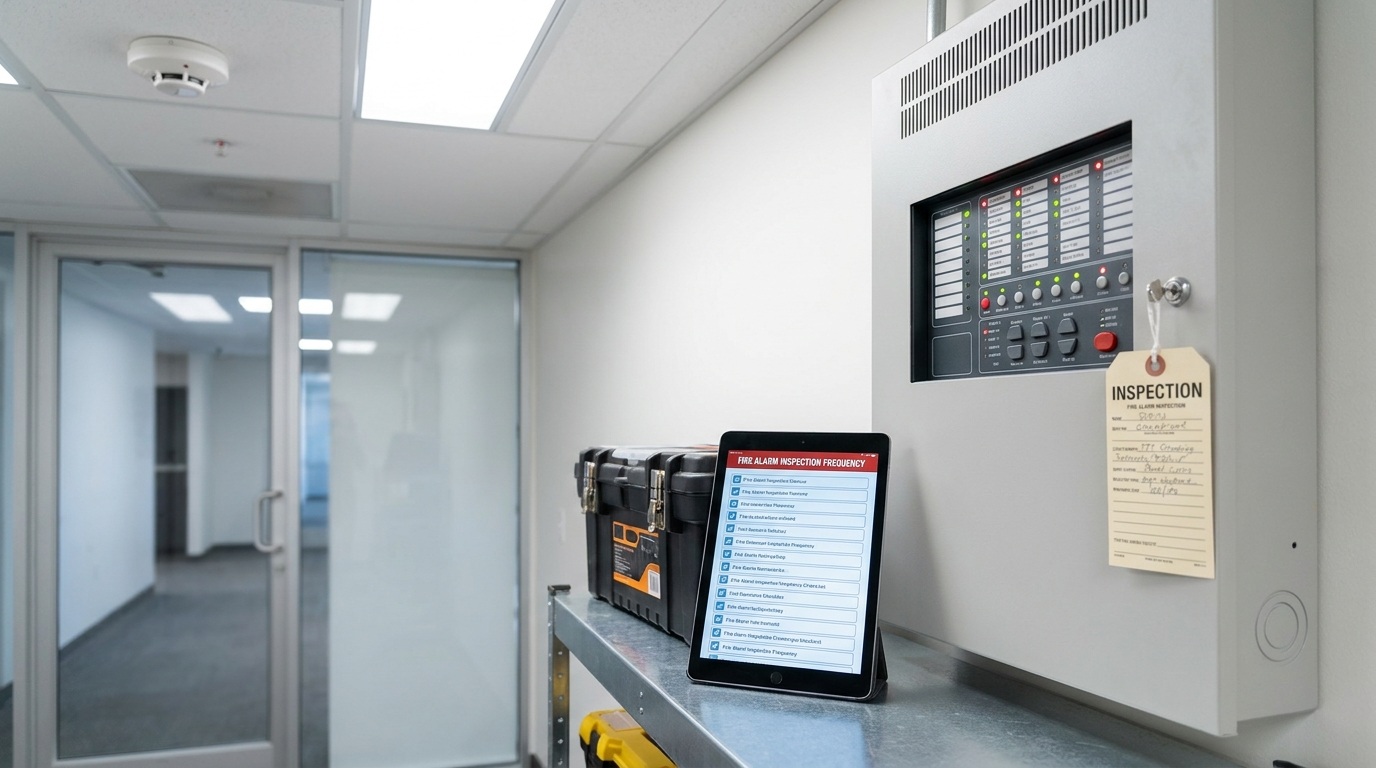

You should inspect fire alarms weekly with visual checks to spot damage or faults and test battery backups.
Monthly, activate devices like smoke detectors and call points to confirm alarms sound properly throughout the building.
Annual inspections by qualified engineers guarantee thorough system assessments and compliance with standards like BS 5839-1 or NFPA 72.
Inspection frequency may increase based on your building’s risk level and type.
Understanding these requirements helps you maintain safety and meet regulations effectively.
Key Takeaways
- Fire alarms typically require weekly visual inspections to check control panels and device status for faults or damage.
- Monthly functional tests must activate devices like call points and detectors to ensure alarms sound throughout the building.
- Annual professional inspections by qualified engineers assess the entire system, including battery backups and hidden faults.
- Inspection frequency varies by building type, with industrial and high-risk sites often needing more frequent inspections.
- Detailed records of all inspections, tests, and maintenance are essential for regulatory compliance and safety audits.
Fire Alarm Inspection Frequency: Visual and Functional Testing
Regular visual and functional testing of fire alarm systems is essential to ensure early detection of faults and maintain system reliability.
You should conduct weekly visual inspections to verify that control panels display normal status without fault messages.
Additionally, check that detectors, call points, sounders, and indicator lights remain unobstructed and undamaged.
Battery backups must also be checked during these inspections.
Functional testing, typically monthly, involves activating different devices, such as manual call points, to confirm alarm responses and audibility throughout the premises.
The frequency of these inspections depends on building type, fire risk, and local regulations, with industrial sites often requiring stricter routines.
Keeping detailed records of all tests ensures compliance with standards like BS 5839-1 and enables prompt correction of any faults.
This practice helps preserve system integrity and occupant safety.
Fire alarm project managers play a crucial role in this process by managing documentation and ensuring adherence to testing schedules and regulatory compliance.
Weekly and Monthly Fire Alarm Testing Explained
Weekly and monthly fire alarm testing plays an essential role in maintaining system reliability and occupant safety. Each week, you should visually inspect the control panel for fault messages and guarantee detectors, call points, sounders, and indicator lights are undamaged and unobstructed.
Battery backups must also be checked. Functional testing involves activating different devices in rotation. Manual call points and alarm sounders must respond audibly throughout the premises.
Monthly tests expand on this by verifying that all initiating devices correctly trigger the alarm circuit and that sounders work building-wide.
Smoke and heat detectors require monthly functional checks in both commercial and residential settings. By following this regimen, you catch failures early and guarantee fire alarms function effectively until the annual professional inspection. Consistently logging results supports compliance and fault investigation.
It is also crucial to document troubleshooting by recording date, time, system status, diagnostic codes, tools used, and corrective actions to maintain accountability and support maintenance records.
How Inspection Frequency Varies by Building Type and Risk?
Although fire alarm inspection schedules share common elements, the frequency and scope vary markedly depending on the building type and associated fire risk.
Fire alarm inspection schedules differ significantly by building type and inherent fire risk factors.
For instance, commercial premises require weekly tests to verify system readiness. Industrial sites often mandate daily visual inspections due to higher hazards.
Residential buildings generally follow weekly visual checks, but some jurisdictions may recommend more frequent functional tests based on occupant vulnerability or fire load.
High-risk environments, such as healthcare facilities or chemical plants, demand rigorous routines combining daily, weekly, and monthly inspections.
These also include thorough annual servicing by certified engineers. Your inspection plan must align with local regulations and standards like BS 5839-1 or NFPA 72.
Tailoring inspection frequency guarantees peak fire alarm reliability and compliance. This reduces false alarms and enhances occupant safety.
Regular testing and maintenance help ensure code-compliant interconnected alarms function properly throughout the system.
Why You Should Never Skip Annual Fire Alarm Inspections?
When you skip your annual fire alarm inspection, you risk overlooking hidden faults that routine checks might miss.
These faults can compromise your system’s reliability during an emergency.
Annual inspections, performed by qualified engineers, provide detailed assessments that weekly or monthly tests can’t cover.
Here’s why you should never skip them:
- Complete battery evaluation guarantees backup power reliability.
- Thorough component testing detects wear or internal faults unnoticed in routine checks.
- Manual call points undergo full activation tests, confirming system responsiveness.
- Engineers identify and rectify potential failures before they escalate.
Additionally, inspections ensure compliance with local fire codes and standards to maintain safety and legality.
Fire Alarm Testing Records and Compliance Requirements
Because fire alarm testing is critical to safety, you must keep detailed records of all inspections, tests, and maintenance activities. These logs guarantee compliance with standards like BS 5839-1:2019 and NFPA 72. They also provide traceability for audits or investigations. Accurate records help identify recurring faults and verify that tests occur at the required frequency. Additionally, maintaining these records supports compliance with local alarm system permit requirements and helps avoid fines or enforcement actions.
| Test Type | Record Details Needed |
|---|---|
| Weekly Visual Check | Date, devices inspected, faults |
| Monthly Functional | Devices tested, results, issues |
| Annual Professional | Engineer name, service details |
| Fault Investigations | Incident date, resolution steps |
Frequently Asked Questions
What Tools Are Needed for Professional Fire Alarm Inspections?
You’ll need specialized tools like a multimeter to check electrical continuity and voltage, a smoke or heat detector tester to simulate alarm conditions, and a handheld device programmer for system diagnostics.
A ladder helps access ceiling devices safely. Don’t forget a battery tester to assess backup power and a sound level meter to verify alarm audibility.
A notebook or digital device is essential for logging results and compliance records during professional inspections.
How Can I Train Staff to Perform Weekly Fire Alarm Tests?
You can train staff to perform weekly fire alarm tests by demonstrating how to check control panels, inspect devices for damage, and activate manual call points.
Provide clear instructions, hands-on practice, and detailed checklists. Emphasize rotating device testing, documenting results, and recognizing fault indicators.
Reinforce safety protocols and ensure understanding through quizzes. Schedule regular refresher sessions.
This approach builds confidence, accuracy, and compliance in maintaining your fire alarm system’s reliability.
What Are Common Causes of False Fire Alarm Activations?
Common causes of false fire alarm activations include cooking smoke, steam from showers, dust accumulation on detectors, and insect interference.
Electrical issues like faulty wiring or low batteries also trigger false alarms. You should watch for environmental factors such as aerosols or strong chemical fumes.
Regular maintenance and cleaning help reduce these triggers, ensuring your fire alarm system stays reliable and minimizes unnecessary disruptions.
How Do Weather Conditions Affect Fire Alarm System Reliability?
Think of your fire alarm system as a ship sailing through storms. Weather conditions like humidity, extreme heat, or cold can corrode sensors, trigger false alarms, or even cause system failures.
You’ll want to protect detectors from moisture buildup and temperature swings, as they affect sensitivity and battery life. Regular inspections catch weather-induced wear early, ensuring your system stays reliable when you need it most.
Don’t let weather sneak up on your safety.
Can Smart Home Systems Integrate With Traditional Fire Alarms?
Yes, you can integrate smart home systems with traditional fire alarms.
By connecting compatible smoke detectors and alarm panels to your smart hub, you’ll get real-time alerts on your phone and automated responses like turning on lights or releasing door locks.
Make certain compatibility between devices and follow manufacturer guidelines for secure integration.
This setup enhances safety by combining proven fire alarm technology with smart monitoring and control features.
Stay Compliant With Regular Fire Alarm Inspections
You wouldn’t ignore a fire alarm blaring in your home, so don’t skip its inspections.
Ironically, the very device meant to save you can become silent if neglected.
Weekly, monthly, and annual checks aren’t just suggestions; they’re lifesaving necessities tailored to your building’s risk.
Keep detailed records, follow compliance, and stay vigilant.
After all, the only thing worse than a false alarm is no alarm at all when you truly need it.