
You won’t find smoke detectors installed inside most rental cars because major companies like Hertz and Enterprise enforce strict no-smoking policies through post-rental inspections instead.
They avoid onboard detectors to minimize maintenance, false alarms, and liability risks. Instead, inspections use visual checks, odor sensors, and residue swabs to confirm violations.
However, emerging detection technologies and telematics integration are starting to change how rental fleets monitor smoking compliance and manage enforcement more effectively.
Key Takeaways
- Major rental companies do not install onboard smoke detectors; they enforce no-smoking policies through post-rental inspections.
- Rental agreements explicitly prohibit smoking and vaping inside vehicles, relying on visual and odor-based inspections.
- New smoke detector technologies exist but are not widely adopted due to cost, maintenance, and false positive concerns.
- Detection primarily occurs via post-rental visual checks, odor sensors, residue swabs, and comparison with pre-rental photos.
- Enforcement involves cleaning fees for violations, supported by documented evidence rather than real-time smoke detector alerts.
Do Rental Cars Have Smoke Detectors?
Why don’t rental cars typically come equipped with smoke detectors?
You’ll find that major rental companies like Hertz, Avis, and Enterprise don’t install such devices because industry standards emphasize strict smoking bans enforced through inspection rather than onboard hardware.
Major rental companies enforce strict no-smoking policies through inspections, not by installing smoke detectors in vehicles.
Instead of detectors, these companies rely on post-rental protocols: digital photo analysis, odor sensors, and residue swabbing detect smoke presence after use.
Installing smoke detectors in a shared fleet adds significant cost and maintenance complexity, which companies avoid by utilizing efficient verification techniques.
When you rent a car, the agreement explicitly prohibits smoking.
Breaches are identified through multi-tiered detection methods after the rental period, not during.
This approach balances operational costs with effective policy enforcement without the need for embedded smoke detection technology.
Additionally, unauthorized covering or tampering with smoke detectors is often illegal and can lead to fines or other penalties, emphasizing why rental vehicles avoid onboard detectors to reduce liability risks related to smoke detector tampering.
Reasons Rental Cars Lack Smoke Detectors
Although smoke detectors could enhance in-vehicle monitoring, rental car companies avoid installing them due to high costs and maintenance demands.
Equipping a shared fleet with reliable smoke detection technology requires substantial upfront investment and ongoing calibration to maintain accuracy.
Additionally, these systems must withstand vehicle vibrations, temperature fluctuations, and frequent cleaning, increasing operational complexity.
Instead, operators prioritize post-rental inspection protocols using digital photo analysis, odor sensors, and residue swabbing to detect smoking violations efficiently.
Since smoke detectors add hardware complexity and potential false positives, companies focus on cost-effective, scalable verification methods that align with existing fleet management workflows.
Consequently, the absence of onboard smoke detectors reflects a strategic balance between technological feasibility, economic constraints, and enforcement effectiveness in high-turnover rental environments.
Moreover, the need for reliable operation without internet dependency further discourages integrating smart, cloud-connected smoke detection systems in rental vehicles.
How Rental Companies Enforce No-Smoking Rules?
You know how every rental agreement has that unmistakable no-smoking clause? It’s pretty clear: smoking or vaping in the vehicle is a definite no-go.
Rental companies take these rules seriously, and they’ve got some impressive tech to help enforce them.
For starters, they use advanced detection technologies. Think AI-analyzed photos, odor sensors, and even residue swab tests. Sounds high-tech, right?
After you drop off the car, trained inspectors come in for a quick check. They’re on the lookout for any signs of smoking before they finalize any charges.
It’s all about keeping those cars fresh and clean for the next renter! Some companies also invest in devices with sensor limitations that can affect the accuracy of smoke detection.
Smoking Policy Clauses
When you rent a vehicle, the rental agreement explicitly prohibits smoking, vaping, or using tobacco products inside the car. Rental companies enforce these rules through specific clauses that outline penalties and inspection procedures.
Violations typically result in substantial cleaning fees, often ranging from $250 to over $1,000. To guarantee compliance, companies rely on a combination of pre- and post-rental documentation and physical inspections.
Here’s how they enforce no-smoking policies:
- Digital photo documentation to detect nicotine stains on upholstery.
- Odor detection during vehicle drop-off inspections.
- Surface residue swabbing for chemical analysis of tobacco markers.
- Automatic fee application upon confirmed violation evidence.
These measures guarantee strict adherence to non-smoking policies across fleets. Additionally, rental companies often use inspection procedures that are designed to respect customer privacy while ensuring compliance with their no-smoking policies.
Detection Technologies Used
Since rental companies aim to maintain smoke-free vehicles, they employ advanced detection technologies to enforce no-smoking rules effectively.
You’ll find that handheld electronic noses detect volatile organic compounds like acetaldehyde and cotinine at levels as low as 0.02 parts per billion, indicating tobacco smoke presence.
Additionally, digital photo analysis uses AI algorithms to identify nicotine stains on high-contact surfaces such as headrests and armrests.
Surface residue swabbing collects samples from seat belts and door handles, which lab tests confirm for nicotine metabolites, providing solid evidence.
These combined technologies create a three-tiered verification system: visual, chemical, and olfactory. This helps you avoid disputes by ensuring accurate detection without onboard smoke detectors in rental cars.
Regular inspection routines ensure that detection devices remain calibrated and effective in identifying smoke residues over time.
Post-Rental Inspection
Inspectors conduct a thorough 3-minute evaluation immediately upon vehicle drop-off to detect any signs of smoking, such as residue or odor. Rental companies rely on a standardized protocol to enforce no-smoking rules effectively.
During this inspection, they:
- Visually scan upholstery and headrests for nicotine stains or discoloration.
- Use handheld electronic noses to measure volatile organic compounds indicating smoke.
- Swab high-contact surfaces like seat belts and door handles for chemical residue.
- Compare findings against pre-rental digital photos to confirm changes or violations.
If smoking evidence emerges, they impose cleaning fees based on contract terms. To protect yourself, document the vehicle’s condition with timestamped videos before returning it. This inspection system guarantees accurate, timely enforcement without onboard smoke detectors, as most rental vehicles do not have interconnected smoke detectors installed due to compatibility and installation constraints.
What Technologies Detect Smoking Inside Rental Cars?
Although rental cars rarely come equipped with onboard smoke detectors, rental companies employ several advanced technologies to detect smoking inside their vehicles.
You’ll find handheld electronic noses that sense volatile organic compounds like acetaldehyde and cotinine at concentrations as low as 0.02 parts per billion. These sensors identify tobacco smoke residues with high sensitivity.
Additionally, surface residue swab testing collects samples from areas such as seat belts and door handles for lab analysis to confirm nicotine presence.
Digital photo analysis powered by AI algorithms detects nicotine staining patterns on headrests and consoles by identifying specific yellow-brown gradients.
Some fleets integrate telematics-connected air quality monitors that trigger immediate alerts when smoke particles exceed set thresholds. This enables real-time detection and policy enforcement without relying on onboard smoke detectors.
To ensure accurate detection and minimize false positives, it is essential to consider environmental factors such as residual odors and contamination that might affect sensor readings.
How Post-Rental Inspections Identify Smoking Violations?
When you drop off a rental car, inspectors jump into action with a quick, thorough 3-minute check for any signs of smoke residue and odors. They use tools like digital photos, odor sensors, and surface swabs to gather solid evidence. It’s pretty impressive how they can pinpoint issues so quickly!
Now, if you want to protect yourself, it’s a good idea to document the vehicle’s condition. Taking timestamped videos can really help if you end up needing to dispute any charges later on. Trust me, having that visual evidence can be a game-changer.
And speaking of disputes, if you find yourself in one, make sure to communicate in writing. Referencing specific contract clauses and including your collected evidence can be crucial in resolving any cleaning fee charges. It’s all about being prepared!
Keep in mind that rental cars typically do not have built-in smoke detectors, so detection relies heavily on post-rental inspections rather than onboard alert systems.
Inspection Procedures Overview
Because rental car companies prioritize maintaining smoke-free interiors, post-rental inspections employ a multi-step approach to identify smoking violations efficiently. When you hand back a vehicle, inspectors follow a systematic procedure combining visual, olfactory, and chemical assessments to detect evidence of smoking.
- Visual Examination: Inspectors scan upholstery and surfaces for discoloration or burn marks.
- Odor Detection: Specialized sensors or trained personnel check for lingering tobacco or vape odors.
- Surface Sampling: Swabs collect residue from high-contact areas like seat belts and headrests.
- Data Logging: Findings are documented with timestamped photos and sensor readouts for verification.
This rigorous process guarantees smoking breaches are identified with accuracy, upholding company policies and enabling fair enforcement without onboard smoke detectors. Additionally, maintaining precise device identification through a unique identifier system enhances the integrity of inspection data management.
Evidence Collection Methods
Following the inspection procedures, rental companies rely on multiple evidence collection methods to identify smoking violations accurately. You’ll find that digital photo documentation plays a key role, using AI algorithms to detect nicotine stains on surfaces like headrests and armrests.
Additionally, handheld electronic noses measure volatile organic compounds associated with tobacco smoke, detecting concentrations as low as 0.02 parts per billion. Surface residue swab tests also collect samples from high-contact areas, with lab analysis confirming nicotine or cotinine presence.
These combined methods form a three-tiered verification system: digital imaging, odor sensing, and chemical residue testing. This provides robust, admissible evidence to enforce no-smoking policies and justify cleaning fees. This systematic approach guarantees smoking violations are identified with precision and fairness.
Before finalizing any violation decision, inspectors always verify safety by ensuring there is no actual fire hazard present during the inspection process.
Dispute Resolution Process
Although post-rental inspections typically last only a few minutes, they play a critical role in identifying smoking violations through a systematic evaluation of smoke residue and odors.
When you bring back a rental car, inspectors use a precise protocol to detect evidence of smoking:
- Visual examination for discoloration or smoke stains on upholstery and trim.
- Electronic odor sensors measure volatile organic compounds linked to tobacco smoke.
- Surface swab tests collect samples from high-touch areas like seat belts and door handles.
- Digital photo documentation compares pre- and post-rental conditions for nicotine residue patterns.
If violations are found, companies notify you with supporting evidence and contract references.
You can contest charges by providing timestamped videos or written communication, ensuring a fair dispute resolution process based on objective inspection results.
How New Smoke Detector Tech Is Changing Rental Fleets?
As rental fleets grow larger and more diverse, new smoke detector technologies are transforming how companies enforce no-smoking policies.
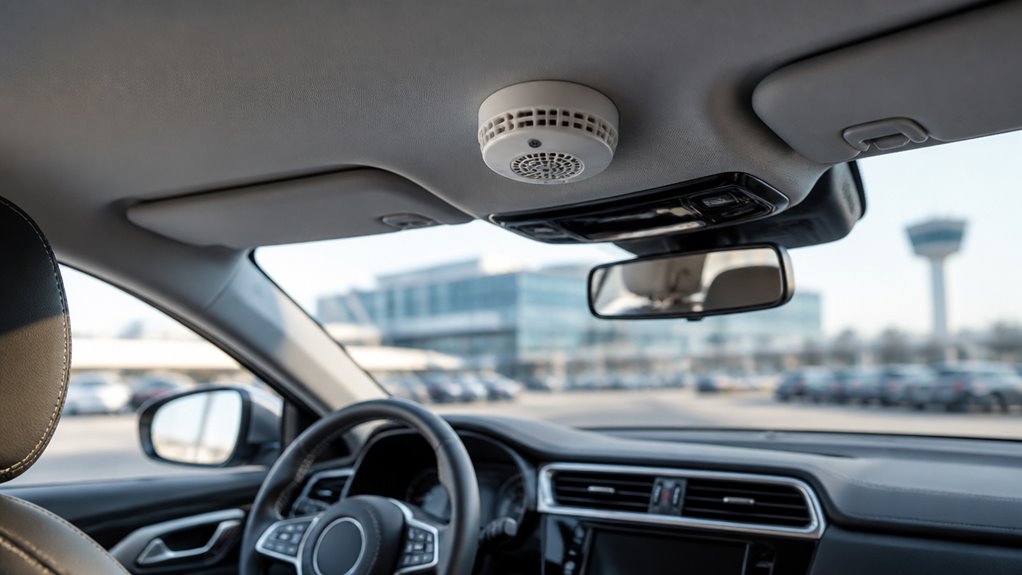
You’ll find that automated detectors, often mounted on windshields, continuously monitor air quality by measuring smoke particle concentrations.
These sensors connect to telematics systems, providing real-time alerts when smoke thresholds are exceeded.
This immediate feedback enables fleet managers to quickly identify violations, reducing reliance on post-rental inspections and subjective assessments.
The integration of volatile organic compound sensors with digital platforms improves accuracy and fairness in enforcing rules.
By leveraging this technology, you can expect lower cleaning costs, faster incident resolution, and enhanced compliance across shared vehicles.
These advancements mark a significant shift from traditional detection methods to proactive, data-driven fleet management strategies.
Frequently Asked Questions
Are Cleaning Fees for Smoking Violations Tax-Deductible?
Cleaning fees for smoking violations on rental cars typically aren’t tax-deductible for personal use because they’re considered personal expenses.
However, if you rent a car strictly for business and smoking fees arise due to business activities, you might deduct them as a business expense.
You should keep detailed records and consult a tax professional, as IRS rules vary and require clear justification linking the expense directly to business purposes.
Can Renters Request a Smoke-Free Guarantee Before Pickup?
You can’t always demand a smoke-free guarantee before pickup, but you should definitely ask.
While rental companies enforce strict no-smoking policies, they rarely install onboard detectors. Instead, they rely on post-return inspections and cleaning fees.
To increase your chances, request a non-smoking vehicle explicitly. Document the car’s condition during pickup and review the rental agreement closely to understand their smoking enforcement and how they handle violations.
How Long Does It Take to Remove Smoke Odor From a Vehicle?
Removing smoke odor from a vehicle typically takes 24 to 72 hours using professional cleaning methods.
You’ll need thorough ventilation, ozone treatments, or activated carbon filters to neutralize volatile organic compounds effectively.
Surface cleaning of upholstery and air ducts also speeds the process.
Residual odors can persist longer without specialized equipment.
For rental cars, cleaning protocols aim for quick turnaround while ensuring no detectable smoke traces remain before the next renter’s use.
Do Rental Cars Have Designated Smoking Areas Nearby?
Rental car companies typically don’t provide designated smoking areas near their pickup or drop-off locations.
If you want to smoke, you’ll usually need to find a public area outside the rental facility since smoking is strictly prohibited inside vehicles.
You should check local regulations and rental location policies beforehand.
Avoid smoking near the car to prevent cleaning fees and potential contract violations that can result from residual smoke odor or damage.
Are Smoke Detectors Mandatory in Rental Cars Outside North America?
No, smoke detectors aren’t mandatory in rental cars outside North America either. Most regions lack specific regulations requiring onboard smoke detection in vehicles.
Instead, rental companies rely on strict no-smoking policies, post-rental inspections, and odor detection technologies to enforce compliance.
You’ll find that enforcement depends on contractual agreements and residue testing rather than legally mandated smoke detectors integrated into the car’s interior systems.
What Drivers Should Know Before Smoking in a Rental Car
You might wonder why rental cars don’t have built-in smoke detectors despite strict no-smoking policies.
The truth is, current technology relies on sensors and thorough inspections rather than traditional detectors.
These methods effectively identify violations without complicating vehicle maintenance or safety systems.
As smoke detection tech advances, expect rental fleets to adopt smarter solutions, enhancing enforcement precision.
So, isn’t it time rental companies embraced these innovations for a cleaner, safer driving experience?