
To dispose of a smoke alarm, first identify its type: ionization, photoelectric, or dual-sensor. Check the label or manufacturer’s site for details.
Remove all batteries carefully and tape the terminals to prevent fire risk. Never toss ionization or dual-sensor alarms in regular trash.
Take them to hazardous waste facilities or use manufacturer take-back programs. Photoelectric alarms can go to electronic recyclers.
For commercial units, follow strict compliance rules. Understanding these steps guarantees safe, legal disposal and environmental protection. You’ll find more details and options ahead.
Key Takeaways
- Identify your smoke alarm type (ionization, photoelectric, or dual-sensor) by checking the label or manufacturer information before disposal.
- Remove all batteries carefully, especially lithium or sealed long-life types, and recycle batteries separately to prevent hazards.
- Never dispose of ionization or dual-sensor alarms in regular trash; use hazardous waste facilities or manufacturer take-back programs.
- Photoelectric alarms can be recycled as electronic waste at authorized e-waste centers, keeping the unit intact without dismantling.
- For commercial or large-scale disposal, use licensed waste carriers and maintain records to comply with hazardous waste regulations.
How to Identify Your Smoke Alarm Type?
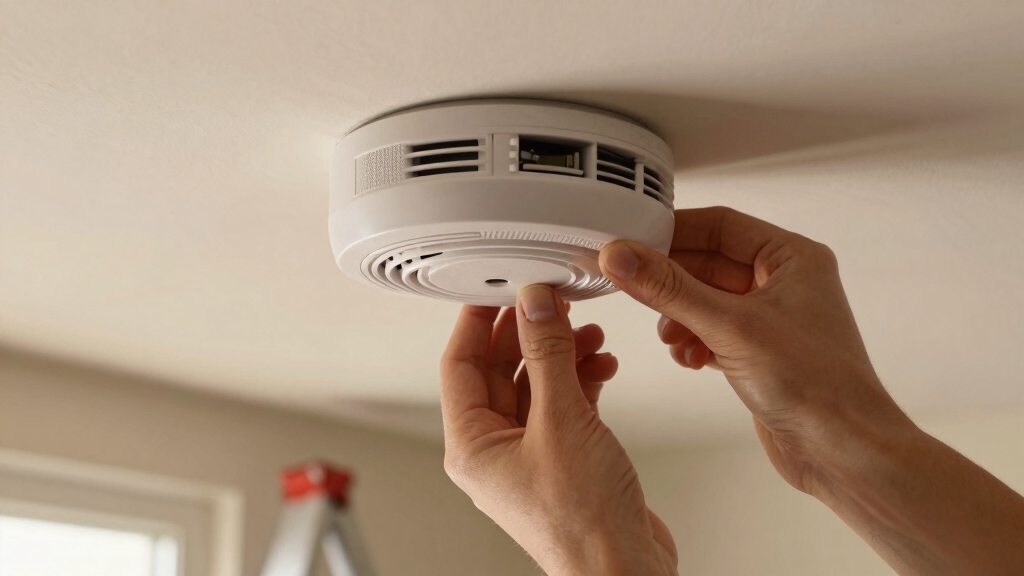
To figure out how to dispose of your smoke alarm properly, you first need to identify its type.
Check the product label or visit the manufacturer’s website to determine if your unit is ionization, photoelectric, or dual-sensor.
Ionization alarms contain radioactive material and usually display a crossed-out wheelie bin symbol, indicating special disposal requirements.
Photoelectric alarms lack radioactive components and can often be recycled with electronic waste.
If your smoke alarm is dual-sensor, combining both technologies, treat it as an ionization unit for disposal safety.
Identifying your smoke alarm type precisely guarantees you follow appropriate disposal protocols, preventing environmental contamination and complying with hazardous waste regulations.
Don’t guess. Verify the model information to handle your smoke alarm responsibly.
The small amount of americium-241 in ionization alarms is securely enclosed to prevent exposure during normal use or disposal, making proper handling essential to avoid radioactive material release.
How to Safely Remove Batteries Before Disposal?
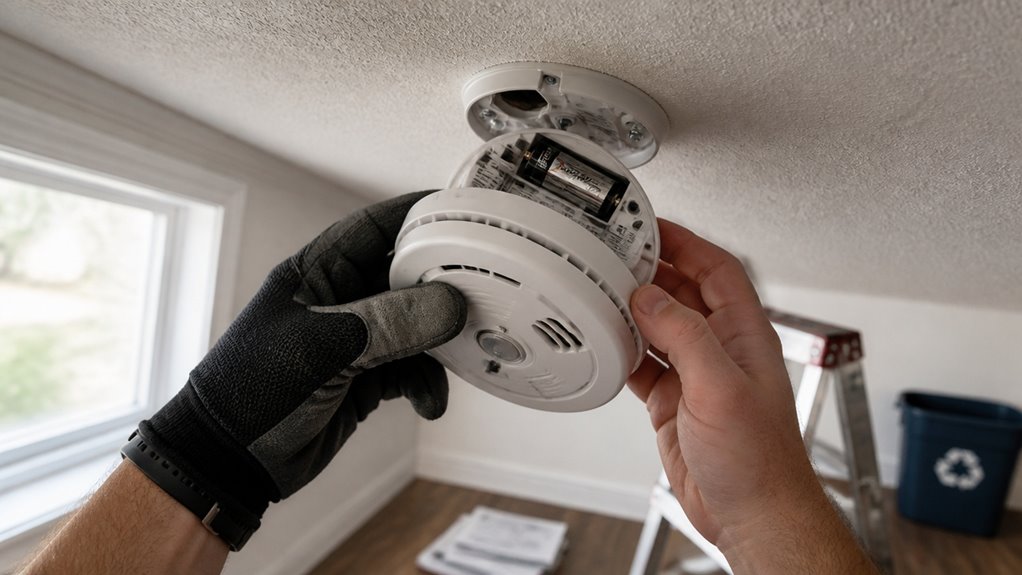
Before disposing of your smoke alarm, remove all backup batteries carefully to eliminate any fire hazards.
Start by opening the battery compartment, usually located on the back or side of the unit.
Gently extract each battery without forcing or damaging the compartment.
Standard alkaline batteries can typically be discarded with regular household waste, but lithium or sealed 10-year batteries require separate recycling.
Handle batteries with care to avoid punctures or leaks.
Never attempt to dismantle the smoke alarm’s internal circuitry during battery removal, as this could expose hazardous components.
Removing batteries not only prevents potential fires but also guarantees compliance with disposal regulations.
Keep the smoke alarm intact after removal, preserving the circuit board and wiring for safe subsequent disposal.
If your smoke alarm has an embedded battery, do not attempt to remove it and instead keep the unit intact for specialized handling.
Where to Dispose of Ionization and Dual Sensor Smoke Alarms?
Once you’ve carefully removed the batteries from your smoke alarm, focus on disposing of ionization and dual sensor units properly, as they contain radioactive material.
You must never throw these alarms in regular trash or recycling bins. Instead, use designated hazardous waste facilities or community collection events to guarantee safe handling.
Many manufacturers also offer take-back programs for these units.
It is important to note that sealed battery designs complicate recycling due to the inability to remove the battery easily, which may require specialized recycling programs.
| Disposal Location | Key Details |
|---|---|
| Hazardous Waste Facility | Accepts ionization alarms safely |
| Manufacturer Take-Back | Mail-back or drop-off options |
| Community Collection Events | Periodic hazardous waste drop-off |
| Retailer Recycling Bins | Some accept smoke alarms |
Always check local regulations to comply with specific disposal rules for ionization and dual sensor smoke alarms.
How to Recycle Photoelectric Smoke Alarms?
When you’re ready to recycle a photoelectric smoke alarm, start by confirming it doesn’t contain any radioactive components, which simplifies disposal markedly.
Remove all batteries first, especially lithium or long-life types, which require separate recycling. Keep the unit intact to avoid damaging electronic circuits.
Check with your local e-waste recycler or authorized collection points, as photoelectric alarms typically qualify as electronic waste under WEEE regulations.
Avoid placing them in regular trash or compost bins to guarantee responsible handling.
Certified recyclers will dismantle the device safely, recovering valuable materials while preventing environmental harm.
Always consult manufacturer guidelines for any specific disposal instructions.
Proper battery maintenance during the device’s life ensures safer disposal and reduces environmental impact.
Community Drop-Offs and Manufacturer Take-Backs for Smoke Alarms
You can drop off your old smoke alarms at community collection points or take advantage of manufacturer take-back programs designed to handle these devices safely.
Many local recycling centers and hazardous waste facilities provide permanent drop-off bins specifically for smoke alarms. This ensures proper disposal, especially for ionization units containing radioactive materials.
Manufacturers such as Kidde and First Alert often run take-back programs, allowing you to send smoke detectors directly for responsible recycling.
Before dropping off, remove batteries to prevent fire risks. Retailers like Home Depot may also accept smoke alarms for recycling.
Always check with the original manufacturer or local waste authorities for program availability and specific instructions.
Using these community and manufacturer options guarantees compliance with safety regulations and helps prevent environmental contamination from improperly discarded smoke alarms.
Additionally, it is important to tape battery terminals before disposal to prevent short circuits and enhance safety during handling.
Commercial Disposal and Compliance for Smoke Alarms
When it comes to disposing of smoke alarms in a commercial setting, it’s really important to use a licensed waste carrier. This ensures that hazardous materials are handled properly.
Now, if you’re dealing with ionization units, take extra care! These can’t just be tossed in the landfill. There are strict regulatory guidelines you need to follow here.
And remember, it’s always a good idea to check in with your local authorities. They can help you make sure your business is meeting all the legal disposal requirements. It’s better to be safe than sorry!
Additionally, proper containment and hazardous material spill prevention during disposal are essential to avoid environmental contamination and health risks.
Licensed Waste Carrier
Since commercial smoke alarms often contain components classified as hazardous waste, businesses must engage licensed waste carriers to handle their disposal. These carriers assure compliance with environmental laws and prevent illegal dumping.
You should select a licensed waste carrier who holds valid permits for handling electronic and hazardous waste. They should provide documentation and waste transfer notes.
Additionally, they should offer specialized collection services for smoke alarms and assure recycling or treatment according to regulations. It’s important that they maintain secure transport to authorized disposal facilities.
Using a licensed carrier protects your business from legal penalties and environmental risks. Always verify the carrier’s credentials and keep records of disposal actions.
This professional approach guarantees that commercial smoke alarms, especially ionization types, are managed safely. It supports your compliance obligations and environmental responsibility.
Proper disposal often requires following special handling rules to ensure environmental safety and regulatory compliance.
Hazardous Waste Handling
In handling commercial smoke alarms classified as hazardous waste, strict adherence to regulatory protocols guarantees safety and legal compliance.
You must make certain that ionization smoke alarms, containing radioactive material, are never discarded with general refuse.
Instead, arrange disposal through licensed WEEE waste carriers who specialize in hazardous materials.
Separate these units from regular commercial waste and place them in designated WEEE bins for collection.
Avoid sending any smoke alarms to landfills, as improper handling risks environmental contamination.
Consult local authorities to confirm approved disposal routes and maintain documentation for compliance audits.
Your waste carrier should provide certified recycling and disposal services that prevent landfill entry and ensure responsible processing.
Following these procedures protects your business, the environment, and public health while meeting hazardous waste handling obligations efficiently.
Additionally, remember that Kidde smoke alarms should be replaced every 10 years due to sensor sensitivity degradation to guarantee proper detection and safety.
Regulatory Compliance Guidelines
Although handling commercial smoke alarms involves complex regulations, you can guarantee compliance by following established disposal protocols designed to protect health and the environment.
For commercial smoke alarms, especially ionization types containing radioactive material, adhering to legal requirements is critical.
You must never discard them in general refuse or landfill. Instead, follow these guidelines:
Use licensed WEEE waste carriers for collection and disposal.
Separate smoke alarms from regular business waste and place them in designated WEEE bins.
Treat ionization detectors as hazardous waste requiring specialized handling.
Contact local authorities for disposal advice and compliance verification.
Make certain all waste carriers provide proof of responsible recycling and non-landfill processing.
Regular maintenance and testing are essential to ensure smoke alarms remain functional throughout their service life, reducing the risk of early disposal due to malfunctioning interconnected alarms.
Frequently Asked Questions
Can I Reuse Parts From My Old Smoke Alarm?
You generally shouldn’t reuse parts from your old smoke alarm, especially if it’s an ionization type containing radioactive material.
Components like sensors and circuit boards are calibrated and sealed for safety and reliability.
Tampering risks malfunction or exposure to hazardous substances.
Instead, replace the entire unit with a new, certified model.
If you want to salvage batteries, only do so if they’re in good condition and removable.
Follow disposal rules carefully.
How Long Does a Smoke Alarm Typically Last Before Disposal?
A smoke alarm typically lasts about 8 to 10 years before you need to replace it.
After this period, its sensors and internal components degrade, reducing reliability.
Check the manufacture date on the back of the unit to confirm its age.
If it’s older than 10 years or if it frequently gives false alarms, replace it promptly to safeguard your safety and comply with recommended standards.
Are Smoke Alarms Recyclable if They Are Hardwired Into the Home?
Yes, hardwired smoke alarms are recyclable, but you must handle them carefully. First, disconnect the power and remove the unit intact to avoid damaging wiring or the circuit board.
Identify the detector type: ionization or photoelectric, as this affects disposal requirements. Photoelectric units can go to certified e-waste recyclers, while ionization alarms require hazardous waste handling.
Check local recycling programs or manufacturer take-back options for proper recycling of hardwired alarms.
What Should I Do if My Smoke Alarm Malfunctions Before Disposal?
If your smoke alarm starts acting up before you part ways with it, don’t panic.
First, try resetting it by pressing the test/reset button or replacing the batteries.
If it still misbehaves, consult the manufacturer’s guide or customer service for troubleshooting.
Avoid dismantling it yourself, especially if it’s an ionization unit.
Once confirmed faulty, follow proper disposal steps to ensure safety and compliance with local regulations.
Can Smoke Alarms Be Safely Disposed of in Regular Trash Outside Specific Areas?
You generally can’t dispose of smoke alarms in regular trash outside specific areas, especially ionization types with radioactive materials.
Photoelectric units might be allowed in some places after you remove batteries, but ionization detectors require hazardous waste handling.
Always check local regulations before tossing yours. Improper disposal risks environmental contamination and legal issues.
When in doubt, use certified e-waste recyclers or manufacturer take-back programs for safe, compliant disposal.
Final Steps for Safe Smoke Alarm Disposal
Disposing of your smoke alarm is like tending a garden. You carefully remove the old blooms (batteries), sort the seeds (alarm types), and place each in the right soil (disposal method) to guarantee new life and safety.
By identifying your alarm, safely removing batteries, and choosing proper recycling or drop-off options, you protect both your home and the environment.
Handle disposal with care, and you’ll keep safety blooming for years to come.