
To dispose of your First Alert smoke detector safely, first identify if it’s ionization or photoelectric by checking labels or manuals.
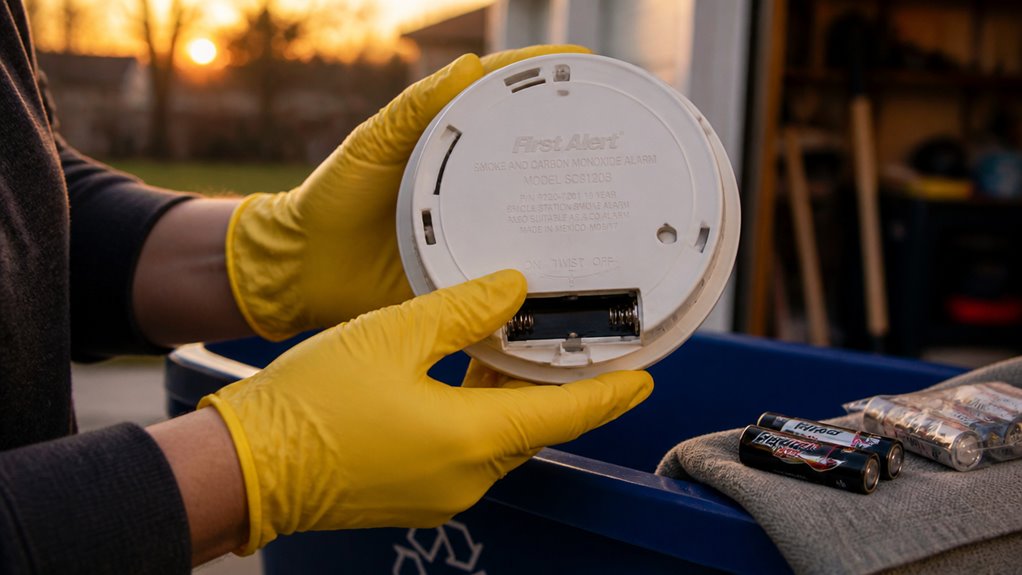
Remove any accessible batteries without opening units, especially if batteries are embedded.
Follow your local disposal rules. Photoelectric types often go in regular trash, while ionization units may have special handling due to radioactive components.
Consider using First Alert’s mail-back program for a safer option. Proper preparation and awareness of regulations guarantee compliant disposal.
More detailed guidance can help you manage each step confidently.
Key Takeaways
- Identify detector type (ionization or photoelectric) via labels or manuals before disposal; do not tamper with internal components.
- Remove accessible batteries, disconnect power, and keep units intact; do not open units with embedded batteries.
- Use First Alert’s mail-in take-back program for up to four detectors; a small fee applies for more than four units.
- Package detectors in sturdy containers, label with detector type, and avoid disassembling for safe transport and recycling.
- Check local regulations for disposal options; manufacturer take-back or specialized mail-in services are safer if local options are limited.
How to Identify Your First Alert Smoke Detector Type?
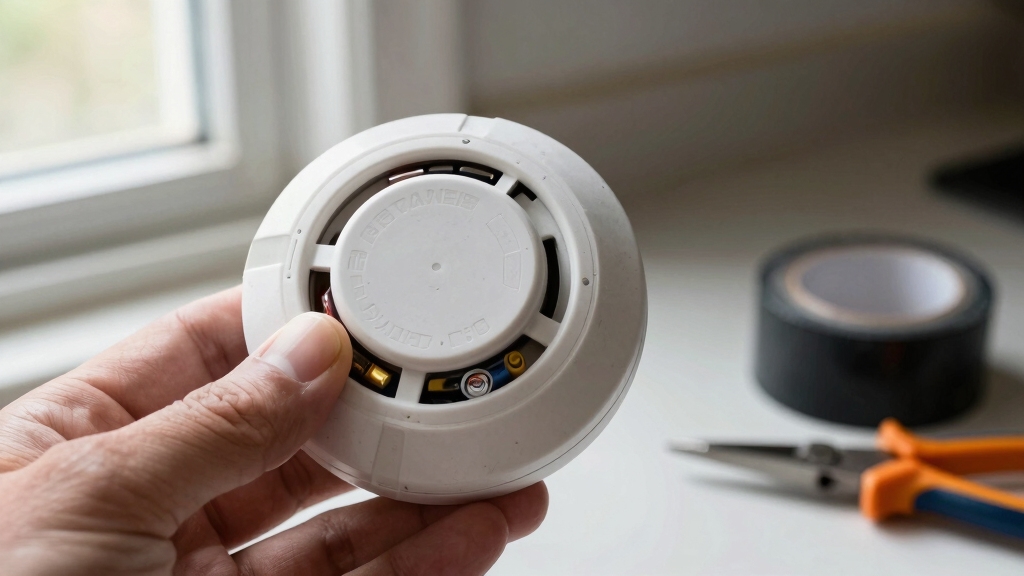
Start by checking the label or manual on your First Alert smoke detector to determine its type.
Your unit will be classified as either ionization or photoelectric. Ionization detectors contain a small amount of americium-241, a low-level radioactive material, and this is usually noted on the label by law.
Photoelectric detectors don’t contain radioactive components. If you can’t find clear information, consult the manufacturer’s website or customer service before proceeding.
Identifying the type is vital because disposal rules differ slightly and local regulations may vary. Never assume the type without verification.
Proper identification helps you follow the safest, most compliant disposal method and reduces environmental risks. Always handle your detector carefully and avoid tampering with internal components during this process.
For further safety, consider that many smoke alarms use photoelectric sensors for more accurate and faster smoke detection.
Why You Should Remove Batteries Before Disposal?
Although smoke detectors are designed for safety, you should always remove accessible batteries before disposal to prevent potential hazards.
Remove accessible smoke detector batteries before disposal to avoid potential safety hazards and environmental risks.
Batteries, especially lithium types, can leak harmful chemicals or cause fires if damaged or exposed to heat in waste facilities.
Removing batteries also prevents accidental power activation, which could trigger false alarms or complicate recycling processes.
If your detector has embedded batteries, don’t attempt to remove them; leave the unit intact to avoid damage or exposure to hazardous components.
Proper battery removal simplifies disposal and helps comply with local regulations, which often restrict battery landfill disposal.
By taking this step, you reduce environmental risks and make it easier to utilize manufacturer take-back or recycling programs.
This ensures safer, more responsible smoke detector disposal.
Be aware that sealed battery designs complicate recycling due to the inability to remove batteries easily, requiring specialized handling to prevent environmental harm.
Disposing of Photoelectric First Alert Smoke Detectors
When disposing of photoelectric First Alert smoke detectors, you should first remove any accessible batteries. This prevents potential hazards and complies with local regulations.
Once batteries are out, you can typically place the detector in your regular household waste. Photoelectric alarms don’t contain radioactive materials, so special handling isn’t usually required.
However, recycling is preferred if available, since these detectors include recyclable plastics, metals, and circuit boards. Avoid disassembling the unit, as keeping it intact makes disposal safer and easier.
Always check your community’s specific guidelines before throwing it away, because local rules for smoke detector disposal can vary. Following these steps guarantees you dispose of your photoelectric First Alert smoke detector safely and responsibly.
Photoelectric smoke detectors operate using light scattering inside a sealed chamber to detect smoke, which is why proper disposal avoids releasing sensitive components.
Disposing of Ionization First Alert Smoke Detectors
Because ionization smoke detectors contain a small amount of americium-241, you should handle their disposal carefully by first removing any accessible batteries while keeping the unit intact.
Ionization smoke detectors contain americium-241, so remove batteries first and keep the unit intact when disposing.
These detectors don’t require special radioactive waste treatment, but local disposal rules vary, so check regulations before discarding. Many areas accept ionization detectors with household garbage, but manufacturer take-back programs offer a safer option.
When disposing of ionization detectors, consider these steps:
- Remove accessible batteries without opening the unit.
- Keep the detector intact; avoid disassembling radioactive components.
- Confirm local regulations for disposal or recycling options.
- Use First Alert’s mail-in take-back program when local options are unavailable.
The americium-241 source inside the unit is securely encased to prevent any radiation exposure during normal disposal.
Handling Embedded Batteries in First Alert Smoke Detectors
After removing accessible batteries and confirming disposal guidelines for ionization detectors, you may encounter First Alert smoke detectors with embedded batteries.
These units should not be opened or tampered with, as embedded lithium batteries pose risks if damaged. Always leave the detector intact to avoid exposure to hazardous components.
Local regulations often restrict disposing of embedded batteries in landfills, so proper disposal is essential.
Replacement of the CR17335 battery must be handled with care to avoid damage and ensure safe operation.
| Action | Reason | Recommendation |
|---|---|---|
| Do not open unit | Prevent damage to battery | Leave detector intact |
| Remove accessible batteries | Avoid battery hazards | Dispose separately |
| Check local rules | Compliance with disposal laws | Follow community guidelines |
Handle embedded batteries carefully to guarantee safe and legal disposal.
Using First Alert’s Take-Back Program for Disposal
You can easily return up to four First Alert smoke detectors through their take-back program, which is super convenient.
What’s even better is that they also accept other brands like BRK, Family Gard, and Onelink. So, if you have any of those lying around, you’re in luck!
Now, if you happen to have more than four units, just keep in mind that a small fee will apply. It’s a pretty straightforward process, though!
First Alert makes an effort to recycle the alarms you send back when possible. However, do note that some parts mightn’t be recyclable because of the flame-resistant chemicals in them. So, it’s always good to check!
For safety, always remove the alarm by twisting counterclockwise and disconnect power before disposal.
Eligibility and Brands
When you consider disposing of ionization smoke detectors, First Alert’s take-back program offers a convenient option for eligible units.
To qualify, you should know these key points:
- The program accepts ionization smoke detectors from First Alert, BRK, Family Gard, and Onelink brands only.
- You can send up to four detectors without incurring extra fees.
- Units must be intact with batteries removed; don’t open or tamper with embedded components.
- First Alert recycles returned detectors when possible, though some parts may be non-recyclable due to flame-resistant materials.
Make sure your detectors meet these criteria before using the take-back service.
If your units fall outside these limits or brands, consider local disposal options or other manufacturer programs with caution.
For safety, always replace First Alert smoke and CO alarms every 10 years to maintain proper sensor performance.
Return Quantity Limits
Knowing the eligibility and brand restrictions helps clarify the quantity limits for returns using First Alert’s take-back program. You can send up to four smoke detectors per package without extra fees. If you exceed this, First Alert charges a small handling fee.
Only units from First Alert, BRK, Family Gard, and Onelink qualify. Make certain your devices meet these criteria before shipping.
| Maximum Return Limit | Accepted Brands | Additional Fee |
|---|---|---|
| 4 units | First Alert, BRK, Family Gard, Onelink | No fee |
| Over 4 units | First Alert, BRK, Family Gard, Onelink | Small fee applies |
| Non-listed brands | Not accepted | Not accepted |
| Photoelectric units | Accepted, but disposal via household waste | No fee |
Stick to these limits to assure smooth processing. For those considering surveillance options, be aware that First Alert smoke detectors do not include built-in cameras and focus solely on fire safety.
Recycling Process Details
Start the recycling process by carefully preparing your smoke detectors according to First Alert’s guidelines. First, remove any accessible batteries but leave units with embedded batteries intact.
Next, confirm the detector type: ionization or photoelectric to guarantee proper handling. Then, package up to four detectors, including First Alert, BRK, Family Gard, or Onelink brands, for return.
Finally, use First Alert’s mail-in take-back program, noting a small fee applies for more than four units.
- Remove accessible batteries without opening the unit.
- Verify smoke detector type via labels or manuals.
- Limit returns to four detectors per shipment.
- Ship detectors using First Alert’s take-back program.
This precise process guarantees safe, compliant recycling while minimizing environmental impact. For optimal safety, always disconnect power source before removal or battery replacement.
Local Regulations Impacting First Alert Smoke Detector Disposal
Hey there! Before you toss out your First Alert smoke detectors, it’s super important to check your local regulations. You see, the rules can really differ from one place to another.
In some areas, you might need to use special disposal or recycling options, especially if you have ionization models that contain radioactive materials. Yikes, right?
Also, remember that replacing smoke alarms every 10 years is crucial since sensor sensitivity may decrease over time, affecting detection performance.
Local Rules Overview
Local regulations play a crucial role in determining how you dispose of First Alert smoke detectors. Since rules vary widely, you should always verify local guidelines before disposal to avoid violations or environmental harm.
Here are key considerations:
- Check if your area treats smoke detectors as hazardous or electronic waste.
- Confirm whether ionization or photoelectric alarms have distinct disposal rules.
- Learn if you must remove batteries or keep units intact.
- Identify designated drop-off locations or collection events for smoke detector disposal.
Specialized Disposal Options
Understanding how regulations shape your options for disposing of First Alert smoke detectors helps you avoid improper handling or penalties. Since ionization detectors contain a small amount of americium-241, some local rules treat them differently than photoelectric models, which have no radioactive material.
You should always check your local waste management policies before disposal. Many areas allow photoelectric alarms in regular trash once batteries are removed, but ionization units might require specialized recycling or manufacturer take-back programs.
If local options are limited, consider First Alert’s mail-in recycling service, which accepts up to four ionization detectors per submission. Avoid disassembling units, especially if batteries are embedded or radioactive components are present.
Following these specialized disposal requirements guarantees you stay compliant and protect the environment.
Recycling Options for First Alert Smoke Detectors Near You
When looking to recycle your First Alert smoke detectors, checking available take-back programs and municipal recycling options is essential. Many areas have specific rules, so it’s best to verify local guidance before disposal.
You should remove accessible batteries but keep the unit intact to ease recycling.
Consider these steps for recycling:
- Contact First Alert’s take-back program, which accepts up to four detectors for a small fee if you exceed that number.
- Inquire with local waste management or public works about household hazardous waste collection events.
- Use mail-in services like Curie Environmental Services for ionization detectors if local options are unavailable.
- Confirm if your municipality accepts smoke detectors in regular recycling or trash, especially for photoelectric models.
Following these options helps you dispose of detectors safely and responsibly.
How to Handle Smoke Detectors With Circuit Boards?
Because smoke detectors with circuit boards often contain sensitive electronic components and, in some cases, radioactive elements, you should avoid disassembling or damaging the unit.
Smoke detectors with circuit boards may contain sensitive electronics and radioactive parts, so avoid tampering with them.
Removing embedded batteries or tampering with internal parts can release hazardous materials or void recycling options.
Before disposal, check the detector’s label or manual to identify if it’s ionization or photoelectric.
Always remove accessible batteries but leave the unit intact to guarantee safe handling.
Intact detectors are easier to route for manufacturer take-back or local recycling programs.
Since some localities have specific rules regarding circuit board-containing smoke detectors, confirm disposal requirements in your area.
Following these precautions keeps you safe and helps properly manage electronic waste and any low-level radioactive material within the detector.
Safe Storage and Transport Tips Before Disposal
Before disposing of your smoke detector, store it in a cool, dry place away from direct sunlight and moisture to prevent damage to its components. Proper storage guarantees the detector remains intact for safe handling and recycling.
Follow these tips for safe storage and transport:
- Remove accessible batteries to prevent leakage but avoid opening units with embedded batteries.
- Keep the smoke detector intact, especially if it contains circuit boards or radioactive materials.
- Place the unit in a sturdy container or box to protect it during transport.
- Label the package clearly, noting the detector type if known, to assist disposal or recycling workers.
These precautions help maintain safety and comply with disposal guidelines.
Frequently Asked Questions
Can I Reuse Parts From Old First Alert Smoke Detectors?
You generally shouldn’t reuse parts from old First Alert smoke detectors, especially if they contain radioactive components or embedded batteries.
Disassembling units can be hazardous and may void safety certifications.
It’s safer to keep the detector intact and follow proper disposal or recycling methods.
If you want spare parts, it’s better to buy new, certified components to guarantee your alarm functions reliably and meets safety standards.
How Long Do First Alert Smoke Detectors Typically Last?
First Alert smoke detectors typically last about 10 years. You should replace the entire unit once it reaches this age, even if it seems to work fine.
Over time, sensors can become less reliable, increasing your risk. Regularly test your detector monthly and replace batteries as needed to maintain functionality.
If your detector is older than 10 years or shows signs of malfunction, it’s safest to get a new one immediately.
What Should I Do if My Smoke Detector Is Damaged?
If your smoke detector is damaged, don’t try to repair or open it yourself, especially if it’s an ionization type with radioactive material.
Remove any accessible batteries and keep the unit intact.
Contact the manufacturer or your local waste authority for proper disposal instructions.
Many offer take-back or mail-in recycling programs.
Handling it carefully reduces risk and guarantees you dispose of it safely and legally, protecting your health and environment.
Are There Special Disposal Instructions for Combination Smoke and Carbon Monoxide Alarms?
Imagine you find a combination smoke and carbon monoxide alarm in your home. Yes, there are special disposal instructions.
Since these units contain electronic components, you shouldn’t just toss them in the trash. Instead, check if your local waste programs accept them or contact the manufacturer’s take-back service.
Always remove accessible batteries first and avoid dismantling the unit. Proper disposal protects the environment and complies with local regulations.
Can I Trade in Old Smoke Detectors When Buying New Ones?
You generally can’t trade in old smoke detectors when buying new ones at most retailers.
However, some manufacturers, including First Alert, offer mail-in or take-back programs for recycling your old units.
It’s best to check if your local store or the manufacturer provides such options.
Always remove batteries before sending devices back, and never disassemble units with embedded batteries or radioactive parts.
Confirm local disposal rules to stay compliant and safe.
Follow Local Rules for Safer Smoke Detector Disposal
When disposing of your First Alert smoke detector, remember to identify its type, remove batteries, and follow local regulations.
Handle photoelectric and ionization models with care, especially if they have embedded batteries or circuit boards.
Explore recycling options nearby, and store or transport the device safely before disposal.
By staying informed, acting responsibly, and prioritizing safety, you protect both your home and the environment.
This ensures a safer, cleaner future for everyone.